Revolt of 1857 – The First War of Indian Independence

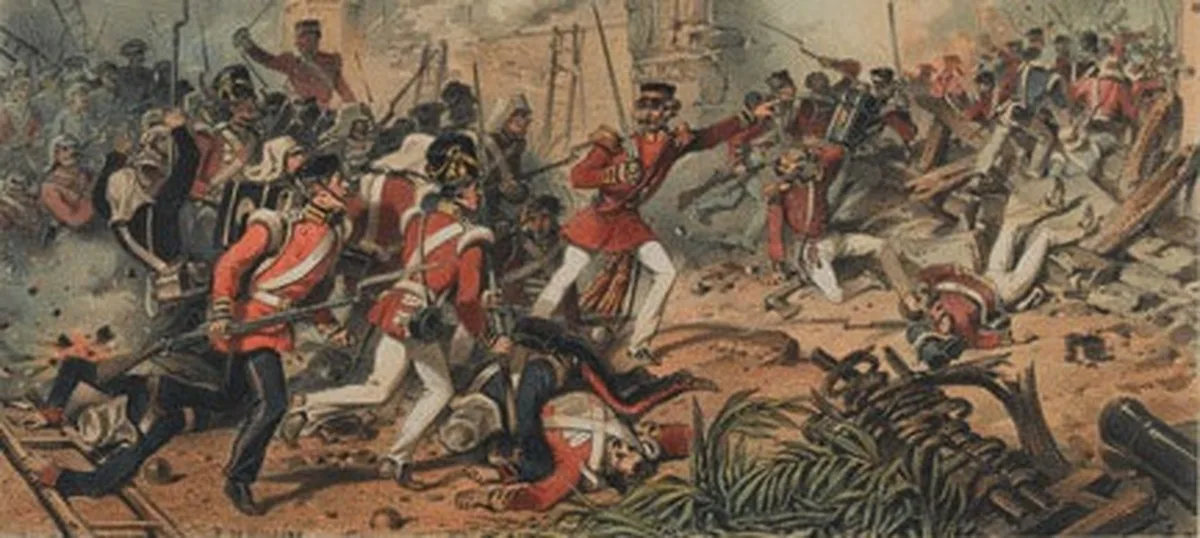
The Revolt of 1857 was one of the most important events in Indian history. It marked the first large-scale and organised uprising of Indians against British rule. Though it ultimately failed, the revolt played a crucial role in shaping India’s future struggle for independence. It was not just a military rebellion but a mass movement that involved soldiers, peasants, rulers, and common people.
Thank you for reading this post, don't forget to subscribe!The revolt is known by different names such as the Sepoy Mutiny, Indian Mutiny, Great Rebellion, and First War of Independence. The term “First War of Independence” was popularised by Vinayak Damodar Savarkar, who viewed it as the beginning of India’s fight against colonial rule.
Nature of the Revolt
The Revolt of 1857 began as a mutiny of sepoys (Indian soldiers in the British army), but it quickly turned into a widespread rebellion involving different sections of society.
- It was the first organised resistance against the British East India Company
- It spread across northern and central India
- It included participation from rulers, peasants, soldiers, and civilians
- It showed early signs of nationalism
Although it lacked unity and coordination, the revolt demonstrated that Indians were ready to challenge British authority.
Causes of the Revolt of 1857
The Revolt of 1857 did not occur suddenly. It was the result of several long-term and short-term causes, which can be divided into political, social, economic, and military factors.
1. Political Causes
British Expansion Policy
The British followed aggressive expansion policies that angered Indian rulers and chiefs.
- The political causes of the revolt were mainly linked to the policy of expansion through the Doctrine of Lapse and direct annexation.
- A large number of Indian rulers were removed from power, which created fear among other ruling families who expected the same fate.
- The Doctrine of Lapse, introduced by Lord Dalhousie, allowed the British to annex states where rulers had no natural heir.
- Important states like Satara, Nagpur, and Jhansi were annexed under this policy.
- Other regions such as Jaitpur, Sambalpur, and Udaipur were also annexed.
A well-known example is Rani Lakshmi Bai, whose adopted son was not allowed to succeed the throne of Jhansi. This deeply angered her and pushed her towards rebellion.
Doctrine of Lapse
- The Doctrine of Lapse was a major political tool used by the British in the late 1840s.
- It prevented Hindu rulers without a natural heir from adopting a successor.
- After the death of such rulers, their kingdoms were annexed by the British.
- This policy caused widespread dissatisfaction among Indian rulers and nobles.
- Many Brahmins also became unhappy as they lost their traditional privileges and sources of income.
Annexation of Awadh
The annexation of Awadh in 1856 further increased discontent.
- It was annexed on the grounds of maladministration by Lord Dalhousie
- Thousands of nobles, officials, soldiers, and retainers lost their jobs
- This turned Awadh from a loyal state into a centre of unrest and rebellion
2. Social and Religious Causes
Social and religious factors also played an important role in the revolt.
- The rapid spread of Western civilisation created fear among Indians
- An Act of 1850 changed Hindu inheritance law, allowing converts to Christianity to inherit property
- Many people believed that the British were trying to convert Indians to Christianity
Reforms introduced by the British were seen as threats:
- Abolition of practices like sati and female infanticide
- Legalisation of widow remarriage
- Introduction of Western education, which challenged traditional beliefs of both Hindus and Muslims
Even modern developments were viewed with suspicion:
- Railways and telegraph were misunderstood
- People feared these changes would destroy Indian culture and traditions
3. Economic Causes
Economic exploitation was one of the strongest reasons behind the revolt.
Impact on Peasants and Zamindars
- Peasants and zamindars were heavily burdened with high land taxes
- Strict revenue collection methods forced many into debt
- Many lost lands that their families had owned for generations
A significant point is that many sepoys came from peasant families, so their grievances were directly connected to rural distress.
Decline of Indian Industries
- After the Industrial Revolution in Britain, cheap machine-made goods flooded Indian markets
- Indian handicraft industries, especially textiles, suffered greatly
- Local artisans could not compete with British products
- This led to unemployment and poverty among skilled workers
4. Military Causes
The Revolt of 1857 began as a sepoy mutiny due to dissatisfaction in the army.
- Indian sepoys made up more than 87% of the British army in India but were treated as inferior
- They were paid less than British soldiers of the same rank
- They had limited chances of promotion
- They were often posted far away from their homes
In 1856, Lord Canning passed the General Service Enlistment Act, which required sepoys to serve overseas if needed. This was against their religious beliefs and created resentment.
Immediate Cause of the Revolt
The immediate cause of the Revolt of 1857 was the introduction of the Enfield rifle.
- Cartridges were believed to be greased with cow and pig fat
- Soldiers had to bite the cartridges before use
- This hurt both Hindu and Muslim religious sentiments
In March 1857, Mangal Pandey revolted at Barrackpore and attacked British officers. He was executed, which further increased anger.
On 9 May 1857, 85 soldiers at Meerut refused to use the cartridges and were imprisoned. The next day, the revolt began.
Centres and Leaders of the Revolt
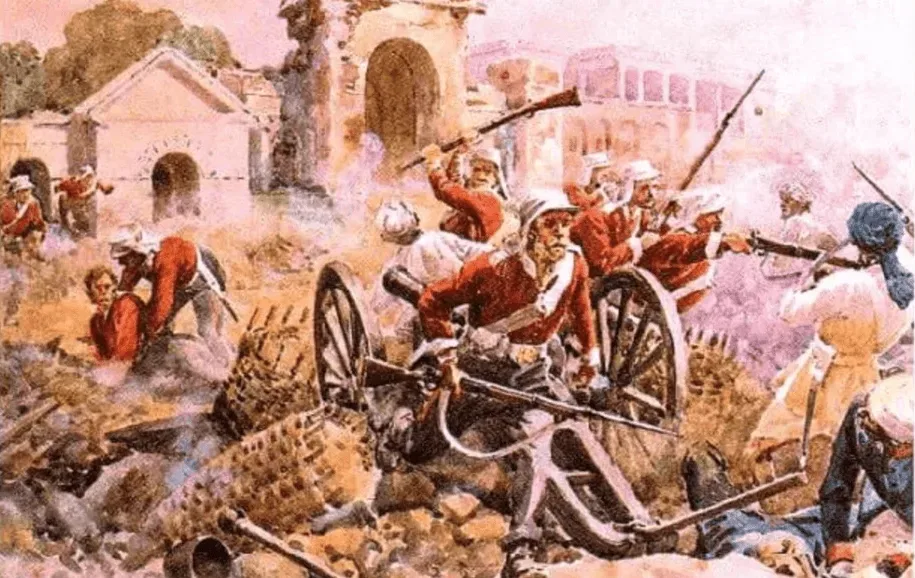
The revolt spread rapidly across a wide region, extending from the neighbourhood of Patna to the borders of Rajasthan. Major centres of the uprising included Kanpur, Lucknow, Bareilly, Jhansi, Gwalior, and Arrah in Bihar. Each centre had strong leadership and witnessed intense fighting against British forces.
Delhi
- Led by Bahadur Shah II
- He was declared the symbolic leader of the rebellion
- Delhi became the main centre of resistance
Kanpur
- Led by Nana Saheb, the adopted son of Peshwa Baji Rao II
- He joined the revolt because the British denied him his pension
- Initially, the rebels achieved success, but it was short-lived
- Kanpur was recaptured by the British after reinforcements arrived
- The revolt here was suppressed with severe brutality
- Nana Saheb escaped, but his commander Tantia Tope continued the struggle
- Tantia Tope was later defeated, captured, and executed
Lucknow
- Capital of Awadh and a major centre of rebellion
- Led by Begum Hazrat Mahal
- She took charge on behalf of her son and resisted British authority strongly
Jhansi
- Led by the young and courageous Rani Lakshmi Bai
- She revolted after the British refused to accept her adopted son as the rightful heir
- She fought bravely against British forces
- Despite her resistance, she was eventually defeated
Gwalior
- After escaping from Jhansi, Rani Lakshmi Bai joined Tantia Tope
- Together, they captured Gwalior
- Fierce battles took place, where Rani Lakshmi Bai fought heroically until her death
- Gwalior was later recaptured by the British
Bihar
- Led by Kunwar Singh, a noble from Jagdispur
- Despite his old age, he led the revolt with great determination
- He became one of the most respected leaders of the uprising
Suppression of the Revolt
The revolt lasted for more than a year but was eventually suppressed by mid-1858.
- The British used superior military strength
- Reinforcements came from England
- Brutal methods were used to crush the rebellion
On 8 July 1858, peace was officially declared by Lord Canning.
Why Did the Revolt of 1857 Fail?
Despite its intensity, the Revolt of 1857 failed due to several important reasons:
1. Limited Spread (Limited Uprising)
Although the revolt was widespread in some areas, a large part of the country remained unaffected.
- The revolt was mainly confined to the Doab region (area between Ganga and Yamuna rivers)
- Northern and central India were the main centres
- Southern and eastern regions did not participate
- Major princely states like Hyderabad, Mysore, Travancore, Kashmir, and the states of Rajputana did not join the rebellion
This limited participation weakened the overall impact of the revolt.
2. Lack of Unity
There was no unity among the rebels.
- Different groups fought for their own interests
- There was no common goal or shared vision
- Lack of coordination made the movement weak
3. Weak and Ineffective Leadership
Although leaders like Nana Saheb, Tantia Tope, and Rani Lakshmi Bai showed great bravery, they could not provide strong and united leadership.
- There was no central authority
- No single leader to guide the entire movement
- Lack of proper planning and coordination
4. Lack of Resources
The rebels were not well-equipped to fight a powerful enemy like the British.
- Shortage of weapons, money, and trained soldiers
- Poor organisation and supply system
- On the other hand, the British had a steady supply of men, money, and modern weapons from England
5. Support for the British (No Participation of Middle Class)
Many influential groups did not support the revolt.
- The English-educated middle class stayed away from the rebellion
- Rich merchants, traders, and zamindars of Bengal supported the British
- Their support helped the British in suppressing the revolt effectively
Results and Impact of the Revolt
Although the revolt failed, it brought significant and long-lasting changes in the administration of India.
1. End of Company Rule
The great uprising of 1857 was an important landmark in the history of modern India. It marked the end of the rule of the British East India Company in India. After the revolt, the Company lost all its administrative powers.
2. Beginning of Crown Rule
India came under the direct control of the British Crown. This change was officially announced by Lord Canning at a grand Durbar held in Allahabad on 1 November 1858, in the name of Queen Victoria.
The Indian administration was taken over by Queen Victoria, which meant that the British Parliament now governed India. A new body called the India Office was created in Britain to handle the administration and governance of the country.
3. Administrative Changes
Several important administrative reforms were introduced:
- The post of Governor-General was replaced by that of the Viceroy
- The Viceroy became the direct representative of the British Crown in India
- The rights of Indian rulers were recognised and protected
- Policies of unnecessary annexation were stopped
4. Abolition of Doctrine of Lapse
The controversial Doctrine of Lapse was abolished after the revolt.
- Indian rulers were allowed to adopt sons as legal heirs
- The British stopped annexing states on the basis of succession issues
This helped reduce fear among princely states.
5. Religious Policy (Religious Tolerance)
The British government promised not to interfere in the religious and social practices of Indians.
- Respect for Indian customs and traditions was assured
- Efforts were made to avoid actions that could hurt religious sentiments
6. Military Reorganisation
The British made major changes in the army to prevent future rebellions:
- The ratio of British officers to Indian soldiers was increased
- Key positions and armoury remained under British control
- Steps were taken to reduce the dominance of the Bengal army
These reforms ensured tighter control over the military.
Historical Significance of the Revolt of 1857
The Revolt of 1857 holds great importance in Indian history:
- It marked the beginning of India’s freedom struggle
- It united different sections of society
- It created a sense of national identity
- It exposed the weaknesses of British rule
Even though it failed, it inspired future movements and leaders.
Historiography and Interpretations
Different historians have interpreted the revolt in different ways:
- British historians called it a “Sepoy Mutiny”
- Indian historians called it a “National Revolt”
- Nationalists viewed it as the First War of Independence
Writers like Vinayak Damodar Savarkar played a key role in shaping its nationalist interpretation.
Famous Books on the Revolt of 1857
Several important books have been written on this topic:
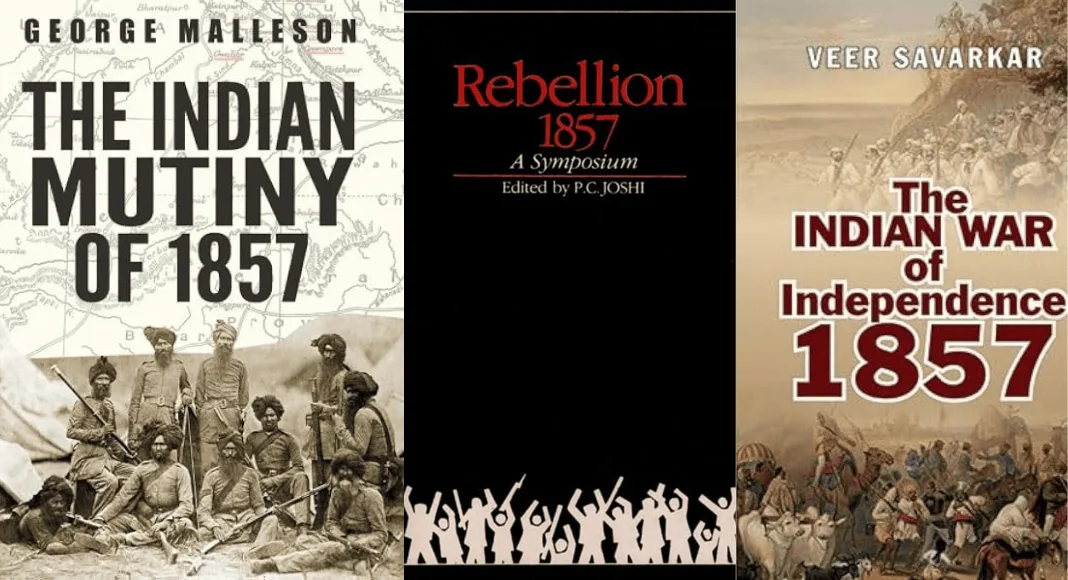
- The Indian War of Independence – Vinayak Damodar Savarkar
- Rebellion 1857: A Symposium – Puran Chand Joshi
- The Indian Mutiny of 1857 – George Bruce Malleson
- The Great Mutiny – Christopher Hibbert
- Religion and Ideology of the Rebels of 1857 – Iqbal Hussain
Conclusion
The Revolt of 1857 was a turning point in Indian history. It was the first major attempt by Indians to overthrow British rule. Although it did not succeed, it laid the foundation for future struggles and inspired generations of freedom fighters.
The revolt showed that unity among Indians was possible, and it planted the seeds of nationalism that later grew into a powerful independence movement.
FAQs – Revolt of 1857
1. What was the Revolt of 1857?
The Revolt of 1857 was the first large-scale uprising of Indians against British rule. It started as a sepoy mutiny but soon turned into a widespread rebellion involving rulers, peasants, and common people.
2. Why is the Revolt of 1857 called the First War of Independence?
It is called the First War of Independence because it was the first organised effort by Indians to end British rule. Vinayak Damodar Savarkar popularised this term.
3. What were the main causes of the Revolt of 1857?
The main causes included political expansion by the British, economic exploitation, social and religious interference, and discrimination in the army.
4. What was the immediate cause of the revolt?
The immediate cause was the introduction of greased cartridges in Enfield rifles, which offended both Hindu and Muslim soldiers.
5. Who were the main leaders of the Revolt of 1857?
Important leaders included Rani Lakshmi Bai, Nana Saheb, Tantia Tope, Begum Hazrat Mahal, and Kunwar Singh.
6. Where did the Revolt of 1857 begin?
The revolt began in Meerut on 10 May 1857 and soon spread to Delhi and other parts of northern India.
7. Why did the Revolt of 1857 fail?
The revolt failed due to lack of unity, weak leadership, limited resources, and absence of support from many regions and rulers.