



Health & You: Explore Student Health and Wellness Tools on KiHikila

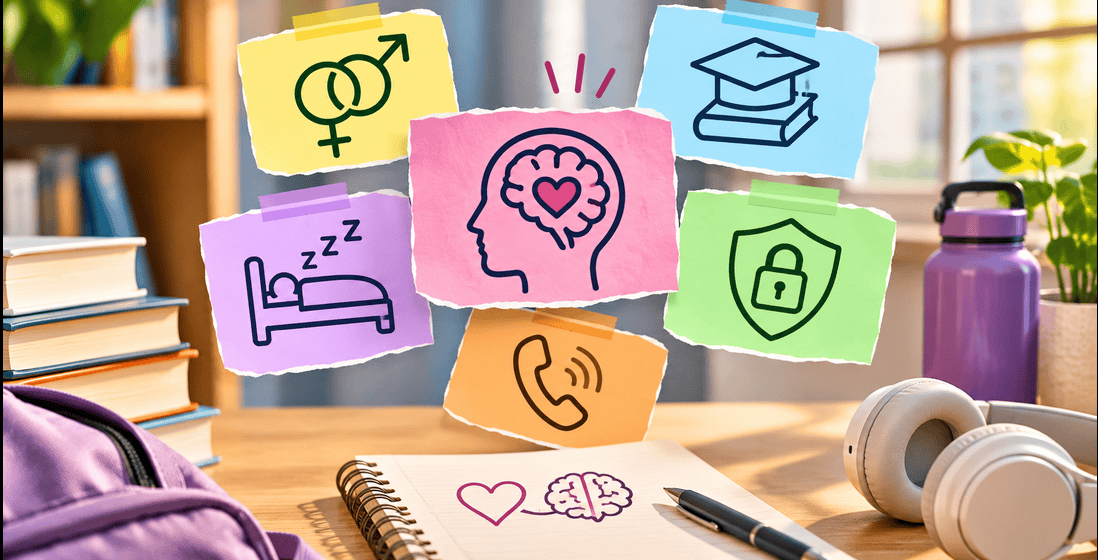
Health & You is a dedicated section on KiHikila Student Corner that helps students understand important topics related to physical health, mental well-being, relationships, sleep, and online safety. Student life is not only about attending classes, completing assignments, and preparing for examinations. Taking care of health and understanding personal well-being are equally important.
Many students have questions about exam stress, sleep problems, relationships, consent, and online harassment. However, they may feel uncomfortable discussing these subjects with others or may not know where to find reliable information.

To make useful information easier to access, KiHikila Student Corner brings together several student-friendly guides under its Health & You section. The aim is to provide straightforward, age-appropriate information without unnecessary lectures, judgement, or sensational content.
Why Is Health Awareness Important for Students?
The student years can bring many changes and responsibilities. Academic pressure, changing routines, social relationships, and increased screen time can affect how students feel physically and emotionally.
Understanding health-related topics can help students make better decisions and recognise when they need support.
The Health & You section focuses on five important areas:
- Sex Education, Answered Honestly
- Exam Stress & Mental Health
- Sleep, Screens & Focus
- Consent & Online Safety
- Helplines & Common Questions
Let’s explore each guide and understand how it can help students.
1. Sex Education, Answered Honestly
Sex education is an important part of understanding the human body, personal health, and healthy relationships. However, many students do not always receive clear answers to their questions.
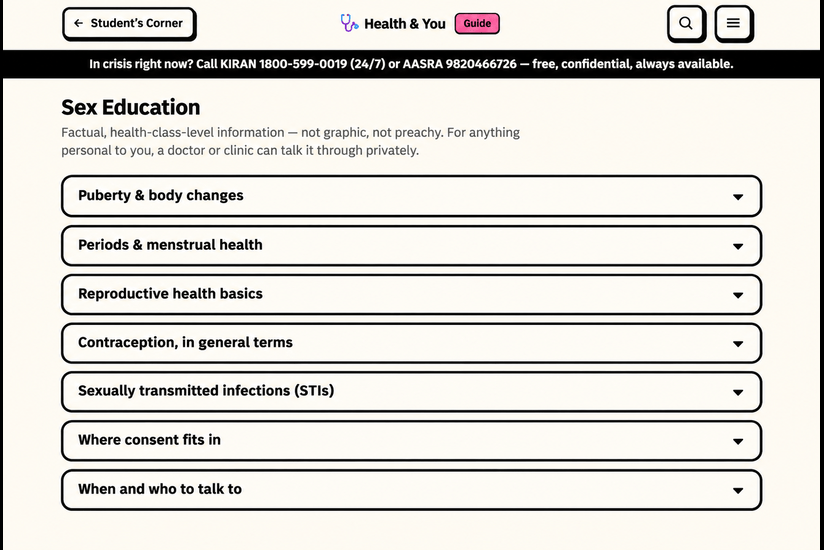
The Sex Education, Answered Honestly guide provides factual, age-appropriate information about questions that textbooks may not explain in detail.
It focuses on providing information without shame, judgement, or unnecessary embarrassment.
Understanding sex education can help students learn about:
- Physical and emotional changes during puberty
- Reproductive health and basic body awareness
- Personal hygiene and self-care
- Healthy relationships and personal boundaries
- Respect, responsibility, and personal safety
Having access to reliable information can help students avoid common misconceptions and understand important aspects of their health.
The purpose of this guide is to make learning about the human body easier and more comfortable.
2. Exam Stress & Mental Health
Examinations are an important part of student life, but the pressure to perform well can sometimes become overwhelming.
Students may experience worry, nervousness, difficulty concentrating, or sleep problems before examinations. Some may also feel pressure from family expectations, academic competition, or fear of disappointing others.
The Exam Stress & Mental Health guide explains what exam anxiety can feel like, simple ways to manage everyday stress, and when it may be helpful to talk to someone.
Students can benefit from learning practical habits such as:
- Creating a realistic study timetable
- Taking short breaks between study sessions
- Getting enough sleep
- Talking about worries with someone they trust
- Avoiding unnecessary comparisons with other students
- Seeking professional support when stress becomes difficult to manage
It is important to remember that experiencing stress does not mean someone is weak or unsuccessful.
If anxiety starts affecting daily activities, sleep, or studies, speaking with a counsellor, doctor, or trusted adult can be helpful.
3. Sleep, Screens & Focus
Sleep plays an important role in physical health, memory, learning, and concentration. However, many students do not get enough quality sleep because of late-night studying, mobile phone use, gaming, or irregular daily routines.
The Sleep, Screens & Focus guide helps students understand why they may feel tired even after spending several hours in bed.
It also discusses everyday habits that can affect sleep and concentration.
Some useful habits include:
- Following a regular sleep and waking schedule
- Avoiding excessive screen use before bedtime
- Keeping mobile phones away while studying
- Making the sleeping environment comfortable
- Avoiding caffeine close to bedtime
- Taking regular breaks during long study sessions
Students should also understand that screen time is not always harmful. Educational videos, online classes, and digital study materials can be useful. The important thing is to maintain a healthy balance.
Good sleep habits can support better concentration, learning, and everyday energy.
4. Consent & Online Safety
Understanding consent and online safety is essential for students growing up in a digital world.
Social media, messaging applications, and online communities make communication easier, but they can also create risks such as harassment, privacy violations, cyberbullying, and online scams.
The Consent & Online Safety guide explains what consent means, why personal boundaries matter, and how students can respond to unsafe online situations.
Important topics include:
- Understanding personal boundaries
- Respecting other people’s choices
- Recognising unhealthy relationships
- Protecting personal information online
- Identifying online harassment and cyberbullying
- Understanding sextortion and reporting options
Students should remember that consent must be freely given and can be withdrawn. Nobody should be pressured into sharing private photographs, personal information, or doing something that makes them uncomfortable.
If someone experiences online harassment or threats, they should avoid responding to threats, preserve relevant evidence where safe, and seek help from a trusted adult or appropriate authority.
Learning about consent and digital safety can help students build respectful relationships and use the internet more responsibly.
5. Helplines & Common Questions
Sometimes students need more than general information. They may need to speak with someone who can listen, provide guidance, or connect them with professional support.
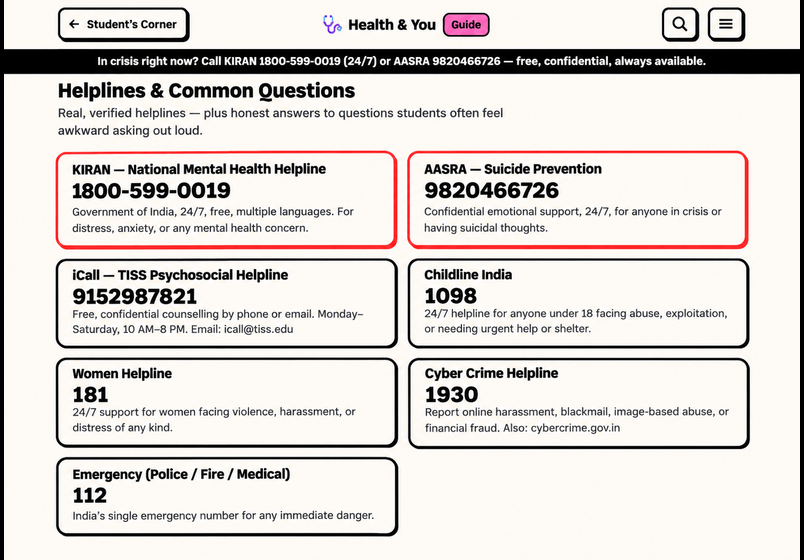
The Helplines & Common Questions section brings together information about real, verified helplines and answers to questions that students may find difficult to ask openly.
It aims to make reliable support information easier to find.
Students may need assistance with:
- Academic and examination stress
- Emotional difficulties
- Bullying and harassment
- Personal safety concerns
- Relationship-related questions
- Situations requiring professional guidance
Knowing where to seek help is important. Students should not feel that they have to handle every problem alone.
If a situation feels urgent or someone is in immediate danger, contact local emergency services or seek help from a trusted adult or healthcare professional rather than relying only on a webpage.
Explore All Health & You Guides on KiHikila
Here is a quick overview of the five resources available in this section.
| Guide | What You Can Learn |
|---|---|
| Sex Education, Answered Honestly | Body awareness, reproductive health, and healthy relationships |
| Exam Stress & Mental Health | Exam anxiety, stress management, and emotional well-being |
| Sleep, Screens & Focus | Healthy sleep habits and better concentration |
| Consent & Online Safety | Personal boundaries, consent, and digital protection |
| Helplines & Common Questions | Verified support resources and answers to common concerns |
Start Learning About Your Health with KiHikila
Health awareness should be an important part of every student’s education. Understanding mental well-being, personal safety, sleep, relationships, and physical health can help young people make informed decisions.
The Health & You section on KiHikila Student Corner brings these topics together through simple and informative guides.
Whether you want to understand exam stress, learn about healthy sleep habits, explore sex education, or find reliable support resources, these guides provide a starting point.
Visit KiHikila Student Corner and explore the Health & You section.
Remember, asking questions about health is normal. Seeking help when needed is a positive step, and reliable information can make it easier to make informed decisions.