Hajong tribe of Assam: A Deep Exploration of Their History, Culture and Identity

The Hajong tribe of Assam represents one of the most culturally rich and historically layered communities of Northeast India. Spread across the border regions of Assam, Meghalaya and Bangladesh, the Hajong people carry a legacy shaped by migration, resilience, agrarian traditions, indigenous customs, and a unique blend of Hindu-influenced and tribal belief systems. Though not as widely documented as some other tribes, the Hajongs continue to preserve a distinctive identity rooted in folklore, language, rituals and a deep bond with land and nature.
Thank you for reading this post, don't forget to subscribe!This extensive blog unfolds their history, lifestyle, traditions, festivals, attire, social structure and contemporary challenges, offering a complete understanding of this remarkable community.
Origins and Historical Background
The ancestry of the Hajong tribe has intrigued scholars for decades. Though their exact origin does not have a single established historical source, linguistic and cultural studies offer valuable insights. The Hajongs are classified as a tribe of Indo-Tibetan origin, originally believed to have migrated from the foothills of Myanmar or Tibet hundreds of years ago. Over time, they gradually moved into the plains of present-day Garo Hills, northern Bangladesh and western Assam.
Historical theories suggest that the early Hajongs were animistic agricultural communities who practiced shifting cultivation and worshipped nature spirits, forest deities, and clan-based guardian gods. This tribal foundation forms the backbone of their identity, even though later centuries introduced influences of Hinduism, mainly from Bengali Vaishnav and Shaivite traditions.
The migration of the Hajongs across the India–Bangladesh border was shaped by geography, floodplains, political boundaries and socio-cultural exchanges with neighbouring groups such as the Garos, Koch, Mandi and Assamese communities. Today, while many Hajongs reside in Meghalaya, a significant and culturally vibrant population thrives in the districts of Assam such as Goalpara, Kamrup, and Dhubri.
Language: Hajong as a Bond of Identity
Language is one of the strongest markers of identity for the Hajong tribe of Assam. The Hajong language belongs to the Indo-Aryan (Eastern Bengali-Assamese) group but retains older Tibeto-Burman linguistic features. This dual influence makes it unique among tribal languages of the region.
Key features of Hajong language:
- It is written using Assamese or Bengali script.
- Vocabulary includes many indigenous terms related to agriculture, rituals and nature.
- It has tonal variations similar to Tibeto-Burman languages.
- Oral literature songs, folktales, ballads is a core medium of preservation.
Despite modern pressures, the language continues to be spoken at home and in community gatherings, maintaining an emotional and cultural connection between generations.
Social Structure and Clan System
The social structure of the Hajong tribe of Assam is traditionally organized around clans known as Nikini. Each clan traces its lineage to an ancestral spirit or a mythical progenitor. Members of the same clan do not marry each other, maintaining the rule of exogamy.
The Hajong society, while patriarchal, values community participation. Village councils consisting of elders often mediate social decisions, festivals, marriages and land-related matters. The involvement of the entire community in rituals, agricultural activities and celebrations reflects the strong social cohesion among the Hajongs.
Religious Practices and Belief Systems
Though today many Hajongs identify as Hindu (mainly Vaishnavite), their religious identity is an intricate blend of indigenous animism and later Hindu influences.
Indigenous elements include:
- Worship of nature spirits
- Rituals for forest deities
- Clan-based guardian spirits
- Offerings to ancestral spirits during agricultural ceremonies
Hindu influence is reflected in:
- Worship of gods such as Kali, Shiva and Krishna
- Presence of community temples
- Celebrations like Durga Puja and Diwali
- Vaishnavite chanting traditions
A remarkable feature of Hajong spiritual life is that both indigenous and Hindu practices coexist seamlessly. Their religious identity is not confined to one category but emerges from layers of historical adaptation, continuity and reverence for nature.
Festivals and Rituals: The Heartbeat of Hajong Culture
Festivals hold deep cultural meaning for the Hajong tribe of Assam. They are tied to agriculture, seasonal cycles, fertility, community bonding and ancestral memory.
Pusne Festival
The most significant festival of the Hajongs, celebrated in January.
It marks the beginning of the agricultural year, involving rituals for prosperity, folk songs, dance and traditional feasts. Rice-based foods form the core of the celebration.
Bastu Puja
A ritual offering made to village protective spirits to ensure safety, fertility and harmony. The entire community gathers to pray for protection from natural disasters and illnesses.
Kani Puja
Associated with crop cultivation and fertility. Offerings are made before sowing seeds to seek blessings for abundant harvests.
Chorkhela and folk performing arts
Young boys and girls sing and dance in groups using traditional instruments like madol and flute. This strengthens communal bonds, especially during winter festivals.
These festivals highlight how the Hajongs maintain an integrated worldview where nature, agriculture, spirituality and society are inseparable.
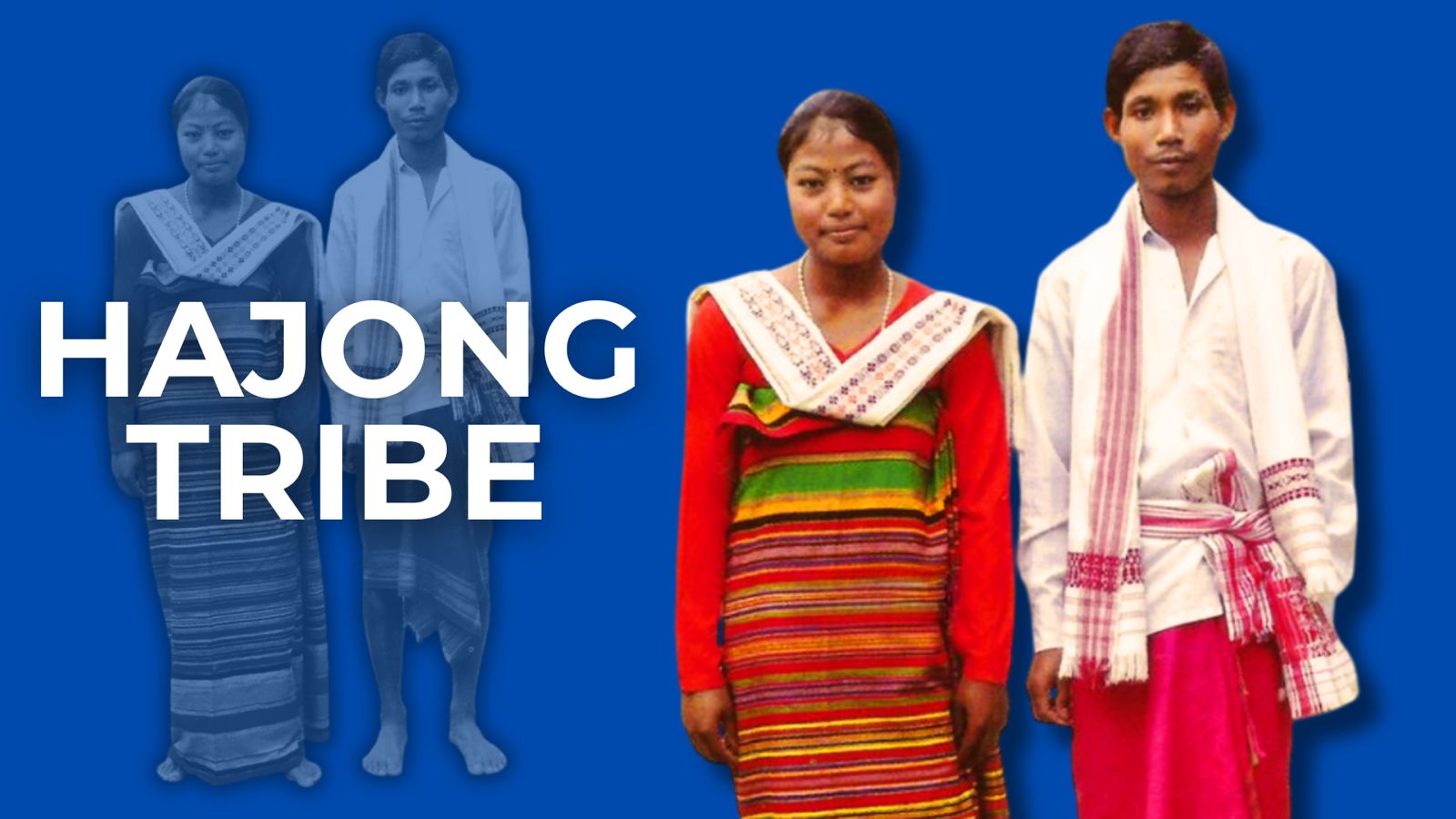
Traditional Attire and Craftsmanship
The traditional clothing of the Hajong tribe of Assam is simple yet elegant, reflecting their agrarian lifestyle and aesthetic sensibilities.
Women’s attire
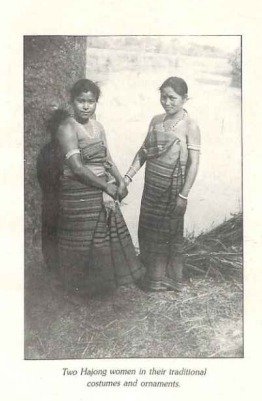
Hajong women wear the Pathin, a wrap-around cloth with horizontal stripes, usually woven in bright colours such as red, yellow and black. The design varies across regions but maintains the distinctive pattern representing cultural identity.
Men’s attire
Hajong men traditionally wear the Fota, a type of loincloth, along with a sleeveless cotton jacket. During festivals, men may adorn headgear or decorative fabric.
Weaving and handicrafts
Hajong women are skilled weavers, and weaving is an important domestic art. Handcrafted items like baskets, mats, bamboo crafts and traditional jewellery continue to hold cultural and economic value.
Agriculture and Traditional Livelihood
Agriculture is the backbone of Hajong life. The tribe has followed agrarian practices for generations, relying on fertile plains and riversides for cultivation.
Major crops include:
- Rice
- Maize
- Mustard
- Vegetables
- Seasonal fruits
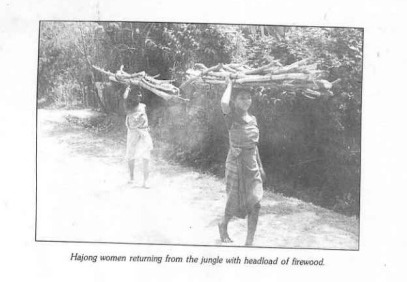
Fishing, livestock rearing and forest resource collection supplement their livelihood. In earlier times, shifting cultivation played a role, but most Hajongs in Assam today follow settled agriculture.
Their farming system is intertwined with rituals each phase of cultivation has its own offerings and ceremonies, symbolizing respect for land and nature.
Food Habits and Culinary Traditions
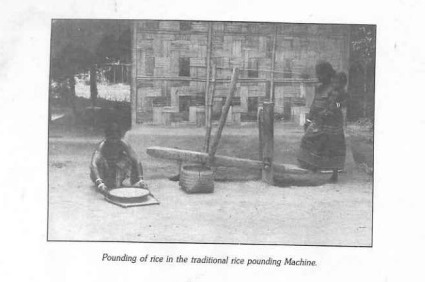
The cuisine of the Hajong tribe of Assam is simple, nutritious and closely linked to agricultural produce.
Common dishes include:
- Rice as the staple
- Fish cooked with minimal spices
- Fermented bamboo shoots
- Leafy greens
- Dried fish preparations
- Rice beer (Poro Apong in some regions)
Food is not just for sustenance it is central to festivals, hospitality and community relationships.
Folk Music, Dance and Oral Traditions
The Hajong cultural identity is deeply rooted in performing arts and oral literature.
Their traditions include:
- Folk songs praising nature, love, bravery and agricultural life
- Community dances performed during Pusne and Chorkhela
- Storytelling traditions passed down orally
- Ritual music accompanied by drums, bamboo flutes and clappers
These art forms preserve the collective memory and cultural wisdom of the community.
Marriage Customs and Family Life
Marriage among the Hajongs is an elaborate social ceremony. Traditional weddings involve matchmaking by families, approval of clan compatibility and ritual offerings.
Key customs include:
- Bride and groom must belong to different clans
- Exchange of symbolic items
- Music, dancing and feasting
- Blessings from elders and ancestors
Family life is centered on cooperation, shared responsibilities and respect for elders. The extended family structure strengthens communal bonds.
Contemporary Challenges and Identity Assertion
Despite their strong cultural roots, the Hajong tribe of Assam faces several contemporary issues.
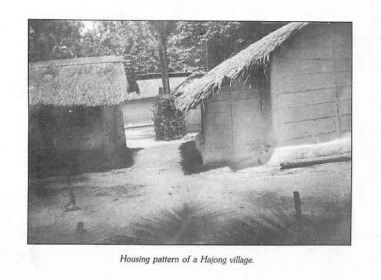
Major challenges include:
- Limited documentation of their history and culture
- Economic pressures on traditional agriculture
- Language endangerment due to dominance of Bengali and Assamese
- Migration of youth to cities
- Lack of widespread representation in mainstream media
Yet, the Hajong community is actively engaged in preserving their identity. Cultural organizations, youth groups, linguistic activists and scholars continue to revive traditional practices, document folklore, and promote their language and heritage.
Hajong Tribe in Modern Assam: Evolving Yet Rooted
The present-day Hajong community reflects a balance between tradition and modernity.
Many Hajongs pursue higher education, government jobs, entrepreneurship and modern livelihoods, while still participating in festivals, rituals and cultural programs.
The identity of the Hajongs today evolves through:
- Cultural preservation efforts
- Community associations
- Participation in regional festivals
- Revival of weaving and handicrafts
- Promotion of Hajong music and dance digitally
Their resilience and adaptability show that indigenous cultures can thrive even in a fast-changing world when communities remain committed to their heritage.
Why the Hajong Tribe of Assam Matters in Cultural Studies
The study of the Hajong tribe of Assam is essential for several reasons:
- They represent a cultural bridge between Indo-Aryan and Tibeto-Burman traditions.
- Their festivals and rituals preserve ancient agrarian wisdom.
- Their language adds diversity to the linguistic landscape of Northeast India.
- Their customs and folklore enrich anthropological research.
- Their heritage contributes to the pluralistic identity of Assam.
Understanding the Hajongs provides deeper insights into the mosaic of tribes that form the cultural backbone of Assam and the entire Northeast.