


Black Mass Export Ban 2026

Black Mass Export Ban has become an important step in India’s efforts to strengthen domestic battery recycling and protect critical mineral resources. On November 10, 2026, the Directorate General of Foreign Trade (DGFT), under the Ministry of Commerce and Industry, prohibited the export of lithium-ion battery black mass with immediate effect. The decision was announced through Notification No. 49/2026-27, which changed the export policy for black mass under ITC (HS) Code 85491400 from “Free” to “Prohibited”. The move aims to keep valuable battery materials within India and support the country’s electric vehicle and clean-energy industries.
India Prohibits Export of Lithium-Ion Battery Black Mass
The Government of India introduced the export restriction on November 10, 2026. The Directorate General of Foreign Trade issued the notification to prevent the export of specified battery waste materials until further orders.

The prohibition covers unsorted waste and scrap of primary cells, primary batteries and electric accumulators. It also includes spent cells and batteries that do not contain lead, cadmium or mercury.
Earlier, the export of these materials was allowed under the Free category. Following the new notification, their export has been moved to the Prohibited category.
The decision is expected to encourage the domestic processing of used batteries and help Indian recycling companies obtain more raw materials for their operations.
What Is Black Mass in Battery Recycling?
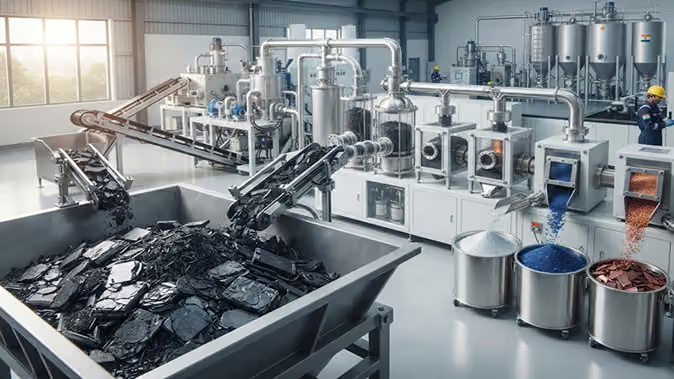
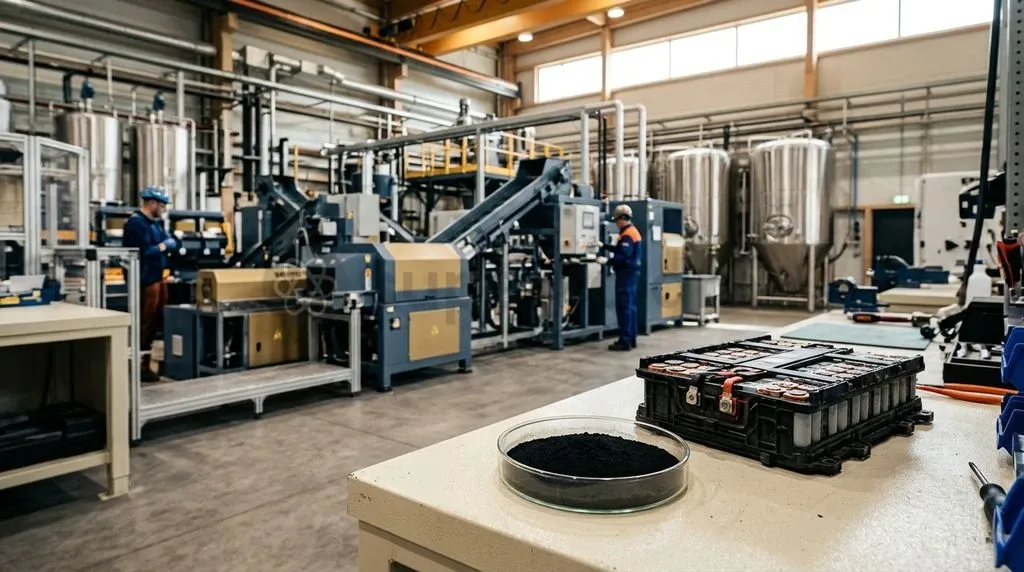
Black mass is a powder-like material produced during the recycling of discarded lithium-ion batteries. It is obtained by collecting and processing battery materials through shredding and other mechanical treatment methods.
This material contains several valuable minerals, including:
- Lithium: Used in rechargeable batteries for electric vehicles and electronic devices.
- Cobalt: Helps improve battery performance and stability.
- Nickel: Used in battery manufacturing to improve energy storage capacity.
These minerals are important for manufacturing rechargeable batteries used in electric cars, mobile phones, laptops and energy storage systems.
Recovering these materials from discarded batteries reduces the need to depend entirely on newly mined minerals. It also supports the reuse of valuable resources and reduces battery waste.
Why Has India Banned Black Mass Exports?
One of the main reasons behind the Black Mass Export Ban is to increase the availability of critical minerals within India.
Indian battery recyclers need a regular supply of used battery materials to recover lithium, cobalt, nickel and other valuable resources. However, the export of black mass can reduce the amount of recyclable material available to domestic industries.
By restricting exports, the government wants to ensure that more battery waste is processed within the country.
The decision also supports India’s growing electric vehicle industry. As the number of electric cars, two-wheelers and other battery-powered vehicles increases, the demand for battery materials is also expected to rise.
Domestic recycling can help create a more reliable supply chain for battery manufacturers and reduce dependence on imported raw materials.
Government’s ₹1,500 Crore Critical Mineral Recycling Scheme
The export restriction is connected with India’s wider efforts to develop a strong domestic critical mineral recycling industry.
In September 2025, the government approved the ₹1,500 crore Incentive Scheme for Promotion of Critical Mineral Recycling.
The scheme aims to encourage investment in recycling facilities and improve the recovery of important minerals from waste materials.
It supports the development of recycling capacity for materials obtained from used batteries, electronic waste and other industrial waste streams.
The programme is important for India’s clean-energy transition because critical minerals are required for electric vehicles, renewable energy storage and other advanced technologies.
By combining financial incentives with restrictions on the export of valuable battery waste, India aims to strengthen its domestic recycling ecosystem.
Black Mass Classified as Hazardous Waste
The Ministry of Environment, Forest and Climate Change has classified black mass as hazardous waste.
Its import and export are regulated under the Hazardous and Other Wastes (Management and Transboundary Movement) Rules, 2016.
These rules control the movement of hazardous waste across international borders to protect human health and the environment.
The regulations require appropriate permissions for the import and export of covered hazardous materials. They also provide safeguards for the handling, transportation and treatment of such waste.
India’s restrictions on black mass exports are part of its broader approach to managing battery waste safely and recovering valuable materials within the country.
Battery Waste Management Rules, 2022
India introduced the Battery Waste Management Rules, 2022, to improve the collection, recycling and environmentally safe disposal of used batteries.
These rules were amended in 2025 to strengthen the battery waste management system.
Under the rules, battery producers must register with the Central Pollution Control Board (CPCB) and fulfil their annual recycling responsibilities.
The system follows the Extended Producer Responsibility (EPR) principle. This means that producers are responsible for ensuring that batteries placed in the market are properly collected and recycled after use.
Registered recyclers can generate EPR certificates based on the verified quantity of batteries and materials recycled. Producers can purchase these certificates to meet their annual recycling obligations.
This system encourages formal recycling activities and helps improve accountability in battery waste management.
CPCB Guidelines for Black Mass Utilisation
The Central Pollution Control Board has also taken steps to improve the use and recycling of black mass.
It issued guidelines on black mass utilisation in January 2025 and July 2026.
These guidelines provide direction for the proper processing and recovery of valuable materials from battery waste. They also support better management practices among recycling companies.
The guidelines are important because improper handling of discarded lithium-ion batteries can create environmental and safety risks.
Proper recycling helps recover useful minerals while reducing the amount of hazardous waste sent for disposal.
Role of DGFT in India’s Export Policy
The Directorate General of Foreign Trade operates under the Ministry of Commerce and Industry and is responsible for implementing India’s foreign trade policy.
Its legal authority comes from the Foreign Trade (Development and Regulation) Act, 1992.
DGFT issues notifications and updates import and export rules for different goods. It also regulates the movement of specified products through changes in their trade policy categories.
Through Notification No. 49/2026-27, DGFT changed the export status of black mass under ITC (HS) Code 85491400.
The decision reflects the government’s focus on protecting valuable resources and supporting industries that are important for India’s future energy requirements.
Impact on India’s Electric Vehicle and Clean Energy Industries
The Black Mass Export Ban may provide greater access to recyclable battery materials for Indian companies. This can support the growth of domestic battery recycling facilities and improve the recovery of critical minerals.
The measure is also relevant to India’s electric vehicle market, which requires a steady supply of battery materials.
As electric vehicle adoption increases, the country will need stronger systems for collecting, processing and recycling used batteries.
Domestic recycling can help reduce waste, recover valuable minerals and support a circular economy.
The government’s focus on critical mineral recovery is also connected to renewable energy development, battery storage technology and India’s long-term clean-energy goals. The new export restriction is intended to strengthen these industries by keeping important battery resources available for domestic use.