


Agratas Lithium Cells: Tata’s Battery Technology

Agratas Lithium Cells are set to play an important role in India’s growing electric vehicle and energy storage industry. Agratas, the battery business of the Tata Group, is developing its own lithium iron phosphate (LFP) battery cell technology for its upcoming manufacturing facility in Sanand, Gujarat. The company is also building a pilot production line for these battery cells and investing in a large research center in Bengaluru. This move supports India’s growing focus on advanced battery manufacturing and reducing dependence on imported technology.
Thank you for reading this post, don't forget to subscribe!As demand for electric vehicles and renewable energy storage continues to increase across the world, battery technology has become one of the most important areas of innovation. By developing battery cells within the country, Agratas aims to strengthen India’s position in the global battery supply chain.
Focus on Lithium Iron Phosphate Technology Agratas Lithium Cells
Lithium iron phosphate, commonly known as LFP, is one of the most widely used lithium-ion battery technologies today. These batteries are valued for their strong safety performance, long operating life, and better thermal stability compared to several other battery types.
Unlike nickel manganese cobalt (NMC) batteries, LFP cells require less dependence on expensive materials such as nickel and cobalt. This makes them more affordable and suitable for electric vehicles, energy storage systems, and commercial applications.
Agratas is creating its own LFP battery technology instead of relying entirely on outside suppliers. Engineers from India, South Korea, and China are working together to improve manufacturing methods, test battery performance, and increase production efficiency.
Sanand Plant to Boost Battery Manufacturing
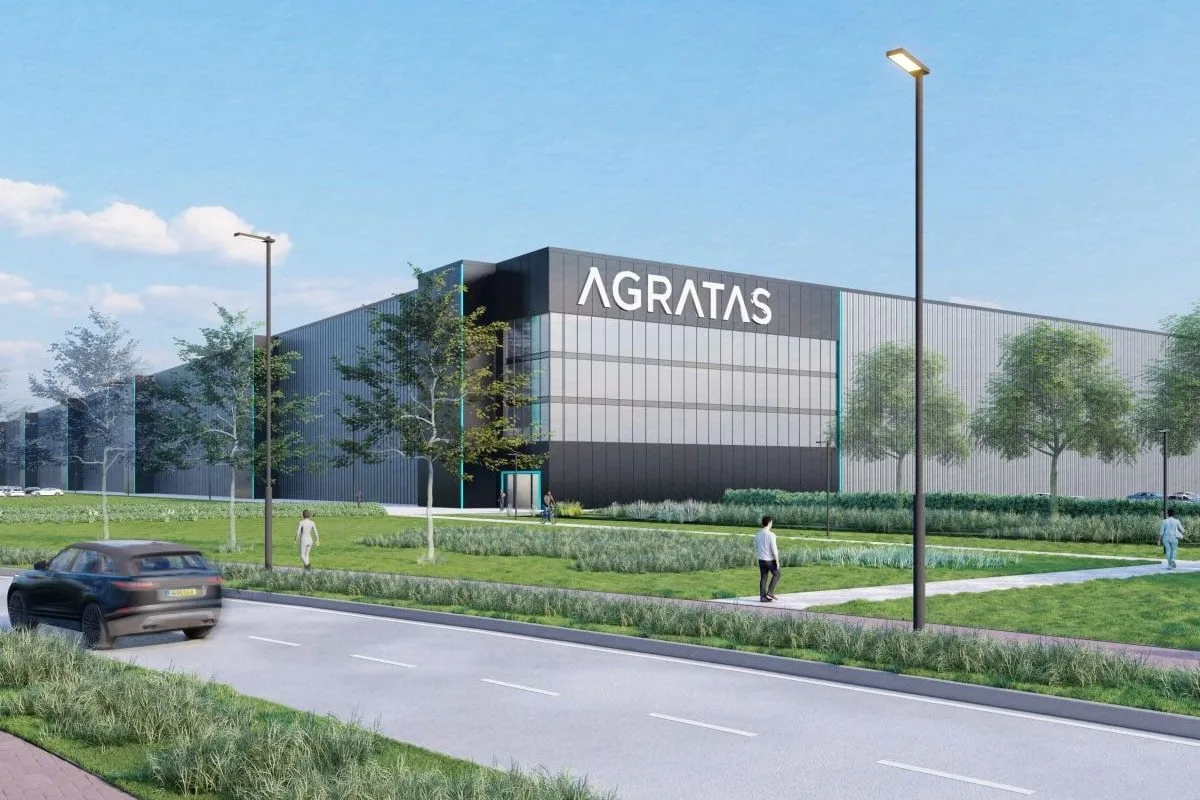
The company’s major manufacturing project is being developed in Sanand, Gujarat. The factory is planned with an annual production capacity of 20 gigawatt-hours (GWh) during its first phase.
A gigawatt-hour is a measurement used to describe how much battery capacity a factory can produce. Large battery plants with high GWh capacity can supply batteries for thousands of electric vehicles every year.
The Sanand facility is expected to begin producing NMC battery cells by early 2027. For these batteries, Agratas is using licensed technology from Japan’s Automotive Energy Supply Corporation while continuing to develop its own LFP technology separately.
Investment in Research and Innovation
Battery development requires continuous research into materials, cell design, electrolytes, manufacturing processes, and quality testing. To support this work, Agratas is investing more than 400 million US dollars in a new research and development center in Bengaluru.
The research facility will focus on improving LFP batteries as well as exploring future battery chemistries. Scientists and engineers will work on increasing battery life, improving charging speed, enhancing safety, and reducing manufacturing costs.
Research centers like this are becoming increasingly important as countries compete to develop next-generation battery technologies for electric mobility and renewable energy storage.
Growing Need for Domestic Battery Technology
The global battery industry has experienced major changes in recent years. Several countries have increased efforts to build local battery manufacturing capabilities as demand for electric vehicles continues to rise.
China has introduced tighter export controls on certain battery manufacturing knowledge and technologies. This has encouraged companies in other countries, including India, to strengthen their own research and production capabilities.
By developing proprietary battery technology, Agratas aims to reduce dependence on imported designs while creating a stronger domestic supply chain for advanced energy storage solutions.
Supporting Electric Vehicles and Clean Energy
LFP batteries are widely used in electric cars, buses, commercial vehicles, and stationary energy storage systems. Their long life cycle and improved safety make them suitable for everyday transportation as well as large renewable energy projects.
As India continues to expand solar and wind power generation, battery storage is becoming increasingly important for balancing electricity supply and demand. Reliable battery systems help store excess renewable energy and deliver it when electricity demand rises.
The growth of companies like Agratas also supports India’s broader push toward electric mobility, cleaner transportation, and energy independence.
Expanding Global Manufacturing Presence
Along with its Indian operations, Agratas is also developing a battery manufacturing facility in Somerset, England. The plant is expected to supply battery cells for Jaguar Land Rover, including future electric vehicles such as the Range Rover Electric SUV.
With manufacturing projects in both India and the United Kingdom, Agratas is building an international presence while investing heavily in battery research, advanced manufacturing, and clean energy technologies. These developments highlight the growing importance of battery innovation as electric vehicles and renewable energy continue to expand worldwide.