



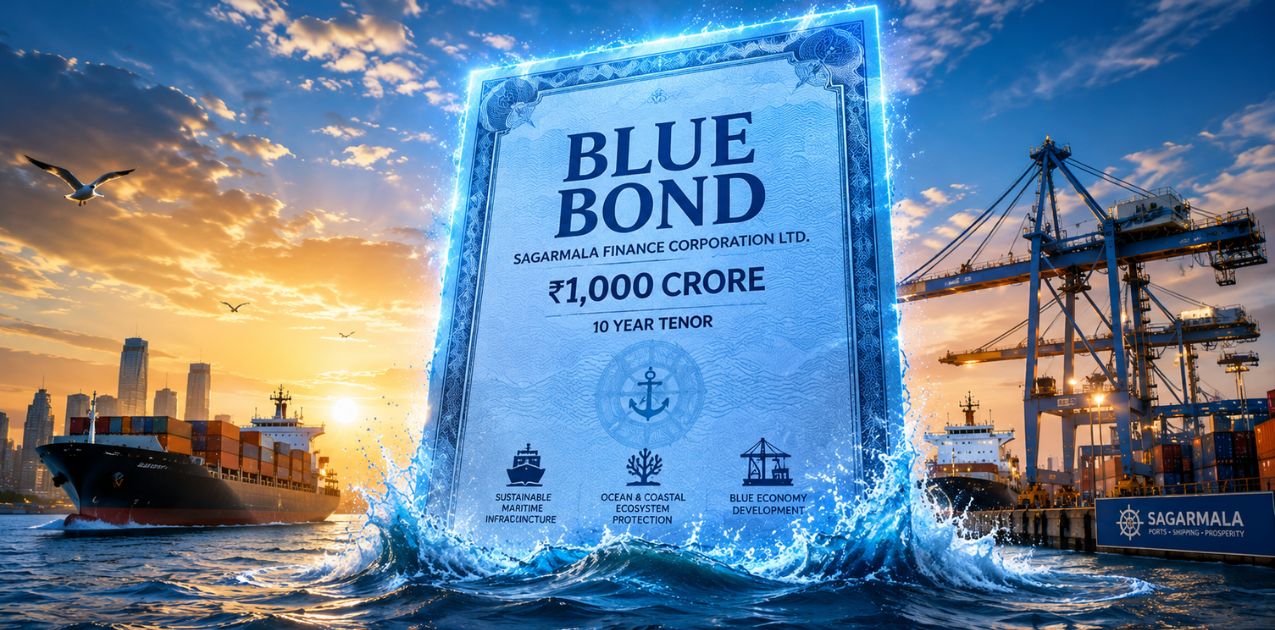
India’s Blue Bond Set for Launch

Blue Bond is set to enter India’s sustainable finance market with the country’s first proposed blue bond issue scheduled for 28 September 2026. The issue is being planned by Sagarmala Finance Corporation, a state-owned financial institution focused on the maritime sector. The proposed issue size is ₹600 crore, with an additional greenshoe option of ₹500 crore, and the bonds will have a 10-year maturity period.
Thank you for reading this post, don't forget to subscribe!The planned issue is expected to create a new financing channel for projects connected with India’s oceans, coastal areas, ports and wider blue economy. It also comes at a time when sustainable finance is expanding in India through instruments such as green bonds, municipal bonds and other labelled debt securities.
What Is a Blue Bond?
A blue bond is a type of debt instrument designed to raise money for projects connected with oceans, marine ecosystems, coastal development and water management. The money raised through such bonds is generally linked to activities that support the sustainable use and protection of water resources.
Blue bonds can help finance projects such as coastal infrastructure, marine conservation, sustainable fisheries, water supply systems, wastewater treatment and other activities related to the blue economy.
The concept is similar to green bonds, but the main focus is different. Green bonds generally support a wider range of environmentally beneficial projects, while blue bonds concentrate on oceans, water resources and marine or coastal activities.
Sagarmala Finance Corporation Plans ₹600 Crore Issue
Sagarmala Finance Corporation is preparing to launch the proposed ₹600 crore blue bond issue on 28 September 2026. The institution has also proposed a greenshoe option of ₹500 crore, which could allow it to raise additional funds depending on investor demand and the final issue structure.
The bonds will have a 10-year tenor, meaning investors would hold the debt instrument until its scheduled maturity unless it is sold or otherwise transferred earlier.
The funds are planned to support lending activities in the maritime sector. They are also expected to be used for greenfield port projects and coastal road networks during the current financial year.
Funds to Support Maritime Infrastructure
The proposed Blue Bond issue is closely connected with India’s maritime development plans. Ports and coastal transport infrastructure require large amounts of long-term financing, especially when new facilities are being developed.
Greenfield projects refer to projects being developed from the beginning on new sites rather than major expansions of existing facilities. Financing such projects through specialised debt instruments can provide another source of capital for the maritime sector.
The proposed use of funds for coastal roads also links the bond to transport infrastructure. Better coastal connectivity can support movement between ports, industrial areas and other economic centres.
SBI Capital Markets Appointed as Arranger
SBI Capital Markets has been appointed as the arranger for the proposed bond issue. An arranger helps structure and coordinate a debt issue and works with the issuer and investors during the process.
The proposed bonds have received an AA+ rating from Icra and Care, according to the information released about the issue. Credit ratings are used by investors as one source of information when assessing the credit quality and repayment capacity associated with debt securities.
The final response from investors will provide an indication of demand for India’s first proposed blue bond issue at the national level.
Vadodara Also Plans a Blue Bond
The development of blue finance in India is not limited to the maritime sector. The Vadodara Municipal Corporation is also seeking approvals for a separate ₹200 crore blue bond issue.
The proposed Vadodara bond would be used for water-related infrastructure. The projects include a pump house, water treatment plant and clear-water reservoir.
This shows how the concept of blue finance can extend beyond oceans and ports. Water supply and treatment are also important parts of sustainable water management, particularly for growing cities.
If approved and implemented, such municipal financing can give urban local bodies another way to raise money for large public infrastructure projects.
Blue Finance and India’s Sustainable Debt Market
India’s sustainable debt market has expanded through different types of labelled financial instruments. Green bonds have been used to finance projects connected with renewable energy, clean transport and other environmental activities.
Municipal bonds have also been used by urban local bodies to raise funds for infrastructure. The proposed Blue Bond issues introduce another specialised category focused on water and maritime-related activities.
The growth of these instruments reflects the increasing use of capital markets for projects with environmental and sustainability objectives.
Importance for the Blue Economy
The blue economy covers economic activities linked to oceans, seas, coastal areas and water resources while aiming to use these resources in a sustainable way. It can include shipping, ports, fisheries, marine tourism, coastal infrastructure, renewable energy and marine conservation.
India has a long coastline and a large maritime sector, making financing for coastal and port-related infrastructure important for economic activity.
The proposed Blue Bond issue by Sagarmala Finance Corporation could provide a dedicated source of funding for some of these activities. By linking investors with maritime projects, the instrument may also increase attention on sustainable development in the coastal and marine sectors.
A New Segment in India’s Bond Market
The proposed issue on 28 September 2026 marks an important development in India’s sustainable finance market. A successful issue could increase awareness of blue bonds among financial institutions, investors and public bodies.
The proposed ₹600 crore issue, along with the ₹500 crore greenshoe option, is focused on long-term financing for maritime lending, greenfield ports and coastal road networks. At the same time, Vadodara’s proposed ₹200 crore issue shows how blue finance can also be connected with urban water infrastructure.
Together, these developments indicate that blue finance is beginning to gain a place alongside other sustainable financing instruments in India.