


Brazil Social Media Rules Under 16 Tighten Online Safety

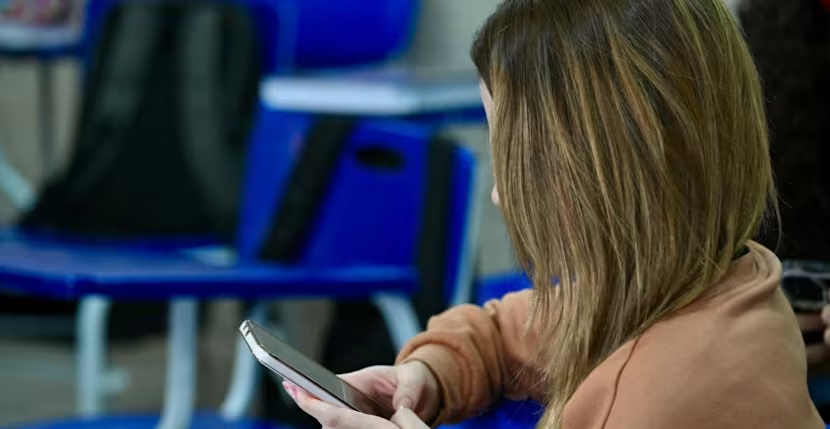
Brazil Social Media Rules Under 16 have come into force as the country introduces strict measures to protect children online. The new law aims to control how minors access social media and other digital platforms, focusing on safety and responsible usage.
Thank you for reading this post, don't forget to subscribe!Why the Law Was Introduced
The law was approved in 2025 after a major scandal involving alleged exploitation of minors on Instagram. This incident raised serious concerns about online safety for young users.
With a population of over 212 million and high internet use, Brazil has seen growing worries about harmful content, cyber risks, and the mental health effects of social media on teenagers.

Key Rules for Users Under 16
Under the new regulation, children below 16 must connect their social media accounts to a parent or legal guardian. This ensures better supervision and safer usage.
Platforms are now required to introduce strong age verification systems. Simple self-declaration of age is no longer allowed. The goal is to block minors from accessing harmful content such as violence or explicit material.
New Responsibilities for Tech Companies
Technology companies must follow strict compliance rules. They are required to use advanced methods like identity document checks or biometric verification to confirm a user’s age.
Platforms must also quickly remove any content related to abuse or exploitation and report such cases to authorities. If companies fail to follow the rules, they may face heavy penalties, including fines up to 50 million reais, account restrictions, or even complete bans in serious situations.

Wider Impact of Brazil Social Media Rules Under 16
The law is being enforced by the National Data Protection Authority. It also bans targeted advertising aimed at children and places limits on certain video game features like loot boxes.
Unlike some countries that focus only on social media, Brazil’s law covers the broader internet. This shows a more complete approach to protecting children in the digital world. Countries like Australia have taken similar steps, but Brazil’s model highlights shared responsibility between parents and platforms.