


Delhi Diwali Pollution Hits Five-Year High

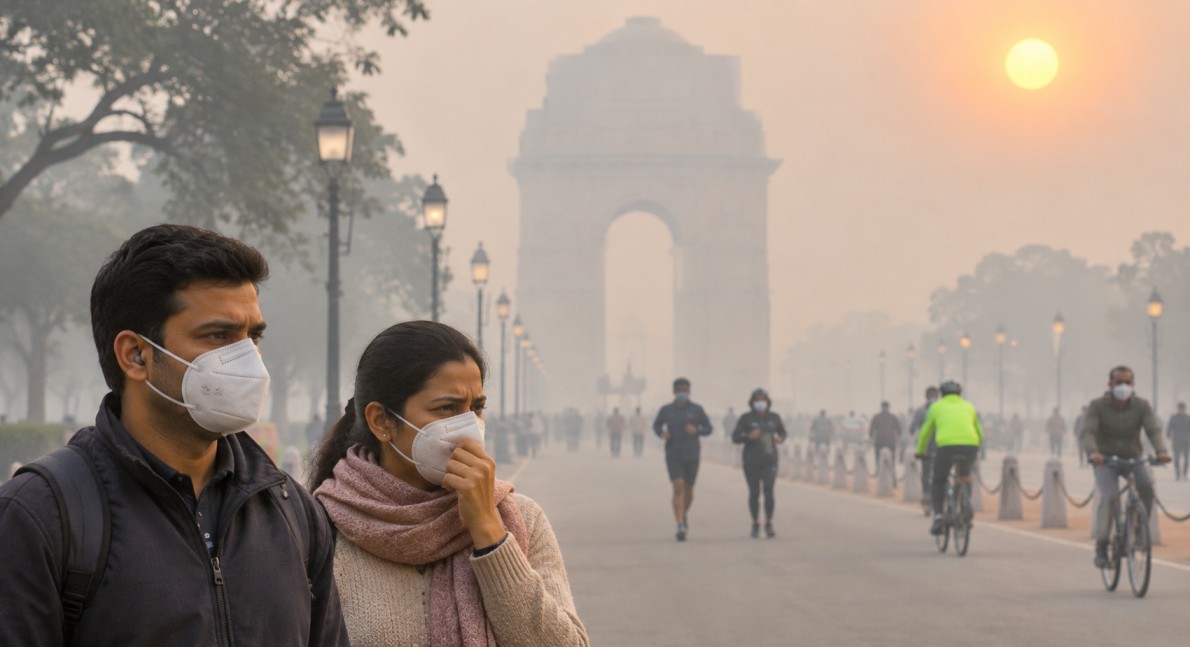
Delhi Diwali Pollution reached its highest level in five years on 8 November 2026, with the city recording an average Air Quality Index (AQI) of 376. The situation remained serious on the morning after the festival, when the overall AQI stood at 371 at 10 am on Monday, 9 November. A thick layer of smog and fog covered several parts of the national capital, reducing visibility and worsening air quality.
The figures show how difficult it remains for Delhi to control air pollution during the winter season. Firecracker smoke, vehicle emissions, stubble burning in neighbouring states and unfavourable weather conditions have all contributed to the problem.

Delhi Records Its Most Polluted Diwali Since 2021
According to data from the Central Pollution Control Board (CPCB), Delhi’s average AQI on Diwali was 376. This was the highest reading recorded on the festival day since 2021, when the AQI reached 382.
The post-Diwali pollution level was also the highest since 2021. The overall AQI stood at 371 at 10 am on 9 November, compared with 345 on the day after Diwali in 2025.
The previous Diwali-day AQI readings were 345 in 2025, 328 in 2024, 218 in 2023 and 312 in 2022. These figures show that pollution levels can change considerably from year to year, depending on weather conditions and other sources of emissions.
Several Monitoring Stations Record Severe Pollution
Air quality remained unhealthy across many parts of Delhi on Monday morning. Out of the 51 monitoring stations that reported data, 14 recorded AQI levels in the severe category. Four stations were in the poor category, while the remaining 33 reported very poor air quality.
Delhi Technological University (DTU) recorded the highest reading, with an AQI of 439. Other areas experiencing severe pollution included Bawana, Burari, Jahangirpuri, Sonia Vihar, Punjabi Bagh, Okhla and Rohini.
These readings indicate that pollution was not limited to one part of the city. Several residential and commercial areas continued to experience poor air conditions after the festival.
Thick Smog and Fog Reduce Visibility
Delhi woke up to a mixture of smog and fog on Monday. Visibility dropped sharply at the city’s two major weather stations, Safdarjung and Palam.
At Safdarjung, visibility fell to just 50 metres at 6:30 am, compared with 700 metres a day earlier. At Palam, visibility was recorded at 400 metres, against 800 metres on Sunday.
Conditions improved gradually during the morning. By 9 am, visibility had increased to 500 metres at Safdarjung and 900 metres at Palam.
According to India Meteorological Department (IMD) officials, the conditions were caused by a combination of fog and smog. Calm winds and dry weather also played a role. When wind speeds remain low, pollutants stay closer to the ground instead of spreading away from the city.
PM2.5 Levels Raise Health Concerns
International air quality monitoring platform IQAir placed Delhi’s air quality in the very unhealthy category on Monday morning. It recorded an AQI of 245 at 8:30 am, with PM2.5 concentration at 170 micrograms per cubic metre.
The platform reported that this PM2.5 level was around 34 times the World Health Organization’s annual guideline value. PM10 concentration was recorded at 126 micrograms per cubic metre.
PM2.5 refers to very fine particles that can enter deep into the lungs and may reach the bloodstream. Long exposure to these particles can increase the risk of breathing problems and other health complications. Children, older people and individuals with existing respiratory conditions can be particularly vulnerable.
Different air quality platforms reported different AQI figures during the period. This can happen because monitoring networks, calculation methods and reporting times vary. Therefore, readings from different platforms should not be treated as directly comparable.
Firecracker Restrictions Face Enforcement Challenges
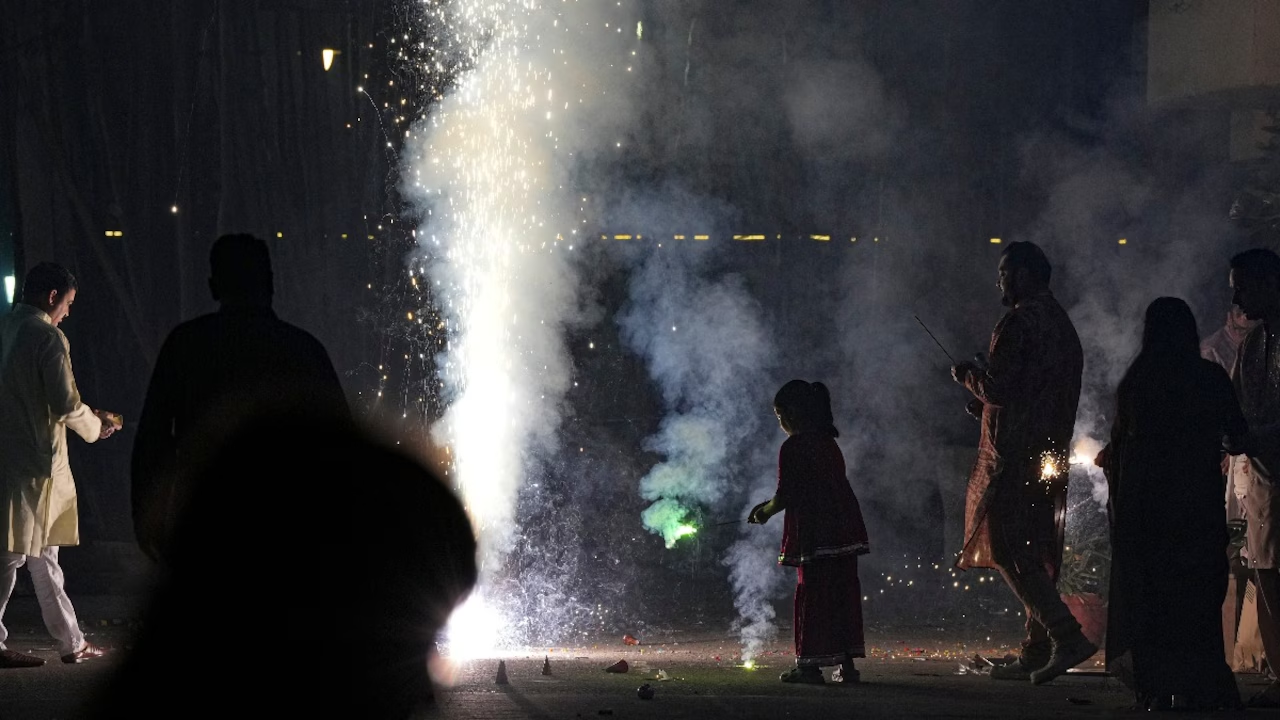
Despite restrictions, fireworks were reported in several parts of Delhi beyond the permitted hours. Areas including Pitampura, Burari, Mayur Vihar and parts of Lutyens’ Delhi witnessed firecracker use on Sunday evening.
An order issued by the District Magistrate (East) permitted green firecrackers only on 7 and 8 November. The allowed time slots were 6 am to 7 am and 8 pm to 10 pm.
The order also prohibited firecracker use within 300 metres of hospitals, nursing homes, health centres, old-age homes, educational institutions and other notified silence zones.
Only green firecrackers certified by the Council of Scientific and Industrial Research–National Environmental Engineering Research Institute (CSIR-NEERI) were permitted for sale at designated locations. The district administration and Delhi Police had also announced joint patrols and enforcement teams to prevent the sale and use of prohibited firecrackers.
However, reports of fireworks outside the permitted time limits raised questions about how effectively these restrictions were being enforced.
Stubble Burning and Vehicle Emissions Add to the Problem
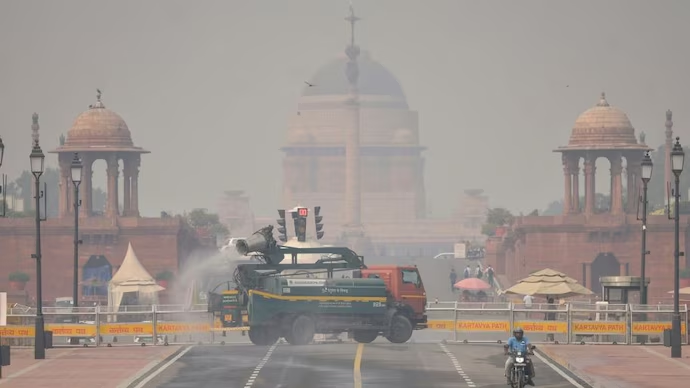
Firecrackers are only one part of Delhi’s wider air pollution problem. Vehicle emissions, industrial activities, construction dust and smoke from agricultural residue burning in neighbouring states also contribute to poor air quality.
November is an important period for the stubble-burning season in parts of northern India. During this time, smoke from agricultural fires can travel towards Delhi and nearby regions, depending on wind direction and weather conditions.
The Air Quality Early Warning System (EWS) warned that Delhi’s air quality was likely to remain in the severe category over the following few days. Low wind speeds and a ventilation index below 6,000 square metres per second were identified as conditions that could prevent pollutants from dispersing effectively.
Understanding Delhi’s AQI Categories
The CPCB uses the Air Quality Index to communicate the level of air pollution and its possible health effects.
| AQI Range | Category |
|---|---|
| 0-50 | Good |
| 51-00 | Satisfactory |
| 101-200 | Moderate |
| 201-300 | Poor |
| 301-400 | Very Poor |
| 401-500 | Severe |
An AQI between 301 and 400 indicates very poor air quality, while readings above 400 fall into the severe category. Delhi’s Diwali-day average of 376 therefore remained in the very poor category, close to the severe threshold.
The latest pollution episode has again brought attention to the need for better enforcement of firecracker restrictions, cleaner transport, control of construction dust and coordinated action against agricultural and industrial emissions across northern India.