



Garbhanga Ant Discovery in Guwahati Forest

Garbhanga Ant Discovery has brought fresh attention to the rich wildlife living close to Guwahati city. A new species of ant has been discovered in the Garbhanga Reserve Forest, a green area located on the outskirts of Guwahati, Assam. This exciting find shows that even forests near growing cities can still hide rare and unknown creatures.
Thank you for reading this post, don't forget to subscribe!The newly discovered species has been named Polyrhachis garbhangaensis. The name comes from Garbhanga Reserve Forest, the place where it was found. This ant belongs to the rare mucronata group of spiny ants. The formal description of the species was published on January 30 in an international science journal called Asian Myrmecology.
The discovery was led by Ankita Sharma from the Animal Behaviour and Cognition Programme at the National Institute of Advanced Studies in Bengaluru. She worked under the supervision of Anindya Sinha. Their work focused on studying insects and how they live and interact in forest areas that are close to cities.
Garbhanga Ant Discovery and a Rare Species
The new ant is part of a very rare group. In fact, it is only the third species from the mucronata group ever recorded in India. The genus Polyrhachis, also known as spiny ants, is mostly found in Asia and Australia. India has more than 70 known species of Polyrhachis ants. Out of these, 21 species have been recorded in Assam alone. This shows that Assam is one of the most important regions in India for ant diversity.
The Garbhanga Ant Discovery adds to the growing list of species found in the Northeast. The region is already known for its rich forests, rivers, hills, and wildlife. Many plants and animals found here are not seen in other parts of the country.
Garbhanga Ant Discovery in a Green Corridor
The ants were first collected in August 2023 during field surveys in Garbhanga Reserve Forest. This forest covers about 117 square kilometres. It acts as a green corridor connecting Guwahati city to the nearby Rani Reserve Forest. A green corridor is important because it allows animals and insects to move freely between forest areas.
Garbhanga Reserve Forest lies close to a fast-growing urban area. In recent years, Guwahati has expanded rapidly. Buildings, roads, and other developments have increased near forest boundaries. Because of this, some people believe that forests near cities are damaged and less important. However, this Garbhanga Ant Discovery proves that even such forests can support rare and special species.
Garbhanga Ant Discovery and Urban Impact Study
The researchers were studying how rapid city growth affects ant and spider communities. Ants are very sensitive to changes in their surroundings. When forests are disturbed, ant populations can change quickly. This makes ants important indicators of ecosystem health.
During their research, the team carefully examined the forest floor, tree trunks, and vegetation. It was during this survey that they found the unusual ant species. After detailed study and comparison with other known species, they confirmed it was new to science. The Garbhanga Ant Discovery clearly shows how much there is still to learn about forests near cities.
Garbhanga Ant Discovery and Unique Features
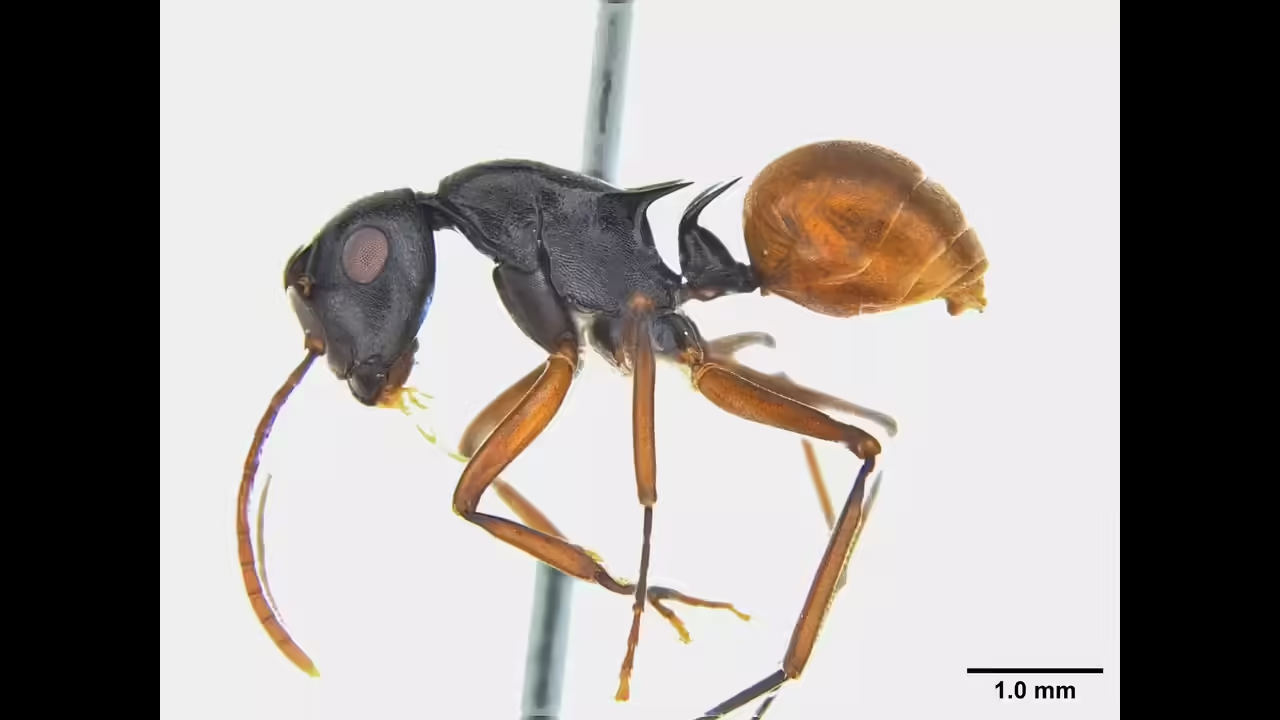
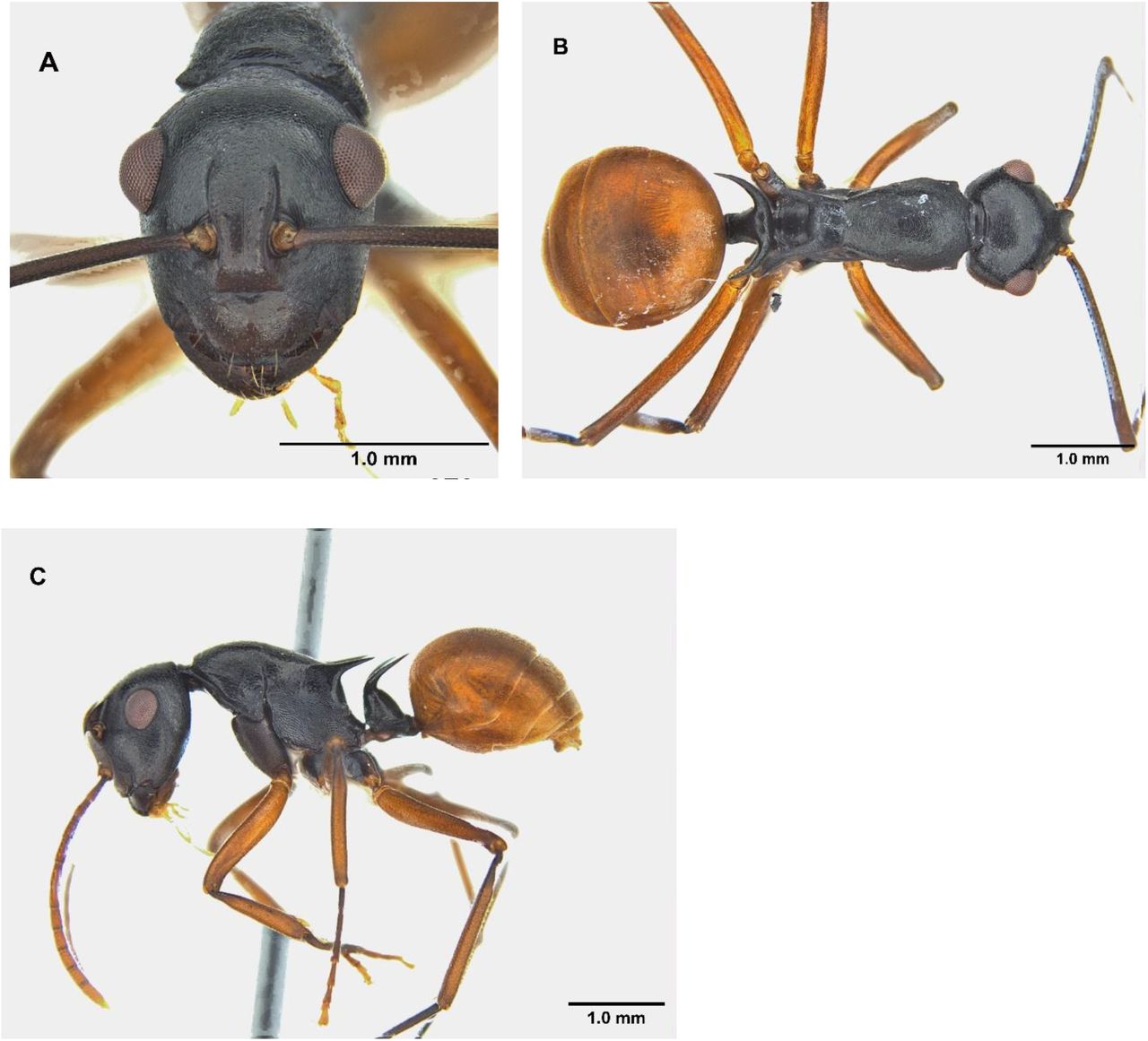
The Assamese spiny ant measures about 5.6 millimetres in length. Though small, it has a very striking appearance. Unlike many other Polyrhachis ants that are black, this new species has a bright yellow-orange abdomen. This colourful body makes it stand out clearly.
Another special feature is its curved body spines. These spines are believed to protect the ant from predators. Spiny ants are known for these sharp structures, which can make it difficult for enemies to attack them.
The detailed structure of the ant’s body, including its head shape, thorax, and spines, helped scientists confirm that it belongs to the rare mucronata group. The Garbhanga Ant Discovery highlights how even tiny insects can have unique and beautiful features.
Garbhanga Ant Discovery and Forest Ecosystem
During the same field study, researchers also noticed an ant-mimicking spider living in the area. Ant-mimicking spiders are spiders that look and move like ants. This helps them avoid predators or hunt more easily.
The presence of both the new ant species and the ant-mimicking spider suggests that mimicry and predator-prey relationships play an important role in this forest ecosystem. Nature often creates such complex interactions, where one species adapts to resemble another for survival.
The Garbhanga Ant Discovery shows that even small insects can reveal big stories about how ecosystems function. Every species, no matter how tiny, has a role in maintaining balance in the environment.
Garbhanga Ant Discovery and Assam’s Biodiversity
Assam is already famous for its wildlife, including one-horned rhinoceroses, elephants, and many bird species. However, insects like ants are often overlooked. Discoveries like this remind us that small creatures are just as important as large animals.
The fact that Assam has 21 recorded species of Polyrhachis ants highlights the region’s biological richness. The forests of Northeast India continue to surprise scientists with new discoveries.
Garbhanga Reserve Forest, in particular, has now gained attention as a valuable natural area. It not only provides greenery and fresh air for nearby residents but also protects unique forms of life.
Garbhanga Ant Discovery and Urban Forest Protection
The Garbhanga Ant Discovery sends a strong message about the value of urban-adjacent forests. These green spaces may appear ordinary, but they can hide rare and unknown species.
As cities expand, forests near urban areas often face pressure from construction, pollution, and human activities. Protecting these forests is important for maintaining biodiversity and ecological balance.
Ants play many useful roles in nature. They help in soil aeration, seed dispersal, and decomposition of organic matter. A healthy ant population usually means a healthy ecosystem.
The Garbhanga Ant Discovery shows that scientific exploration is still uncovering new life forms, even in areas close to human settlements. Garbhanga Reserve Forest is not just a patch of greenery near Guwahati. It is home to living organisms that are still being discovered and understood.