



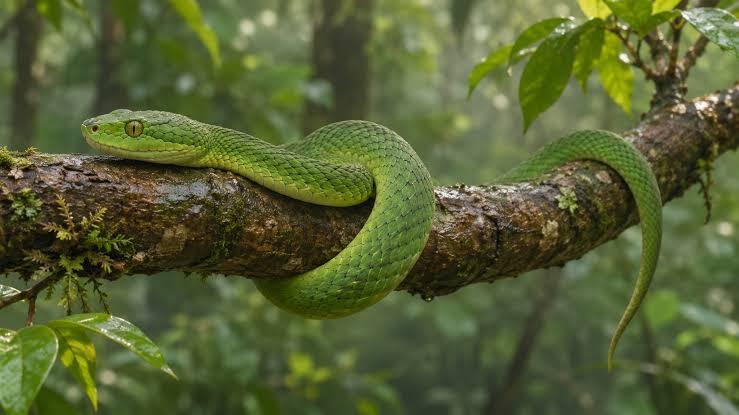
Pit Viper Antivenom Developed in Northeast India

Pit Viper Antivenom has been developed by researchers in Northeast India to target the venom of two medically important pit viper species found in the region. The research was announced on November 25, 2026, by a team led by Professor Ashis K. Mukherjee, Director of the Institute of Advanced Study in Science and Technology (IASST), Guwahati. IASST is an autonomous institute under the Department of Science and Technology. The development is important because existing antivenom treatments in India have limited effectiveness against several snake species found in the Northeast.
New Antivenom Targets Two Pit Viper Species
The newly developed antivenom is designed to neutralise venom from Pope’s pit viper (Trimeresurus popeiorum) and the red-tailed bamboo pit viper (Trimeresurus erythrurus). Both species are found in Northeast India and can cause serious health problems following a bite.

The research team developed an equine F(ab)2 bivalent antivenom. It is called bivalent because it is designed to work against the venom of two different snake species. The venom samples used in the research were collected from Mizoram and Meghalaya.
According to the researchers, the new antivenom showed better venom-neutralising activity than the existing Indian polyvalent antivenom during laboratory and preclinical investigations. It also showed reduced disruption of blood clotting and lower local and organ tissue damage in the studies.
These findings suggest that the new treatment could help address an important gap in snakebite care in the Northeast. However, further studies are needed to establish its safety and effectiveness in human patients.
Research Published in an International Journal
The findings were published in the International Journal of Biological Macromolecules on September 22, 2026. The study examined the ability of the newly developed antivenom to neutralise venom and reduce the harmful effects caused by pit viper bites.
The research involved several institutions and organisations. These included Premium Serums and Vaccines Pvt. Ltd., Amrita Research Centre, Mizoram University and Aaranyak, along with IASST.
The collaboration brought together researchers and organisations working in scientific research, venom studies and antivenom development. Such cooperation is important for studying regional snake species and developing treatments suited to local medical needs.
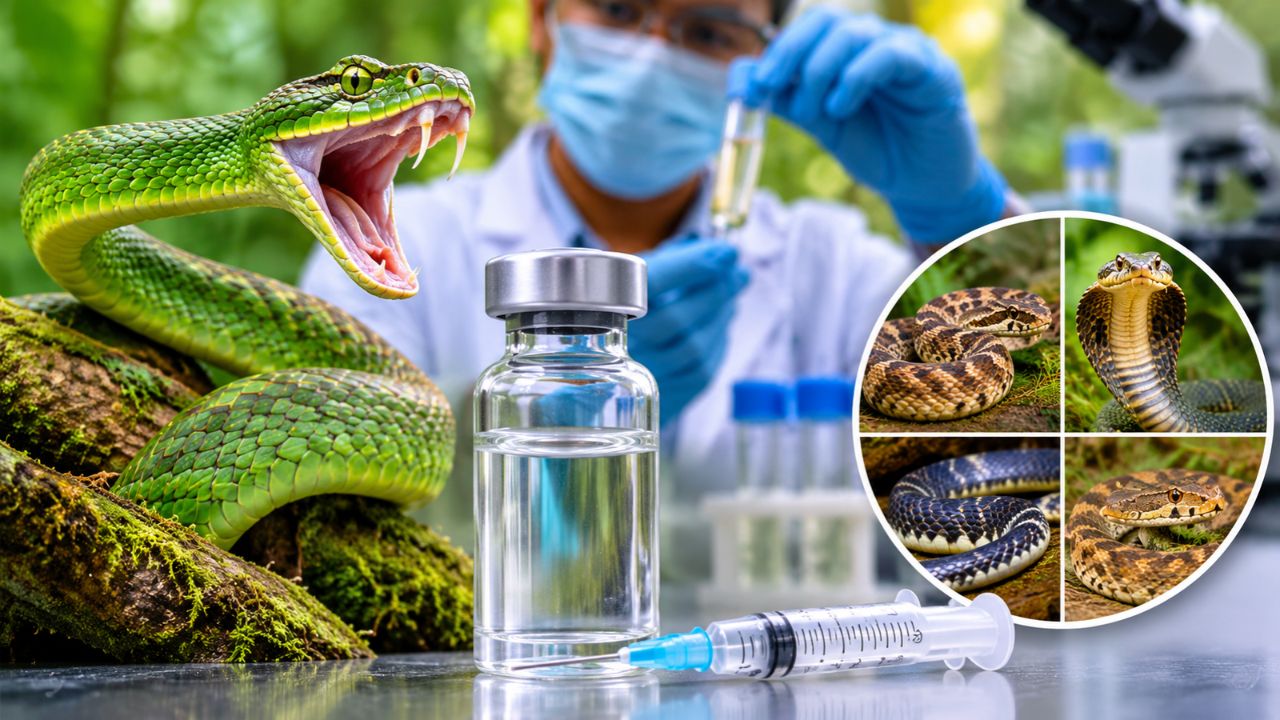
Why Existing Indian Antivenom Has Limitations
The commonly used Indian polyvalent antivenom mainly targets four major snake groups known as the Big Four. These are Russell’s viper, spectacled cobra, common krait and saw-scaled viper.
Although this antivenom is widely used in India, it has limited effectiveness against several other medically significant snakes found in Northeast India, including pit vipers. The region has a variety of snake species, and their venom composition can differ from that of snakes commonly targeted by existing treatments.
This difference makes region-specific research important. Antivenom developed for one snake species may not provide reliable protection against another species, even when the snakes are closely related. Differences in venom composition can affect how well antibodies recognise and neutralise venom toxins.
The new Pit Viper Antivenom aims to address this regional treatment gap by focusing on two pit viper species found in Northeast India.
How the New Antivenom Works
The antivenom uses equine F(ab)2 antibody fragments. These fragments are produced from antibodies obtained from horses and processed to retain the parts that recognise and bind to venom toxins.
The F(ab)2 fragments contain two antigen-binding sections, allowing them to attach to specific venom components. The processing method removes the Fc region of the original antibody while retaining the toxin-binding parts.
The treatment is designed to help neutralise harmful venom components and reduce their effects on the human body. In pit viper bites, venom can interfere with blood clotting and damage tissues around the bite area. In more serious cases, it may also affect internal organs.
Further Testing Needed Before Patient Use
Despite the encouraging laboratory findings, the newly developed antivenom is not yet ready for routine medical use. Professor Ashis K. Mukherjee stated that it requires further clinical evaluation and regulatory approval.
Clinical studies will be necessary to understand how safely and effectively the treatment works in human patients. Regulatory evaluation will also be required before it can be made available for wider medical use.
The research represents an important step towards developing antivenom treatments suited to the snake species found in Northeast India. It also highlights the role of regional scientific institutions in addressing local public health challenges through research and innovation.