


Flood Relief Helicopter Arunachal Pradesh Acts Fast

Flood Relief Helicopter services became a lifeline for many people in Arunachal Pradesh after heavy rains and floods disrupted normal life in early July 2026. The state government quickly launched emergency helicopter operations on 4 July 2026 to send food and medical help to remote villages that were cut off due to damaged roads and landslides.
Thank you for reading this post, don't forget to subscribe!This urgent action helped people living in difficult terrain where reaching by road became almost impossible. The use of helicopters shows how disaster response is changing in India with faster and more efficient methods.
Emergency Air Support in Flood-Hit Areas
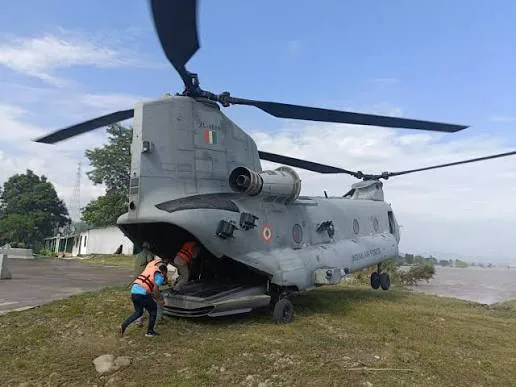
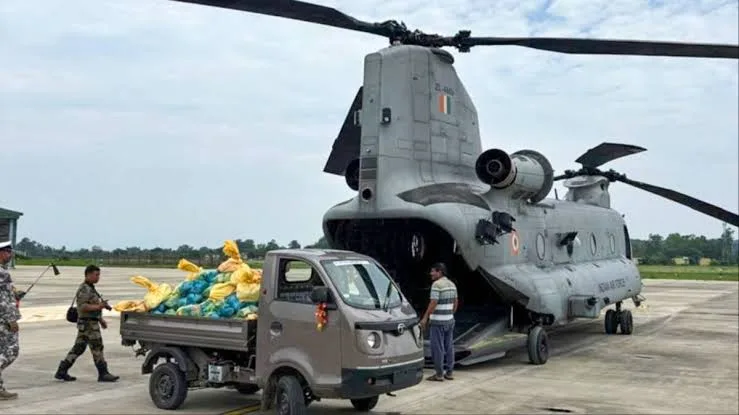
The helicopter operation started early in the morning from Naharlagun and successfully reached Koyu helipad in about an hour. The mission focused on delivering essential supplies and helping those in need.
A large quantity of food, especially rice supplied under the public distribution system, was transported to affected villages. Around 11.5 metric tonnes of rice were delivered to support families who were struggling due to blocked supply routes.
At the same time, the helicopter was also used for medical evacuation. Four patients who needed urgent care were airlifted from the affected area to a safer location where they could receive proper treatment.
This dual use of helicopters for both supply delivery and rescue shows how important air support has become during natural disasters.

Villages Cut Off Due to Flood Relief Helicopter
Several villages in Lower Siang district were badly affected as heavy rains triggered flash floods and landslides. Roads were damaged, and bridges collapsed, making it impossible for vehicles to reach these areas.
Villages like Rotte, Rame, Loglu, Lipin, Mane, Tene, Sipu, Kakki, Kadu, Rina, Sido, and Korang faced serious connectivity issues. People in these areas had limited access to food, clean water, and healthcare.
Such situations are common in hilly regions where infrastructure can be easily damaged by extreme weather. This is why quick response systems like helicopter operations are becoming more important.
Coordination Between Departments
The success of the relief mission was possible because of strong coordination between different government departments. Teams from civil aviation, district administration, disaster management, and food supply worked together to manage the operation.
Officials in places like Itanagar, Pasighat, Likabali, and nearby regions ensured that supplies were properly loaded, transported, and distributed. Ground teams also played a key role in receiving the materials and delivering them to people in need.
This kind of teamwork is essential during emergencies, especially when time is critical and resources must be used efficiently.
Changing Weather and Ongoing Risk
Even as relief work continued, weather conditions remained uncertain. The India Meteorological Department issued a yellow alert for several parts of Arunachal Pradesh, warning about heavy rain, thunderstorms, and lightning from 6 July 2026.
Such alerts are important because they help authorities stay prepared for further risks. In many cases, continuous rainfall can worsen flood situations and delay recovery efforts.
In recent years, extreme weather events have become more frequent due to climate change. States like Arunachal Pradesh, which have complex terrain and heavy rainfall patterns, are especially vulnerable.
Importance of Air-Based Disaster Response
Helicopter-based relief operations are not new in India, but their importance is growing. In regions where roads can be easily blocked by landslides or floods, air transport becomes the fastest and sometimes the only option.
The use of medium-lift helicopters allows large quantities of supplies to be delivered quickly. It also helps in rescuing people who are trapped or injured.
These operations require planning, skilled pilots, and proper coordination, but they can save lives when used effectively.
Technology and Disaster Management
Modern disaster response is also supported by better weather forecasting, satellite monitoring, and communication systems. Authorities can now track weather patterns more accurately and prepare in advance.
Drones and digital mapping tools are also being used in some regions to assess damage and plan relief work. These technologies are helping governments respond faster and more efficiently.
At the same time, there is a growing focus on building stronger infrastructure that can withstand extreme weather. Efforts are being made to improve roads, bridges, and drainage systems in vulnerable areas.
Support for Local Communities
Floods not only damage infrastructure but also affect the daily lives of people. Farmers lose crops, families face shortages of food and water, and access to schools and healthcare is disrupted.
Relief efforts like these helicopter operations provide immediate support, but long-term recovery is also important. Governments and local communities often work together to rebuild and prepare for future challenges.
Awareness programs and early warning systems are also being introduced to help people respond better during emergencies.
A Quick Response That Made a Difference
The emergency helicopter operation in Arunachal Pradesh highlights how quick action can reduce the impact of natural disasters. By delivering food and evacuating patients on time, the authorities were able to support affected communities effectively.
As weather patterns continue to change, such rapid response systems will become even more important. Strengthening disaster management and improving coordination will help protect lives and ensure better recovery in the future.