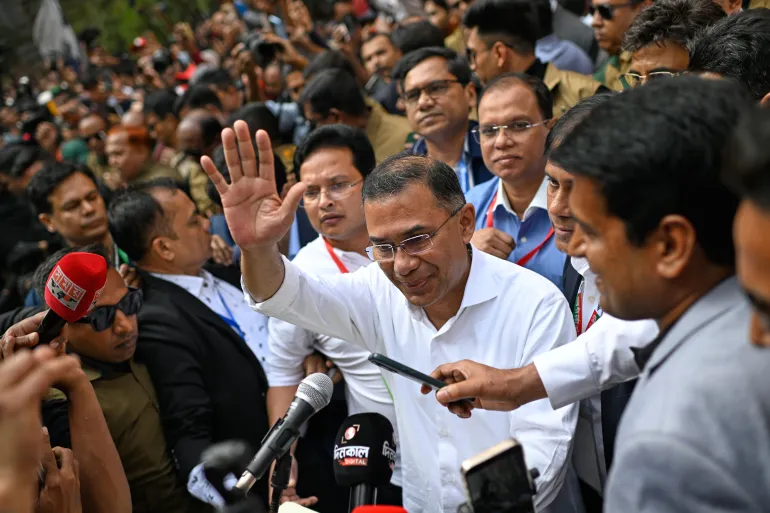
Tarique Rahman Election Win Signals Major Political Shift in Bangladesh

The Tarique Rahman Election Win has emerged as one of the most significant political developments in South Asia in recent years. The Bangladesh Nationalist Party has claimed a sweeping victory in Bangladesh’s general elections, paving the way for Tarique Rahman to take charge as the country’s next prime minister. This result comes after the dramatic ouster of Sheikh Hasina, ending a long chapter in Bangladesh’s political history and opening a new phase marked by uncertainty, hope, and recalibration of foreign relations.
Thank you for reading this post, don't forget to subscribe!The election outcome is not only important for Bangladesh’s domestic politics but also for regional dynamics, especially for India, which shares deep historical, cultural, and strategic ties with its eastern neighbour.
India’s Early Reaction to the Election Outcome
Following the announcement of the results, Indian Prime Minister Narendra Modi congratulated Tarique Rahman for leading the BNP to victory. His message highlighted India’s support for democratic processes and its willingness to work closely with the new leadership in Dhaka. The response was widely seen as a signal that New Delhi is prepared to move forward pragmatically, despite the political turbulence surrounding Sheikh Hasina’s removal.
India and Bangladesh share a 4,096-kilometre-long border, the longest India has with any country. Their relationship covers trade, border management, river water sharing, and security cooperation, particularly in India’s northeast. Because of this interdependence, the Tarique Rahman Election Win has immediate implications for India’s foreign policy planning.
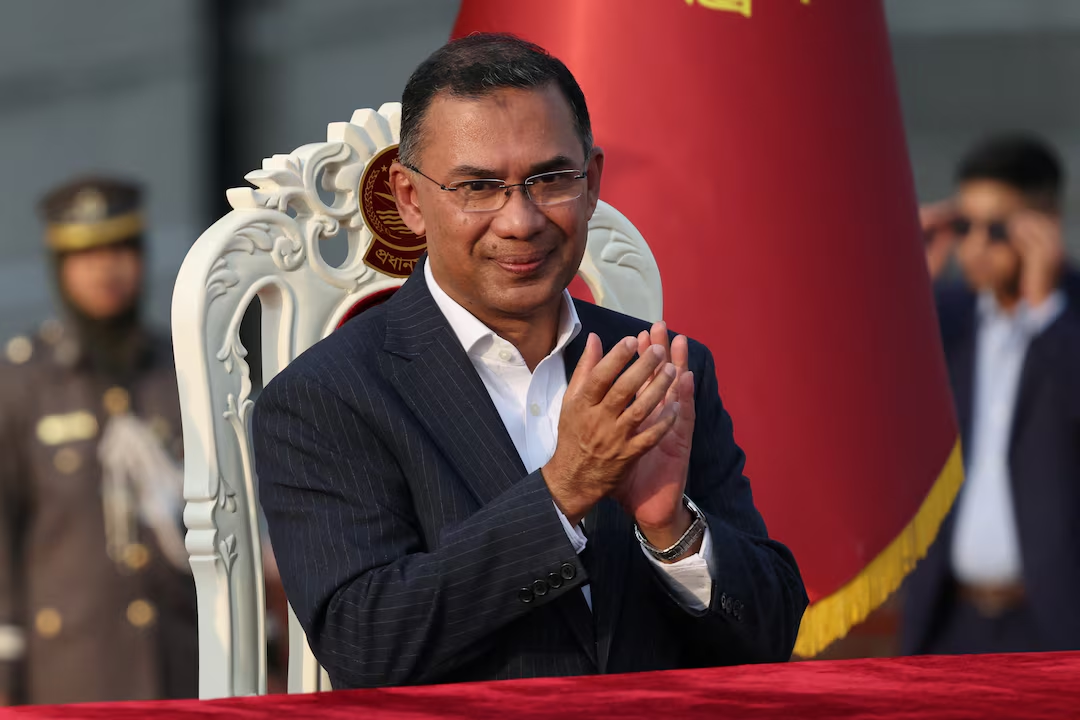
BNP’s Past Relationship with India
To understand the present moment, it is important to look at the BNP’s historical stance towards India. Under the leadership of Khaleda Zia, the BNP governed Bangladesh during two periods, from 1991 to 1996 and from 2001 to 2006. During these years, relations with India were often strained.
India repeatedly raised concerns about cross-border insurgency, accusing Dhaka of allowing groups such as ULFA and NDFB to operate from Bangladeshi territory. Disputes over water sharing, transit rights, and border security also created tension. The BNP’s political alliance with Jamaat-e-Islami further complicated ties, as India viewed the partnership with suspicion.
This background explains why many observers are closely watching how Tarique Rahman reshapes BNP’s approach to India after his election win.
Tarique Rahman’s Policy Signals and Promises
In recent years, Tarique Rahman has tried to project a more moderate and forward-looking image. His election manifesto stresses national sovereignty but also highlights the need for mutual respect and balanced foreign relations. After the Tarique Rahman Election Win, BNP leaders have emphasised that Bangladesh will follow a policy of zero tolerance towards terrorism and will not allow its soil to be used by extremist groups.
Rahman has also spoken about protecting religious minorities and strengthening democratic institutions. On bilateral issues with India, the BNP has indicated openness to cooperation in areas such as trade, education, healthcare, and security. At the same time, the party has promised to raise long-standing concerns like border killings and fair sharing of transboundary rivers, including the Teesta River and the Padma River.
Regional Dynamics and the China–Pakistan Angle
Another key aspect of the new political phase is Bangladesh’s relationship with other regional powers. Analysts expect a BNP-led government to continue strong engagement with China, which has invested heavily in Bangladesh’s infrastructure, ports, and energy projects. Maintaining these ties will be important for Bangladesh’s economic growth.
Relations with Pakistan are also likely to remain cordial, though sensitive historical issues from the 1971 Liberation War still shape public opinion. For India, this broader regional balancing act means it will need to carefully manage its engagement with a BNP government that seeks to diversify its foreign partnerships.
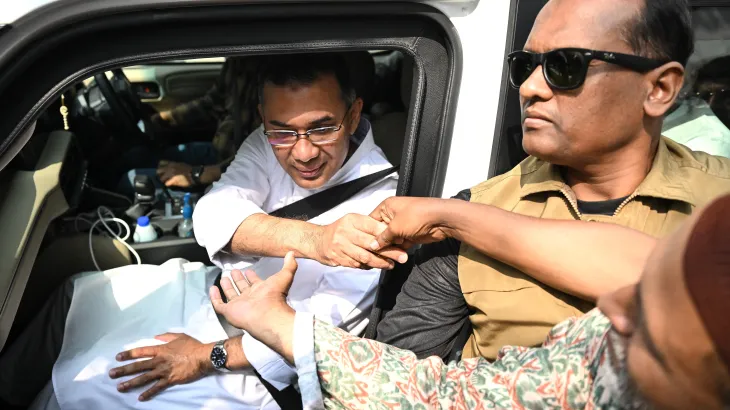
The Sheikh Hasina Factor and Public Sentiment
One of the most sensitive issues following the election is the presence of Sheikh Hasina in India. BNP leaders have suggested that this could influence public sentiment in Bangladesh. However, any discussion of extradition is legally complex and diplomatically delicate. For now, India appears focused on maintaining stability and avoiding actions that could inflame tensions.
As Bangladesh moves forward under new leadership, the Tarique Rahman Election Win represents both an opportunity and a challenge. For India, the task will be to build trust with the new government while safeguarding its strategic interests. For Bangladesh, the coming months will test whether the promises of reform, stability, and balanced foreign relations can be translated into reality.