


Indian Navy LRMR Marks 50 Years

Indian Navy LRMR operations completed 50 years on 18 November 2026, marking an important milestone in India’s maritime security history. The occasion also marked the commissioning anniversary of Indian Naval Air Squadron 312 (INAS 312), popularly known as the ‘Albatross’.
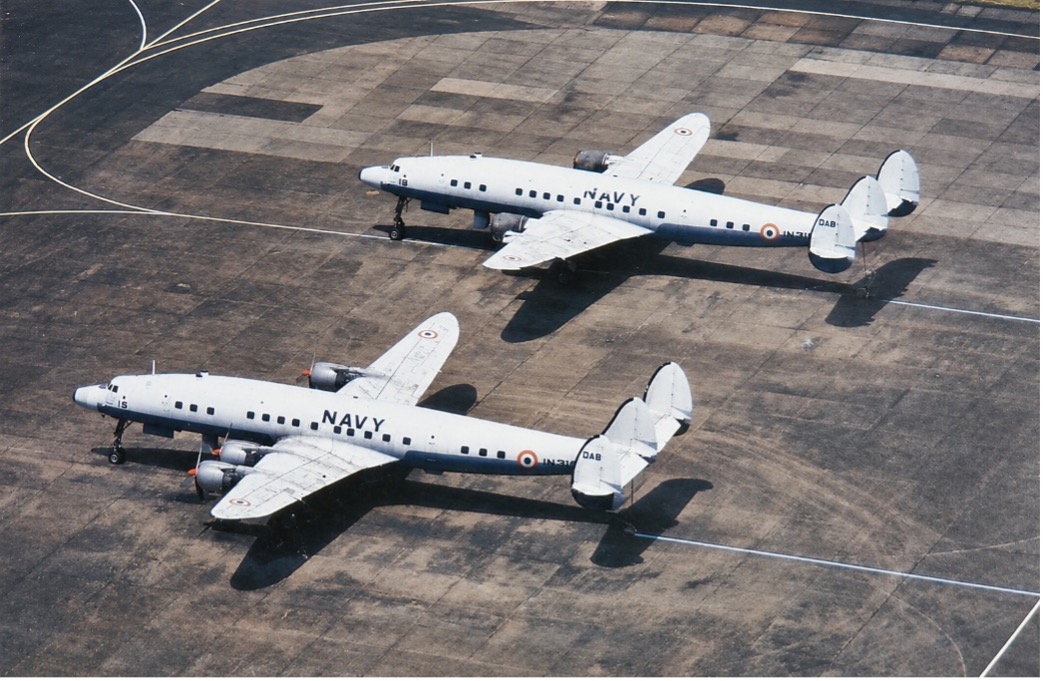
INAS 312 was commissioned on 18 November 1976 at INS Hansa in Goa. It began its journey with five Lockheed Super Constellation aircraft transferred from the Indian Air Force. Over the years, the squadron and India’s long-range maritime reconnaissance fleet have developed into important parts of the Navy’s surveillance and security network.

How India’s Maritime Reconnaissance Began
Long-Range Maritime Reconnaissance (LRMR) allows the Indian Navy to monitor large areas of the sea, identify possible threats and collect information about activities in important maritime regions.
When INAS 312 was established in 1976, its Super Constellation aircraft provided the Navy with long-range surveillance capabilities. These aircraft helped monitor India’s surrounding waters and supported maritime operations.
The Navy later introduced more advanced aircraft to improve its ability to operate over long distances and gather information. This development reflected the growing importance of the Indian Ocean region for trade, security and international movement.
Evolution of India’s Maritime Patrol Aircraft
India’s long-range maritime reconnaissance fleet has changed significantly since the 1970s. After the Super Constellation aircraft, the Navy introduced the Ilyushin Il-38 in 1977.
The next major addition was the Tupolev Tu-142M, which entered service in 1988. These aircraft provided improved capabilities for long-range maritime patrol and surveillance.
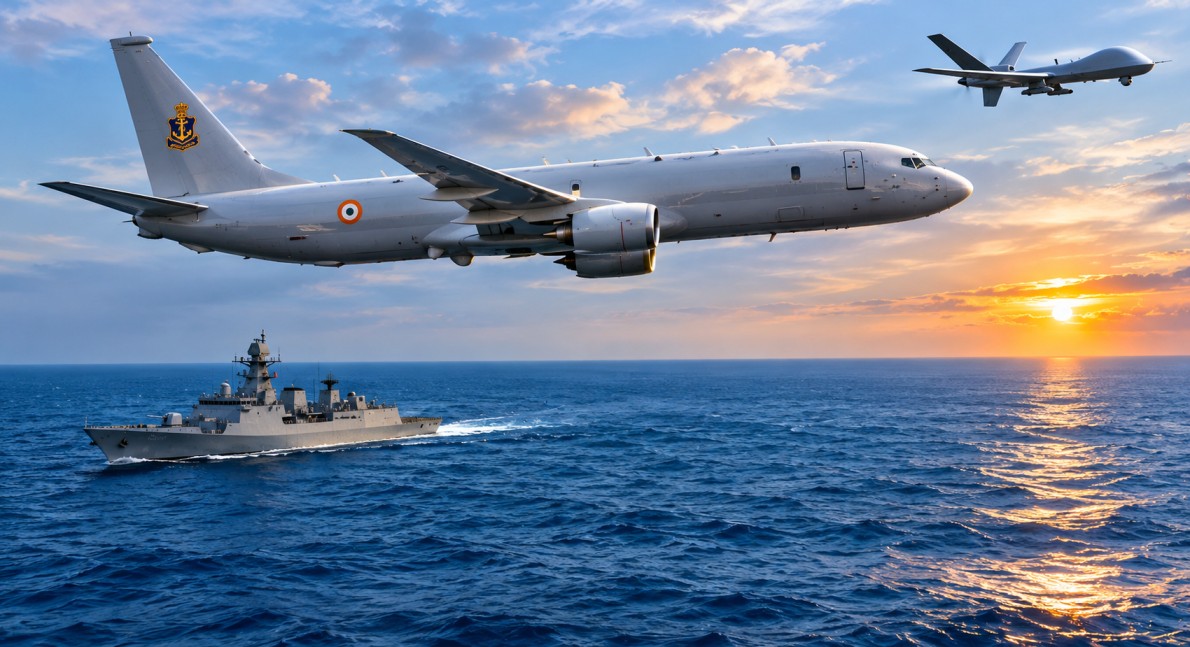
In 2013, the Indian Navy inducted the Boeing P-8I Poseidon, bringing more advanced surveillance and anti-submarine warfare technology into its fleet.
The P-8I became a major part of India’s maritime security operations. It can monitor large sea areas, detect underwater threats and support coordination between aircraft, ships and shore-based facilities.
P-8I Poseidon Strengthens Maritime Security
The Boeing P-8I Poseidon is a long-range maritime patrol aircraft developed for surveillance, anti-submarine warfare and other naval missions.
India’s P-8I includes specialised equipment such as the Telephonics APS-143 OceanEye aft radar and a magnetic anomaly detector. These systems help the aircraft identify surface and underwater activity.
The aircraft also uses Data Link II, which allows tactical information to be shared among Indian Navy aircraft, ships and shore establishments.
The Indian Navy received its 10th P-8I aircraft in December 2021. By that time, the fleet had crossed 30,000 flight hours since its induction in 2013.
INAS 312 and INAS 316 Operate from Two Naval Bases
Today, India’s P-8I fleet operates through two important naval air squadrons.
INAS 312 operates P-8I aircraft from INS Rajali in Arakkonam, Tamil Nadu. INAS 316 operates the aircraft from INS Hansa in Goa.
Together, these squadrons support maritime surveillance across the Indian Ocean and other important sea regions. Their operations help the Navy maintain awareness of maritime activities and respond to potential security concerns.
Role in Major Military and Rescue Operations
Indian Navy long-range reconnaissance aircraft have supported several important military operations over the decades. These include Operations Cactus, Vijay, Parakram and Sindoor.
Their role has also extended beyond military activities. Maritime patrol aircraft have supported anti-piracy missions and search-and-rescue operations, helping the Navy monitor shipping routes and assist vessels in distress.
Such missions are important because the Indian Ocean carries a large volume of international trade. Monitoring these waters helps protect commercial shipping and supports regional maritime stability.
P-8I Fleet Reaches Major Flight-Hour Milestone
INAS 312 reached another important milestone during a two-day Long-Range Maritime Reconnaissance seminar held at INS Rajali on 16 and 17 September 2025.
The squadron was commemorated for completing 50,000 hours on the P-8I aircraft. This achievement highlighted the experience gained by its personnel through years of maritime operations.
The milestone also reflected the growing role of modern aircraft in India’s maritime surveillance network.
Sea Guardian Drones Add to Surveillance Capabilities
India’s maritime reconnaissance network is also expanding through unmanned aircraft. INS Rajali operates MQ-9B Sea Guardian High Altitude Long Endurance drones.
These drones can remain airborne for extended periods and support maritime reconnaissance and anti-submarine warfare activities. Their use adds another layer to India’s ability to monitor large sea areas.
As maritime security challenges continue to change, the combination of manned patrol aircraft, unmanned systems, ships and advanced sensors is becoming increasingly important.
The 50-year milestone of INAS 312 highlights the Indian Navy’s long journey from the Super Constellation aircraft to modern P-8I Poseidon platforms and advanced unmanned surveillance systems.