


Chandrayaan-3 Lunar Soil Study Reveals Three Layers

Chandrayaan-3 Lunar Soil research has revealed three distinct layers beneath the Moon’s surface at Shiv Shakti Point, where India’s Vikram lander touched down in August 2023. The findings were published on 17 November 2026 and are based on data collected by the Chandra’s Surface Thermophysical Experiment (ChaSTE).
The study was led by K Durga Prasad of the Physical Research Laboratory (PRL), Ahmedabad. It examined the physical and thermal properties of the top 10 centimetres of lunar soil. The results provide new information about how lunar soil is structured and how it responds to heat from the Sun.

Three Different Layers Found Beneath the Lunar Surface
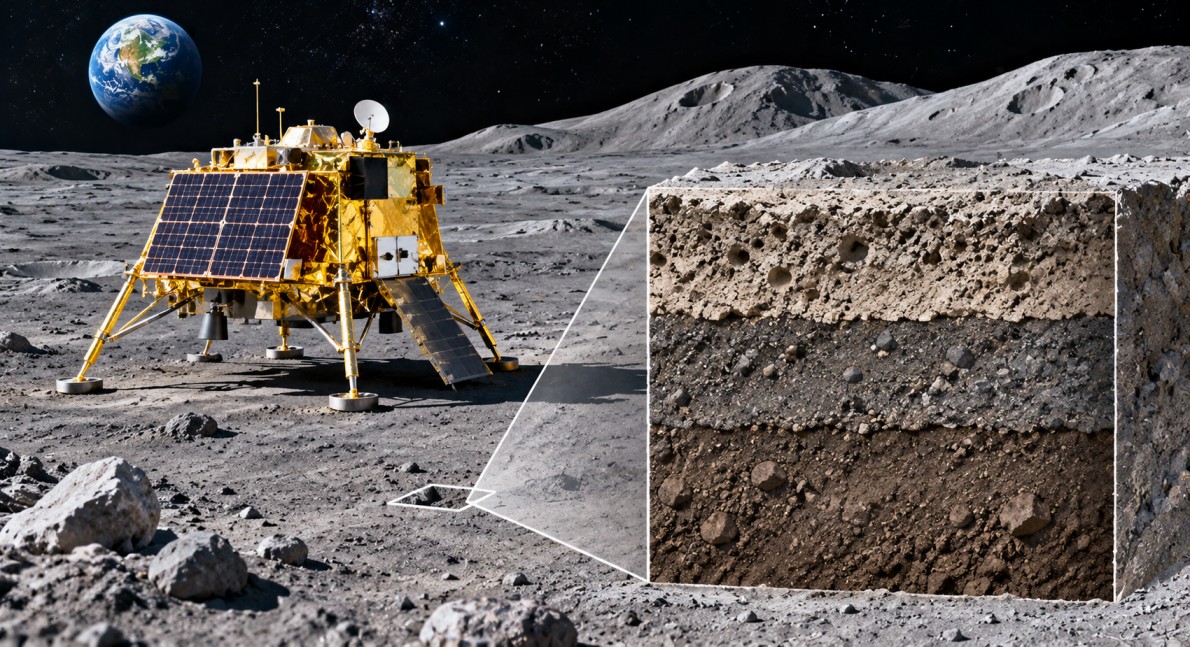
ChaSTE observations identified three layers with different physical properties within the upper 10 centimetres of the lunar surface.
The upper layer extends to a depth of about 3 centimetres. It is highly porous, with an estimated porosity of around 80% and a bulk density of approximately 600 kilograms per cubic metre. This means the top layer contains a large amount of empty space between soil particles.
The middle layer, located between 3 and 6 centimetres, has higher thermal conductivity. This means it transfers heat more effectively than the upper layer.
The third layer extends from 6 to 10 centimetres below the surface. It is denser than the upper layers and has intermediate thermal conductivity. Its bulk density reaches approximately 1,500 kilograms per cubic metre at a depth of 10 centimetres.
These differences show that lunar soil is not uniform, even within a relatively shallow section beneath the surface.
ChaSTE Helps Scientists Study Lunar Soil
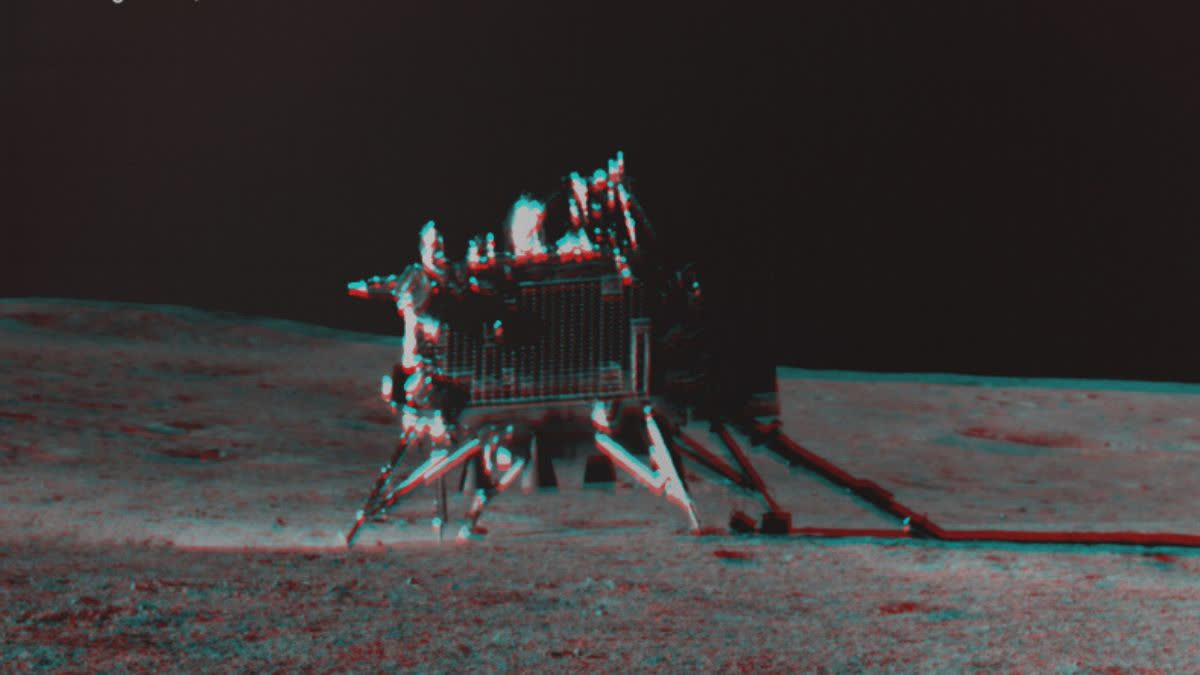
ChaSTE is one of the scientific instruments carried by the Vikram lander during the Chandrayaan-3 mission. It was designed to measure temperatures and thermal conductivity at and below the lunar surface.
The instrument collected temperature data at different depths, allowing scientists to understand how heat moves through the soil. These measurements are especially important because the Moon has extreme temperature changes between day and night.
At local noon, the temperature difference across the top 10 centimetres of soil was about 73 kelvin. The three layers responded differently to solar heating because of their different physical and thermal properties.
The measurements provide valuable information about the lunar environment near the Moon’s south polar region.
Vikram’s Hop Manoeuvre Helped Reveal the Layers
The new findings also connect to an important event during the Chandrayaan-3 mission. On 3 September 2023, Vikram performed a hop manoeuvre, moving a short distance from its original landing position.
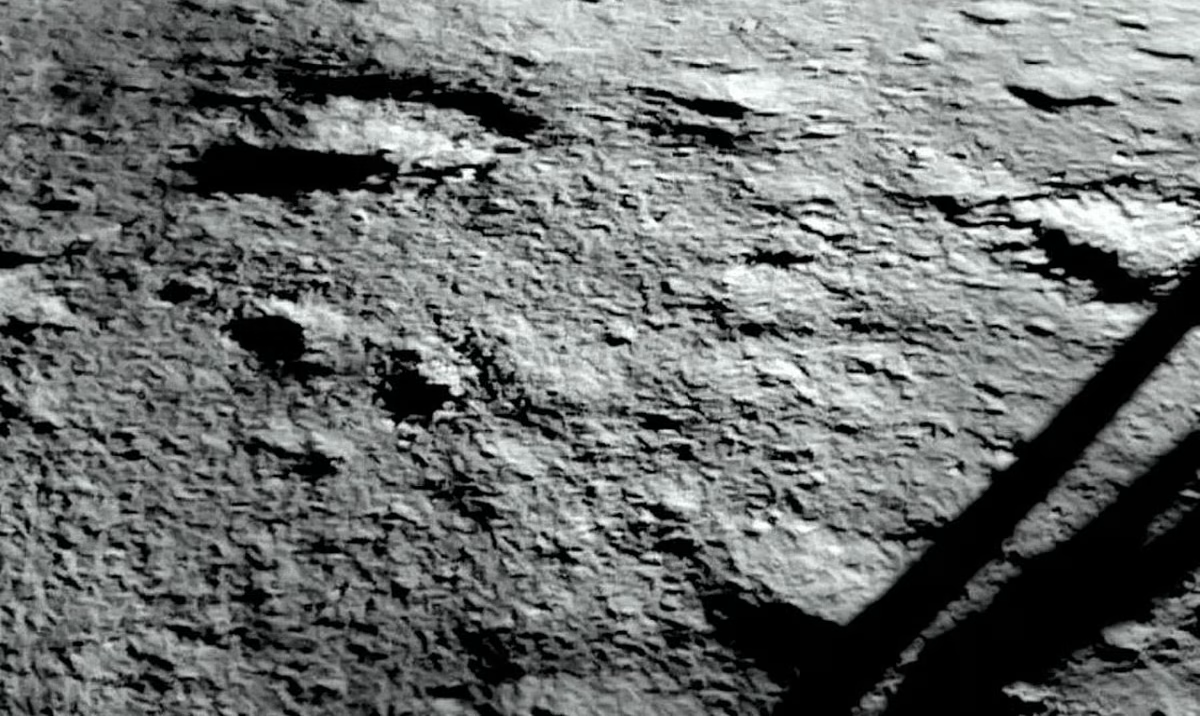
During this manoeuvre, the lander’s engine firing disturbed the uppermost 2–3 centimetres of lunar soil at the new location. This exposed material from the layers underneath the surface.
The disturbed soil provided an opportunity to examine the physical properties of the underlying material. Scientists used the available ChaSTE observations to improve their understanding of the soil profile.
An earlier analysis of ChaSTE measurements, published in April 2026, had identified two soil layers. The latest research expanded this understanding by identifying three distinct layers.
Why Lunar Soil Properties Matter
Studying lunar soil, also known as lunar regolith, is important for understanding the Moon’s surface environment. Its density, porosity and ability to transfer heat can affect how landers, rovers and other equipment operate.
Heat moves through lunar soil mainly through contact between individual grains and radiation across the spaces between them. The Moon’s near-vacuum environment means heat transfer through gases is very limited, and convection does not occur as it does on Earth.
Understanding these processes can help scientists improve the design of future lunar missions. It may also support planning for equipment and structures that need to operate on the Moon for long periods.
Importance for Future Lunar Exploration
The findings from Shiv Shakti Point add to the scientific results of Chandrayaan-3 and India’s growing lunar research programme.
Detailed information about the upper layers of lunar soil can help researchers understand the conditions at the landing site and compare them with observations from other parts of the Moon.
The research was published in the Nature Portfolio journal npj Space Exploration. It demonstrates how measurements collected by instruments on a lander can provide important information about the physical conditions of another world.
As countries and space agencies plan future lunar missions, understanding the Moon’s surface will remain essential for safe landings, scientific exploration and the development of long-term activities on the lunar surface.