

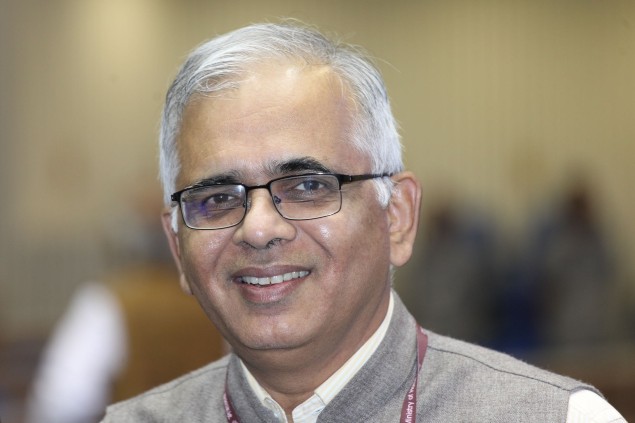
Shekhar Mande Joins UN Science Group

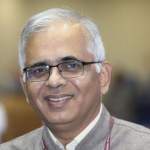
Shekhar Mande has received an important international responsibility after being nominated to a United Nations group working to promote science, technology and innovation. On November 17, 2026, UN Secretary-General António Guterres nominated Professor Shekhar C. Mande as one of the 10 new members of the Group of Ten High-level Representatives of Civil Society, Private Sector and Scientific Community.
Mande is the President of the Indian National Science Academy (INSA). His appointment will run from 2026 to 2028. The nomination brings Indian scientific expertise to an international platform focused on using science and technology to address global challenges.

Role of the UN Science and Technology Group
The Group of Ten is part of the United Nations Technology Facilitation Mechanism. Its main purpose is to encourage cooperation between governments, scientists, businesses and civil society organisations.
The group supports the use of science, technology and innovation to achieve the Sustainable Development Goals (SDGs). These goals are part of the United Nations 2030 Agenda, which focuses on major global issues such as poverty, quality education, healthcare, clean energy, climate action and sustainable economic growth.
The 10 members bring different professional backgrounds and knowledge from various regions of the world. Their experience helps the United Nations understand how new scientific developments can support sustainable development.
Marian Dorcas Quain from Ghana and Giorgio Rossi from Italy have been appointed as the group’s co-chairs.
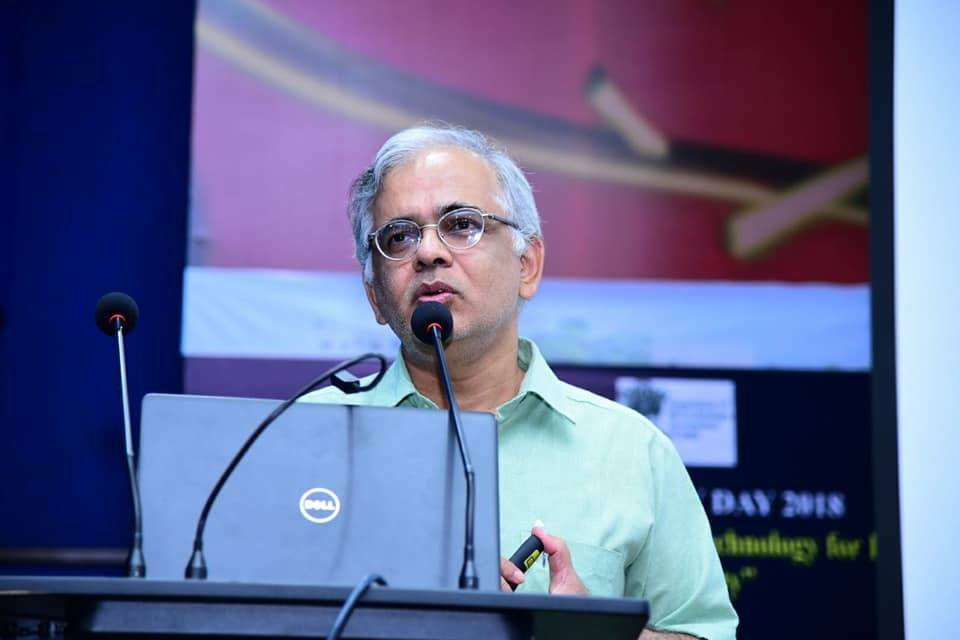
Who Is Professor Shekhar C. Mande?
Professor Shekhar C. Mande is an Indian structural and computational biologist with extensive experience in scientific research and administration. His work has contributed to India’s scientific research community.
He previously served as the Director General of the Council of Scientific and Industrial Research (CSIR). CSIR is one of India’s major research and development organisations, working across different areas of science, engineering and technology.
Mande also served as a Distinguished Professor at the Bioinformatics Centre of Savitribai Phule Pune University. His research background includes structural biology, which studies the structure of biological molecules and how their shapes influence their functions.
His experience in research management and scientific institutions has also helped him contribute to science policy and research development in India.
Importance of the Indian National Science Academy
The Indian National Science Academy is one of India’s leading scientific organisations. It was established to promote scientific knowledge, support research and encourage cooperation among scientists.
As its President, Shekhar Mande represents an important part of India’s scientific community. The academy supports scientific research through fellowships, awards, lectures and other academic activities.
INSA also works to strengthen international scientific cooperation and encourage young researchers to participate in scientific activities.
How the Appointment Supports Sustainable Development
Science and technology play an important role in solving problems faced by countries around the world. New developments in artificial intelligence, biotechnology, clean energy, healthcare and climate research can help improve people’s lives.
However, scientific progress also requires international cooperation, responsible innovation and access to new technologies. The United Nations Technology Facilitation Mechanism provides a platform for experts from different sectors to share ideas and support these efforts.
Mande’s nomination provides an opportunity for Indian scientific experience to contribute to discussions on global research priorities. His background in biology, research management and scientific administration can help connect scientific knowledge with wider development goals.
The appointment also highlights India’s participation in international science and technology discussions as countries work towards achieving the Sustainable Development Goals by 2030.