




Quantum Magnetism Breakthrough

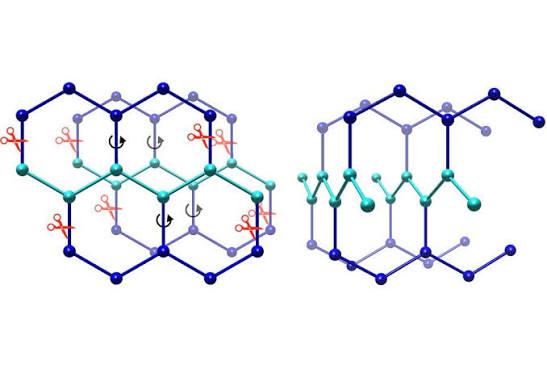
Quantum Magnetism research has opened a new possibility for future data storage and quantum computing. On November 20, 2026, researchers at the Raman Research Institute (RRI) in Bengaluru announced a theoretical method to control quantum magnetism by changing the connectivity of a network. The research could help scientists create special quantum states known as entangled states, which may be useful for storing quantum information.
The development is important because quantum technologies need better ways to control and protect information at the atomic and material levels. Scientists around the world are exploring different methods to control magnetic properties using radio waves, electric fields, light and mechanical changes.

Controlling Magnetism Through Network Connectivity
The researchers at the Raman Research Institute proposed a method in which the connections between different parts of a quantum network can be changed to control magnetic behaviour.
In quantum systems, the arrangement and interaction of particles play an important role in determining their properties. By changing these connections, scientists may be able to influence how quantum spins interact and create useful entangled states.
Entanglement is a special quantum phenomenon in which two or more particles become connected in such a way that the state of one is related to the state of another, even when they are separated. This property is important for quantum computing, communication and information storage.
Scientists Find New Ways to Control Atomic Magnetism
Other research groups are also developing new methods to control magnetism at very small scales.
Researchers at Delft University of Technology demonstrated a way to control magnetism inside the nucleus of a single atom using radio waves. Their findings were published in Nature Communications on November 2, 2026, with further details reported on November 16.
Nuclear spins are difficult to control because their magnetic moments are much smaller than those of electrons. However, they can maintain quantum information for longer periods because they are less affected by certain environmental disturbances.
New Discoveries in Magnons and Altermagnetism
On November 9, 2026, researchers at Ames National Laboratory reported a method to control the handedness of magnons in ferrimagnetic materials by changing their magnetic state with an external magnetic field.
Magnons are tiny quantum units of collective magnetic waves. They are important in research on future information-processing technologies because they may help scientists develop devices that use magnetic waves instead of traditional electrical signals.
Another important development came from SLAC National Accelerator Laboratory. On October 29, researchers experimentally confirmed altermagnetism in manganese telluride (MnTe). The discovery provided further evidence of a magnetic state that combines features of different types of magnetic materials.
Experiments at Oak Ridge National Laboratory on November 2 also showed that mechanical strain can change the magnetic and electronic properties of altermagnets.
Electric Fields and Light May Help Control Magnetism
Scientists are also exploring energy-efficient ways to control magnetic states using electric fields and light.
On September 5, 2026, researchers at Science Tokyo reported a method using electric fields to change polarization and reverse magnetisation in BFCO nanodots. This approach could support the development of non-volatile data storage, where information remains stored even when power is switched off.
A research review published on July 16, 2026, discussed how excitons created by light in extremely thin quantum materials can interact with magnetic behaviour. Excitons are formed when light energy creates a bound pair of an electron and a positively charged hole.
This interaction may allow scientists to control magnetic states using light, opening possible applications in optical memory and quantum devices.
Future Applications of Quantum Magnetism
These developments show how quickly research in quantum materials and magnetic technology is progressing. Better control over quantum states could support the development of more advanced quantum computers, secure communication systems and high-capacity information storage devices.
Traditional computers store information using electrical signals represented by bits, while quantum computers use quantum bits, or qubits. Qubits can use quantum properties such as superposition and entanglement to perform certain types of calculations in new ways.
However, quantum information is highly sensitive to environmental disturbances. Scientists are therefore working to find materials and techniques that can control quantum states more accurately and keep information stable for longer periods.
The research at the Raman Research Institute adds another approach to this growing field. By changing network connectivity to control quantum magnetism, researchers hope to develop new ways of designing and managing quantum systems.