Zojila Pass Avalanche: Snow Disaster Disrupts Ladakh Highway

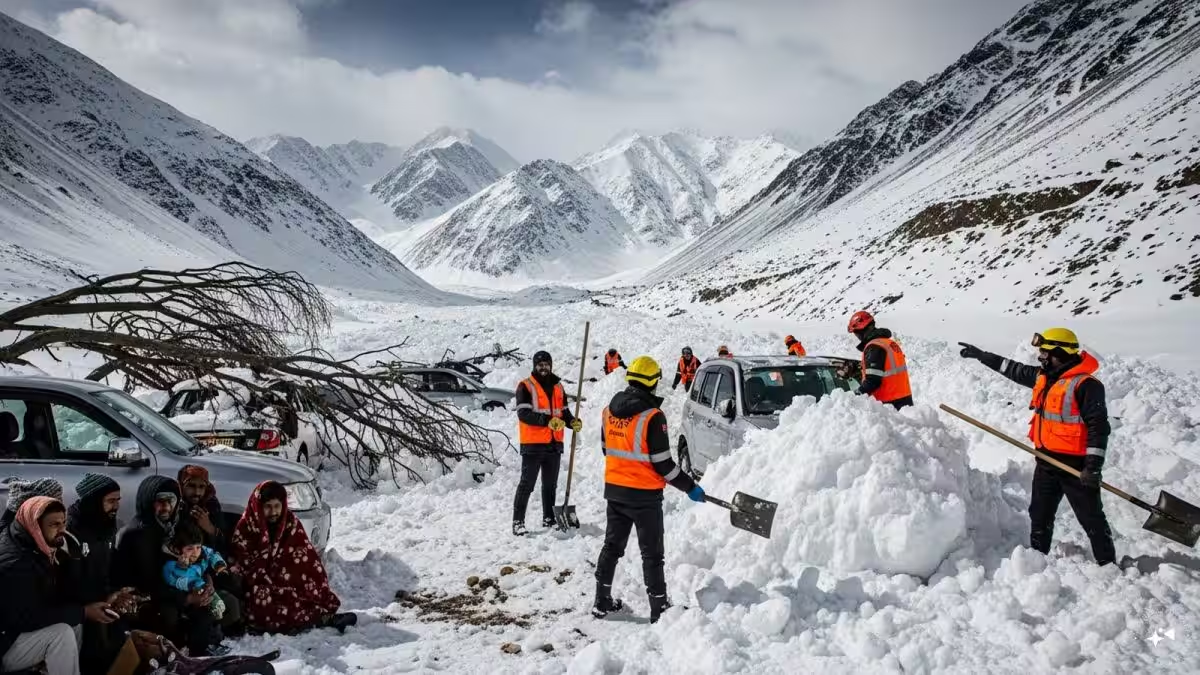
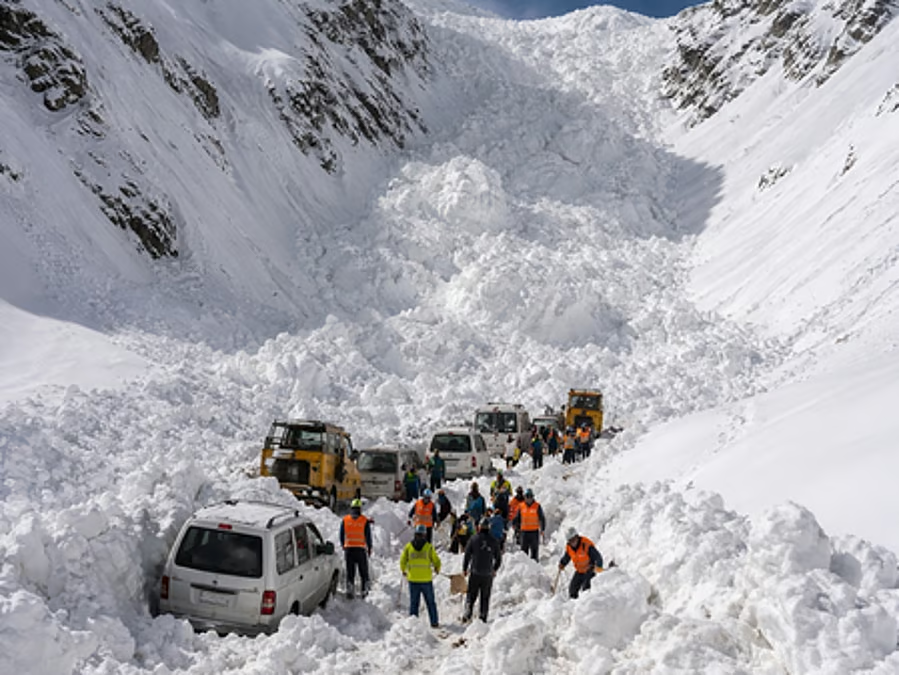
Zojila Pass Avalanche has recently caused major disruption in Ladakh, affecting movement along a key Himalayan route. The heavy snowfall triggered a massive avalanche, blocking transport and highlighting the risks of extreme weather in high-altitude regions.
Thank you for reading this post, don't forget to subscribe!Location and Importance of Zojila Pass Avalanche
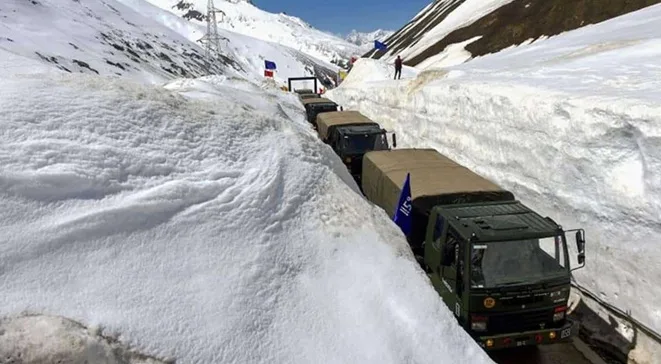
The Zojila Pass Avalanche occurred at Zojila Pass, a high mountain pass in the Kargil district. It lies on the Srinagar–Kargil–Leh highway (NH-1) at around 11,650 feet in the Greater Himalayan Range. This pass is a crucial link connecting the Kashmir Valley with Ladakh. Due to heavy snowfall, it remains closed for several months each year, affecting transport and supply routes.
Strategic and Historical Significance
The Zojila Pass Avalanche area is not only important for travel but also for national security. During the Indo-Pakistan War of 1947–48, this pass became a key battleground. Under Operation Bison, Indian forces successfully recaptured Zojila Pass on 1 November 1948. This marked a major achievement in high-altitude warfare and strengthened India’s control over Ladakh.
What Causes Avalanches
The Zojila Pass Avalanche is an example of how avalanches occur in mountainous areas. An avalanche is a fast flow of snow down a slope. It usually happens when layers of snow become unstable. Factors like heavy snowfall, steep slopes, and lack of vegetation increase the risk. In places like Zojila, continuous snowfall and weak snow layers make avalanches more common and dangerous.
Impact on Connectivity and Safety
The recent Zojila Pass Avalanche has disrupted traffic and affected both civilian travel and military supply lines. This route is vital for transporting goods and maintaining connectivity between regions. Frequent avalanches and harsh weather conditions make travel risky, requiring better monitoring systems, improved infrastructure, and strong disaster preparedness to ensure safety.