



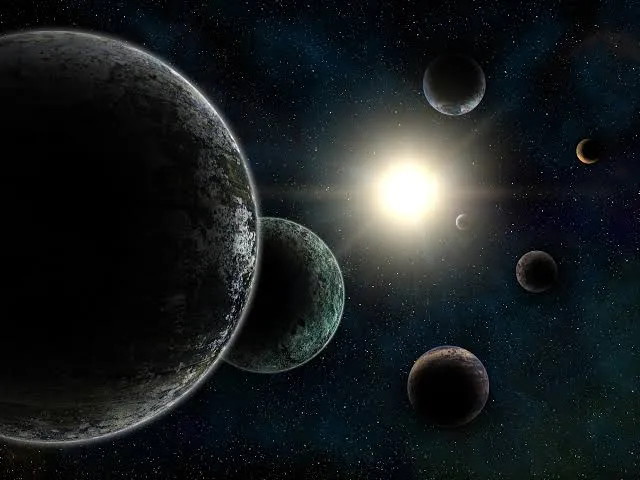
GJ 3378b Discovery Brings New Hope

GJ 3378b Discovery is creating excitement in the world of space science as researchers reveal new details about a planet that may be similar to Earth. Located about 25 light-years away, this exoplanet orbits a small and faint star known as Gliese 3378. Scientists first identified this planet in 2024, but new analysis in 2026 has provided clearer and more accurate information about its size, orbit, and possible conditions.
Thank you for reading this post, don't forget to subscribe!This discovery comes at a time when space exploration is growing rapidly, with new missions and technologies helping scientists understand distant worlds. The idea of finding Earth-like planets continues to capture global attention, especially as researchers search for places that might support life.

A Nearby Star System in Focus
GJ 3378b is part of a star system located in the constellation Camelopardalis, which is visible in the northern sky. The host star, Gliese 3378, is a red dwarf. These types of stars are smaller and cooler than our Sun but are very common in the galaxy.
Because red dwarf stars are faint, studying planets around them is not easy. However, they are important targets for astronomers because many Earth-sized planets have been found orbiting such stars. This makes them key areas in the search for potentially habitable worlds.
Updated Planet Details Change the Picture
Recent studies have revised earlier estimates about GJ 3378b. Scientists now believe the planet has a mass about 2.3 times that of Earth, which is much lower than earlier estimates. This suggests that the planet may be rocky rather than a gas-heavy world.
The planet completes one orbit around its star in just over 21 days. While this is much shorter than Earth’s year, it is common for planets orbiting red dwarf stars to have shorter orbits because they are closer to their stars.
These updated measurements give researchers a better understanding of the planet’s nature and make it more interesting for further study.
Position in the Habitable Zone
One of the most important aspects of the GJ 3378b Discovery is its location within the habitable zone of its star. This is the region where conditions might allow liquid water to exist on the surface of a planet.
GJ 3378b receives about 90% of the energy that Earth gets from the Sun. This places it near the inner edge of the habitable zone. While this does not confirm the presence of water, it increases the chances that the planet could have conditions suitable for life if it has the right atmosphere.
The concept of habitable zones has become a major focus in current space research, especially as scientists look for signs of life beyond Earth.
How Scientists Found the Planet
The discovery and analysis of GJ 3378b were made using a technique called radial velocity. This method detects tiny movements in a star caused by the gravitational pull of an orbiting planet.
Advanced instruments played a key role in this process. Observations were carried out using powerful telescopes equipped with high-precision spectrometers. These tools allow scientists to measure even very small changes in a star’s motion.
With improvements in technology, this method has become one of the most reliable ways to detect planets outside our solar system.
Challenges in Confirming Atmosphere
Even though the planet is located in a promising region, scientists have not yet confirmed whether GJ 3378b has an atmosphere. This is an important factor because an atmosphere can regulate temperature and support conditions needed for life.
Studying atmospheres of distant planets is still a complex task. It requires advanced instruments that can analyze light passing through or reflecting off a planet’s atmosphere. Without this data, it is difficult to say whether the planet could truly support life.
This challenge highlights the need for more powerful space missions and long-term research.
Future Space Missions and Technology
The discovery of GJ 3378b comes at a time when space agencies are planning new missions to study exoplanets in greater detail. One of the upcoming projects includes next-generation telescopes that will be able to detect atmospheric signals and possible signs of life.
These future missions aim to go beyond just identifying planets and focus on understanding their environments. Scientists hope to detect gases like oxygen or methane, which could indicate biological activity.
As technology continues to improve, discoveries like GJ 3378b will play an important role in guiding future research and exploration.

Growing Interest in Earth-Like Worlds
The search for Earth-like planets has become one of the most exciting areas in science today. With each new discovery, researchers get closer to understanding how common such planets are in the universe.
GJ 3378b adds to a growing list of potentially habitable worlds. While it is still too early to confirm if it can support life, its characteristics make it an important target for future studies.
This growing interest also reflects a broader curiosity about our place in the universe and whether life exists beyond Earth.