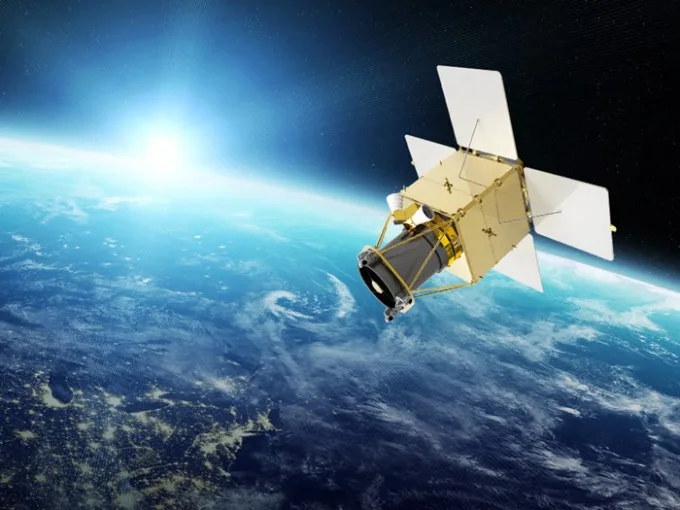
CAS500-2 Satellite Launch: South Korea Sends Earth Observation Satellite Into Orbit

South Korea successfully completed the CAS500-2 Satellite Launch on 3 May 2026. The country launched its locally developed Earth-observation satellite aboard a SpaceX Falcon 9 rocket from Vandenberg Space Force Base in California, United States. The satellite is also known as Next-Generation Medium Satellite No. 2.
Thank you for reading this post, don't forget to subscribe!CAS500-2 Satellite Launch Successfully Completed
The launch took place at 3:59 p.m. Korea time. After nearly one hour of flight, the satellite separated from the Falcon 9 rocket and entered a sun-synchronous orbit at an altitude of 498 kilometres.
Around 15 minutes later, the satellite made its first communication with a ground station located in Svalbard, Norway. Officials confirmed that the satellite was operating normally after entering orbit.
The mission was supervised by the Korea AeroSpace Administration (KASA). The launch had faced a delay of almost four years because the original plan involved a Russian Soyuz rocket before changes were made due to the Russia-Ukraine war.
CAS500-2 Satellite Features and Design
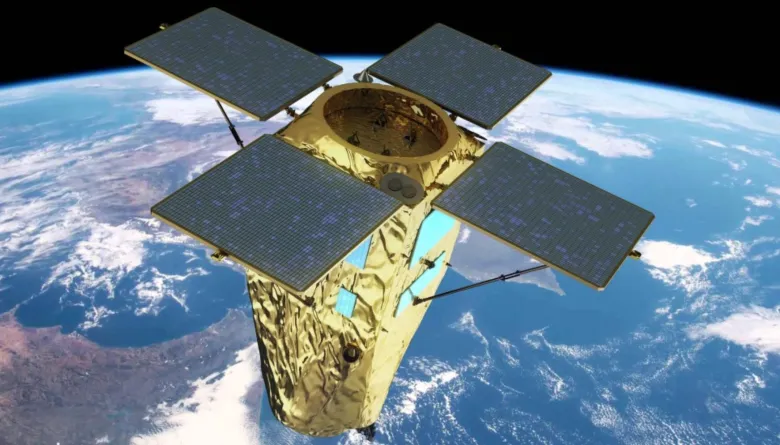
The CAS500-2 Satellite Launch is an important step for South Korea’s space industry. Korea Aerospace Industries (KAI) led the development and manufacturing of the satellite.
The satellite weighs 534 kilograms and carries advanced optical sensors. It can capture black-and-white images with a resolution of 0.5 metres and colour images with a resolution of 2.0 metres.
A major achievement of the project is that 86 percent of the satellite platform and 98 percent of the payload technology were developed domestically in South Korea.
Role of Sun-Synchronous Orbit
CAS500-2 was placed into a sun-synchronous orbit, which is commonly used for Earth-observation satellites. This type of orbit allows the satellite to pass over the same area under similar lighting conditions every time.
Such orbits are useful for mapping, environmental monitoring, and disaster management because they provide clear and consistent images.
Uses of CAS500-2 Satellite
The satellite will support several important services after completing around four months of testing and calibration in orbit. Its official mission is expected to begin in the second half of 2026.
The CAS500-2 satellite will provide high-precision images for:
- Land and resource management
- Disaster response and monitoring
- National spatial information services
- Environmental observation and planning
The CAS500-2 Satellite Launch highlights South Korea’s growing capability in satellite technology and space research.