


LineShine Supercomputer Tops Global TOP500 Rankings

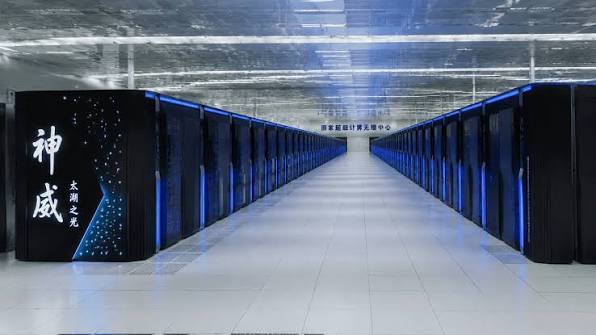
LineShine Supercomputer has secured the first position in the latest TOP500 ranking of the world’s most powerful supercomputers. The ranking was released on 16 November 2026 during the SC26 conference in Chicago, United States. China’s LineShine has retained its leading position, while India’s highest-ranked supercomputer, Shakti Cloud, secured the 35th position. This development highlights the growing importance of high-performance computing in scientific research, artificial intelligence, weather forecasting, and advanced technology.
China’s LineShine Retains the Top Position
LineShine first became the world’s number one supercomputer in June 2026 after replacing the American supercomputer El Capitan. It has maintained its leading position in the November 2026 ranking.

The machine was developed and installed by the Shenzhen Cloud Computing Centre at the National Supercomputing Centre in Shenzhen, China. It is designed to handle extremely complex calculations that ordinary computers cannot perform efficiently.
In the standardised performance test, LineShine achieved approximately 2.198 quintillion calculations per second. It became the first supercomputer listed in the TOP500 ranking to cross the two-quintillion calculations-per-second mark.
The system uses around 42 megawatts of electricity, showing the enormous energy requirements of modern high-performance computing systems.
How Powerful Is LineShine?
LineShine is designed mainly for advanced scientific research, including atmospheric studies and ocean research. These activities require the processing of huge amounts of information to understand weather patterns, climate conditions, and changes in ocean systems.
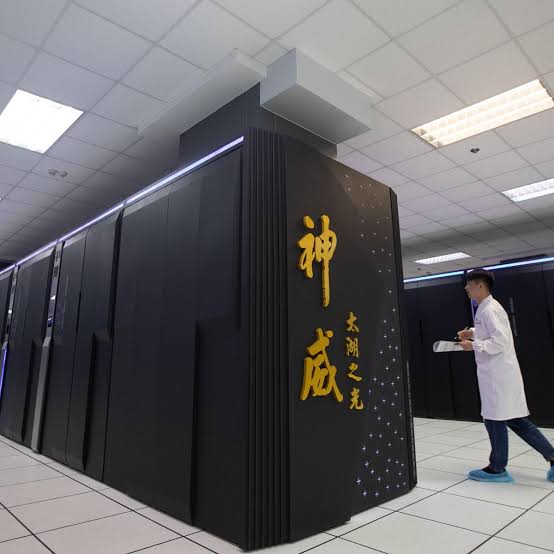
The supercomputer uses Chinese-made processors and the Kylin operating system. Its development also reflects China’s efforts to strengthen its domestic semiconductor and computing technology industries.
Supercomputers like LineShine can support several important activities:
- Weather forecasting and climate modelling.
- Artificial intelligence research.
- Scientific and medical research.
- Ocean and atmospheric studies.
- Complex engineering simulations.
- Large-scale data analysis.
Top Five Supercomputers in the November 2026 Ranking
Although LineShine retained the first position, the other systems in the top five also represent major developments in international computing technology.
The top five include:
- LineShine – China
- El Capitan – United States
- Frontier – United States
- Aurora – United States
- JUPITER Booster – Germany
The top 10 positions remained unchanged in the latest ranking. The November 2026 list also included 27 new systems, the lowest number of newcomers in the history of the ranking. The computing performance required to enter the list increased by 7.3 per cent compared with June 2026.
South Korea’s HANGANG was the highest-ranked newcomer, securing the 12th position.
India’s Shakti Cloud Secures 35th Position
India’s highest-ranked supercomputer in the November 2026 TOP500 list was Shakti Cloud, which secured the 35th position.
India has been expanding its high-performance computing capabilities to support scientific research, weather prediction, artificial intelligence, and national technology development.
Supercomputing facilities are important for India’s growing digital economy. They can help researchers process large datasets, develop new technologies, and work on complex scientific problems.
With increasing demand for AI applications and advanced computing, countries are investing in faster and more efficient computing infrastructure.
What Is the TOP500 Ranking?
TOP500 is an international list that ranks the world’s most powerful supercomputers based on their computing performance.
The ranking is updated twice every year:
- June: During the International Supercomputing Conference.
- November: During the ACM/IEEE Supercomputing Conference.
The ranking uses the High Performance Linpack (HPL) benchmark to measure how quickly a supercomputer can solve large mathematical problems.
The results help researchers and technology experts compare the computing power of different systems around the world.
Understanding the Green500 and HPCG Rankings
Apart from TOP500, there are other important rankings that measure different aspects of supercomputing technology.
Green500 focuses on energy efficiency. It measures how much computing performance a system can deliver for the electricity it consumes. This is important because modern supercomputers require enormous amounts of power and cooling.
HPCG (High Performance Conjugate Gradients) measures performance using a different set of calculations that reflect certain real-world scientific computing workloads. It provides additional information about how supercomputers perform beyond the HPL benchmark.
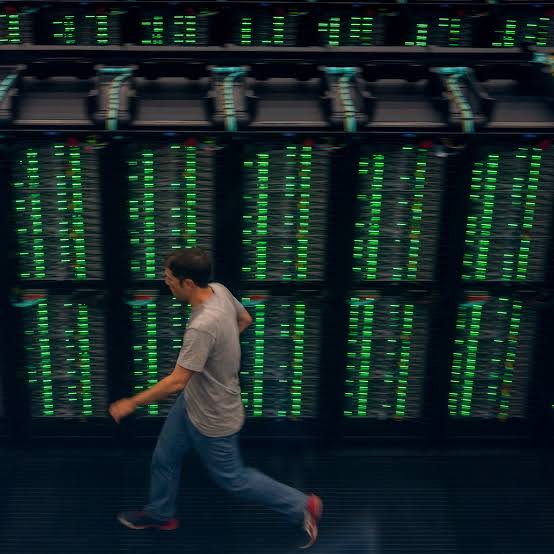
These rankings are becoming increasingly important as countries look for ways to develop powerful but energy-efficient computing systems.
Kylin Operating System and China’s Computing Technology
Another important feature of LineShine is its use of the Kylin operating system. Kylin is a Chinese operating system developed for different computing environments.
Its early versions were based on FreeBSD, while version 3.0 marked a shift towards a Linux-based system.
The use of domestic processors and operating systems reflects China’s efforts to build a stronger technology ecosystem and reduce dependence on foreign computing components.
As artificial intelligence, cloud computing, and advanced scientific research continue to grow, high-performance computing is becoming an important part of global technological development.