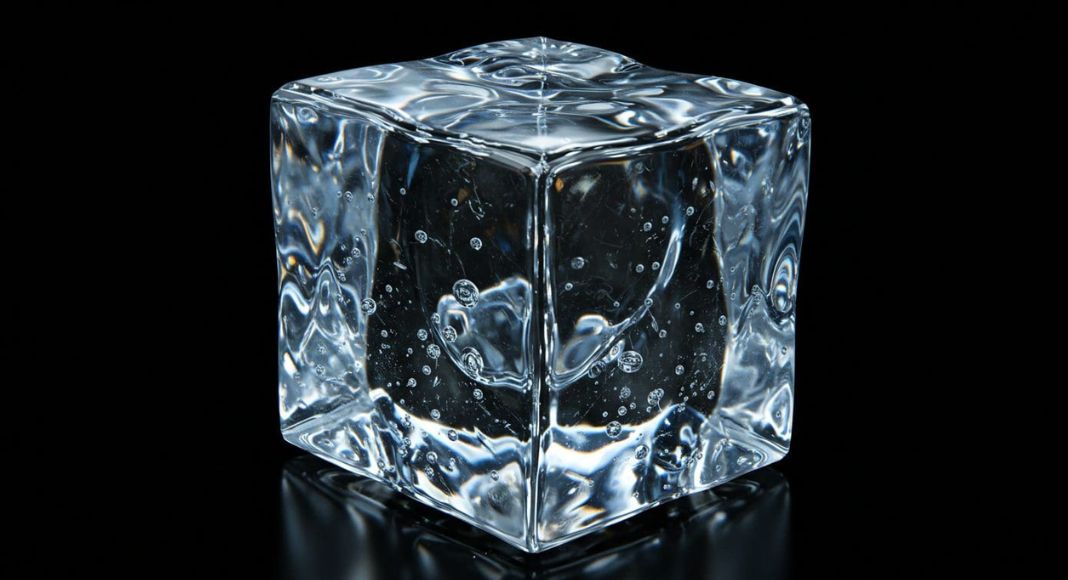
Mpemba Effect: How Supercomputers Finally Solved a Long-Standing Mystery

The Mpemba Effect has puzzled people for centuries. It sounds strange, yet it has been observed many times: under certain conditions, hot water can freeze faster than cold water. Now, scientists have taken a big step toward explaining this mystery using powerful supercomputer simulations. Their work offers a fresh look at how water turns into ice and why temperature history matters more than we once thought.
Thank you for reading this post, don't forget to subscribe!This breakthrough study was published in Communications Physics and focuses on what happens inside water at the smallest, molecular level during freezing. By doing this, researchers have moved closer to answering a question that has confused scientists, students, and curious minds for generations.
A Curious Effect That Refused to Go Away
The Mpemba Effect is not new. Ancient Greek thinker Aristotle mentioned something similar over 2,000 years ago. Much later, in the 1960s, a Tanzanian student named Erasto Mpemba noticed that hot ice cream mix froze faster than a cold one. His observation was first doubted, but later confirmed, and the effect was named after him.
Even with many experiments over the years, scientists struggled to explain why this happens in water. The main problem was water itself. Its behavior during freezing is far more complex than it appears.
Why Water Is So Hard to Study
Water molecules are linked by hydrogen bonds that constantly break and reform. This creates a shifting network that is difficult to capture in calculations. When water cools and turns into ice, it does not change smoothly. Instead, it passes through many brief and unstable stages.
Earlier computer models were not powerful or detailed enough to follow these changes clearly. As a result, the Mpemba Effect remained more of a curiosity than a fully understood process.
Supercomputers Step In
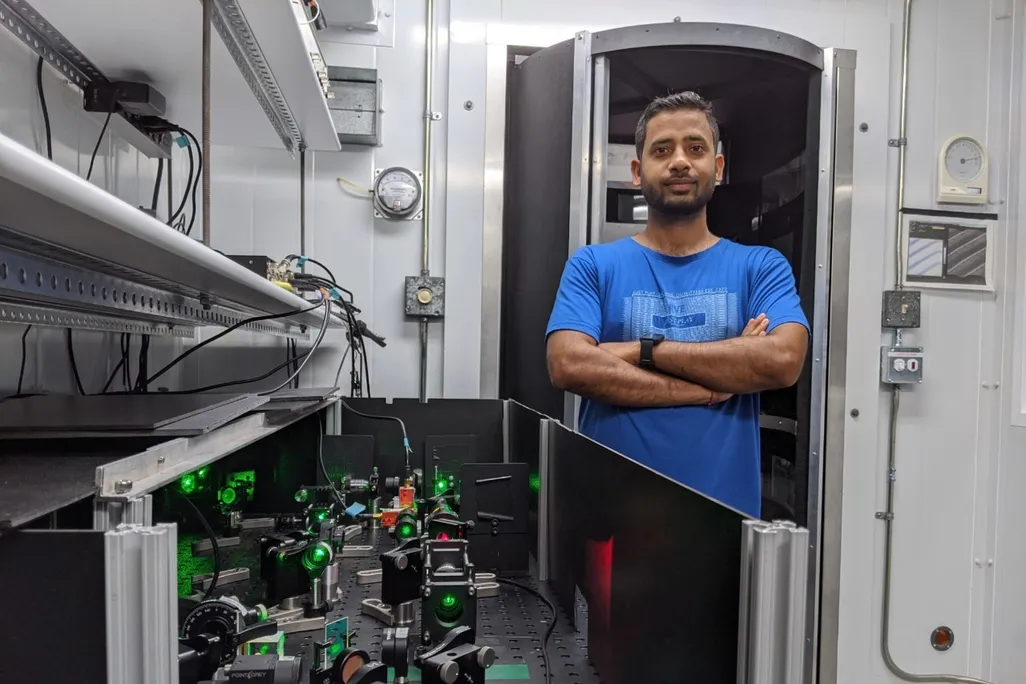
Researchers from the Jawaharlal Nehru Centre for Advanced Scientific Research, with support from India’s Department of Science and Technology, used high-performance supercomputers to overcome this challenge. These machines allowed them to simulate water freezing with much greater accuracy than before.
They compared water with other simplified systems, such as model fluids and magnetic-style models, to see whether the effect was unique or part of a bigger pattern. This approach helped them isolate what makes water special.
The Hidden Paths to Ice Formation
The simulations revealed something important: water does not head straight toward ice when it cools. Instead, it can get stuck in temporary molecular arrangements. These are not ice, but they are not liquid either. Think of them as wrong turns on the road to freezing.
Here is where the Mpemba Effect comes in. Water that starts at a higher temperature may avoid some of these slow pathways. In contrast, cooler water can fall into these traps and stay there longer. As a result, the hotter water sometimes reaches true ice formation faster.
In simple terms, starting hotter can give water a clearer, quicker route to freezing.
More Than Just a Water Story
One of the most exciting outcomes of this research is that the Mpemba Effect is not limited to water. The simulations showed similar behavior in other materials as well. This suggests the effect is a broader feature of systems that are pushed far from balance and then cooled quickly.
Understanding this behavior can help scientists better predict how materials respond to sudden temperature changes.
Why This Discovery Matters
Solving the Mpemba Effect is not just about satisfying curiosity. These findings could influence how we design cooling systems, manage heat in electronics, or control freezing in industrial processes. When devices get smaller and more powerful, controlling heat becomes even more important.
By showing that thermal history matters, this research opens the door to smarter ways of handling heat in future technologies.
In the end, the Mpemba Effect reminds us that nature does not always follow simple rules. Thanks to supercomputers and careful simulations, one of physics’ most surprising puzzles is finally starting to make sense.