


Infosys Prize 2026 Honours Six Researchers

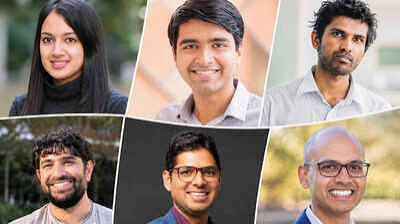
The Infosys Prize 2026 recognised six researchers for their important contributions to science, technology, economics, law and other fields. The Infosys Science Foundation announced the six winners in Bengaluru on November 12, 2026. The awards celebrate young researchers whose work has helped improve knowledge and understanding in different areas.
The six winners were selected across six categories: Economics; Engineering and Computer Science; Humanities and Social Sciences; Life Sciences; Mathematical Sciences; and Physical Sciences. Their research covers important subjects such as climate change, wireless communication, constitutional law, oxygen biology, probability theory and quantum computing.

What Is the Infosys Prize?
The Infosys Prize is an annual award presented by the Infosys Science Foundation. It recognises researchers for outstanding contributions to their fields. The award aims to encourage scientific research, new ideas and academic excellence.
Each winner receives a gold medal, a citation and a cash prize of USD 100,000, or its equivalent in Indian rupees. Since 2024, the award has focused on recognising researchers below the age of 40.
The six categories cover a wide range of subjects. This allows the foundation to recognise achievements in both scientific and non-scientific fields, including economics, social sciences and law.
Six Winners of the Infosys Prize 2026
The 2026 awards recognised six researchers working at leading universities and research institutions around the world. Each winner was honoured for a specific contribution to their field.
Karthik Sastry – Economics
Karthik Sastry, Associate Professor at Princeton University, received the Infosys Prize 2026 in the Economics category.
His research focuses on the connections between climate change, technological innovation and business cycle fluctuations. These subjects are important for understanding how environmental changes and new technologies can influence economic activity.
His work contributes to the study of how economies respond to changes in technology and environmental conditions.
Swarun Kumar – Engineering and Computer Science
Swarun Kumar, Assistant Professor at Carnegie Mellon University, won the award in Engineering and Computer Science.
He was recognised for his pioneering work in low-power wireless networks. Such networks are important for developing communication systems that use less energy while maintaining reliable connections.
Wireless technology has become an important part of modern life. It supports communication devices, connected systems and many applications that depend on efficient data transfer.
Gautam Bhatia – Humanities and Social Sciences
Gautam Bhatia, Adjunct Professor at Jindal Global Law School, received the prize in Humanities and Social Sciences.
He was recognised for his work in constitutional law. Constitutional law deals with the basic legal principles that guide a country’s government, protect rights and define the powers of public institutions.
His recognition highlights the importance of legal research and its role in understanding constitutional principles.
Isha Jain – Life Sciences
Isha Jain of the University of California, San Francisco, received the award in the Life Sciences category.
She was honoured for her research in oxygen biology. This area of science studies how oxygen affects living cells and biological processes.
Oxygen plays an important role in the functioning of the human body. Research in oxygen biology can help scientists better understand how cells respond to changes in oxygen levels and how these processes affect health and disease.
Riddhipratim Basu – Mathematical Sciences
Riddhipratim Basu, Associate Professor at the International Centre for Theoretical Sciences (ICTS-TIFR) in Bengaluru, received the prize in Mathematical Sciences.
He was recognised for his contributions to probability theory and statistical physics.
Probability theory is a branch of mathematics used to study uncertainty and the likelihood of events. Statistical physics uses mathematical and statistical methods to understand the behaviour of large groups of particles and physical systems.
These areas of research have applications in several scientific fields.
Manoj Kumar Joshi – Physical Sciences
Manoj Kumar Joshi, Assistant Professor at the Singapore University of Technology and Design, won the award in Physical Sciences.
His research focuses on trapped ions and programmable quantum machines. Trapped-ion technology is one of the approaches used to develop quantum computers.
In these systems, electromagnetic fields are used to hold ions in controlled positions. Scientists use the ions to store and process quantum information. Laser-based techniques can control their quantum states and create interactions between them.
Programmable quantum machines are being studied for their potential to solve certain problems in ways that differ from traditional computers.
Why the 2026 Awards Matter
The Infosys Prize 2026 highlights the wide range of research taking place across different academic fields. The selected work addresses subjects that are important to modern society, including climate change, communication technology, constitutional principles, biological processes and quantum computing.
The awards also show how research in one field can connect with developments in another. For example, climate research can help improve our understanding of economic challenges, while advances in wireless networks can support more efficient communication systems.
Recognising researchers at an early stage of their careers can also encourage further work in science, technology and the humanities. The prize provides international recognition to researchers whose contributions help expand knowledge and open new areas of study.
A Look at the Six Prize Categories
The 2026 awards covered six major areas of research. Economics focused on climate change and innovation, while Engineering and Computer Science recognised advances in low-power wireless networks. Humanities and Social Sciences highlighted constitutional law, and Life Sciences recognised research into oxygen biology.
The Mathematical Sciences award honoured work in probability theory and statistical physics. Physical Sciences recognised research involving trapped ions and programmable quantum machines.
Together, these six categories reflect the broad scope of the Infosys Prize and its effort to recognise valuable contributions across academic disciplines.