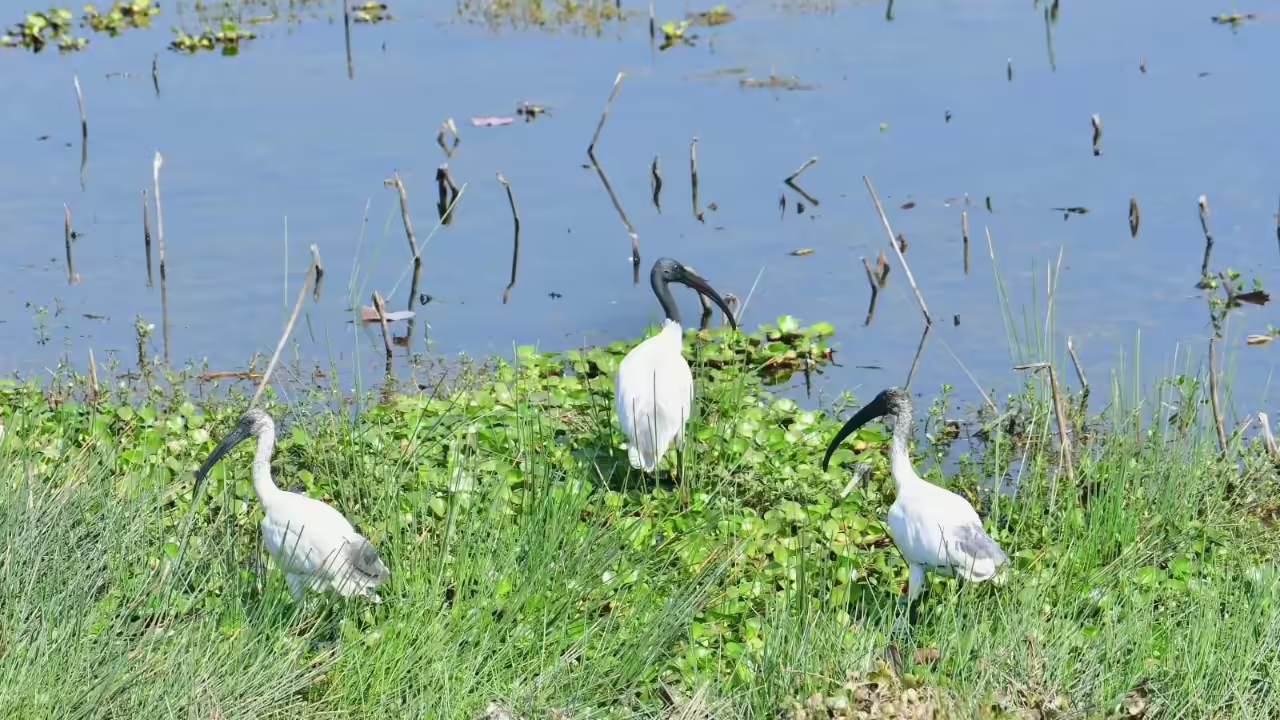
Gogabeel Lake Ramsar Site Declared Bihar’s First Ramsar Wetland

Gogabeel Lake Ramsar Site has brought Bihar into the national spotlight as India adds yet another wetland of international importance to its growing conservation network. The inclusion of Gogabeel Lake, located in the Katihar district of Bihar, marks India’s 94th Ramsar site, reinforcing the country’s dedication to preserving its diverse wetland ecosystems under the global Ramsar Convention. This oxbow lake, nestled between the Ganga and Mahananda rivers, is not only Bihar’s first community reserve but also a unique example of sustainable management led by local communities.
Thank you for reading this post, don't forget to subscribe!The recognition of Gogabeel Lake Ramsar Site underlines India’s ongoing efforts to balance ecological protection with human livelihood, highlighting a model of conservation that combines traditional knowledge with modern environmental strategies.
Gogabeel Lake Ramsar Site: A Unique Community-Managed Wetland
The Gogabeel Lake Ramsar Site stands out as a vibrant example of community-driven conservation. Formed naturally as an oxbow lake, Gogabeel lies in a floodplain zone where the Ganga and Mahananda rivers frequently change their courses. This dynamic hydrology creates a rich wetland ecosystem that supports a wide variety of life forms.
During the monsoon season, the lake connects with the two major rivers, rejuvenating its water system and providing an essential habitat for migratory birds, aquatic plants, and freshwater fish species. Its ecological significance lies in its ability to act as a seasonal flood absorber, thereby reducing flood risks in surrounding human settlements.

Local communities play a central role in maintaining the ecological health of the lake. They are actively involved in monitoring bird populations, preventing illegal fishing, and managing waste. Their deep-rooted connection with the wetland has turned Gogabeel into an ideal example of community-led environmental stewardship.
With this recognition, Gogabeel Lake joins other important wetlands of Bihar like Gokul Jalashay and Udaipur Jheel, expanding the state’s footprint in India’s conservation map and strengthening its ecological identity.
Gogabeel Lake Ramsar Site: India’s Rising Global Standing in Wetland Conservation
India’s addition of the Gogabeel Lake Ramsar Site further cements its position as a leader in wetland conservation in Asia. With 94 Ramsar sites, India now ranks third globally, following the United Kingdom (176 sites) and Mexico (144 sites).
In the last 11 years, India has added 67 new wetlands to the Ramsar list, covering more than 13.6 lakh hectares of ecologically sensitive areas. This steady increase reflects India’s comprehensive strategy that focuses on sustainable management, biodiversity protection, and local participation.
During the announcement of Gogabeel’s inclusion, Union Environment Minister Bhupender Yadav expressed pride in India’s achievement, noting that this milestone demonstrates the nation’s commitment to protecting natural heritage. He emphasized that community-led initiatives like Gogabeel are key to building resilience against climate change and ensuring the long-term sustainability of wetlands.
Such recognition also enhances India’s global image as a responsible environmental steward actively contributing to international climate goals.
Gogabeel Lake Ramsar Site: Significance of Ramsar Sites
The Ramsar Convention, established in 1971 in Ramsar, Iran, is an international treaty dedicated to the conservation and wise use of wetlands. Today, it includes 172 member countries and 2,546 protected sites worldwide.
Wetlands designated as Ramsar Sites are recognized for their ecological, hydrological, and socio-economic importance. They perform critical environmental functions such as:
- Regulating water flow and replenishing groundwater
- Supporting biodiversity, including migratory birds and aquatic species
- Acting as natural flood buffers during heavy rainfall
- Providing livelihoods through fisheries, agriculture, and ecotourism
The inclusion of Gogabeel Lake Ramsar Site acknowledges its crucial role in maintaining the hydrological balance of the region while supporting the lives of thousands of local residents who depend on it for fishing, farming, and other resources.
Such recognitions bring not only prestige but also international attention and funding opportunities for research, habitat restoration, and sustainable management.
Exam-Oriented Facts about Gogabeel Lake Ramsar Site
- Gogabeel Lake, located in Katihar district, Bihar, became India’s 94th Ramsar site in November 2025.
- It is Bihar’s first community reserve and is managed collectively by local stakeholders and the Forest Department.
- Bihar now has six Ramsar sites, ranking third among Indian states, after Tamil Nadu and Uttar Pradesh.
- India ranks third globally in total Ramsar sites, behind the UK (176) and Mexico (144).
- The Ramsar Convention was signed in 1971 in Iran to protect wetlands of international importance.
These facts are particularly relevant for students and aspirants preparing for competitive examinations related to environment, geography, and general studies.
Gogabeel Lake Ramsar Site: Strengthening India’s Eco-Conservation Vision
The recognition of the Gogabeel Lake Ramsar Site underscores India’s growing emphasis on integrating local participation with global conservation standards. The community-based management model adopted here exemplifies the government’s vision of “people’s participation for planet protection.”
By empowering local communities to take part in monitoring and maintaining wetland ecosystems, India is ensuring that conservation is not imposed from above but nurtured from within. This inclusive approach allows for sustainable coexistence between people and nature, ensuring that economic activities like fishing, agriculture, and tourism do not compromise ecological health.

Furthermore, the addition of Gogabeel Lake to the Ramsar network enhances India’s climate resilience strategy. Wetlands act as natural carbon sinks, reduce flood intensity, and maintain soil moisture all crucial in mitigating the effects of global warming and erratic weather patterns.
Experts believe that Gogabeel’s inclusion will inspire other states to strengthen their own conservation programs and identify more ecologically important wetlands for Ramsar designation.
A Model for Sustainable Wetland Management
The Gogabeel Lake Ramsar Site serves as a symbol of how environmental conservation can thrive through collective effort and awareness. It highlights that when local communities, government authorities, and environmental experts work together, remarkable results can be achieved in protecting nature’s fragile systems.
By linking local traditions with scientific conservation methods, Gogabeel stands as a living model for India’s broader eco-conservation vision a future where development and ecology move hand in hand.
As India continues its journey toward a greener and more sustainable future, Gogabeel Lake will remain a beacon of hope, demonstrating that grassroots participation and international recognition can together safeguard the natural treasures that define our nation’s ecological heritage.