India Pakistan Nuclear List Exchange Continues in 2026

India Pakistan Nuclear List Exchange once again took place on January 1, 2026, continuing a long-established diplomatic practice between the two neighbouring countries. Despite tense relations and recent military strain, both sides exchanged details of their nuclear installations under a bilateral agreement aimed at preventing attacks on atomic facilities. The move highlights the continuation of certain formal communication channels even during periods of political difficulty.
Thank you for reading this post, don't forget to subscribe!The exchange happened quietly through diplomatic routes, following a process that has been maintained for more than three decades. It comes at a time when relations remain strained after a brief period of military confrontation in May last year, making the exchange particularly significant in the current regional climate.
India Pakistan Nuclear List Exchange and Its Historical Background
The foundation of this annual exchange lies in the Agreement on the Prohibition of Attacks against Nuclear Installations and Facilities, signed by India and Pakistan on December 31, 1988. The agreement officially came into effect on January 27, 1991, creating a formal commitment by both sides to avoid targeting each other’s nuclear sites.
Under this understanding, both countries agreed to share information every year about nuclear installations and facilities covered under the pact. The goal is simple but important: to reduce the risk of misunderstanding, accidental escalation or deliberate targeting of sensitive nuclear infrastructure.
India Pakistan Nuclear List Exchange Process in 2026

As per the established procedure, Pakistan handed over its list of nuclear installations to a representative of the Indian High Commission in Islamabad through official diplomatic channels. At the same time, Indian authorities shared their corresponding list with Pakistani officials in New Delhi.
This simultaneous exchange follows a strict timeline set by the agreement, which requires both sides to complete the process on the first day of each calendar year. The routine has remained uninterrupted, even during periods when diplomatic engagement between the two nations was otherwise minimal.
India Pakistan Nuclear List Exchange Amid Political Tensions
The latest exchange is noteworthy because it occurred against the backdrop of strained relations. In May of the previous year, India and Pakistan experienced four days of military hostilities, leading to increased tensions along the border and a cooling of diplomatic dialogue.
Despite this environment, both governments chose to uphold the nuclear installations agreement. This shows that some institutional arrangements remain insulated from political shifts and are seen as necessary for regional safety and stability.
India Pakistan Nuclear List Exchange and Prisoners’ Information Sharing
Along with the nuclear installations list, both countries also exchanged information about prisoners held in each other’s custody. This exchange was conducted under the Consular Access Agreement signed on May 21, 2008.
Pakistan shared details of 257 Indian nationals in its custody. This included 199 fishermen who had crossed maritime boundaries and 58 other civilians. India, in return, provided a list of Pakistani prisoners currently held in Indian jails. These exchanges take place twice a year, usually in January and July, and are meant to ensure transparency and humanitarian access.
India Pakistan Nuclear List Exchange and Diplomatic Channels
The continuation of such exchanges shows that even when broader relations are frozen, certain diplomatic mechanisms remain functional. These structured interactions help maintain basic communication and reduce uncertainty between two nuclear-armed neighbours.
Diplomatic observers often note that such agreements play a quiet but critical role in preventing misunderstandings. By sharing sensitive information in a controlled and predictable manner, both sides reduce the chances of miscalculation during times of tension.
India Pakistan Nuclear List Exchange and Regional Stability
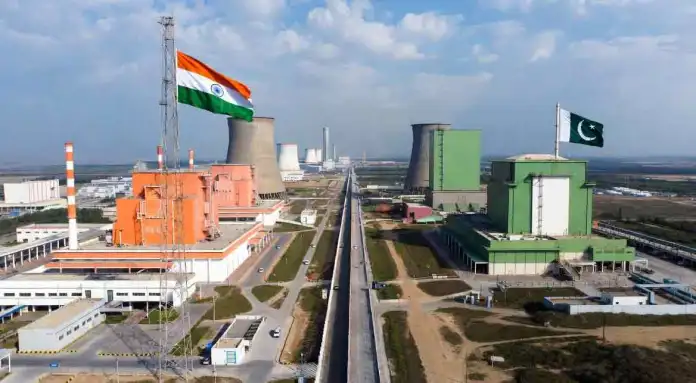
In South Asia, where geopolitical tensions can escalate quickly, maintaining transparency around nuclear installations is considered essential. The agreement ensures that neither country targets or threatens the other’s nuclear facilities, even during conflict situations.
This approach helps limit the scope of confrontation and keeps nuclear assets outside active hostilities. It also sends a message to the international community that both countries recognise the dangers associated with nuclear escalation and are willing to maintain minimum safeguards.
India Pakistan Nuclear List Exchange in the Current Global Context
The 2026 exchange also takes place amid broader global concerns about nuclear safety, conflict zones and rising geopolitical uncertainty. As international focus remains on nuclear risk reduction, the continuation of such agreements in South Asia draws attention as an example of long-term confidence-building, even between rivals.
While it does not resolve deeper political disputes, the exchange shows that long-standing mechanisms can continue to function independently of day-to-day tensions. It reflects an understanding that certain responsibilities go beyond immediate political disagreements.