Vrindavani Vastra Textile to Return to Assam for Exhibition in 2027

Vrindavani Vastra Textile, one of India’s most treasured cultural artifacts, is set to make a historic return to Assam in 2027. The British Museum in London has agreed to loan this revered 16th-century silk textile to India for 18 months, allowing it to be exhibited on Indian soil for the very first time. This moment marks a monumental occasion for Assam’s art, heritage, and spiritual history, as the state prepares to welcome back one of its greatest artistic creations after centuries abroad.
Thank you for reading this post, don't forget to subscribe!A Masterpiece of Assamese Heritage
The Vrindavani Vastra Textile is a masterpiece of Assamese weaving and devotional art. It was created under the guidance of the great saint-reformer Srimanta Sankardeva, a central figure in the Bhakti movement in Assam during the 16th century. Sankardeva’s vision combined spirituality, art, and craftsmanship to express deep religious devotion through visual storytelling.
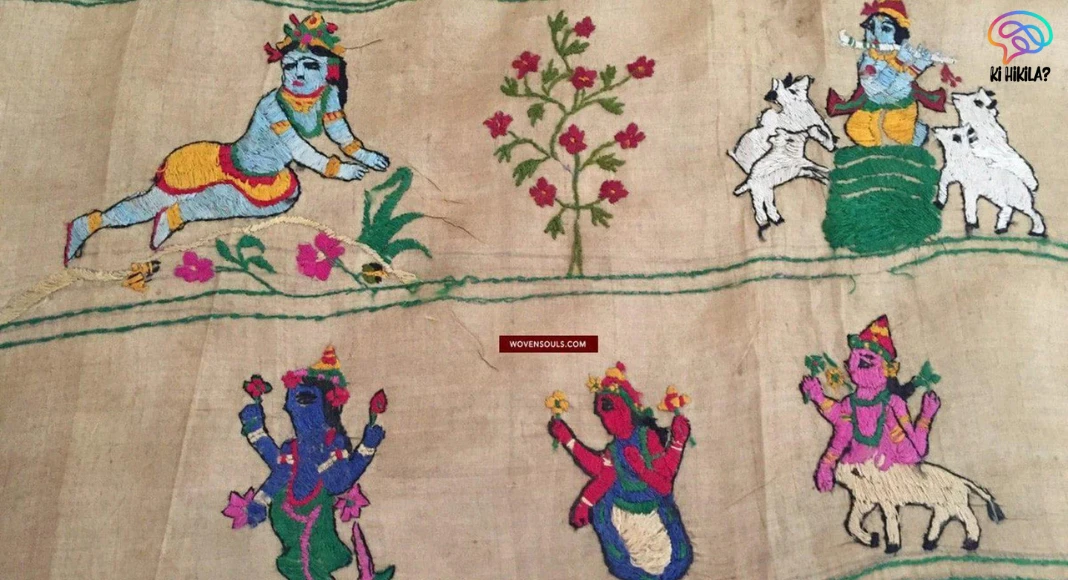
This textile, woven in fine silk, vividly depicts scenes from the life of Lord Krishna, particularly from the Bhāgavata Purāṇa and Sankardeva’s own play Kaliyadamana, which describes Krishna’s victory over the serpent Kaliya. The cloth is a rare example of narrative weaving, where art, literature, and devotion converge in one extraordinary creation.
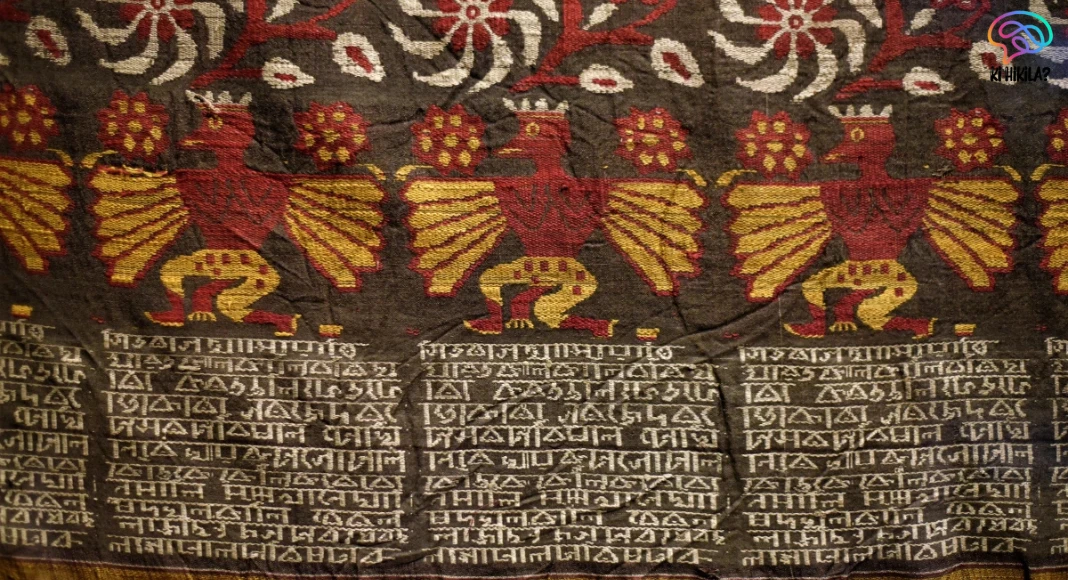
The Vrindavani Vastra Textile is also a testament to the skill of Assamese weavers, who employed the intricate lampas technique—a complex double-weaving method that required two weavers working simultaneously on the loom. This advanced technique enabled the creation of detailed, multi-colored patterns that appear both textured and lifelike.
Journey from Assam to the British Museum
The story of the Vrindavani Vastra Textile is not only about artistry but also about its remarkable journey across continents. Historical records suggest that fragments of the textile traveled to Tibet sometime during the 17th or 18th century, possibly carried by traders or monks who admired its craftsmanship and religious symbolism.
In the 19th and early 20th centuries, British explorers and collectors discovered these fragments in Tibet and acquired them for study and preservation. The pieces eventually made their way to the India Museum in London, which later merged its collections with the British Museum.
Today, around 20 fragments of the textile are known to survive, with the British Museum holding a significant stitched piece made of 12 silk strips measuring over nine meters in length. This preserved cloth remains one of the finest surviving examples of medieval Indian textile art.
Conditions for the Loan and Exhibition
The British Museum’s decision to loan the Vrindavani Vastra Textile to Assam comes with specific conservation and security conditions. The textile is fragile and requires precise environmental controls to prevent damage from humidity, light, or temperature fluctuations.
To meet these standards, Assam must construct a dedicated museum that meets international preservation requirements. The JSW Group has been allotted land in Guwahati to build this facility under its corporate social responsibility program. This new museum will not only house the Vrindavani Vastra during its 18-month stay but will also serve as a center for Assamese art, weaving traditions, and cultural education.
Additionally, the President of India will issue a sovereign guarantee assuring the British Museum of the artifact’s safe return at the end of the loan period. This guarantee represents India’s formal commitment to safeguarding a piece of its heritage that holds immense cultural and historical value.
Artistic and Cultural Features
Every detail of the Vrindavani Vastra Textile tells a story. The 12 silk strips feature intricately woven scenes portraying episodes from Krishna’s life, including his childhood adventures, divine dances with the gopis, and the subduing of Kaliya. Captions and devotional verses accompany the images, blending literary and visual art into a single devotional tapestry.
The textile also depicts various avataras of Lord Vishnu, adding a broader religious dimension beyond Krishna’s story. The upper section of the textile is adorned with Chinese damask and brocade featuring dragon motifs, believed to be later additions that reflect its time in Tibet and its cross-cultural journey.
Metal rings attached along the top suggest that the textile was once displayed in monasteries or temples, suspended as a sacred visual scripture for worshippers. The weaving technique itself—lampas weaving—is among the most complex known to textile historians. It involves two sets of warps and wefts operated simultaneously, demanding both precision and artistic coordination between the two weavers.
A Cultural Homecoming for Assam
The return of the Vrindavani Vastra Textile to Assam will be far more than an art exhibition—it will be a spiritual homecoming. For the Assamese people, this textile represents the living heritage of Srimanta Sankardeva’s Ekasarana Dharma, a faith movement that unified art, literature, and devotion.
When exhibited in 2027, it will reconnect present generations with a glorious era of Assamese cultural achievement. Scholars, artists, and devotees across India are expected to visit Guwahati to witness this exceptional artifact, which has been away from its homeland for centuries.
The exhibition will also serve as an opportunity to educate the world about Assam’s rich weaving traditions, which continue to thrive today through fabrics like Muga and Pat silk. It is anticipated that the display will inspire renewed interest in traditional handloom practices and heritage preservation efforts across India.
A Landmark Moment for Indian Heritage
The upcoming exhibition of the Vrindavani Vastra Textile is not just a cultural event but a milestone in international collaboration for heritage preservation. It reflects growing recognition of India’s historical contributions to global art and religion and showcases how ancient craftsmanship can continue to unite people across nations and centuries.
As Assam prepares to host this priceless textile, the state stands ready to celebrate a chapter of history that embodies devotion, creativity, and identity. The return of the Vrindavani Vastra will remind the world of India’s deep artistic legacy and reaffirm the importance of protecting cultural treasures for future generations.