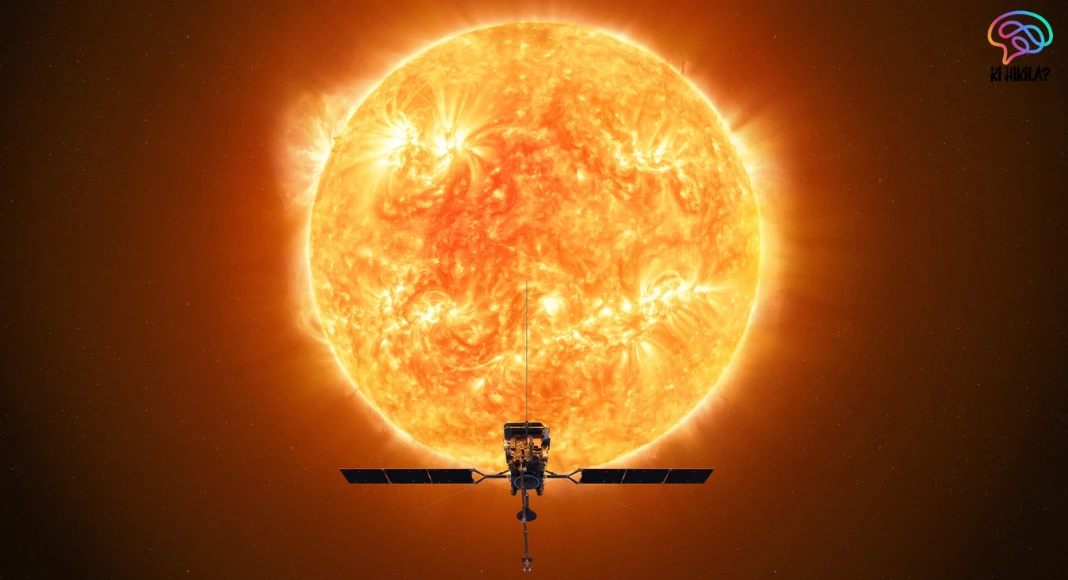
ESA Solar Orbiter Unveils Breakthrough in Understanding Solar Energetic Particles

ESA Solar Orbiter has achieved a major scientific milestone by uncovering new insights into the origins of energetic particles emitted by the Sun. Launched in 2020 as a joint mission between the European Space Agency (ESA) and NASA, the Solar Orbiter is revolutionizing our understanding of how solar activity affects space weather and the Earth’s technological systems. Its recent findings have traced the sources of Solar Energetic Electrons, offering valuable clues about solar events that shape the environment of our solar system.
Thank you for reading this post, don't forget to subscribe!The Solar Orbiter Mission and Its Objectives
The ESA Solar Orbiter was launched to provide an unprecedented view of the Sun, focusing particularly on its poles—regions that have remained largely unexplored until now. It is the first spacecraft designed to capture detailed images of the Sun’s polar regions, offering a new perspective on the magnetic fields and solar dynamics that govern solar activity.
The spacecraft operates closer to the Sun than any previous mission, enduring extreme heat and radiation. Equipped with ten advanced scientific instruments, it can both measure the solar wind directly and remotely observe the Sun’s surface. Between November 2020 and December 2022, the Solar Orbiter recorded more than 300 bursts of energetic electrons. Each of these bursts provided critical data linking solar phenomena to the release of high-energy particles.
These discoveries are transforming the way scientists interpret solar activity and helping them understand how energy from the Sun is transmitted across space.
Understanding Solar Energetic Electrons
ESA Solar Orbiter has played a key role in identifying two main types of Solar Energetic Electrons, or SEEs. The first type is associated with solar flares, which are sudden, intense explosions that occur on small regions of the Sun’s surface. These flares emit radiation and high-energy particles that can travel rapidly through the solar system.
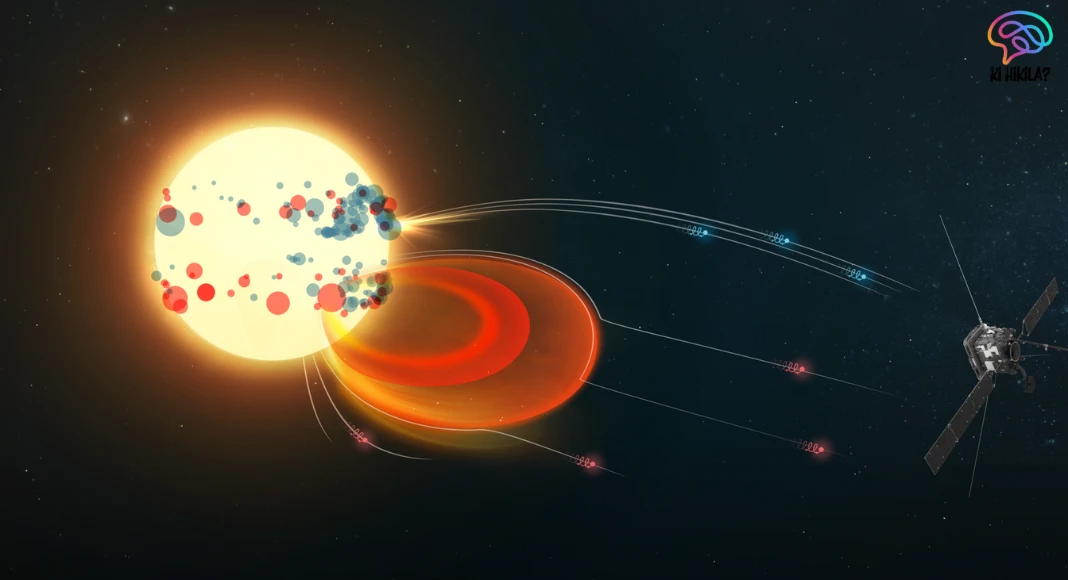
The second type of SEEs is linked to coronal mass ejections (CMEs). CMEs are massive eruptions of plasma and magnetic fields from the Sun’s outer atmosphere, or corona. Unlike solar flares, CMEs release particles more gradually but with much higher energy. These powerful bursts of solar material can travel millions of kilometres per hour, sometimes impacting Earth’s magnetosphere and disrupting satellite operations, GPS systems, and communication networks.
The detailed observations provided by the ESA Solar Orbiter have allowed scientists to better distinguish between these two types of energetic electrons and understand their respective impacts on space weather.
Tracing the Source of Energetic Particles
One of the mission’s most significant breakthroughs came when the ESA Solar Orbiter simultaneously observed solar events and detected corresponding streams of energetic electrons in space. This dual observation made it possible to directly trace the particles back to their points of origin on the Sun.
Scientists noticed a time delay between the solar events and the arrival of particles at the spacecraft. This delay was caused by the time taken for particles to travel through space and the scattering effects created by turbulence in the interplanetary medium. These findings provided the first clear evidence connecting energetic electrons detected in space to specific solar eruptions.
By understanding this relationship, researchers can now better predict how and when solar storms will release high-energy particles that might affect spacecraft, astronauts, and even power systems on Earth.
Impact on Space Weather and Earth
The Sun’s activity constantly influences the space environment surrounding Earth, a phenomenon collectively known as space weather. Solar flares, coronal mass ejections, solar wind, and energetic particle events can all have serious consequences for human technology.
Data from the ESA Solar Orbiter has shed new light on how these processes work. Solar flares can cause sudden radio blackouts and interfere with communication networks. CMEs are even more dangerous, as they can trigger geomagnetic storms that damage satellites and power grids. These solar disturbances can also pose radiation risks to astronauts in orbit or on future missions to the Moon and Mars.
Understanding how and where these energetic particles are produced allows scientists to develop better forecasting models. Improved predictions can help governments, space agencies, and power companies prepare for solar storms, minimizing potential disruptions.
Future Prospects and Scientific Goals
The ESA Solar Orbiter continues to move closer to the Sun with each orbit, enabling even more detailed observations. One of its primary objectives is to study the Sun’s 11-year magnetic cycle, a key driver of solar activity that influences everything from sunspots to flares and CMEs. By understanding this cycle, scientists can gain insight into the long-term patterns that shape the behaviour of our star.
Another major research focus is the heating of the Sun’s corona, which mysteriously reaches temperatures of millions of degrees—hotter than the Sun’s visible surface. The Solar Orbiter aims to uncover the mechanisms behind this phenomenon, which has puzzled scientists for decades.
Additionally, the spacecraft investigates how the solar wind forms and accelerates to high speeds. Solar wind is a continuous flow of charged particles streaming from the Sun that shapes the heliosphere—the vast bubble-like region that protects our solar system from interstellar radiation.
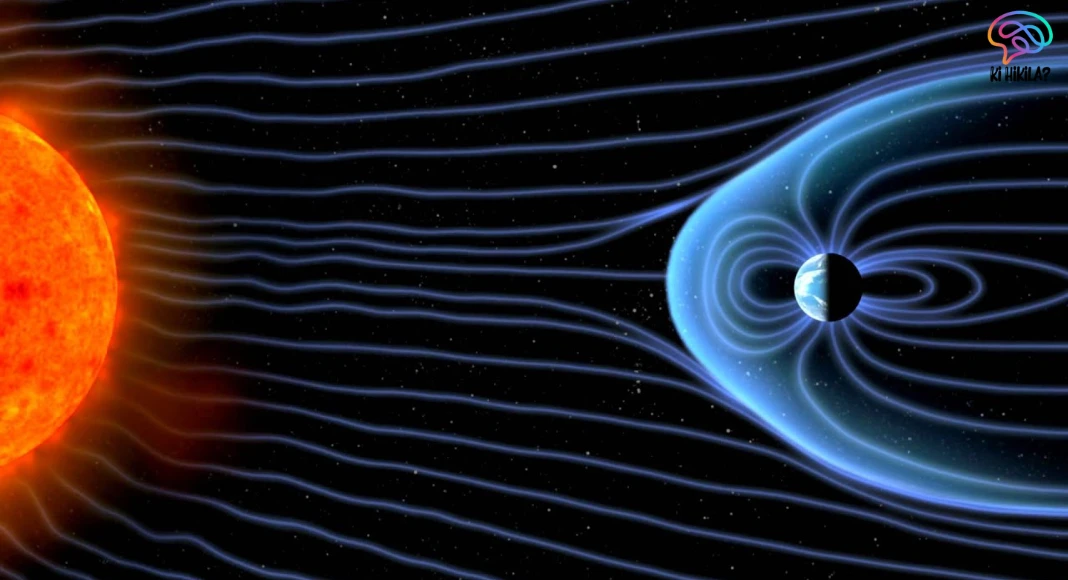
Through these studies, the ESA Solar Orbiter is expected to deepen humanity’s understanding of how the Sun affects space weather and Earth’s environment. Its discoveries will also play a vital role in preparing for future space exploration missions that depend on accurate solar forecasting.
A New Era of Solar Exploration
The achievements of the ESA Solar Orbiter mark a significant advancement in heliophysics. By capturing the most detailed views of the Sun’s poles and tracing the origins of energetic particles, it has opened new possibilities for predicting solar events and protecting technology on Earth.
As the mission continues to collect data, scientists anticipate even greater insights into the forces that power the Sun and shape the space environment around our planet. The knowledge gained from the Solar Orbiter will not only safeguard satellites and astronauts but also contribute to a broader understanding of the dynamic relationship between the Sun and life on Earth.