
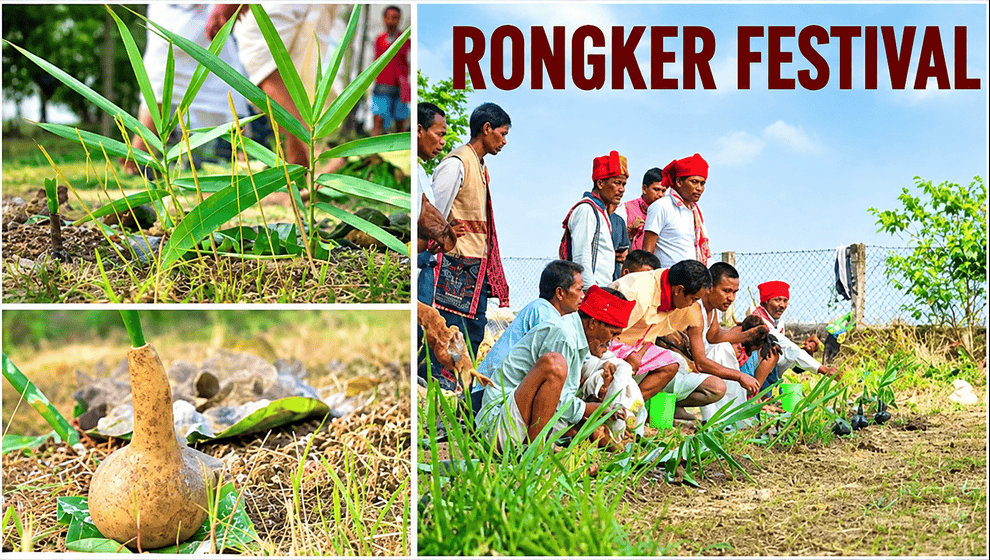
Rongker Festival: The Traditional Karbi Thanksgiving Celebration of Assam

Introduction
Rongker Festival is one of the most important traditional festivals of the Karbi tribe of Assam. It is an annual religious and community celebration associated with the arrival of spring, agricultural life and the well-being of the village. The festival reflects the Karbi people’s deep connection with nature, farming, traditional beliefs and their ancestral customs.
Celebrated mainly in the Karbi Anglong region of Assam, Rongker is a form of community worship in which villagers pray to their traditional deities for a good harvest, protection from diseases, freedom from natural calamities and peace throughout the year. It is also an occasion for bringing the community together through traditional ceremonies, folk dances, indigenous games and communal feasts.

Unlike festivals that are mainly celebrated for entertainment, Rongker has a strong religious and social meaning. It represents the collective hopes of villagers for a safe, healthy and prosperous year.
When Is Rongker Festival Celebrated?
Rongker is generally celebrated in January or February, depending on the decision and convenience of the villagers. The Government of India’s Utsav portal mentions that the festival is observed either on 5 January or 5 February as a thanksgiving ceremony and a prayer for protection from harmful forces. However, the date is not necessarily the same in every Karbi village.
The festival is associated with the beginning of a new agricultural cycle and the traditional New Year period. It is an important time for villagers to pray for favourable weather, healthy crops, protection of domestic animals and the overall prosperity of their community.
Rongker is not simply a celebration of a successful harvest. It is also a prayer for the coming agricultural season, asking traditional deities to protect the village and support the people throughout the year.
Historical and Cultural Background of Rongker
The Karbis are one of the major indigenous communities of Assam. They have a rich cultural heritage that includes traditional religious practices, folk songs, dances, festivals, oral traditions and community-based agricultural customs.
Karbi Anglong and West Karbi Anglong are important regions associated with Karbi culture. The community has traditionally maintained a close relationship with forests, hills, rivers, agricultural fields and other natural surroundings.
Rongker developed as an important religious practice within this cultural setting. Traditional Karbi beliefs recognise different spiritual forces associated with households, villages, territories and natural surroundings. Through Rongker, villagers collectively worship territorial deities and seek protection for the entire community.
According to an anthropological study titled An Anthropological Study of the Karbi Religious Festival/Rituals – Rongker, published in 2019, the festival is performed to protect villages from natural calamities and diseases, ensure people’s well-being and seek a favourable farming season. The study also discusses different forms of Rongker observed by the Karbis in Karbi Anglong.
The festival therefore represents the traditional relationship between religion, agriculture, nature and community life among the Karbis.
Religious Significance and Traditional Deities
Religious worship is the most important part of Rongker. The Karbis traditionally believe that different deities and spiritual forces are connected with human life, household prosperity, agriculture and the protection of villages.
During Rongker, villagers offer prayers to these deities to seek blessings for the coming year. The worship is intended to protect people, animals and crops from diseases, misfortunes and other dangers.
Some important deities associated with Karbi religious traditions include:
| Deity | Traditional significance |
|---|---|
| Hemphu | An important household and protective deity |
| Mukrang | A prominent deity in Karbi traditional beliefs |
| Rasinja (Rasingja) | A female household deity |
| Longri Sarpo | Associated with the welfare of the village |
| Rit-Anglong | Traditionally associated with agriculture |
| Arnam-teke | Associated with the protection of villagers from tigers and other dangers |
The importance and selection of deities may differ between villages and local traditions. Therefore, the same list should not be considered compulsory for every Rongker celebration. Research on Karbi religious beliefs also describes the distinction between household deities and territorial or village deities.
Major Rituals and Ceremonies of Rongker
Rongker involves a series of traditional ceremonies performed according to Karbi religious customs. The main worship is generally organised in an open place within or near the village. Villagers collectively prepare the worship area, construct temporary arrangements and organise the offerings required for the rituals.
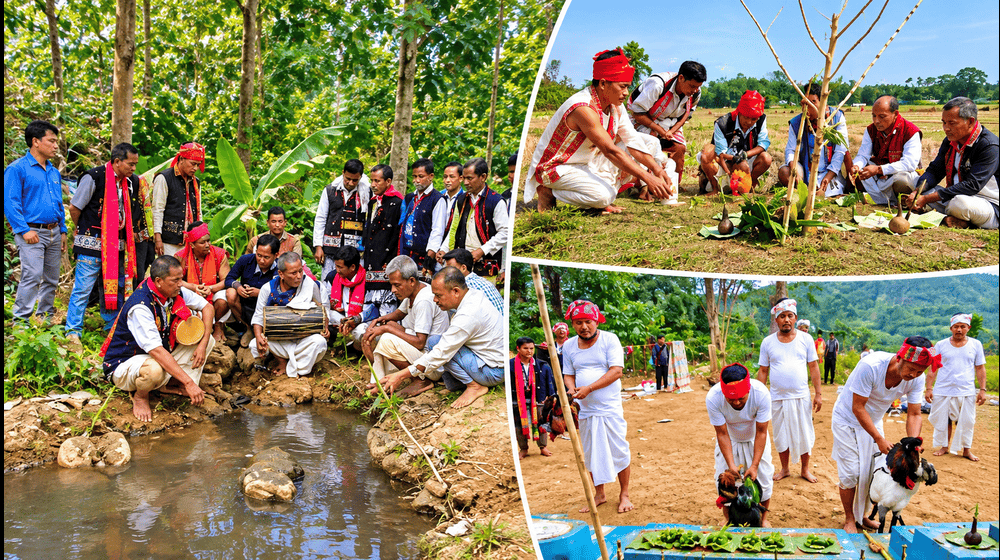
In a commonly documented three-day form of Rongker, the ceremonies are divided into four major stages.
Sadi – Inviting the Deities
Sadi is the opening stage of the traditional Rongker ceremony. During this ritual, the deities are formally invited to the festival site.
The villagers prepare the worship area and make arrangements for the religious ceremonies. The purpose is to establish a connection with the spiritual forces believed to protect the village.
This opening ritual is important because the subsequent offerings and prayers are performed after invoking the presence of the deities.
Karkli – Worship and Offerings
Karkli is one of the central parts of Rongker. During this stage, the traditional deities are worshipped through prayers and different offerings.
Two important practices associated with Karkli are:
- Kibo-Kaba: The offering of food or meals to the deities as part of the traditional worship.
- Koia-Abida: The offering of betel leaves and areca nuts as a mark of respect.
The main priest, known as the Kurusar, leads the religious ceremonies with assistance from other traditional religious specialists and village representatives.
In some communities, specially prepared offerings are placed at traditional altars. Animal and bird sacrifices are also described in ethnographic accounts of the ceremony, although the practices and offerings may vary according to local customs and beliefs.
After the worship, a communal feast is organised. The ceremony brings villagers together and reflects the importance of collective participation in Karbi religious life.
Rongphu-Rongling-Kangthin – Driving Away Evil Spirits
Rongphu-Rongling-Kangthin is another important stage of Rongker. It is also known as Ajo-Rongker.
This ritual is generally performed on the evening of the second day. According to traditional beliefs, harmful spirits and negative forces must be driven away from the village to protect its inhabitants.
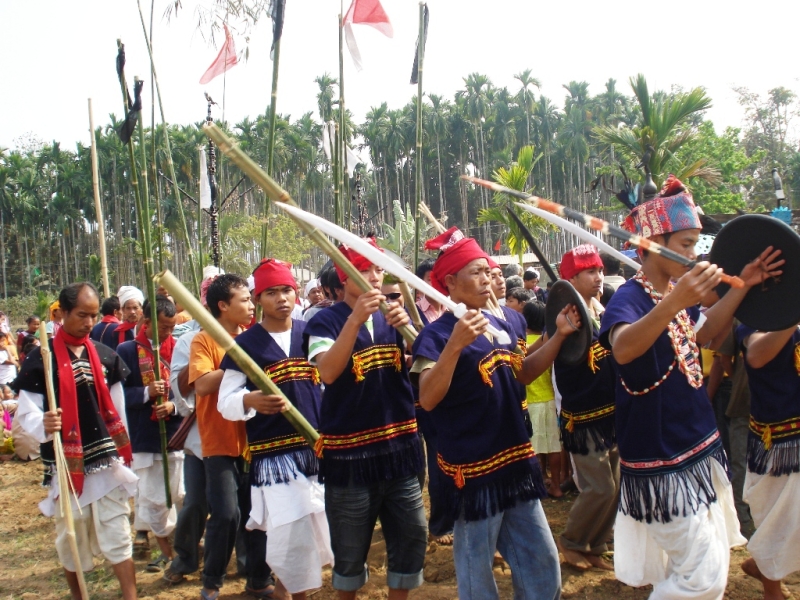
During the ceremony, villagers perform traditional movements and dance as part of the ritual. The practice symbolically drives evil spirits from the lower part of the village towards the upper part, away from the community.
This ceremony reflects the traditional belief that the protection of the village requires collective religious action.
Langhe Rongker – The Final Ritual
Langhe Rongker is the concluding stage of the commonly described three-day celebration.
It is traditionally performed near a riverbank or bathing ghat. During this ceremony, offerings are made to Arnam-teke, the tiger deity associated with protection against attacks by wild animals, particularly tigers.
The ritual reflects the historical relationship between the Karbi people and their natural surroundings. In earlier times, forests and wildlife were closely connected with village life, agriculture and the safety of people and domestic animals.
Through Langhe Rongker, villagers traditionally seek protection from dangerous animals and other threats.
These four stages are documented in research on Karbi religious practices. However, local variations should be recognised rather than assuming that every village follows an identical programme.
Role of the Kurusar and Other Religious Specialists
The Kurusar plays a central role in the traditional Rongker ceremony. The Kurusar is the chief priest responsible for leading the main religious worship and performing important rituals.
The priest is assisted by other religious specialists and experienced members of the village who understand traditional Karbi customs and methods of worship.
Village representatives also contribute to organising the festival. They help prepare the worship area, arrange offerings and coordinate the participation of community members.
Traditionally, the main religious worship has been performed by male members of the village, with women excluded from the central worship area under customary restrictions. This is an ethnographically documented traditional practice and should be understood in its cultural context rather than assumed to describe every contemporary celebration.
The participation of village elders is also important because they help preserve knowledge of traditional ceremonies and pass cultural practices to younger generations.
Traditional Customs and Taboos During Rongker
Rongker is observed according to traditional rules and customs. During the festival, villagers follow certain restrictions to maintain the religious significance and discipline of the ceremony.
Some traditional taboos associated with Rongker include:
- Restriction on husking rice: Traditional grain-husking activities are prohibited during the observance.
- Restriction on agricultural activities: Villagers traditionally avoid heavy agricultural work during the festival.
- Restriction on leaving the village: Community members are expected to remain within the village during the main religious ceremonies.
- Restrictions in the worship area: Traditional rules have restricted women’s entry into the main worship area.
These customs are connected with the traditional belief that the entire village must observe the festival together and maintain the required religious discipline.
Ethnographic accounts published by the Tribal Research Institute and research on Karbi society document these restrictions. Their application may differ across communities and contemporary celebrations.
Traditional Dances, Music and Community Celebrations
Although religious worship is the main purpose of Rongker, community participation is also an important part of the festival.
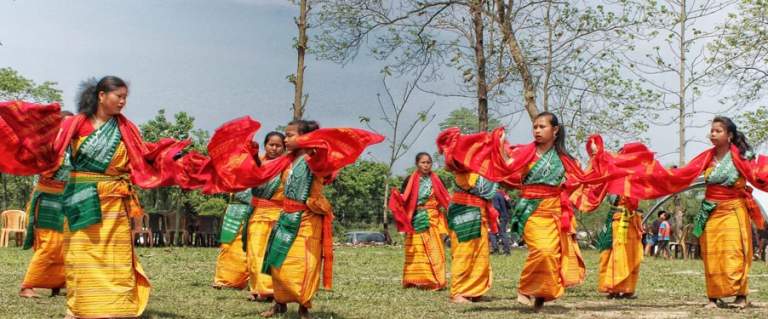
Traditional Karbi music, dances and cultural activities reflect the community’s identity and heritage. Folk instruments, including drums and flutes, are important elements of Karbi musical traditions.
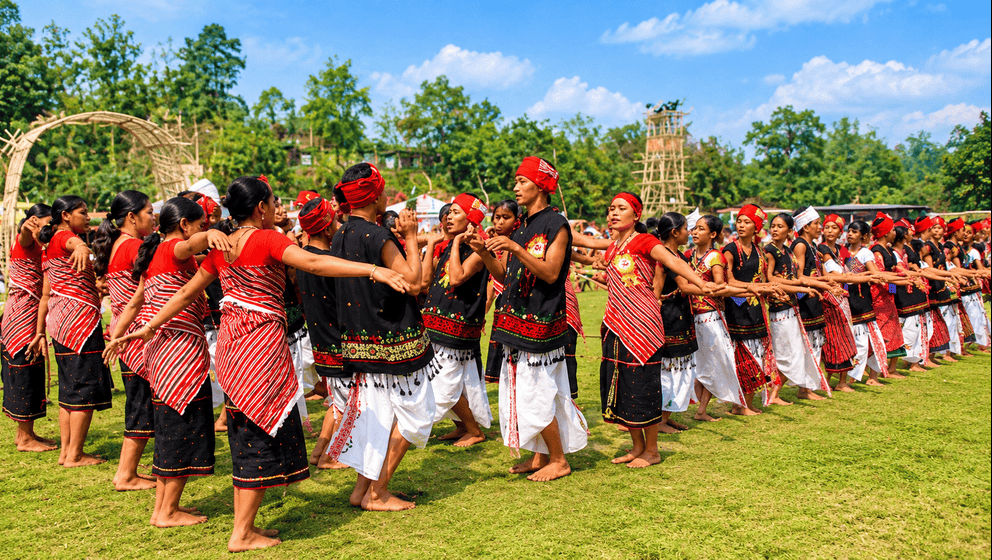
Some traditional Karbi dance forms and cultural expressions include:
- Ritnong Chingdi: A traditional Karbi dance form.
- Hacha Kekan: A traditional cultural dance associated with Karbi celebrations.
- Rongker Dance: A dance form associated with the Rongker tradition.
Traditional dances and cultural programmes may accompany public celebrations of the festival. However, these performances should be distinguished from the religious rituals themselves.
The Government of India also recognises Rongker as a festival associated with Karbi culture, spirituality, seasonal traditions and dance.
Community Feast and Social Importance
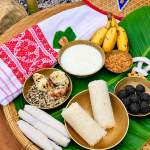
A community feast is an important part of the Rongker celebration. After the religious ceremonies, villagers come together to share food and spend time with one another.
The arrangements are traditionally supported through contributions and collective participation. Members of the village help organise the food, offerings and other requirements.
The communal feast has significance beyond food. It strengthens relationships between families, encourages cooperation and creates a sense of unity among villagers.
Rongker also provides an opportunity for younger generations to observe traditional practices and learn about their cultural heritage from elders.
The festival therefore serves both religious and social purposes. It brings together people who share a common cultural identity and strengthens their connection with their village.
Agricultural Significance of Rongker
Agriculture has traditionally played an important role in the lives of the Karbi people. Farming, particularly traditional shifting cultivation or jhum cultivation in some areas, has influenced many aspects of Karbi culture.
Rongker is closely connected with this agricultural background. During the festival, villagers pray for favourable weather, healthy crops, sufficient rainfall and protection against agricultural problems.
The prayers also reflect concerns about diseases, natural disasters, wild animals and other challenges that could affect village life.
For traditional farming communities, a successful agricultural season is important for food security and economic stability. Rongker expresses the collective hope that the coming year will bring prosperity and a good farming season.
An anthropological study of the festival identifies crop protection, agricultural success and the general welfare of the community as important reasons behind its observance.
Rongker and the Cultural Identity of the Karbi People
Rongker is an important expression of Karbi cultural identity. It represents the community’s traditional religious beliefs, social organisation and relationship with nature.
The festival also demonstrates how indigenous communities preserve their cultural knowledge through collective activities and oral traditions.
The involvement of village elders, priests and younger members helps transmit traditional customs from one generation to another. Through these practices, the Karbi community maintains a connection with its cultural history.
In modern times, public celebrations and cultural programmes also provide opportunities to introduce Karbi traditions to people from other communities.
The Government of Assam’s district administration website, particularly the West Karbi Anglong district portal, identifies Rongker Karkli as an important community religious festival with social, cultural and religious significance. It also notes that the spirits invoked during the ceremony are associated with the protection of families, animals, plants and the wider community.
Difference Between Rongker and Chomangkan
Rongker and Chomangkan are two important traditional festivals of the Karbi community. Although both have religious and community significance, their purposes are different.
| Feature | Rongker | Chomangkan |
|---|---|---|
| Main purpose | Prayers for village protection and prosperity | Religious ceremony associated with the dead |
| Religious significance | Worship of territorial and local deities | Prayers for the peace and onward journey of departed souls |
| Main association | Agricultural well-being and protection | Death-related customs and ancestral beliefs |
| Nature | Community religious festival | Traditional funeral and memorial ceremony |
| Cultural importance | Protection and prosperity of the village | Respect for the deceased and family traditions |
Both festivals reflect the importance of religious beliefs, community participation and traditional customs in Karbi society. Chomangkan, unlike Rongker, is particularly associated with death ceremonies and the traditional beliefs surrounding the souls of departed family members.
Rongker Festival in Modern Times
Rongker continues to hold cultural and religious importance among the Karbi people. Although modern lifestyles and changing social conditions have influenced traditional community practices, the festival remains an important part of Karbi heritage.
Public celebrations, cultural gatherings and awareness programmes help introduce the festival to a wider audience. They also provide opportunities for younger generations to understand traditional Karbi religious practices and community values.
The recognition of Rongker on the Government of India’s Utsav portal and its inclusion in official descriptions of Assam’s tribal festivals help improve awareness of this indigenous celebration.
Preserving Rongker is important not only for the Karbi community but also for the cultural diversity of Assam. Its traditions offer an understanding of how indigenous communities maintain relationships with nature, agriculture, spirituality and collective life.
Frequently Asked Questions
What is Rongker Festival?
Rongker is a traditional religious festival of the Karbi tribe of Assam. It is celebrated to worship traditional deities and pray for village protection, good harvests, good health and prosperity.
Which tribe celebrates Rongker Festival?
The Karbi tribe of Assam celebrates Rongker. It is particularly associated with the Karbi Anglong and West Karbi Anglong regions.
When is Rongker Festival celebrated?
Rongker is generally celebrated in January or February. The Government of India’s Utsav portal mentions 5 January or 5 February as traditional dates, depending on the convenience of the villagers.
How many days is Rongker celebrated?
A commonly documented form of Rongker lasts three days. Its duration and ceremonial details may vary according to local traditions.
Who is the main priest of Rongker?
The main priest is known as the Kurusar. The Kurusar leads the religious ceremonies with assistance from other traditional religious specialists.
What are the four main rituals of Rongker?
The four commonly documented stages are Sadi, Karkli, Rongphu-Rongling-Kangthin and Langhe Rongker.
Why is Rongker celebrated?
Rongker is celebrated to seek blessings from traditional deities for the protection of villagers, good agricultural production, freedom from diseases and safety from natural calamities.