


Ajeyo (2014): A Story of Social Change

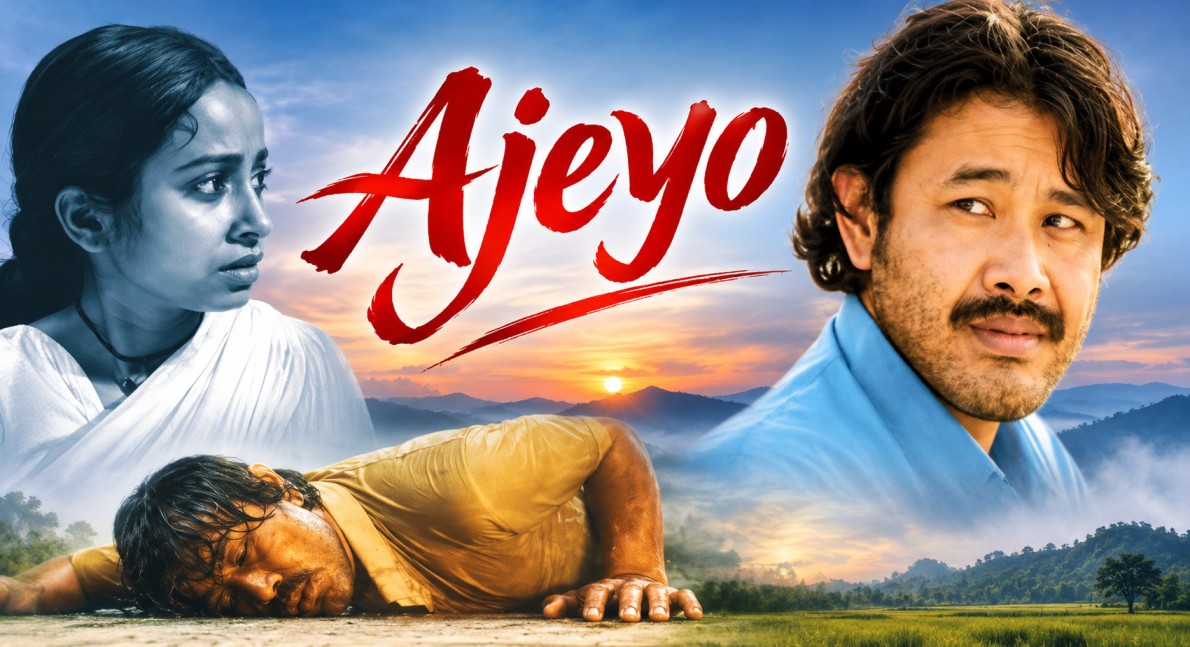
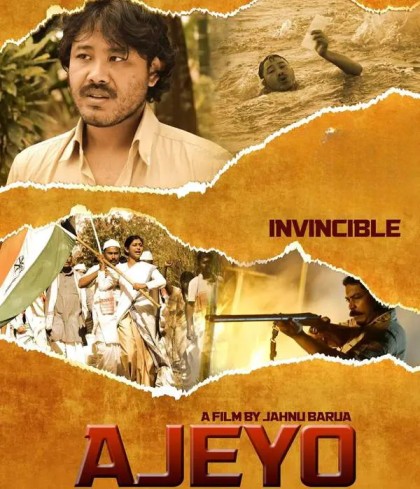
Ajeyo (English: Invincible) is a 2014 Assamese drama film directed by Jahnu Barua. Based on the Sahitya Akademi Award-winning Assamese novel Ashirbador Rong by Arun Sarma, the film explores social injustice, caste discrimination, child marriage and communal harmony in Assam during the final years of British rule in India.
Starring Rupam Chetia, Jupitora Bhuyan, Kopil Bora and Bishnu Kharghoria, Ajeyo follows the life of Gojen Keot, an honest young man who believes that India’s independence will bring an end to social injustice. However, he soon discovers that political freedom alone cannot remove the deep-rooted problems within society.

The film was released on 3 January 2014 and received the National Film Award for Best Feature Film in Assamese at the 61st National Film Awards. It also won the Best Film award at the 2014 Prag Cine Awards.
Ajeyo Movie Details
| Details | Information |
|---|---|
| Film Name | Ajeyo |
| English Title | Invincible |
| Release Date | 3 January 2014 |
| Director | Jahnu Barua |
| Screenplay | Jahnu Barua |
| Based On | Ashirbador Rong by Arun Sarma |
| Producer | Shankar Lall Goenka |
| Production Company | Shiven Arts |
| Lead Actors | Rupam Chetia and Jupitora Bhuyan |
| Cinematography | Sumon Dowerah |
| Editing | Hue-en Barua |
| Music Director | Dhrubajyoti Phukan |
| Language | Assamese |
| Country | India |
| Runtime | 116 minutes |
| Genre | Drama |
Story of Ajeyo
The story of Ajeyo takes place in a village in Assam in 1946, shortly before India’s independence and Partition. It follows Gojen Keot, played by Rupam Chetia, an honest but short-tempered young man who lives with his grandmother.
Gojen struggles to earn a living through small jobs. Although he has left school, he believes strongly in education, equality and social justice. He supports Mahatma Gandhi and hopes that India’s freedom from British rule will create a society without discrimination.
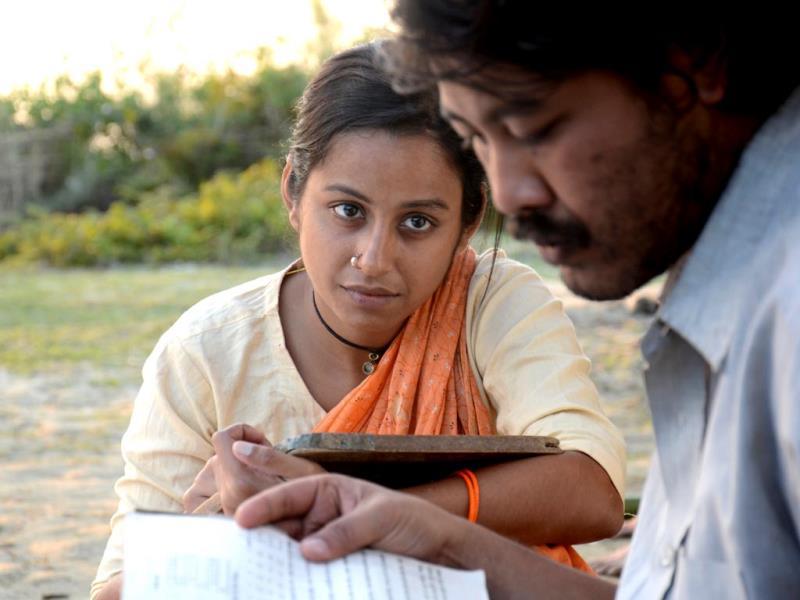
Gojen also tutors Hasina, a young Muslim girl played by Jupitora Bhuyan. Their relationship develops in a society where religious and caste divisions influence everyday life. Gojen believes that people should be treated equally, regardless of their religion or social background.
However, he carries a painful memory from his involvement in the freedom movement. During an earlier protest against British rule, he was given the responsibility of delivering a message to a group of marching protesters. He failed to complete the task, and two freedom fighters lost their lives. Gojen continues to struggle with guilt over the incident.
Much of the story focuses on his opposition to the village’s richest man, who tries to take advantage of the political uncertainty surrounding India’s Partition to acquire land. Gojen stands against this exploitation and challenges the unfair practices of powerful people.
He also fights against caste restrictions and child marriage. One important part of the story involves Joba, a Brahmin woman who becomes a widow at the age of 18. Gojen helps her elope with Madan Sharma, a freedom fighter, despite opposition from her father.
As the story develops, Gojen marries Hasina and eventually leaves the village. The film then moves forward to contemporary Assam, where his granddaughter, played by Rimpi Das, works as a senior police officer. She continues her grandfather’s fight against social injustice, particularly discrimination against women.
Through these two generations, Ajeyo connects the struggles of the freedom movement with social problems that continue even after independence.
Cast and Characters
The film features several Assamese actors who bring its historical and social themes to life.
| Actor | Character |
|---|---|
| Rupam Chetia | Young Gojen Keot |
| Jupitora Bhuyan | Hasina |
| Bishnu Kharghoria | Old Gojen Keot |
| Kopil Bora | Madan Sharma |
| Munmi Kalita | Joba |
| Rimpi Das | Gojen’s granddaughter |
| Pratibha | Gojen’s grandmother |
| Saurav Hazarika | School teacher |
| Lakhi Borthakur | Priest and Joba’s father |
Rupam Chetia plays the young Gojen, whose strong principles often bring him into conflict with powerful people. Jupitora Bhuyan plays Hasina, whose relationship with Gojen challenges the religious divisions of the village. Bishnu Kharghoria portrays Gojen in his later years.
Direction and Production
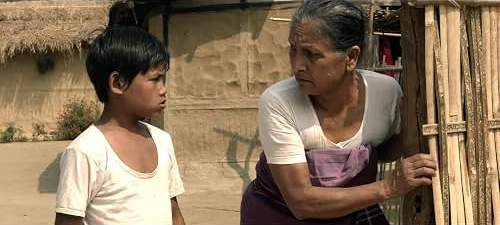
Jahnu Barua directed and adapted Ajeyo from Arun Sarma’s Assamese novel Ashirbador Rong. The novel received the Sahitya Akademi Award in 1997.
The film’s muhurat ceremony took place in Guwahati on 30 November 2012. Principal photography began on 4 January 2013 near Dhola in Sadiya, followed by shooting in Tinsukia.
Rupam Chetia underwent four months of training before filming to prepare for his role. The director also made a notable change to the original novel’s ending. In the book, Gojen has a grandson, while the film introduces a granddaughter who becomes a police officer.
Jahnu Barua explained that this change allowed the story to show a progressive young woman carrying forward Gojen’s ideals. The character also reflects the director’s inspiration from his mother, who had limited formal education but managed a large household and raised 11 children.
Music of Ajeyo
The music of Ajeyo was composed by Dhrubajyoti Phukan. The film’s background score supports its historical setting and emotional themes, including Gojen’s personal struggles, his memories of the freedom movement and his fight against social discrimination.
Music direction was also recognised at the Prag Cine Awards, where Dhrubajyoti Phukan received a nomination for Best Music Direction. The available information identifies the composer but does not provide a complete soundtrack list, song titles or singer details. These details should be verified before publishing them.
Film Festivals and Release
Before its theatrical release, Ajeyo was screened at several film events. It was first shown at the 15th Mumbai Film Festival, held from 17 to 24 October 2013. It was later screened at the 6th Bengaluru International Film Festival, held from 26 December 2013 to 2 January 2014.
The film was released in Assam on 3 January 2014. It was also screened at the Kala Ghoda Arts Festival in Mumbai from 1 to 9 February 2014.
These screenings helped introduce the film to audiences outside Assam and brought attention to its themes of equality, communal harmony and social reform.
Awards and Recognition
Ajeyo received important recognition at both national and regional levels. At the 61st National Film Awards, it won Best Feature Film in Assamese. This was another major achievement for Jahnu Barua, following the success of his earlier film Baandhon in the same category.
At the 2014 Prag Cine Awards, the film won Best Film and Best Costume. It also received nominations in several other categories.
| Award | Category | Result |
|---|---|---|
| 61st National Film Awards | Best Feature Film in Assamese | Won |
| Prag Cine Awards 2014 | Best Film | Won |
| Prag Cine Awards 2014 | Best Costume – Geetarani Goswami | Won |
| Prag Cine Awards 2014 | Best Actor Male – Rupam Chetia | Nominated |
| Prag Cine Awards 2014 | Best Actor Female – Jupitora Bhuyan | Nominated |
| Prag Cine Awards 2014 | Best Music Direction – Dhrubajyoti Phukan | Nominated |
| Prag Cine Awards 2014 | Best Editing – Hue-en Barua | Nominated |
| Prag Cine Awards 2014 | Best Cinematography – Sumon Dowerah | Nominated |
The film was also included in Jeevan Initiative’s annual list of the “Special 10 of the Year (2014)”. The list recognised its portrayal of social conditions during the independence era and the struggles of ordinary people.
Conclusion
Ajeyo is an important Assamese film that connects the history of India’s freedom movement with social challenges that continue across generations. Through Gojen Keot’s journey, Jahnu Barua explores caste discrimination, child marriage, religious divisions and the struggle for equality.
The performances, historical setting and meaningful storyline make the film a memorable work in Assamese cinema. Its National Film Award and Prag Cine Award wins further highlight its contribution to regional filmmaking. The story also reminds viewers that true social progress requires more than political independence; it needs courage, equality and respect for every individual.
FAQs About Ajeyo
1. Who directed the Assamese film Ajeyo?
Jahnu Barua wrote and directed Ajeyo.
2. When was Ajeyo released?
The film was released on 3 January 2014.
3. What is the English meaning of Ajeyo?
Ajeyo means Invincible in English.
4. Which novel is Ajeyo based on?
The film is based on Ashirbador Rong, a novel by Arun Sarma that received the Sahitya Akademi Award in 1997.
5. Who played Gojen Keot in Ajeyo?
Rupam Chetia played the young Gojen Keot, while Bishnu Kharghoria portrayed him in old age.