


Joymoti Film (1935): The Birth of Assamese Cinema

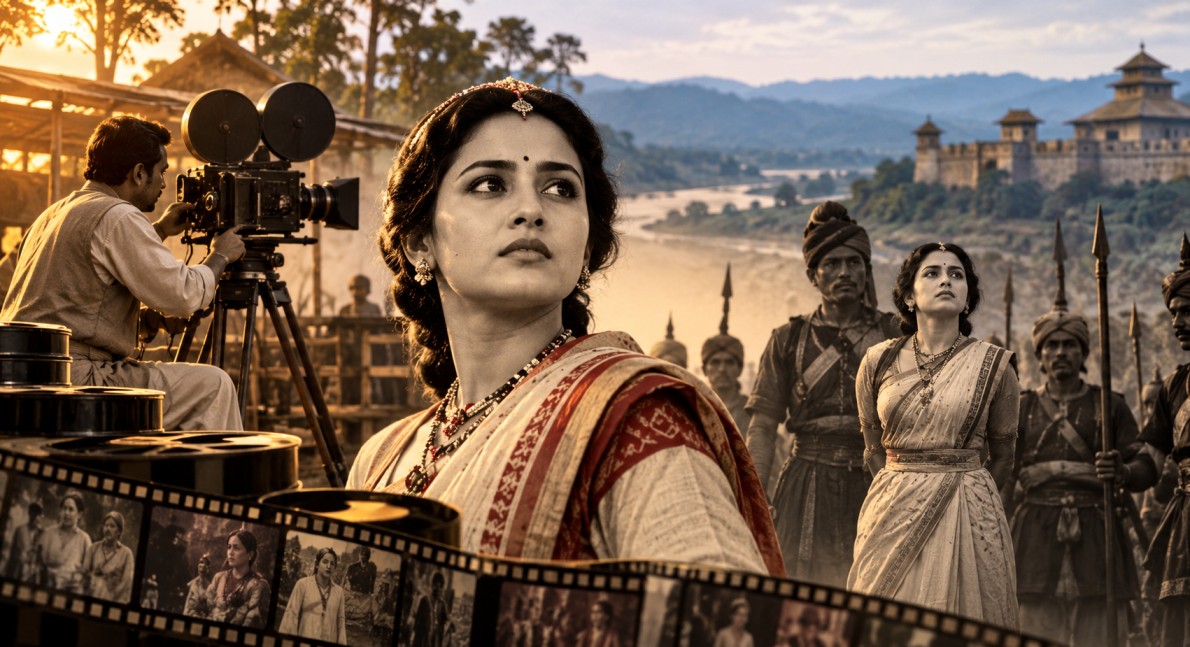
Joymoti Film (1935) holds a special place in the history of Indian cinema. It is widely recognised as the first Assamese-language film and marked the beginning of Assamese filmmaking. Directed and produced by the famous Assamese poet, writer and filmmaker Jyoti Prasad Agarwala, the film was released on 10 March 1935.
The film tells the story of Joymoti Konwari, an Ahom princess who sacrificed her life to protect her husband, Prince Gadapani. Her courage, patience and love for her family and country made her an important figure in Assam’s history.

Apart from its historical story, Joymoti introduced several new filmmaking techniques to Indian cinema. It also gave Assamese cinema its first actress, Aideu Handique. Although the film did not achieve commercial success, its cultural and historical importance remains unforgettable.
Important Details About Joymoti Film
Here are some important facts about the first Assamese film.
| Particulars | Details |
|---|---|
| Film Name | Joymoti |
| Release Date | 10 March 1935 |
| Director | Jyoti Prasad Agarwala |
| Producer | Jyoti Prasad Agarwala |
| Story Based On | Lakshminath Bezbarua’s play |
| Lead Actress | Aideu Handique |
| Other Important Actor | Phani Sarma |
| Cinematography | Bhopal Shankar Mehta |
| Music Director | Jyoti Prasad Agarwala |
| Production Company | Chitralekha Movietone |
| Language | Assamese |
| Country | India |
| Studio | Chitraban Studio, Bholaguri Tea Estate |
History and Background of Joymoti Film
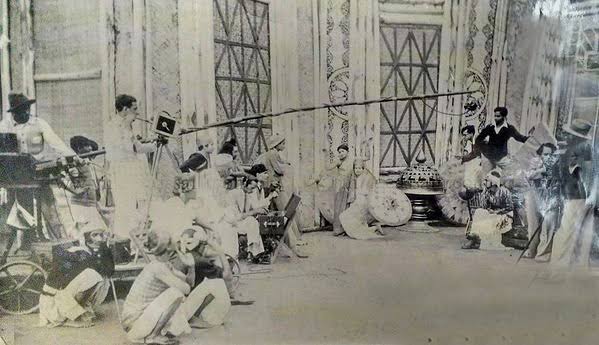
The history of Joymoti began with Jyoti Prasad Agarwala’s interest in cinema and filmmaking. He wanted to introduce a new form of storytelling to Assam and establish a strong foundation for Assamese films.
During his return journey from England, Jyoti Prasad Agarwala spent around six months at the UFA Studios in Berlin, Germany. There, he learned different aspects of filmmaking and gained practical knowledge of film production.
After returning to Assam, he decided to make an Assamese film based on the life and sacrifice of Joymoti Konwari.
For this purpose, he established Chitraban Studio at Bholaguri Tea Estate. The studio became the centre of film production and training. Shooting began in April 1933 and continued through several challenges, including heavy rainfall, poor lighting facilities and technical difficulties.
Jyoti Prasad Agarwala also trained the actors in different filmmaking techniques. Many of them had never acted in a film before. He introduced them to camera shots, editing, processing and other technical aspects of filmmaking.
The shooting was completed in August 1934, and the film was released on 10 March 1935.
Story of Joymoti Konwari
The story of Joymoti is based on an important period in the history of the Ahom Kingdom.
Joymoti Konwari was the wife of Prince Gadapani. During the reign of Ahom king Sulikphaa, also known as Loraa Roja, a political crisis developed in the kingdom. Laluksola Borphukan played an important role in the political events that followed.
Between 1679 and 1681, several Ahom princes faced persecution. To protect himself, Gadapani left the kingdom and went into hiding.
The king’s soldiers could not find him. They captured his wife, Joymoti, and brought her to Jerenga Pathar. She was tortured for several days to force her to reveal her husband’s hiding place.
However, Joymoti refused to disclose Gadapani’s location despite continuous physical suffering. According to the historical account provided, she was tortured for 14 days and died on 27 March 1680.
Her sacrifice helped protect Gadapani, who later returned and became the Ahom king. He is remembered as Supaatphaa Gadadhar Singha.
Joymoti is remembered as a symbol of courage, sacrifice and loyalty in Assamese history.
Aideu Handique: The First Actress of Assamese Cinema
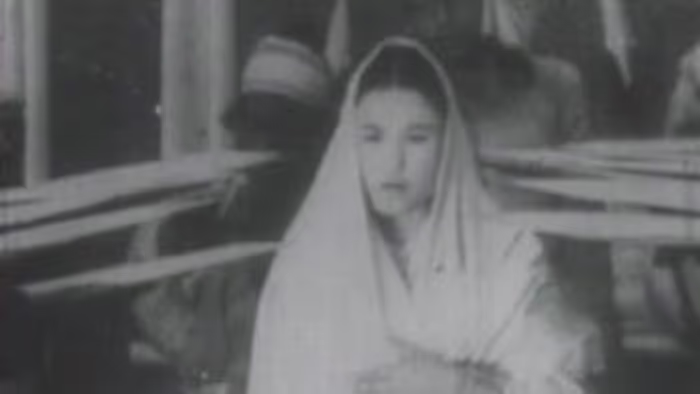
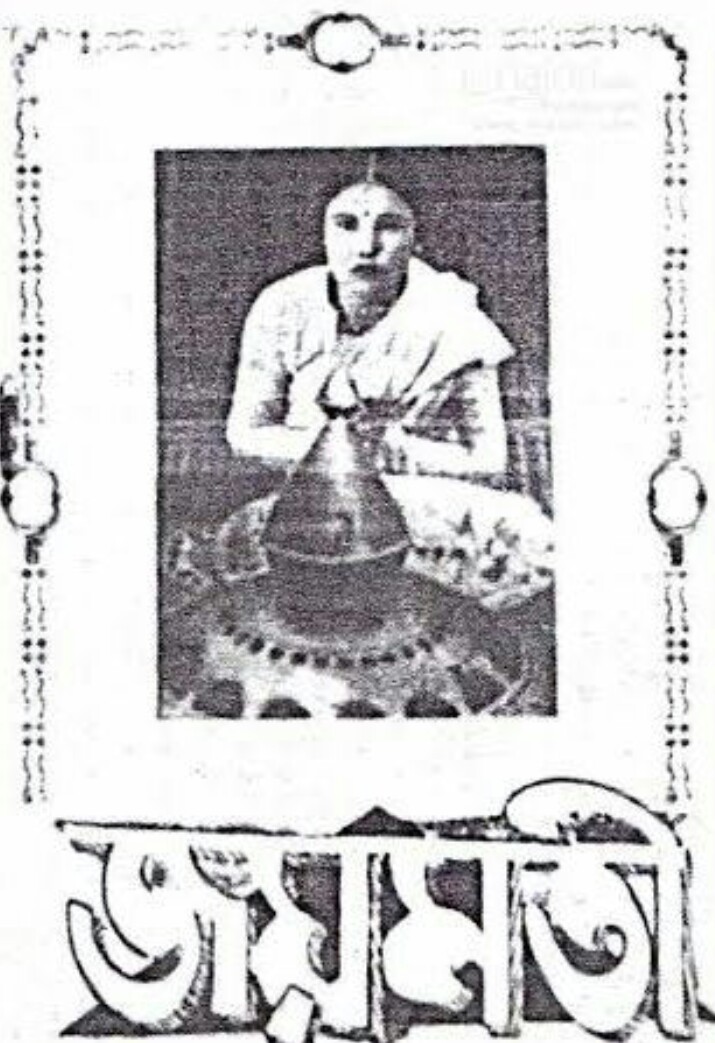
Aideu Handique created history by becoming the first actress of Assamese cinema. She played the leading role of Joymoti in the 1935 film.
Finding a suitable actress was one of the biggest challenges during the production. At that time, acting in films was not widely accepted in many parts of Assamese society, especially for women.
After a long search, Jyoti Prasad Agarwala discovered Aideu Handique in a village near Golaghat. He selected her for the main character because he believed she was suitable for the role.
Her contribution became an important milestone in the development of Assamese cinema. Even though she faced social challenges, her performance helped establish a new path for women in the Assamese film industry.
Chitraban Studio: The Beginning of Assamese Filmmaking
Chitraban Studio was established at Bholaguri Tea Estate in Assam for the production of Joymoti. It was one of the earliest film production facilities in the region.
The studio was not just a place for shooting. It also worked as a training centre where actors and technicians learned different aspects of filmmaking.
Jyoti Prasad Agarwala arranged costumes, traditional ornaments, props and other materials required for the historical film. He also brought technicians from Lahore to support the production.
The shooting faced several difficulties because electricity and modern studio facilities were not available. The team mainly depended on natural sunlight and reflectors for lighting.
Today, Chitraban Studio is remembered as an important historical place connected with the birth of Assamese cinema.
Technical Contributions of Joymoti
Joymoti was an important film because of its technical experiments and filmmaking methods.
One of its major contributions was the use of dubbing and re-recording technology. During the editing process in Lahore, Jyoti Prasad Agarwala discovered that the sound was missing from approximately half of the film.
As it was difficult to bring the actors together again, he arranged for their voices to be recorded in a sound studio. The voices were then added to the film.
This achievement is widely noted in accounts of early Indian cinema as an important use of dubbing and re-recording technology.
The film also used changing camera angles, specially constructed sets, fade-outs, dissolves and other filmmaking techniques.
Film Rediscovery and Restoration
For many years, the original complete print of Joymoti was believed to have been lost. After the Partition of India in 1947, the original print was thought to have remained behind in Lahore.
In the early 1970s, Jyoti Prasad Agarwala’s younger brother, Hridayananda Agarwala, discovered seven reels of the film while cleaning a garage. Although the reels were in poor condition, they helped preserve parts of this historic film.
In 1976, filmmaker Bhupen Hazarika directed the documentary Rupkonwar Jyotiprasad aru Joymoti, which included footage from the surviving reels.
Another important development took place in 1995 when filmmaker Arnab Jan Deka reported recovering an intact original print of the film at a studio in Bombay. He informed the Assam Government and wrote about the discovery in newspapers.
The surviving footage and restoration efforts helped bring renewed attention to the importance of Joymoti.
International Screenings and Recognition
Although Joymoti was not a commercial success when it was released, it later received attention from film researchers and international audiences.
The film was screened at several international film festivals and academic institutions.
Some important screenings include:
| Year | Event or Institution | Location |
|---|---|---|
| 2006 | Internationales Indisches Filmfestival | Stuttgart, Germany |
| 2006 | Asiaticafilmmediale | Rome, Italy |
| 2006 | Munich Film Festival | Munich, Germany |
| 2008 | Osian’s-Cinefan Film Festival | New Delhi, India |
| 2010 | UCLA Centre for India and South Asia Studies | Los Angeles, USA |
| 2011 | Society for Cinema and Media Studies Conference | Evanston, USA |
| 2012 | Joint Celebration of 100 Years of Indian Cinema | Dhaka, Bangladesh |
These screenings helped introduce the history of Assamese cinema to audiences outside India.
Importance of Joymoti in Assamese Cinema
Joymoti is more than just the first Assamese film. It represents the beginning of a regional film industry and the creative vision of Jyoti Prasad Agarwala.
The film introduced Assamese language, culture, history and traditions to cinema. It also demonstrated that regional stories could be presented through filmmaking.
Its use of a strong female protagonist was particularly significant for the period. The story highlighted courage, sacrifice and the importance of protecting one’s values.
Today, Jyoti Prasad Agarwala is remembered as the Rupkonwar of Assam, and his contribution to Assamese cinema remains an important part of the state’s cultural heritage.
Conclusion
Joymoti Film (1935) is a landmark in the history of Assamese cinema and Indian filmmaking. Directed by Jyoti Prasad Agarwala, it introduced Assamese-language filmmaking and brought the historical sacrifice of Joymoti Konwari to the screen.
From the establishment of Chitraban Studio to the selection of Aideu Handique and the use of dubbing technology, the film represents an important period of creativity and innovation.
Even after facing financial losses and difficulties in preserving its original print, Joymoti continues to hold a special place in Assam’s cultural history. Its legacy reminds us of the dedication of the people who laid the foundation of Assamese cinema.
FAQs
1. Which was the first Assamese film?
Joymoti, released on 10 March 1935, is widely recognised as the first Assamese-language film.
2. Who directed the film Joymoti?
Jyoti Prasad Agarwala directed and produced Joymoti.
3. Who played the lead role in Joymoti?
Aideu Handique played the role of Joymoti Konwari.
4. When was Joymoti released?
The film was released on 10 March 1935.
5. Where was Joymoti filmed?
The film was primarily shot at Chitraban Studio, established at Bholaguri Tea Estate in Assam.