

Jantar Mantar Biennale 2026

Jantar Mantar Biennale is a new highlight of the India Biennale 2026, as the historic Jantar Mantar observatory in Central Delhi has been added to the list of festival venues. The 108-day event will celebrate art, architecture and design from India and other countries. Organised by the Ministry of Culture, the festival is scheduled to take place from 4 December 2026 to 21 March 2027. More than 20 countries are expected to participate in this major cultural event.
The inclusion of Jantar Mantar brings together India’s scientific heritage and modern creative activities. The monument, known for its large astronomical instruments, will become one of the important locations in a festival that aims to showcase different forms of art, architecture and design.

What Is the India Biennale 2026?
The India Biennale 2026 is a major cultural festival planned across several historic and cultural locations in Delhi. It will run for 108 days and bring together artists, architects, designers, cultural institutions and organisations from different parts of the world.
The festival will feature exhibitions and creative programmes connected with architecture, art and design. It will also provide a platform for Indian and international institutions to present their work and exchange ideas.
The Ministry of Culture is organising the event, with participation expected from public and private cultural organisations. The selection of historic monuments as venues will connect Delhi’s architectural heritage with contemporary creative work.
Jantar Mantar: A Historic Astronomical Observatory
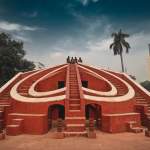
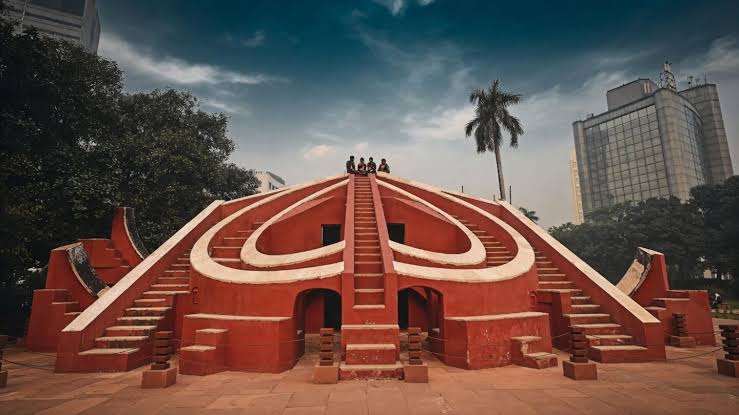
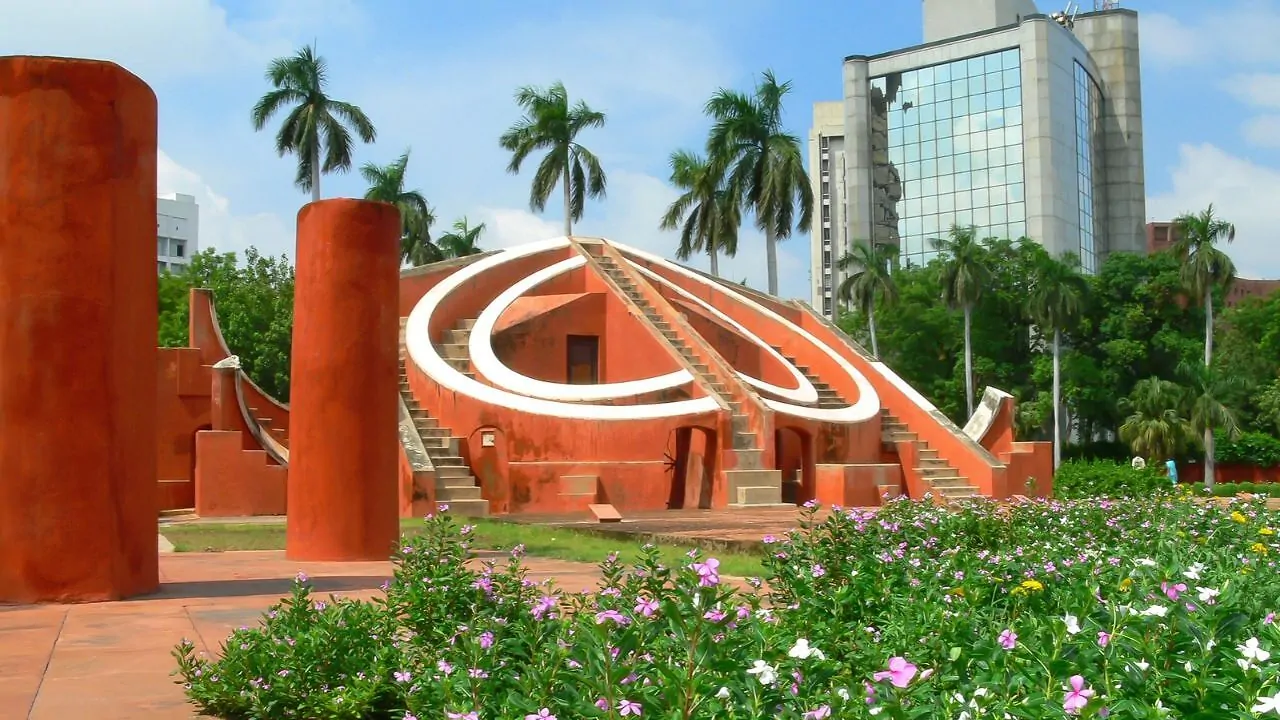
Jantar Mantar in Delhi was built in 1724 by Maharaja Jai Singh II of Jaipur. It is one of five astronomical observatories established by him in different parts of India. The other observatories were built in Jaipur, Ujjain, Varanasi and Mathura.
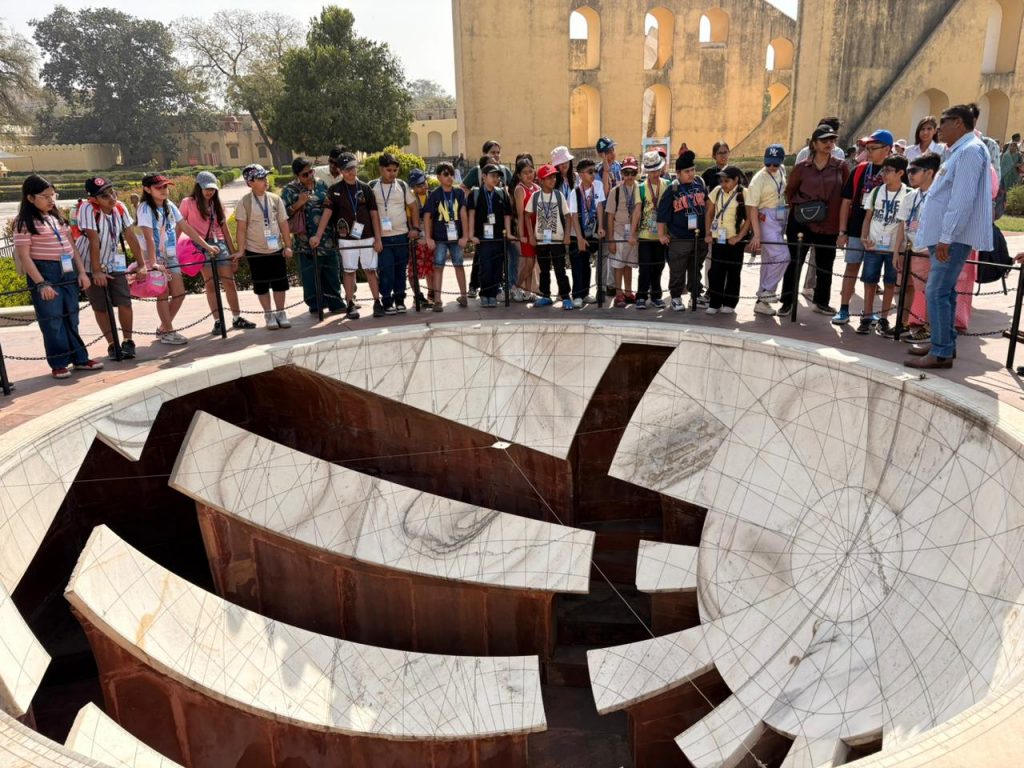
The observatory contains large masonry instruments designed to study the movement and position of celestial bodies. These structures helped astronomers observe the sky, measure time and calculate the positions of astronomical objects.
One of its best-known instruments is the Samrat Yantra, a giant sundial used to measure local time. The Ram Yantra helps measure the altitude and azimuth of celestial objects. Another important instrument, the Jai Prakash Yantra, uses two complementary concave structures to map celestial coordinates.
Jantar Mantar in Delhi should not be confused with the observatory in Jaipur. The Jaipur Jantar Mantar is a UNESCO World Heritage Site, having received this recognition in 2010.
Major Venues of the India Biennale 2026
The 16th-century Purana Qila has been selected as the central hub of the India Biennale 2026. It is expected to host the Ministry of Culture’s exhibition.
Other important locations included in the festival are the Red Fort, Qutub Minar complex, Lodhi Gardens, Agrasen ki Baoli and Safdarjung Tomb. These historic places represent different periods of Delhi’s architectural and cultural development.
Several well-known art and cultural institutions are also expected to participate. These include the National Gallery of Modern Art, Kiran Nadar Museum of Art, Nita Mukesh Ambani Cultural Centre, JSW Foundation and DAG.
The participation of these organisations will bring together different approaches to art, heritage, architecture and design. The use of historic monuments as exhibition venues will also allow visitors to experience Delhi’s cultural spaces in new ways.
Why Is Jantar Mantar’s Inclusion Important?
Jantar Mantar is an important part of India’s scientific and architectural history. Its instruments show how astronomers used carefully designed structures to observe celestial movements before modern electronic equipment became available.
Adding the observatory to the Biennale programme creates an opportunity to connect this scientific heritage with present-day art and design. It also highlights the value of protecting historic monuments while making them accessible to the public through cultural activities.
The festival’s use of locations such as Purana Qila, the Red Fort and Jantar Mantar reflects Delhi’s role as a centre of history, architecture and culture.
Jantar Mantar Road and the Changing Use of Public Spaces
Jantar Mantar has also been part of discussions about the use of public spaces in Delhi. According to the information reported on 29 October 2026, a stretch of Jantar Mantar Road was denotified as a designated protest site on 11 October 2026.
Ramlila Maidan, Burari Ground and CBD Ground were identified as alternative locations for protests. The addition of Jantar Mantar to the India Biennale 2026 programme places this historic observatory among the city’s selected cultural venues.
With the festival scheduled to begin on 4 December 2026, Delhi’s historic monuments and cultural institutions are set to play an important role in bringing together India’s heritage and contemporary creative activities.