Anil Menon Spacewalk at the ISS

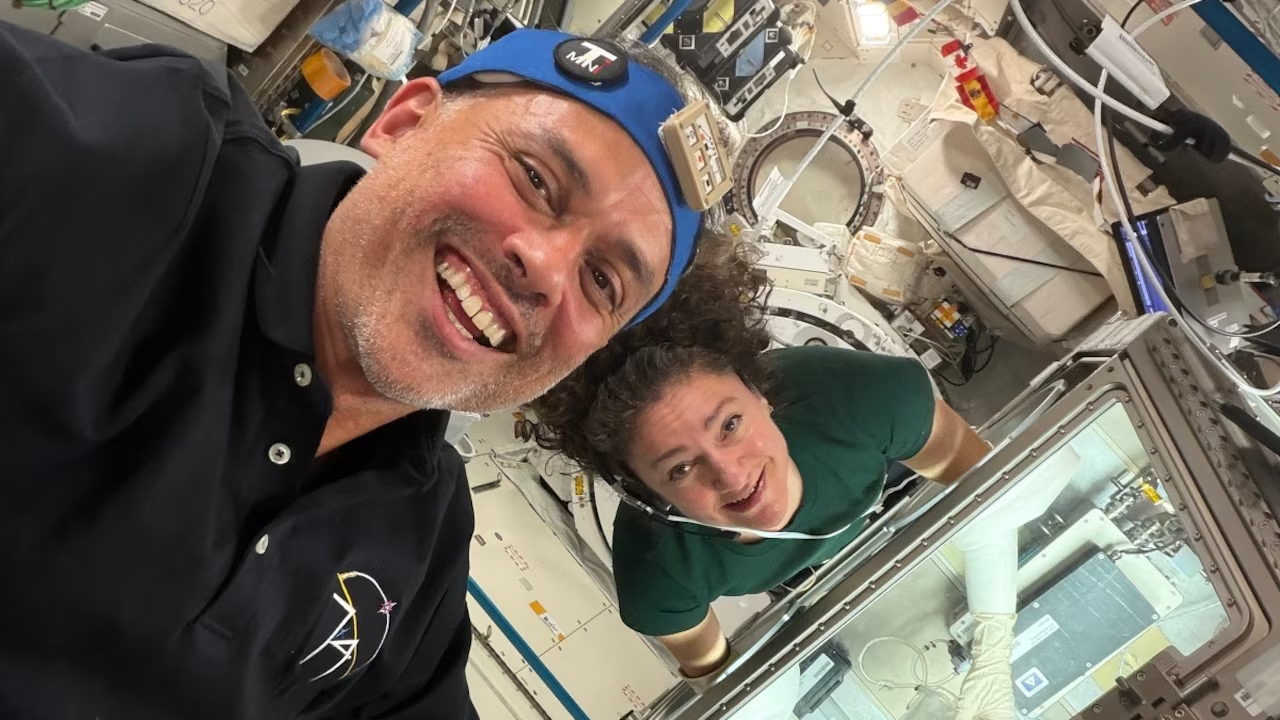
Anil Menon Spacewalk became an important development in space exploration when NASA astronaut Anil Menon completed his fourth career spacewalk on 29 October 2026. He worked alongside Canadian Space Agency astronaut Joshua Kutryk outside the International Space Station (ISS). The spacewalk lasted 7 hours and 11 minutes and focused on installing a new solar array to improve the station’s power system.
The activity marked another step in the ongoing upgrade of the ISS. It was also a special milestone for Kutryk, who completed his first spacewalk, and for the station’s spacewalking programme.

His Fourth Spacewalk Anil Menon Spacewalk
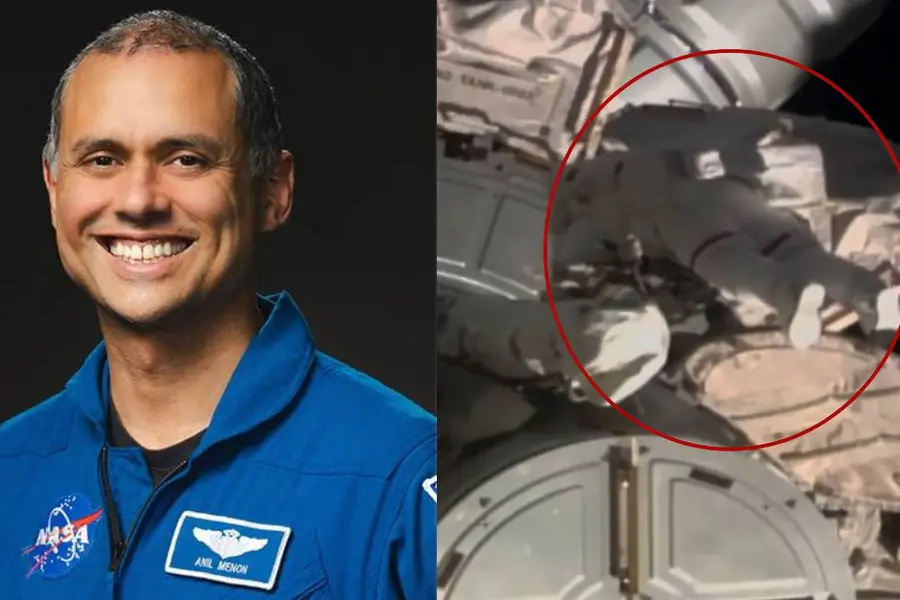
Anil Menon carried out his fourth spacewalk outside the ISS on 29 October 2026. During the activity, he and Joshua Kutryk worked together to install the seventh of eight new Roll-Out Solar Arrays, known as iROSAs.
A spacewalk, also called an extravehicular activity (EVA), takes place when astronauts leave a spacecraft or space station to carry out work in space while wearing specialised spacesuits. These activities can include installing equipment, repairing systems, conducting experiments and maintaining the station.
Spacewalks require careful planning and teamwork. Astronauts must follow detailed procedures while working in a challenging environment with no breathable air and extreme temperature changes. Their spacesuits provide oxygen, pressure, temperature control and communication systems.
Menon’s latest spacewalk increased his total time spent working outside the station to 26 hours and 31 minutes.
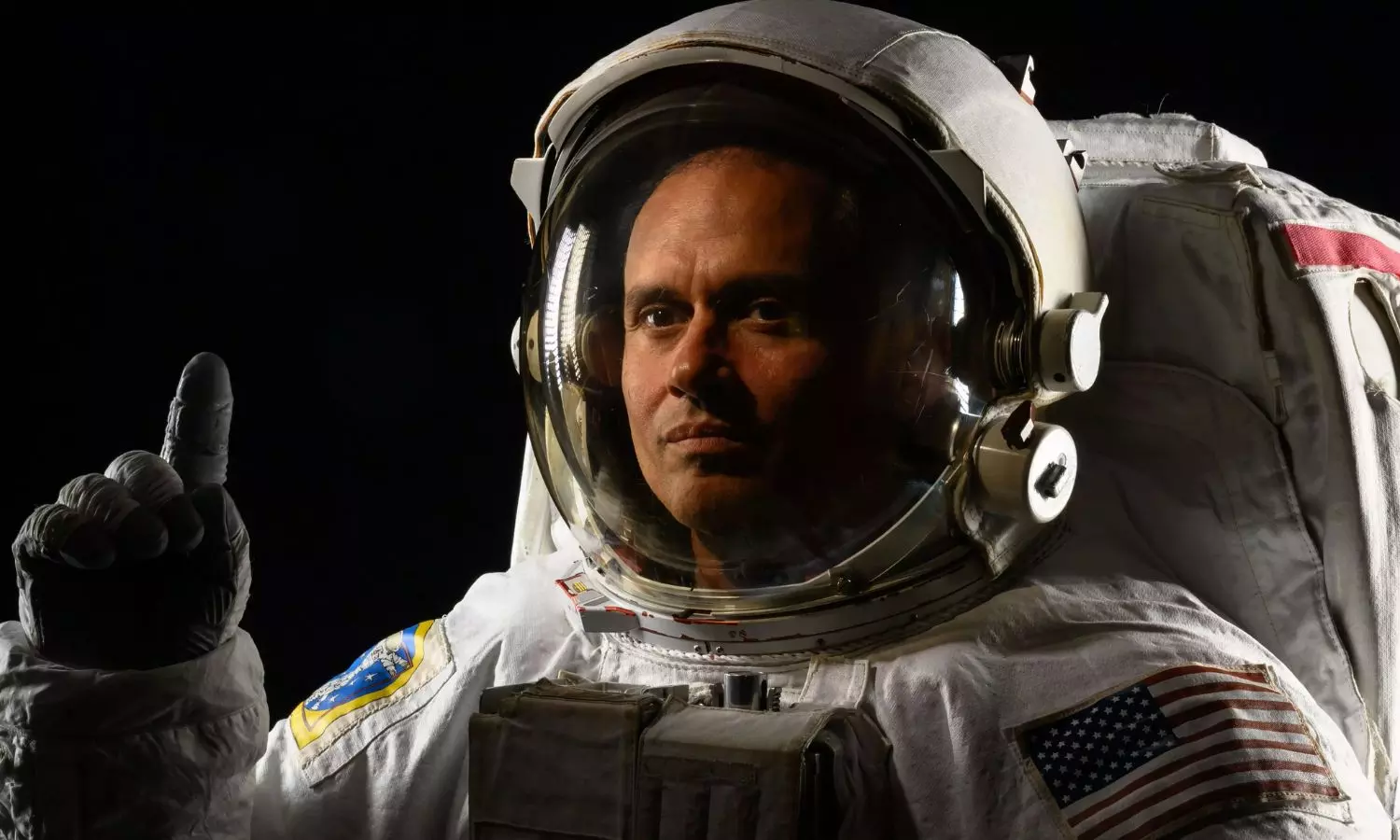
Solar Array Installation at the International Space Station
The main task during the spacewalk was installing the seventh of eight planned iROSAs. These solar arrays are part of an upgrade to the ISS power system.
Solar arrays collect sunlight and convert it into electricity. The station uses this electricity to operate equipment, support scientific experiments, maintain life-support systems and provide power for its crew.
The iROSAs are designed to roll out after deployment rather than unfold like traditional rigid solar panels. Their design allows them to be installed over portions of the station’s existing solar arrays, helping increase available power-generation capacity.
The ISS requires a steady supply of electricity because astronauts live and work there continuously. Its scientific equipment, communication systems and environmental controls all depend on reliable power.
Installing the new arrays helps maintain the station’s ability to support research and operations as it continues to operate in orbit.
A Milestone for U.S. Spacewalks
The activity marked the 100th U.S. spacewalk conducted from the ISS through the station’s Quest airlock without a Space Shuttle docked.
The Quest airlock is a specialised section of the station that allows astronauts to prepare for spacewalks and move safely between the station’s pressurised interior and the vacuum of space.
Spacewalks are an essential part of maintaining the ISS. Astronauts use them to install new equipment, replace ageing components and carry out tasks that cannot be completed from inside the station.
Reaching the 100-spacewalk milestone highlights the experience gained through years of station construction, maintenance and scientific operations.
Joshua Kutryk Completes His First Spacewalk
The mission was also a major personal achievement for Canadian astronaut Joshua Kutryk, who completed his first spacewalk alongside Menon.
Kutryk became the fifth Canadian astronaut to perform an extravehicular activity. Spacewalks require astronauts to receive extensive training in spacesuit operation, equipment handling, safety procedures and movement in microgravity.
Working outside the ISS can be physically demanding. Astronauts must carefully control their movements because objects behave differently in microgravity, and even simple tasks can require significant effort.
The cooperation between astronauts from different space agencies reflects the international nature of the ISS programme.
Anil Menon’s Background and Space Mission
Anil Menon was born and raised in Minneapolis, Minnesota, to Ukrainian and Indian immigrant parents. He launched to the International Space Station in July 2026 for an eight-month mission.
During his stay, he is part of the crew supporting station operations and scientific activities. Astronauts on long-duration missions conduct research, maintain equipment and help prepare the station for future work.
Menon’s cumulative spacewalking time reached 26 hours and 31 minutes after his fourth spacewalk. According to the reported information, he ranks second among Indian-origin astronauts in total spacewalk activity, after Sunita Williams.
Spacewalking experience is important because astronauts may need to carry out complex maintenance tasks that require precision, coordination and the ability to follow detailed instructions in a hazardous environment.
What Are Roll-Out Solar Arrays?
Roll-Out Solar Arrays, or iROSAs, are advanced solar power systems designed for use on the ISS. Their flexible structure allows them to be rolled up for transport and then deployed in orbit.
The station has used solar power since its early operational years. However, solar arrays and other equipment can experience wear over time due to radiation, temperature changes and the conditions of space.
Adding new arrays helps improve the station’s power-generation capability and supports its continued scientific work.
Electricity is needed for experiments in areas such as biology, physics, materials science and human health. These studies help researchers understand how living organisms and materials behave in microgravity, while also supporting the development of technologies for future space missions.
The Next Spacewalk Is Scheduled for November
Another spacewalk is scheduled for 5 November 2026. Menon and Kutryk are expected to install the eighth and final iROSA as part of the planned power-system upgrade.
Completing the installation programme will help advance the station’s solar array improvements. The work also demonstrates how astronauts maintain and upgrade complex equipment while living hundreds of kilometres above Earth.
Why the International Space Station Matters
The International Space Station is a research laboratory that orbits Earth. Its first module, Zarya, was launched on 20 November 1998, and a continuous human presence has been maintained aboard the station since November 2000.
The ISS is a partnership involving five major space agencies: NASA, Roscosmos, the European Space Agency, the Japan Aerospace Exploration Agency and the Canadian Space Agency.
Researchers use the station to study how microgravity affects the human body, plants, fluids and other materials. The results can support medical research, technological development and planning for future missions to the Moon and Mars.
The Anil Menon Spacewalk highlights the continuing work required to maintain this international research facility. The installation of new solar arrays supports the station’s power needs, while the successful activity adds to the experience of astronauts working outside the ISS.