

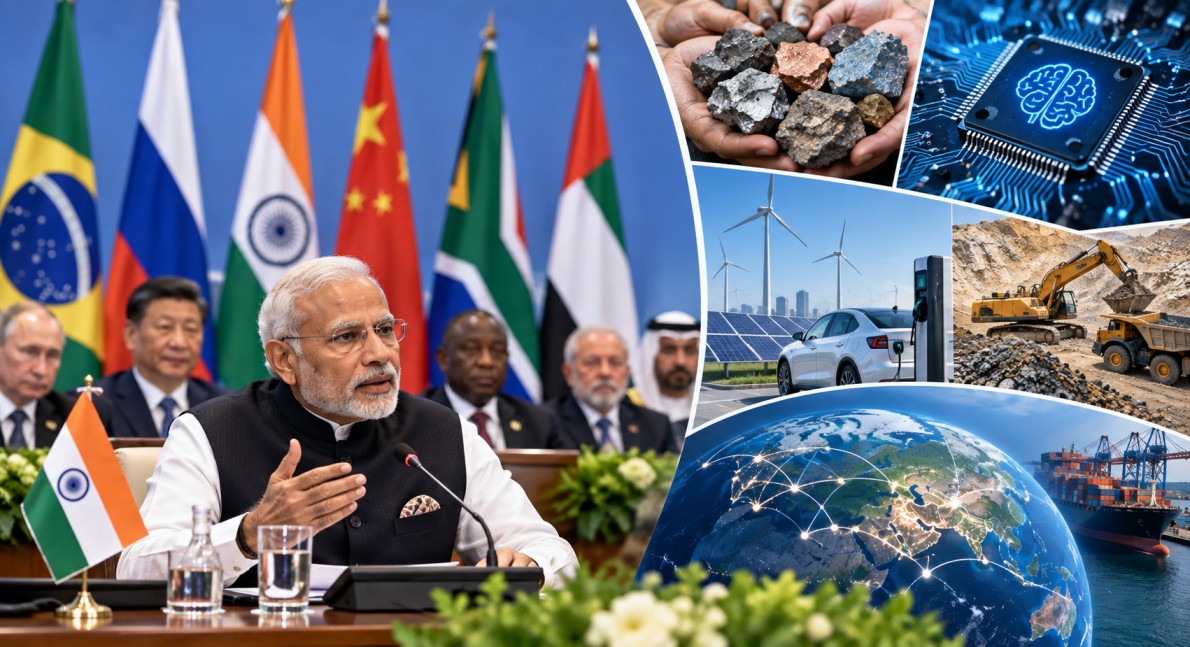

Critical Minerals and advanced technology became key issues at the 18th BRICS Summit in New Delhi, where Prime Minister Narendra Modi warned that the weaponisation of technology and mineral resources could affect shared development. Speaking at the summit on September 13, Modi called for wider and more inclusive access to technology and stronger cooperation among BRICS countries.
Thank you for reading this post, don't forget to subscribe!Modi Raises Concern Over Technology and Minerals
Modi said that technology and critical minerals are becoming increasingly important for economic growth, national security and future industries. He said the use of these resources as tools of pressure could slow shared progress, particularly for developing countries.
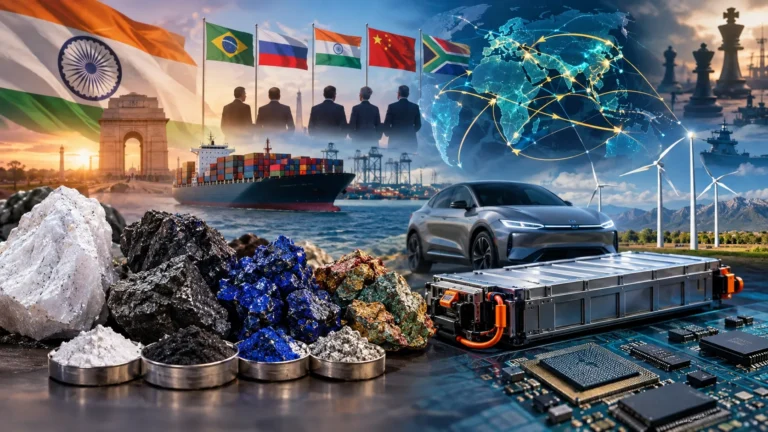
His remarks came as countries are paying greater attention to supply chains for minerals needed in batteries, renewable energy systems, electronics, electric vehicles and advanced manufacturing. The Prime Minister’s comments focused on the need for cooperation so that access to important technologies and resources is not limited to a small group of countries.
The issue has become more important as global industries depend on reliable supplies of minerals and specialised technologies.
BRICS Focuses on Resilient Supply Chains
The New Delhi Declaration, adopted during the BRICS Summit held from September 12 to 13, placed strong emphasis on resilience, innovation, cooperation and sustainability. These four themes were the main priorities of India’s BRICS chairship in 2026.
The declaration called for stronger cooperation among BRICS members and greater resilience in global economic systems. Critical mineral supply chains were part of the wider discussion about reducing vulnerabilities and supporting sustainable development.
For countries that depend heavily on imported raw materials, supply disruptions can affect manufacturing, energy projects and technology industries. BRICS discussions therefore included the need for more reliable and diversified supply networks.
Why Critical Minerals Matter
Critical minerals are raw materials that are important for modern industries and may face supply or processing risks. They are used in products ranging from batteries and semiconductors to renewable energy equipment and defence technologies.
The transition towards electric vehicles and clean energy has increased demand for several minerals. At the same time, advanced digital industries require specialised materials for electronics, computing equipment and other technologies.
This has turned mineral processing and supply chains into an important part of global economic policy. Countries are increasingly looking for new sources, alternative suppliers and domestic processing capacity to reduce the impact of possible disruptions.
Technology Access Becomes a BRICS Issue
Technology was another major focus during India’s BRICS chairship. Modi said that artificial intelligence, cyberspace, outer space, biotechnology and other critical technologies are shaping both future opportunities and the rules that will govern them.
India has also pushed for greater participation by developing countries in discussions about emerging technologies. At the BRICS summit, Modi said the Global South should have a greater role in shaping international rules instead of simply adopting rules created elsewhere.
The discussion comes as artificial intelligence is rapidly expanding into areas such as healthcare, manufacturing, agriculture, finance and public services.
China Proposes Open-Source AI Cooperation
Artificial intelligence also featured in discussions involving Chinese President Xi Jinping. According to reports from the summit, Xi proposed an open-source AI ecosystem for countries of the Global South and called for greater cooperation on supply chains and markets.
The proposal comes at a time when countries are competing to develop advanced AI models, computing infrastructure and semiconductor capabilities. Open-source systems are being discussed internationally as one way to widen access to AI tools and reduce dependence on a small number of technology providers.
For BRICS countries, cooperation in AI could become part of broader discussions on digital infrastructure, research and technology access.
India Pushes Broader BRICS Cooperation
India’s BRICS chairship placed emphasis on cooperation beyond traditional areas such as trade and diplomacy. The country highlighted initiatives involving startups, logistics, digital agriculture, urban development and small businesses.
During the summit, Modi pointed to initiatives such as the BRICS MSME Cooperation Portal and the BRICS Urban Mobility Hub. These programmes are intended to support knowledge sharing and cooperation among member countries.
The BRICS agenda also included efforts to improve cooperation in areas that affect everyday economic activity. The focus on resilience reflects concerns about disruptions caused by conflicts, trade restrictions, supply shortages and changes in global markets.
Critical Minerals and India’s Global Partnerships
The focus on Critical Minerals also connects with India’s wider economic and strategic partnerships. During the BRICS summit, Modi discussed critical minerals and emerging technologies with several foreign leaders.
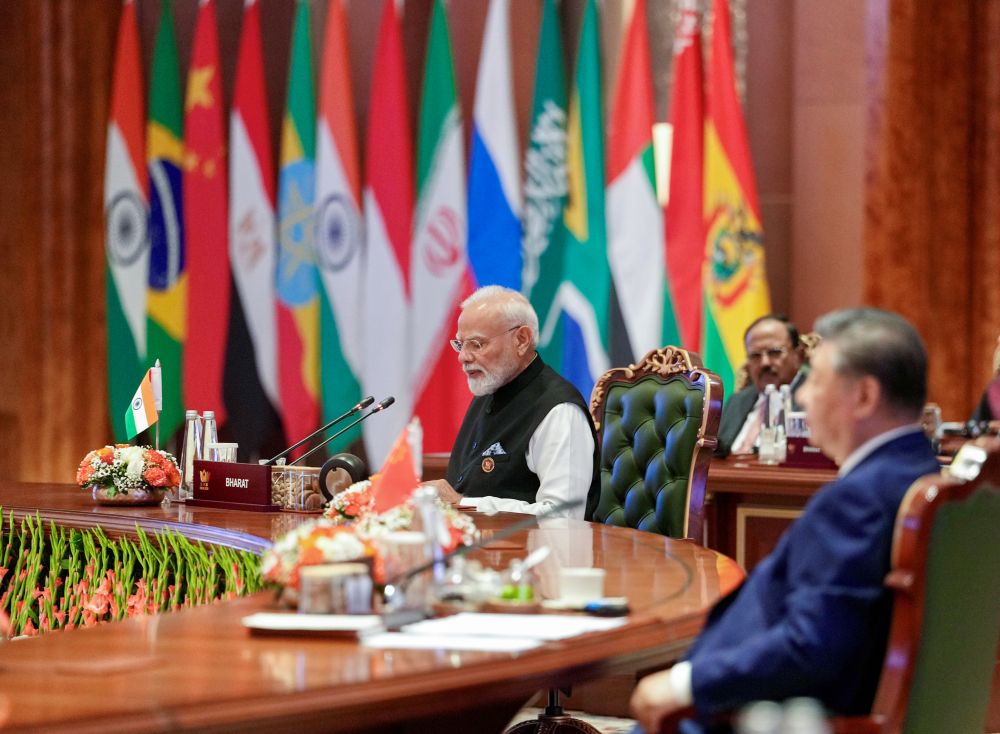
In a meeting with Kazakhstan President Kassym-Jomart Tokayev, India discussed cooperation covering trade, energy, defence, connectivity, critical minerals and emerging technologies.
India has also been expanding cooperation with countries that have access to important natural resources. Such partnerships can support India’s efforts to build more diverse supply chains for industries that depend on minerals and advanced materials.
Supply Chains Become a Global Priority
The BRICS discussion reflects a wider global shift in economic policy. Governments are increasingly looking at supply chains not only from a trade perspective but also in terms of resilience and security.
Mineral extraction is only one part of the supply chain. Processing, refining, transportation and manufacturing are also important. A country may have access to a mineral but still depend on another country for processing or advanced components.
This is why BRICS discussions on Critical Minerals are connected with technology, manufacturing, energy and economic development. Greater cooperation could involve investment, technology sharing, processing capacity and new supply routes.
The New Delhi Declaration’s focus on resilience and cooperation places these issues within the broader BRICS effort to strengthen economic ties among its expanded membership.