

Baishagu Festival: Bodo New Year, Traditional Dance and Spring Celebration of Assam

Baishagu Festival is one of the most important and colourful cultural festivals of Assam. Celebrated mainly by the Bodo community, this festival marks the arrival of spring and the beginning of a new year. It brings together traditional music, folk dances, religious rituals, family gatherings and community celebrations.
Baishagu is deeply connected with the culture, beliefs and agricultural traditions of the Bodo people. The festival reflects their respect for nature, animals, elders and the divine. It is a time when people welcome a fresh beginning, pray for prosperity and celebrate their rich cultural heritage.

The festival is mainly celebrated in mid-April, during the Assamese month of Bohag or the traditional month of Baisakh. Its colourful celebrations, especially the famous Bagarumba dance, have made Baishagu an important part of Assam’s cultural identity.
What Is Baishagu Festival?
Baishagu, also known as Bwisagu, is a traditional spring festival celebrated by the Bodo-Kachari community of Assam. It is one of the most cherished festivals of the Bodo people and is closely connected with the beginning of the agricultural season and the Bodo New Year.
The festival is celebrated with great enthusiasm in the Bodoland Territorial Region and other Bodo-populated areas of Assam. People gather in villages and community spaces to take part in traditional dances, folk songs, prayers and festive meals.
Baishagu is not only a religious festival but also a celebration of social unity. It brings together people of different ages and allows younger generations to learn about their traditional customs.
According to the Assam state government’s cultural information, Baishagu is celebrated by the Boro Kacharis during April and is known for its colourful dances, traditional instruments and community prayers.
Meaning and Origin of Baishagu
The word Baishagu is associated with the traditional month of Baisakh, which marks the beginning of a new year in several regional calendars.
For the Bodo people, the festival represents a new beginning. It marks the transition from one agricultural cycle to another and welcomes the arrival of spring.
The festival has developed from the traditional agricultural and spiritual practices of the Bodo community. In earlier times, agriculture was the main source of livelihood for many Bodo families. Their daily lives depended on the seasons, rainfall, fertile land and the well-being of animals.
As a result, seasonal festivals became an important way of expressing gratitude for nature’s gifts and seeking blessings for the coming agricultural season.
Baishagu continues to carry these traditional values. Even as people move towards modern occupations and urban lifestyles, the festival remains an important expression of Bodo identity and cultural pride.
When Is Baishagu Festival Celebrated?
Baishagu Festival is generally celebrated in mid-April, around the beginning of the Assamese month of Bohag.
The festival takes place during the spring season, when nature begins to show fresh signs of life. Trees become green, flowers bloom and the weather becomes suitable for outdoor celebrations.
Baishagu is celebrated around the same period as Rongali Bihu in Assam and Baisakhi in other parts of India. Although these festivals have different cultural traditions, they share the common idea of welcoming a new year and celebrating seasonal renewal.
The exact dates and duration of Baishagu celebrations may vary between villages and communities. Traditional celebrations often continue for several days, with different activities taking place during the festive period.
Where Is Baishagu Festival Celebrated?
Baishagu is mainly celebrated in the Bodo-populated regions of Assam.
The major areas associated with the festival include:
- Kokrajhar
- Chirang
- Baksa
- Udalguri
- Bongaigaon
- Other Bodo-populated areas of Assam
The Bodoland Territorial Region is especially important for Baishagu celebrations. During the festival, villages and towns organise cultural programmes featuring traditional Bodo music, dances and community gatherings.
The festival is also celebrated by Bodo communities living outside their traditional homeland. Cultural organisations and community groups arrange Baishagu programmes in different parts of India to preserve and promote Bodo traditions.
Traditional Rituals of Baishagu Festival
Baishagu is celebrated through several traditional rituals that reflect the spiritual beliefs and agricultural lifestyle of the Bodo community.
The rituals are closely connected with animals, nature, family relationships and religious worship.
Worship of Cows
The first day of Baishagu traditionally begins with the worship of cows.
Cows and other cattle have played an important role in the agricultural life of the Bodo people. They help farmers in various agricultural activities and are valued for their contribution to rural livelihoods.
On the first day, cattle are taken to a river, pond or nearby water source for a ceremonial bath. They may be decorated with garlands and other traditional items.
In some traditional practices, farmers apply oil and other natural materials to the cattle and offer them food.
The ritual expresses gratitude towards animals and recognises their importance in farming and everyday life.
This tradition is similar in spirit to Goru Bihu, which is celebrated during the Rongali Bihu festival in Assam.
Worship of Bathou
Bathou is an important deity in the traditional religious beliefs of the Bodo community.
The worship of Bathou is closely associated with the Bathou religion, which is an important part of Bodo spiritual and cultural life.
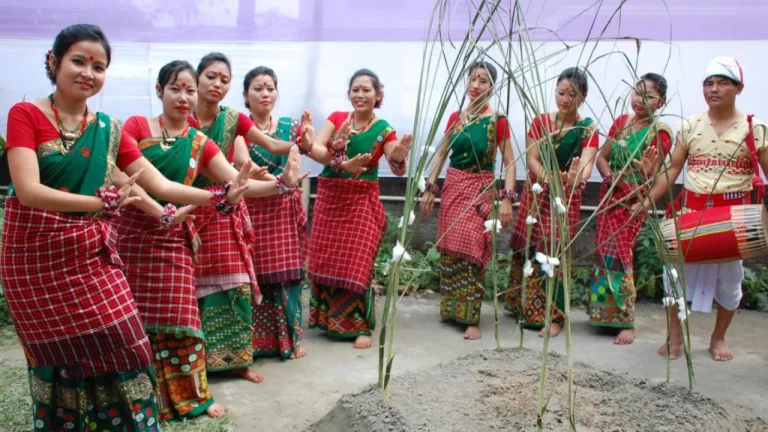
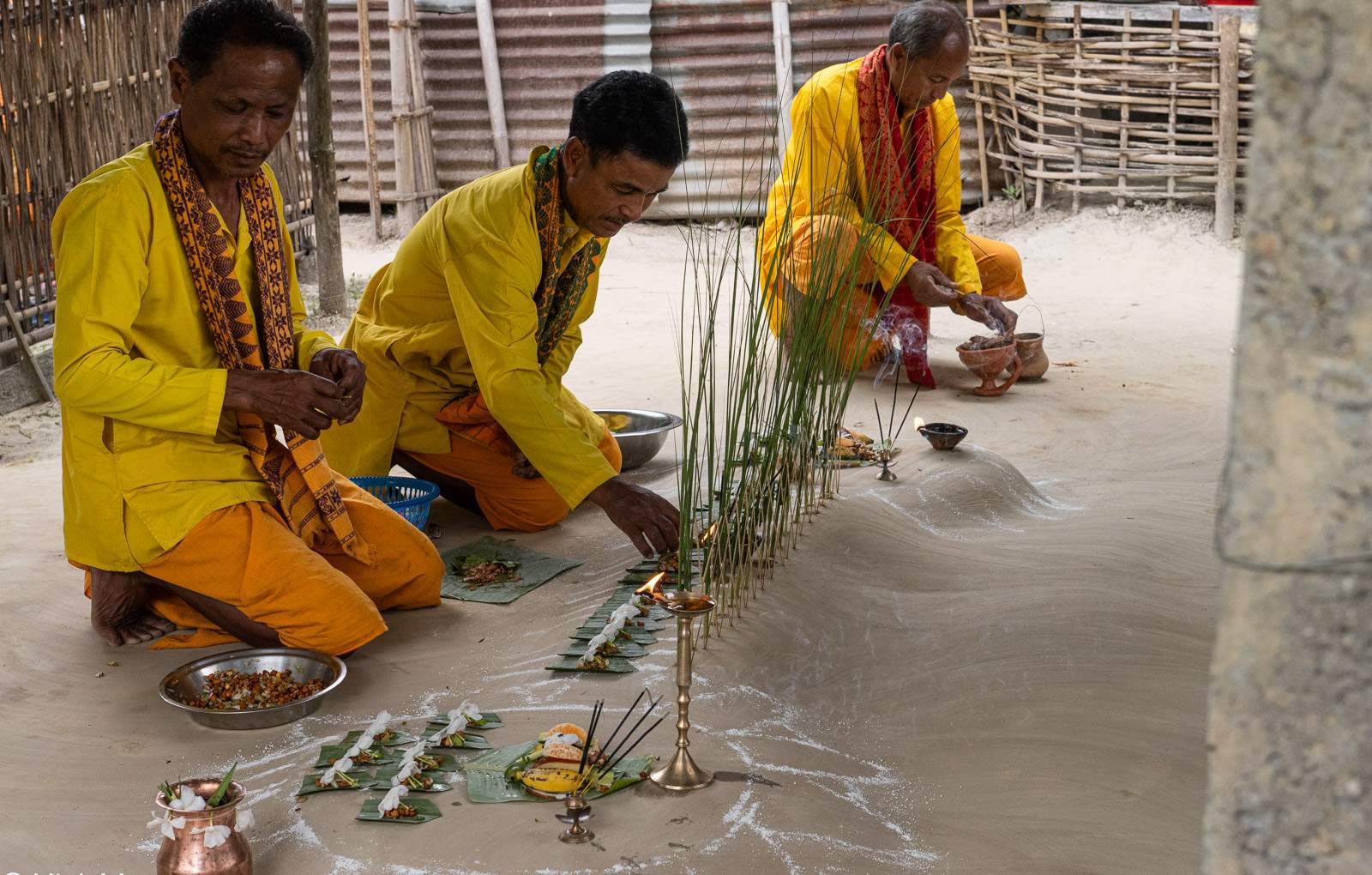
The Siju plant, commonly identified as a type of Euphorbia, has a special place in Bathou worship. It is planted at a sacred place known as the Bathou altar or Bathou Thanshali.
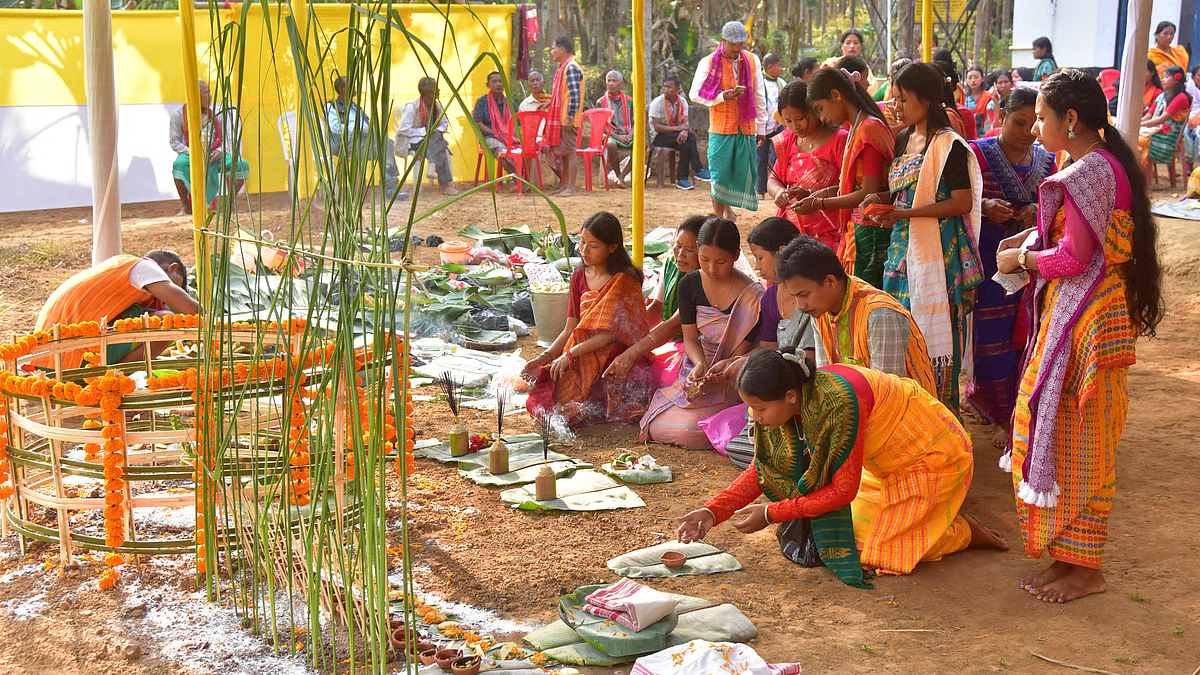
The plant represents an important symbol of the traditional faith. It is respected and protected as part of the sacred space.
During Baishagu, people offer prayers and seek blessings for good health, peace, prosperity and a successful agricultural season.
Traditional offerings and rituals may vary among families and villages according to local customs.
Respect for Elders
Respect for elders is another important part of Baishagu.
During the festival, younger members of the family visit their parents, grandparents and other elderly relatives.
They express gratitude, seek blessings and maintain family relationships. Elders bless the younger generation and share traditional knowledge, stories and cultural practices.
This tradition highlights the importance of family values and respect within Bodo society.
Community Prayer at Garjasali
Community prayer is an important part of Baishagu celebrations.
The festival traditionally concludes with a collective prayer at a designated community worship ground, commonly referred to as Garjasali or Garja Sali.
People gather at the prayer ground and participate in rituals for the well-being of the community.
The gathering represents unity, peace and shared responsibility. It also gives people an opportunity to come together after several days of celebration.
The Assam government’s cultural information also mentions the community prayer at Garjasali as an important part of the festival.
Bagarumba Dance: The Famous Butterfly Dance
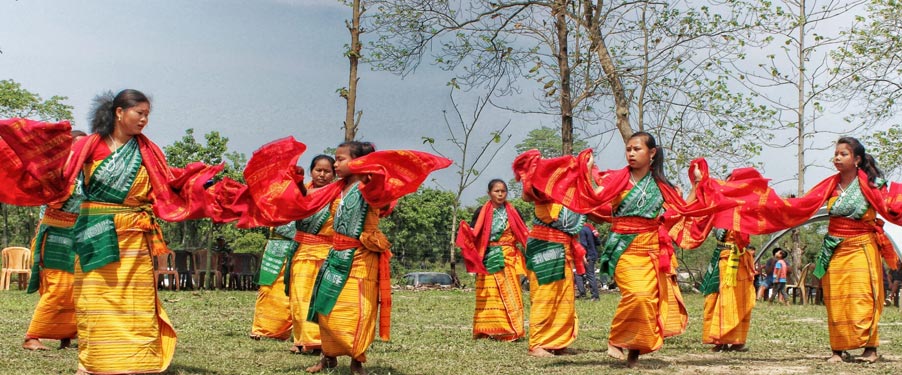
One of the most attractive features of Baishagu Festival is the Bagarumba dance.
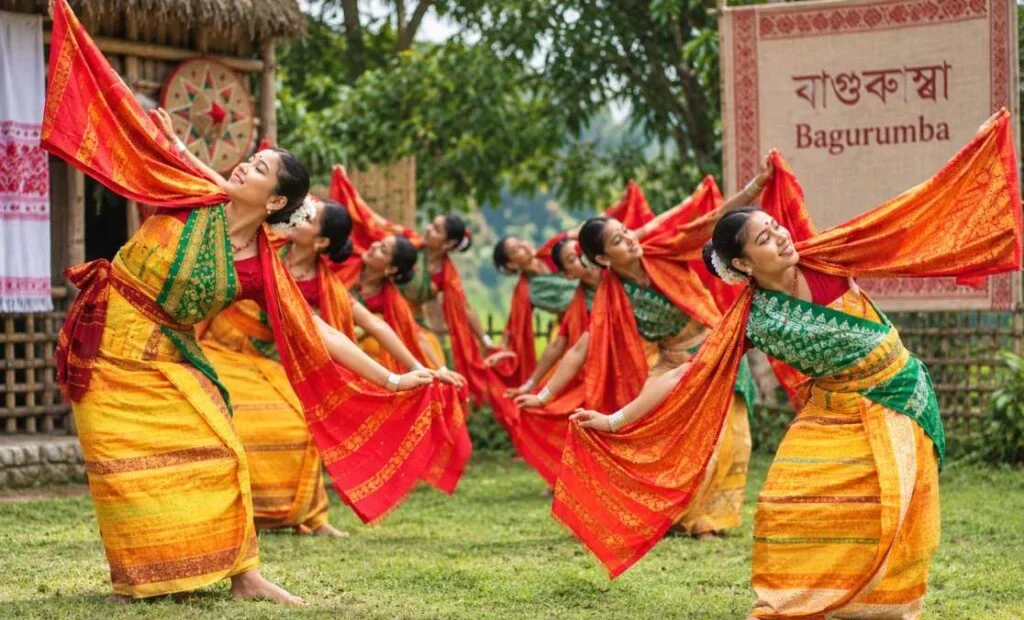
Bagarumba is a traditional folk dance of the Bodo community. It is often called the Butterfly Dance because the graceful movements of the dancers resemble butterflies moving their wings.
The dance is especially associated with Bodo women, who perform it in colourful traditional clothing.
The dancers move their arms, hands and bodies in coordinated patterns. Their flowing garments and gentle movements create a beautiful visual experience.
Bagarumba represents joy, harmony with nature and the beauty of life. Its movements are inspired by the natural world, including flowers, birds, butterflies and the changing seasons.
The dance is performed during traditional festivals, cultural programmes and community gatherings.
It has become one of the most recognisable symbols of Bodo culture and is widely appreciated by audiences across Assam and other parts of India.
Traditional Dress Worn During Baishagu
Traditional clothing plays an important role in Baishagu celebrations.
Bodo women commonly wear the Dokhona, a traditional garment that is an important part of Bodo identity.
The Dokhona is usually woven with colourful patterns and traditional designs. It may be accompanied by a chaddar or other traditional clothing and accessories.
During Bagarumba performances, the colourful clothing adds beauty and movement to the dance.
Bodo men also wear traditional attire during cultural performances and religious gatherings. Their clothing may include a traditional garment known as the Gamosa or other locally used traditional dress.
Traditional weaving is an important part of Bodo culture. Many women continue to preserve traditional designs and weaving techniques, which are passed down through generations.
The clothes worn during Baishagu are not merely decorative. They reflect the community’s history, artistic skills and cultural identity.
Traditional Musical Instruments Used During Baishagu
Music is an essential part of Baishagu Festival.
Traditional instruments create the rhythm and atmosphere for folk dances and community celebrations.
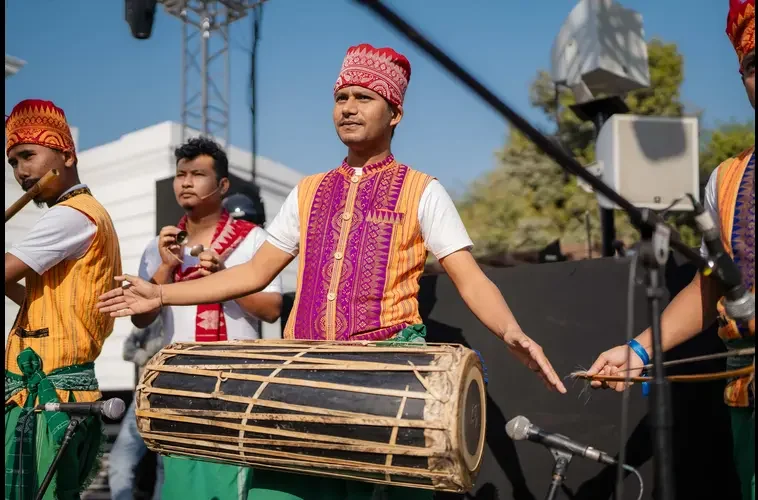
Some important musical instruments associated with Baishagu include:
| Musical Instrument | Description |
|---|---|
| Kham | A traditional drum used to create rhythmic beats |
| Sifung | A traditional bamboo flute |
| Serja | A traditional bowed string instrument |
| Jotha | A pair of small cymbals |
| Gogona | A traditional mouth instrument |
| Tharkha | A split bamboo percussion instrument |
These instruments are played during traditional dances, especially Bagarumba.
The combination of drums, flutes and other folk instruments creates a distinctive musical style that reflects the cultural traditions of the Bodo community.
Traditional Bodo songs often describe nature, village life, love, happiness and the beauty of the surrounding environment.
Music also helps bring people together. During Baishagu, people of different generations participate in singing and dancing, keeping their traditional musical heritage alive.
Traditional Food During Baishagu Festival
Food is another important part of Baishagu celebrations.
Families prepare traditional dishes and share meals with relatives, neighbours and guests.
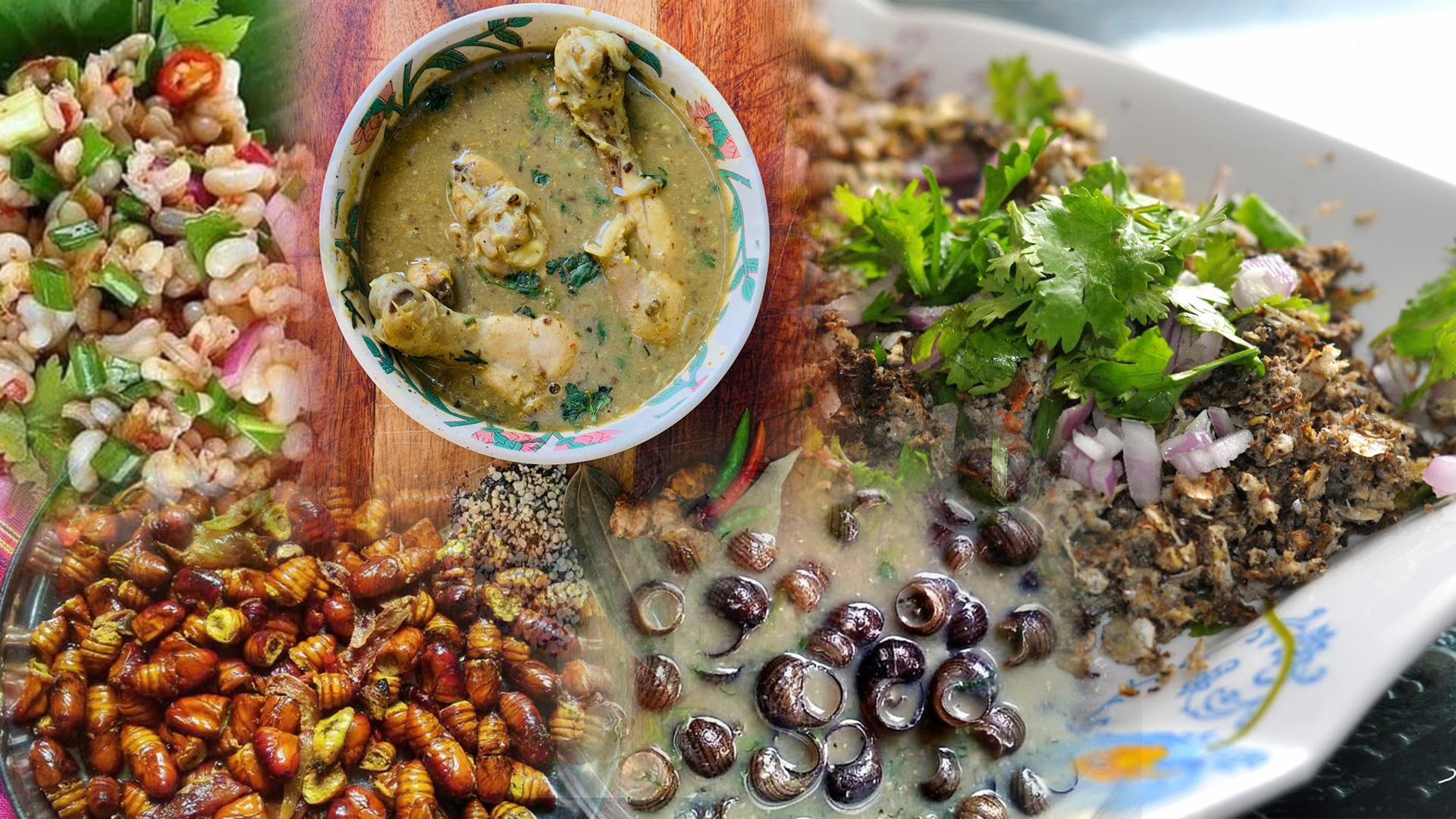
Traditional Bodo cuisine is closely connected with agriculture and the natural resources available in the region.
Some traditional foods associated with Bodo celebrations include:
Pitha: A traditional rice-based preparation enjoyed during festivals and family gatherings.
Zou: Traditional rice beer associated with Bodo cultural and social traditions. Its use depends on local customs and the nature of the gathering.
Namsing: A traditional fermented fish preparation that is part of Bodo cuisine.
Rice-based dishes: Rice is a major part of the traditional diet and is commonly served during festive meals.
Different families may prepare different dishes depending on their local traditions and food preferences.
Sharing food during Baishagu helps strengthen relationships between family members, friends and neighbours.
The festive meal is an expression of hospitality, togetherness and cultural identity.
Agricultural Importance of Baishagu
Baishagu has a strong connection with agriculture.
The Bodo community has traditionally depended on farming for its livelihood. Agriculture has influenced many aspects of Bodo life, including festivals, religious practices, food habits and social relationships.
Baishagu marks the beginning of a new seasonal cycle. It provides an opportunity to express gratitude for the previous agricultural year and seek blessings for future crops.
The worship of cattle reflects their importance in farming. The prayers for prosperity and good health reflect the community’s hope for a successful agricultural season.
The festival also highlights the relationship between humans and nature.
Through its rituals and traditions, Baishagu reminds people that agriculture depends on healthy soil, water, animals and favourable natural conditions.
Although modern farming methods have changed agricultural practices, the festival continues to preserve the traditional values associated with rural life.
Cultural Importance of Baishagu Festival
Baishagu is an important symbol of Bodo cultural identity.
The festival helps preserve traditional practices that have been passed down through generations.
Its cultural importance can be understood through several aspects.
Preservation of traditional dance: Bagarumba and other folk performances help keep Bodo dance traditions alive.
Protection of traditional music: Folk instruments and songs preserve the musical heritage of the community.
Promotion of family values: Respect for elders and family gatherings strengthen relationships between generations.
Community unity: Collective celebrations and prayers bring people together.
Connection with nature: Agricultural rituals and animal worship reflect respect for the natural environment.
Cultural awareness: Baishagu introduces people from different communities to the traditions and beliefs of the Bodo people.
The festival also contributes to the cultural diversity of Assam. Assam is home to many communities, each with its own traditions, languages, festivals and artistic expressions.
Baishagu represents the cultural richness of the Bodo community and adds to the diverse cultural landscape of the state.
Baishagu Festival and Cultural Tourism
Baishagu has become an important cultural attraction in Assam.
Visitors interested in the traditions of Northeast India can learn about Bodo culture through traditional dances, folk music, community celebrations and local cuisine.
Cultural programmes organised during the festival provide opportunities for local artists and performers to showcase their skills.
The festival also helps promote traditional weaving, handicrafts and folk music.
Bodoland’s tourism initiatives highlight the region’s festivals as important cultural experiences. Baishagu is among the celebrations that reflect the seasonal and cultural traditions of the region.
However, Baishagu is primarily a community festival. Visitors should respect local customs, religious practices and the privacy of people participating in traditional rituals.
Photography and participation in religious activities should always follow the guidance of local organisers.
How Baishagu Is Celebrated in Modern Times
Baishagu continues to evolve while preserving its traditional roots.
In villages, people still celebrate the festival through family gatherings, religious rituals, traditional songs and dances.
In towns and cities, cultural organisations arrange public programmes featuring Bagarumba performances, traditional music and community celebrations.
Schools, colleges and cultural groups may organise special events to introduce younger generations to Bodo traditions.
Modern communication platforms have also helped people share photographs, videos and information about Baishagu with audiences around the world.
These activities have increased awareness of Bodo culture and created new opportunities for cultural exchange.
At the same time, traditional rituals and community gatherings remain important to the festival.
The continued celebration of Baishagu shows how cultural traditions can remain meaningful even as society changes.
Frequently Asked Questions About Baishagu Festival
What is Baishagu Festival?
Baishagu is a traditional spring and New Year festival celebrated mainly by the Bodo community of Assam. It includes religious rituals, folk dances, traditional music and community gatherings.
When is Baishagu Festival celebrated?
Baishagu is generally celebrated in mid-April, during the Assamese month of Bohag and the traditional month of Baisakh.
Who celebrates Baishagu Festival?
The Bodo-Kachari community of Assam primarily celebrates Baishagu. It is especially popular in the Bodoland Territorial Region and other Bodo-populated areas.
What is the main dance of Baishagu?
Bagarumba is one of the most famous dances associated with Baishagu. It is also known as the Butterfly Dance because of the graceful movements of the performers.
Who is Bathou?
Bathou is an important deity in the traditional religious beliefs of the Bodo community. The Siju plant is a sacred symbol associated with Bathou worship.
What is the importance of the Siju plant?
The Siju plant has a special place in Bathou religious practices. It is planted at a sacred worship site and represents an important part of traditional Bodo spiritual life.
What is Garjasali?
Garjasali is a designated community prayer ground where people gather for collective prayers during Baishagu celebrations.
Why is Baishagu important to Assam?
Baishagu is an important part of Assam’s cultural diversity. It preserves Bodo traditions, promotes community unity and introduces people to the rich cultural heritage of the Bodo community.
Cultural Heritage That Continues to Live
Baishagu Festival represents the spirit of the Bodo community through its traditional rituals, colourful dances, folk music and family gatherings. It welcomes the spring season while preserving the cultural values that have shaped Bodo society for generations.
From the worship of cattle and Bathou to the graceful movements of Bagarumba, every part of the festival reflects a deep connection with nature, spirituality and community life.
As the festival continues to be celebrated in villages, towns and cultural programmes across Assam, it remains an important symbol of Bodo identity and the state’s rich cultural heritage.
Baishagu is more than a seasonal celebration. It is a living tradition that brings people together, preserves cultural knowledge and welcomes a new beginning with happiness, gratitude and hope.