


Ali Aye Ligang Festival: The Agricultural Festival of the Mising Community

Introduction
Ali Aye Ligang is one of the most important traditional festivals of the Mising community of Assam. It is a beautiful celebration of agriculture, nature, music, dance, and community life. The festival marks the beginning of the agricultural season and reflects the deep connection between the Mising people and the land they cultivate.
The Mising community is one of the major indigenous communities of Assam. Many Mising families traditionally depend on agriculture, fishing, weaving, and other activities connected with nature. Their culture is closely linked with the rivers, forests, and fertile lands of the Brahmaputra Valley.

Ali Aye Ligang is not simply a festival of entertainment. It represents hope for a good harvest, gratitude towards nature, and the importance of unity among people. Through traditional rituals, folk songs, Gumrag dance, and community feasts, the festival continues to preserve the cultural identity of the Mising community.
What Is Ali Aye Ligang?
Ali Aye Ligang is a spring agricultural festival celebrated by the Mising community of Assam. It marks the beginning of seed sowing for the new agricultural season.
The name of the festival comes from the Mising language. The three words have different meanings:
- Ali: Refers to roots, tubers, or legumes.
- Aye: Refers to seeds or grains.
- Ligang: Means sowing or planting.
Together, Ali Aye Ligang represents the beginning of agricultural activities through the ceremonial sowing of seeds.
The festival reflects the traditional farming practices of the Mising people. It also expresses their belief that agriculture is closely connected with the natural world. The celebration reminds people that seeds, soil, sunlight, water, and human effort are all important for a successful harvest.
When Is Ali Aye Ligang Celebrated?
Ali Aye Ligang is celebrated on the first Wednesday of the Assamese month of Phagun, which generally falls in February or March.
The Mising community considers Wednesday an auspicious day for the festival. It is traditionally associated with prosperity and agricultural well-being.
Earlier, the festival could be celebrated on different days during the month of Phagun. Over time, a common date was established to bring greater unity to the celebrations.
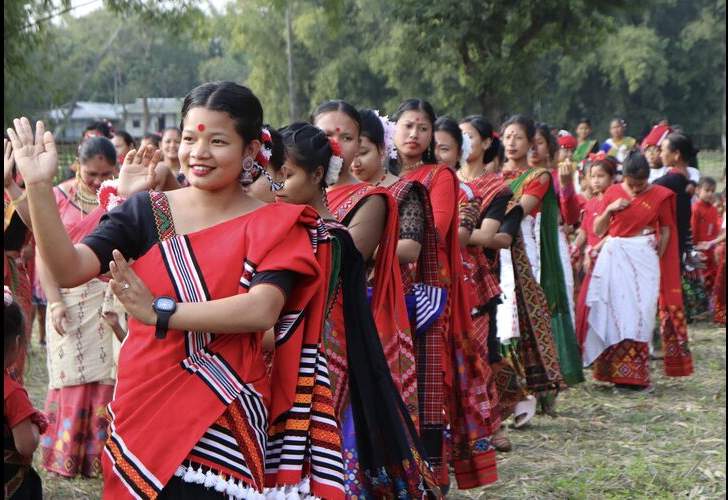
In 1956, the Bane Kebang, the highest socio-cultural organisation of the Mising community, officially announced the first Wednesday of Phagun as the festival’s fixed date.
Ali Aye Ligang is celebrated before Bohag Bihu, the Assamese New Year festival. While Bohag Bihu marks the beginning of a new agricultural and cultural cycle in Assam, Ali Aye Ligang specifically represents the seed-sowing stage of the farming season.
In 2026, Ali Aye Ligang was celebrated on 18 February.
Agricultural Importance of Ali Aye Ligang
Agriculture is an important part of the traditional lifestyle of the Mising community. The fertile lands of the Brahmaputra Valley support the cultivation of rice, pulses, vegetables, and other crops.
Ali Aye Ligang marks the symbolic beginning of agricultural activities for the coming season. The festival is especially connected with the sowing of Ahu paddy, a variety of rice cultivated during the early agricultural season.
The festival also reflects the importance of crops such as sweet potato, colocasia, ginger, turmeric, and legumes.
For the Mising people, sowing seeds is not merely a farming activity. It is a meaningful act that expresses hope for the future. Every seed planted represents the expectation of food, prosperity, and a better life.
The festival also encourages people to remember the hard work of farmers and the importance of protecting agricultural land.
Traditional Rituals of Ali Aye Ligang
The seed-sowing ritual is the central religious and agricultural activity of Ali Aye Ligang.
On the morning or afternoon of the festival, the head of each household performs a traditional ceremony. A small area of land is selected, usually in the eastern corner of a field or household garden.
The selected land is prepared in advance. In some traditional practices, a small square plot is marked out for the ceremony.
Four Megela or Pi plants may be placed at the corners of the sacred sowing area. These plants symbolise strength and vitality.
A leaf-wrapped vessel called Konkuk is also used in certain traditional rituals. Rice beer, known as Apong, is offered as part of the ceremony.
The family then ceremonially sows seeds of Ahu paddy and other crops such as ginger, potato, and colocasia.
Traditional prayers and invocations are offered to natural and spiritual forces associated with creation, fertility, and prosperity.
These rituals reflect the Mising community’s belief in the importance of nature and its role in supporting human life.
Traditional Beliefs and Worship of Nature
The traditional religious beliefs of the Mising community are closely connected with nature.
Donyi-Polo, meaning the Sun and the Moon, holds an important place in the traditional spiritual worldview of several communities of Arunachal Pradesh and Assam, including the Mising people.
The Sun provides light and warmth, while the Moon is connected with the natural rhythm of time and seasons. These natural forces are important for agriculture and the survival of living beings.
Traditional beliefs also include reverence for fertility and natural forces associated with the growth of crops.
Through these beliefs, Ali Aye Ligang expresses gratitude towards the natural world. The festival reminds people that human life depends on the earth, water, sunlight, and other elements of nature.
Gumrag Dance: The Heart of the Festival
Gumrag dance, also known as Gumraag or Pakch-Manam, is one of the most attractive features of Ali Aye Ligang.
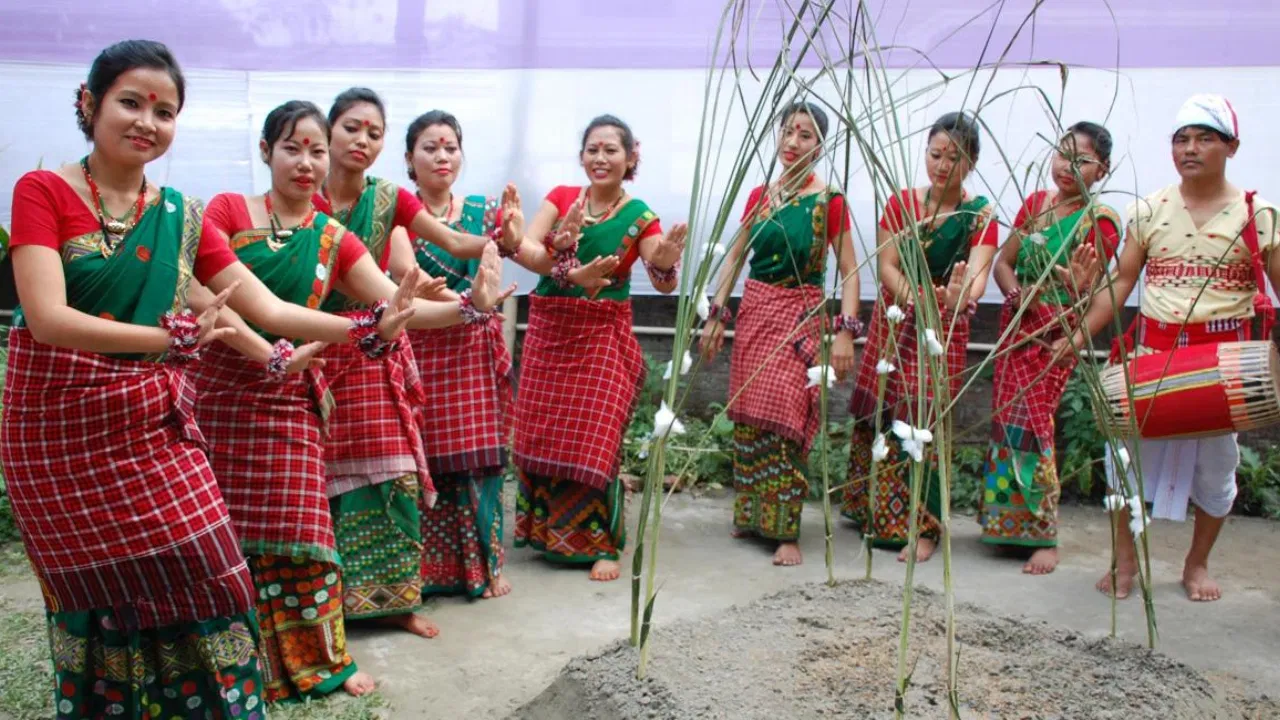
The dance is performed by young men and women wearing traditional Mising clothes. The dancers move rhythmically, often in circular patterns, accompanied by folk music and traditional instruments.
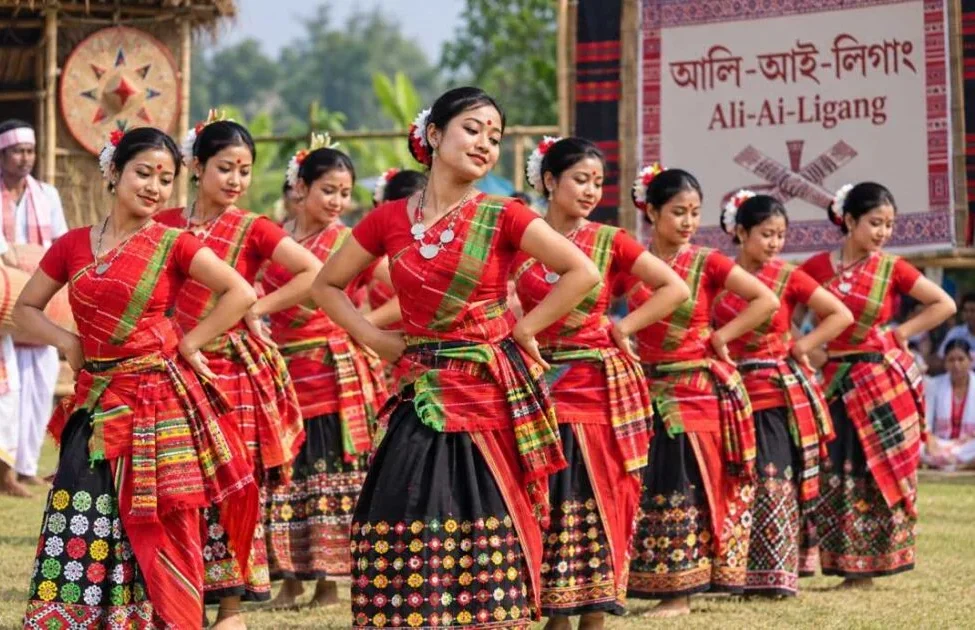
During village celebrations, groups of dancers visit houses and perform in courtyards. The celebrations may begin at one end of the village and gradually spread to other households.
The movements of Gumrag dance are connected with agricultural activities. They may represent digging the soil, sowing seeds, harvesting crops, and threshing paddy.
The circular movement of the dancers also reflects the cycle of life and the changing seasons.
Gumrag dance is not only a form of entertainment. It is a cultural expression of the Mising people’s relationship with agriculture, nature, and community life.
Traditional Songs and Musical Instruments
Music plays an important role in Ali Aye Ligang celebrations.
The traditional folk songs associated with the festival are known as Oi Nitom or Ligang Nitom. These songs reflect the everyday experiences, emotions, and cultural values of the Mising people.
The songs often express love, affection, happiness, hardship, hope, and togetherness. They also describe the beauty of nature and the importance of agricultural life.
Traditional musical instruments add rhythm and energy to the celebrations.
Some important instruments include:
- Dhul: A traditional drum used to create rhythmic beats.
- Taal: Cymbals that provide musical rhythm.
- Gong: A traditional metal instrument used in musical performances.
- Gungang: A traditional mouth instrument, also known as Gagana.
- Pepa: A traditional wind instrument used in some regional folk performances.
The combination of traditional songs, musical instruments, and dance creates a lively atmosphere during the festival.
Traditional Food of Ali Aye Ligang
Food is an essential part of Ali Aye Ligang. The festival is celebrated with traditional dishes prepared by families and shared among relatives, neighbours, and friends.
Women traditionally play an important role in preparing the festival meals. Preparations often begin several days before the celebration.
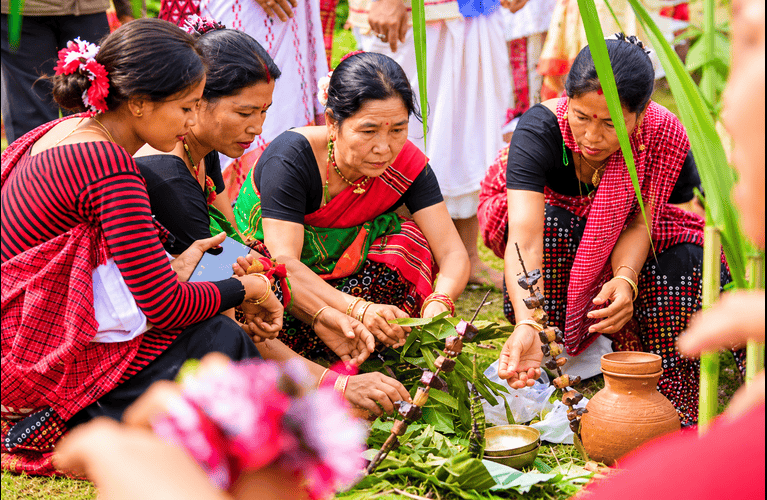
Some popular traditional foods include:
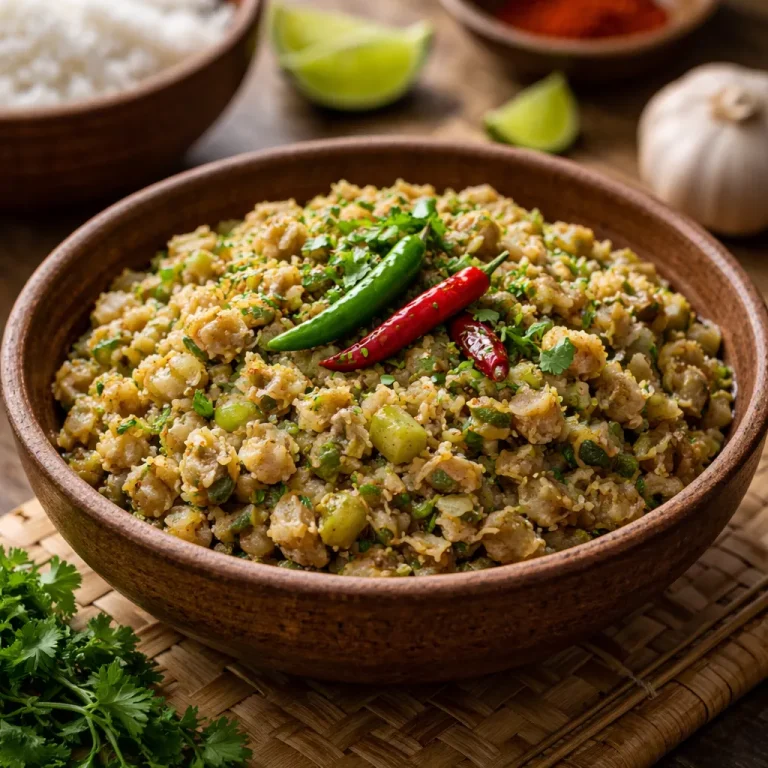
Purang Apin: A traditional rice preparation made using sticky rice, which is packed in leaves and cooked. Taro leaves are used in some preparations.
Apong: Traditional rice beer prepared by the Mising community. It holds cultural importance during festivals and community gatherings.
Pork: Different pork preparations are commonly served during festive meals.
Fish: Fish is an important part of the traditional food culture of the Mising people, especially because of their close relationship with rivers and wetlands.
Other traditional dishes may include chicken, vegetables, and dry fish chutney.
The community feast is an important symbol of equality and social harmony. People from different families come together and share food. The practice strengthens friendship, cooperation, and mutual respect.
Traditional Dress and Handloom Culture
Ali Aye Ligang is also an important occasion for displaying the rich handloom traditions of the Mising community.
Mising women are well known for their weaving skills. Traditional garments are often woven at home using colourful threads and beautiful patterns.
Women commonly wear traditional garments such as Ege, Ribi-Gaseng, and Gacheng during the festival.
These garments represent cultural identity, creativity, and the craftsmanship of Mising women.
Men wear traditional clothing such as Mibu Galuk, Gonro Ugon, and Dumour in different festive and cultural settings.
Traditional attire adds beauty to the festival and helps preserve the community’s cultural heritage.
Gena: The Environmental Message of Ali Aye Ligang
One of the most meaningful aspects of Ali Aye Ligang is the traditional practice of Gena or Madnam.
Gena refers to certain restrictions observed during the festival period. These restrictions are connected with respect for the land and the natural environment.
Traditional practices may include:
- Avoiding ploughing and digging the soil.
- Restricting the cutting of trees.
- Avoiding hunting.
- Limiting fishing activities.
- Following restrictions on certain food preparations.
These customs reflect the belief that the earth should be given time to rest after seeds are planted.
The restrictions also encourage people to avoid unnecessary disturbance to the natural environment.
The period of restrictions is traditionally brought to an end through a ritual known as Li.
Although the practices may vary between villages and families, their underlying message remains important: human activities should respect the natural world.
In today’s world, where environmental protection and sustainable farming are major concerns, these traditional practices offer valuable cultural lessons about living in harmony with nature.
Lilen: The Community Feast
Lilen is an important part of Ali Aye Ligang celebrations in many Mising communities.
It is associated with the concluding stage of the festival and is marked by a community feast.
Families, relatives, and neighbours gather to share traditional food and celebrate together.
The feast represents hospitality, friendship, unity, and social cooperation.
People from different economic backgrounds participate in the celebration. The shared meal strengthens relationships and creates a sense of belonging.
The gathering also provides an opportunity for younger generations to learn about traditional food, customs, and cultural values.
Ali Aye Ligang in Modern Assam
Ali Aye Ligang has gradually become an important cultural celebration beyond traditional Mising villages.
Today, the festival is celebrated in different parts of Assam, including towns and cities. Community organisations arrange cultural programmes, traditional dance performances, music events, and public gatherings.
Urban celebrations often take place in community halls, open grounds, and auditoriums.
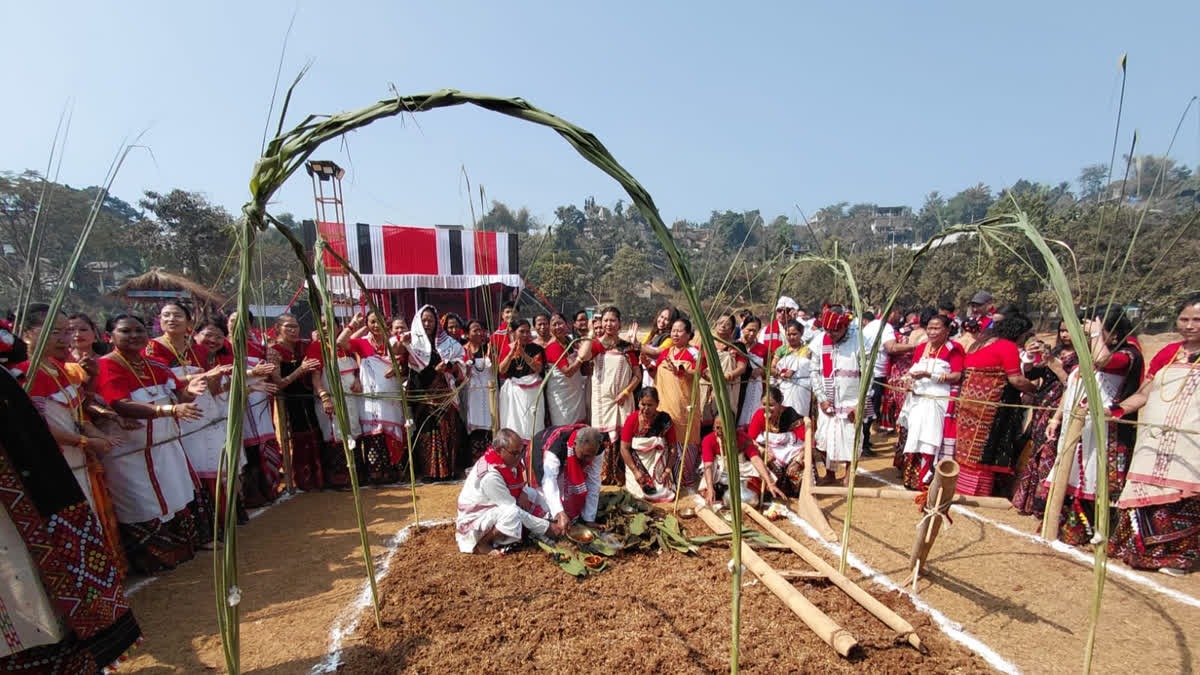
These events provide opportunities for younger generations to understand their cultural heritage and participate in traditional activities.
People from different communities also take part in the celebrations. This participation promotes cultural understanding and strengthens the spirit of unity in Assam.
Ali Aye Ligang also contributes to cultural tourism by introducing visitors to the traditional lifestyle, music, food, and handloom heritage of the Mising community.
At the same time, preserving the traditional meaning of the festival remains important. Its agricultural rituals and cultural values should continue to receive attention alongside modern celebrations.
Significance of Ali Aye Ligang
Ali Aye Ligang holds deep agricultural, cultural, social, and environmental significance.
Agricultural significance: The festival marks the beginning of the seed-sowing season and celebrates the importance of farming in Mising life.
Cultural significance: Traditional dance, music, dress, food, and rituals help preserve the cultural identity of the Mising community.
Social significance: Community celebrations and shared meals strengthen relationships and promote unity among people.
Environmental significance: Traditional restrictions encourage respect for soil, trees, rivers, and other natural resources.
Cultural diversity: The festival contributes to the rich cultural diversity of Assam and helps people understand the traditions of indigenous communities.
Intergenerational learning: The festival allows elders to pass their knowledge, customs, and values to younger generations.
Conclusion
Ali Aye Ligang is much more than an agricultural festival. It is a living expression of the Mising community’s relationship with nature, farming, and collective life.
Through traditional seed-sowing rituals, Gumrag dance, Oi Nitom songs, traditional food, and community gatherings, the festival preserves the cultural heritage of the Mising people.
Its environmental message is equally important. The festival reminds people that the earth is not simply a resource for human use but a source of life that deserves care and respect.
In modern Assam, Ali Aye Ligang continues to strengthen cultural identity and promote harmony among different communities.
Every seed planted during the festival carries a message of hope. It represents the desire for a good harvest, a prosperous future, and a life lived in harmony with nature. By preserving Ali Aye Ligang, the Mising community continues to protect a valuable part of Assam’s cultural heritage.