Indian Air Force Day: Soaring High with Valor, Excellence, and Dedication

Indian Air Force Day is more than just a date on the calendar it’s a resounding tribute to the indomitable spirit of the men and women who guard India’s skies with unwavering courage and precision. Celebrated annually on October 8, this day marks the establishment of the Indian Air Force (IAF) in 1932, a force that has evolved from humble beginnings into a formidable pillar of national defense. As we approach Indian Air Force Day 2025, the 93rd anniversary of this iconic institution, it’s a perfect moment to reflect on its legacy, sacrifices, and the thrilling spectacles that define the celebrations. Whether it’s the thunderous roar of fighter jets slicing through the air or the solemn wreath-laying ceremonies honoring fallen heroes, Indian Air Force Day encapsulates the essence of aerial supremacy and selfless service.
Thank you for reading this post, don't forget to subscribe!In a world where threats loom from above and beyond, the IAF stands as a beacon of self-reliance and technological prowess. This year’s theme, echoing the spirit of “Bharatiya Vayusena: Saksham, Sashakt aur Aatmnirbhar” (Indian Air Force: Capable, Powerful, and Self-Reliant), underscores the force’s push towards indigenous innovation amid global challenges. From the dusty airstrips of pre-independence India to the high-tech hangars buzzing with Tejas and Rafale jets, the journey of the IAF is a saga of resilience. On Indian Air Force Day, millions across the nation pause to salute the airmen and women who embody the motto “Nabhaḥ Sparśaṃ Dīptam” Touching the Sky with Glory.
But why does Indian Air Force Day hold such profound significance? It’s not merely a parade or an air show; it’s a reminder of how the skies above us are defended by those who volunteer to face the unknown. In 2024, the celebrations at Chennai’s Marina Beach drew over a million spectators, witnessing breathtaking flypasts by Su-30MKIs and the aerobatic wizardry of the Surya Kiran team. As we gear up for 2025, expect even grander events, perhaps at Hindon Air Force Station, blending tradition with cutting-edge displays of drone swarms and stealth technology. This blog dives deep into the heart of Indian Air Force Day, exploring its history, milestones, heroes, and future. Buckle up it’s a high-altitude ride through nine decades of aerial excellence.
The Humble Beginnings: Tracing the Roots of the Indian Air Force
The story of the Indian Air Force is intrinsically woven into the fabric of India’s freedom struggle and its post-colonial aspirations. Officially established on October 8, 1932, as an auxiliary unit of the Royal Air Force under British India, the IAF was born out of necessity during a time of imperial oversight. The Indian Air Force Act of 1932 laid the groundwork, mandating the adoption of RAF uniforms, badges, and insignia. Yet, even in its infancy, the force was staffed by Indian talent eager to prove their mettle. On April 1, 1933, No. 1 Squadron was commissioned with just four Westland Wapiti biplanes and a handful of Indian pilots under the command of British Flight Lieutenant Cecil Bouchier. These early aviators, including Sub-Lieutenant Aspy Merwan Engineer the first Indian to join flew reconnaissance missions in the rugged terrains of North Waziristan, quelling tribal insurgencies as early as 1936.
World War II catapulted the fledgling force into the global spotlight. What began as a modest outfit expanded dramatically, with squadrons deploying to theaters in Burma, North Africa, and even Europe. The IAF’s first combat strike came in Arakan against Japanese positions, a pivotal moment that halted the enemy’s advance. Pilots flew an array of aircraft from the sturdy Hawker Hurricanes to the nimble Supermarine Spitfires earning 22 Distinguished Flying Crosses for their valor. By 1945, King George VI bestowed the “Royal” prefix, transforming it into the Royal Indian Air Force (RIAF). Indian airmen like Mohinder Singh Pujji, who led No. 4 Squadron in Burma, became legends, their exploits immortalized in tales of daring dogfights and perilous supply runs.
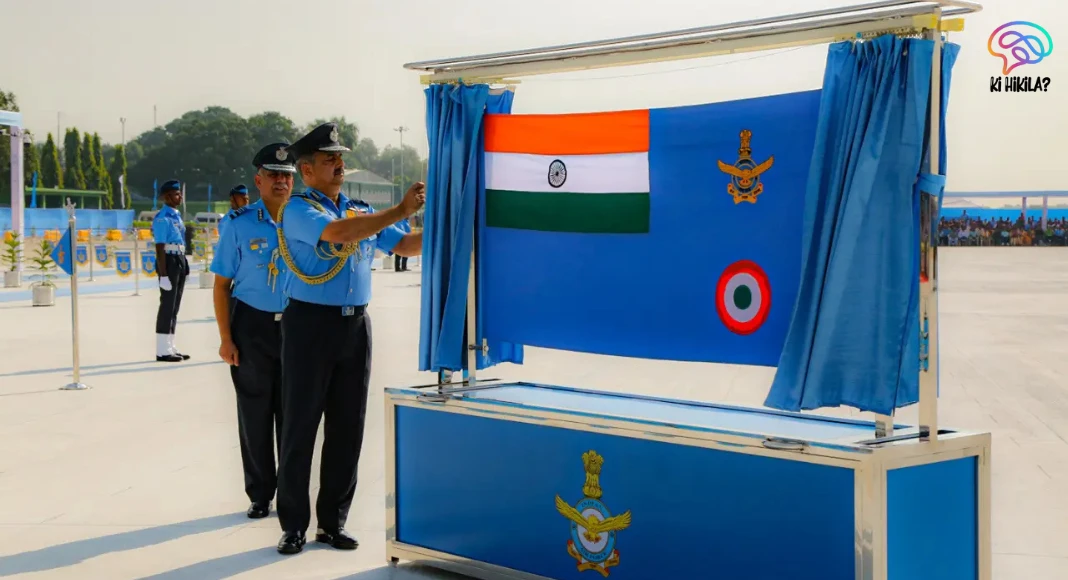
Independence in 1947 brought both promise and partition’s pains. The RIAF’s assets were divided, with three squadrons handed over to the newly formed Pakistan Air Force. On January 26, 1950, the “Royal” was dropped, and the IAF emerged as an independent arm of the Indian military, answerable to the President as Supreme Commander. The interim “Chakra” roundel gave way to the iconic Ashoka Chakra emblem, symbolizing sovereignty. Early post-independence years focused on reorganization, with the IAF absorbing veterans from the Allied forces and laying the foundation for indigenous capabilities.
The 1950s and 1960s marked a shift towards self-sufficiency. The Hindustan Aeronautics Limited (HAL) rolled out the HF-24 Marut, India’s first homegrown fighter jet, in 1961 a bold step despite its mixed performance in combat. Soviet collaborations brought MiG-21s and Sukhoi Su-7s, bolstering the fleet against mounting regional tensions. By the time Indian Air Force Day became an annual fixture in 1933, it had already evolved into a symbol of national pride, with the first major parade in Delhi in 1954 drawing massive crowds and showcasing the force’s growing might.
This foundational era wasn’t without challenges. Budget constraints, outdated equipment, and the scars of partition tested the IAF’s resolve. Yet, under leaders like Air Marshal Subroto Mukerjee the first Indian Chief of Air Staff the force forged ahead, training pilots at the newly established Air Force Academy in Dundigal. The IAF’s early forays into high-altitude operations, such as airlifts to remote outposts, set the stage for its role in future conflicts. Today, as we honor Indian Air Force Day, we remember these pioneers not just for their flights, but for igniting a legacy that touches the stars.
The Significance of Indian Air Force Day: A Day of Remembrance and Inspiration
Indian Air Force Day transcends mere commemoration; it’s a vibrant mosaic of gratitude, education, and aspiration. Observed every October 8, it honors the IAF’s founding while spotlighting its ongoing contributions to national security. In an era of asymmetric threats and cyber skirmishes, this day reminds us that the skies are our first line of defense a domain where vigilance meets velocity.
At its core, Indian Air Force Day is educational, weaving history into the present. Schools and colleges host seminars on the IAF’s role in wars, inspiring the youth to consider aviation careers. It’s a platform for inclusivity too; since 2015, women have been inducted as fighter pilots, with trailblazers like Bhawana Kanth leading the charge. The day fosters patriotism, with social media campaigns amplifying stories of sacrifice, reaching millions and bridging generational gaps.
Significantly, it underscores self-reliance. The 2024 theme emphasized modernization, aligning with initiatives like Make in India. As India eyes 42 combat squadrons by 2030, Indian Air Force Day spotlights indigenous marvels like the Tejas, reducing foreign dependency. It’s also a call to action against complacency reminding civilians of the IAF’s disaster relief roles, from Uttarakhand floods to COVID-19 vaccine airlifts.
For the families of serving personnel, it’s deeply personal. Wreath-laying at war memorials evokes the 1,500+ airmen lost since 1932. Economically, events boost tourism; the 2024 Chennai air show generated buzz worth crores. Globally, it positions India as an aerospace power, with IAF contingents at international air shows like Aero India.
In essence, Indian Air Force Day isn’t just about the past it’s a launchpad for the future, igniting dreams of soaring wings and unyielding resolve.
Milestones in the Skies: Key Wars and Operations That Shaped the IAF
The IAF’s history is etched in the contrails of epic battles, where strategy met sheer audacity. From the frosty peaks of Kargil to the monsoons of Bangladesh, these milestones define Indian Air Force Day‘s celebratory fervor.
The Indo-Pak War of 1947-48 was the IAF’s baptism by fire. Transporting troops to Jammu & Kashmir amid the Maharaja’s accession, Tempests and Dakotas provided crucial airlifts, intercepting a lone Pakistani DC-3 in a rare air-to-air skirmish. Though limited to ground support, it proved the force’s logistical backbone.
The 1962 Sino-Indian War exposed vulnerabilities; political directives curtailed offensive air ops, allowing Chinese advances. Yet, the IAF’s airlifts to high-altitude posts sowed seeds for reform, leading to MiG inductions.
1965’s Indo-Pak conflict was a turning point. For the first time, the IAF struck independently, raiding PAF bases with Hunters and Canberras. Folland Gnats, dubbed “Sabre Slayers,” downed Pakistan’s F-86s, securing air superiority in days despite ground-fire losses of 60-70 aircraft. This war honed tactics, emphasizing surprise and superiority.
The 1971 Bangladesh Liberation War was the IAF’s magnum opus. Flying 16,000+ sorties, it decimated 94 PAF aircraft while losing 45. In the east, MiG-21s achieved air dominance; the Boyra dogfight saw Gnats triumph over Sabres. Longewala’s night raid by Hunters turned the tide, inspiring the film Border. Strategic bombings crippled Pakistani logistics, aiding Mukti Bahini’s victory.
Kargil 1999’s Operation Safed Sagar showcased precision amid peaks. Mirage 2000s bombed Tiger Hill, flying 40+ daily sorties despite losses a MiG-21, MiG-27, and Mi-17 to SAMs. The IAF’s restraint preserved escalation thresholds.
Beyond wars, operations like Vijay (1961 Goa annexation) saw Canberras soften Portuguese defenses. Meghdoot (1984) airlifted troops to Siachen, the world’s highest battlefield. Poomalai (1987) dropped aid in Jaffna via Mirage 2000s, a humanitarian masterstroke. Cactus (1988) thwarted a Maldives coup with paratrooper drops.
The 21st century amplified these feats. Balakot 2019’s airstrikes by Mirage 2000s targeted terror camps, avenging Pulwama. Wing Commander Abhinandan Varthaman’s MiG-21 downed a PAF F-16 in ensuing dogfights, his capture and release a global headline.
2025’s Operation Sindoor was a tech triumph: 23-minute strikes on nine Pakistani terror hubs using Tejas, BrahMos, and SCALP munitions, neutralizing 100+ terrorists and downing six PAF jets including a 314-km S-400 kill. Jamming Chinese defenses, it set back adversary airpower by years, blending indigenous and imported tech seamlessly.
These milestones aren’t footnotes; they’re the adrenaline of Indian Air Force Day, where history fuels the flypast’s roar.
Spectacle in the Sky: Celebrations and Events on Indian Air Force Day
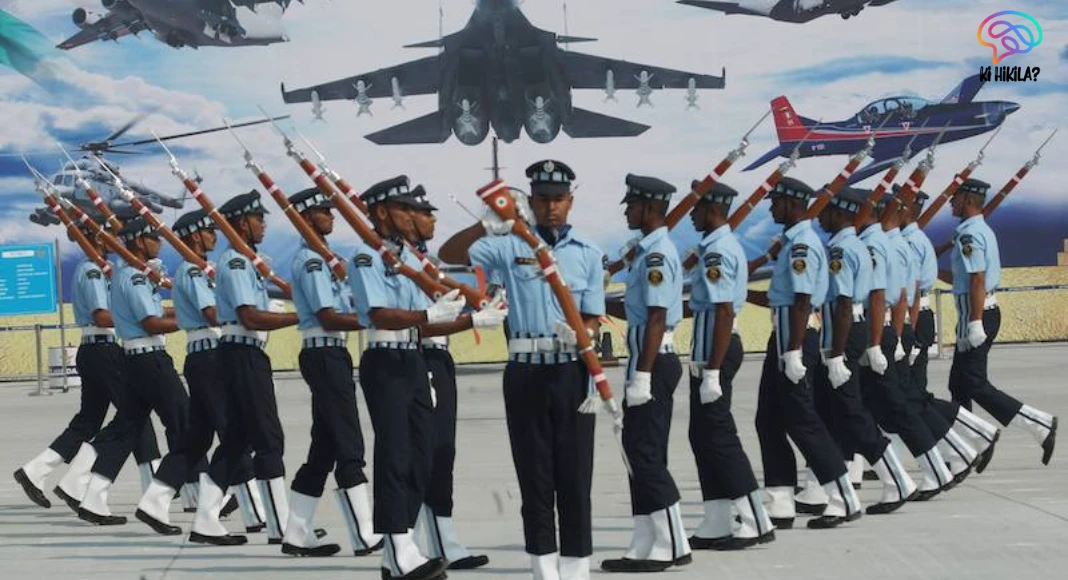
Indian Air Force Day transforms India into a theater of aerial artistry. The centerpiece is the grand parade at venues like Hindon or Tambaram, featuring precision drills by Garud commandos and airmen marching to rousing tunes.
Air shows steal the spotlight. 2024’s Marina Beach extravaganza India’s largest dazzled 1.2 million with Su-30MKI formations, Rafale demos, and Surya Kiran’s 9-Hawk loop-the-loops. The Sarang team’s Dhruv helicopters danced in sync, evoking gasps. Wreath-laying by the President at the National War Memorial precedes, honoring heroes.
For 2025, expect innovations: drone light shows mimicking IAF roundels, VR simulations for public interaction, and eco-friendly flypasts. Chennai or Delhi might host, with live streams on Doordarshan reaching remote villages. Side events include open days at bases, where kids touch MiG cockpits, and seminars on women in aviation.
Nationwide, schools run essay contests, while cities light up with tricolor projections. Social media erupts with #IAFD2025, sharing veteran stories. These festivities aren’t extravagance they’re a nation’s thank-you, making Indian Air Force Day a shared sky of pride.
Wings of Steel: The IAF’s Iconic Aircraft Fleet
The IAF’s fleet is a symphony of speed and stealth, powering Indian Air Force Day‘s aerial ballets. At ~1,716 aircraft, it’s Asia’s third-largest.
Fighters dominate: 260 Su-30MKIs for multi-role dominance, 36 Rafales with Meteor missiles for beyond-visual-range kills, and 123 Tejas Mk1/1A India’s agile light combatant, embodying Atmanirbhar. Upgraded MiG-29s and Mirage 2000s add versatility, while Jaguars evolve into deep-strike platforms.
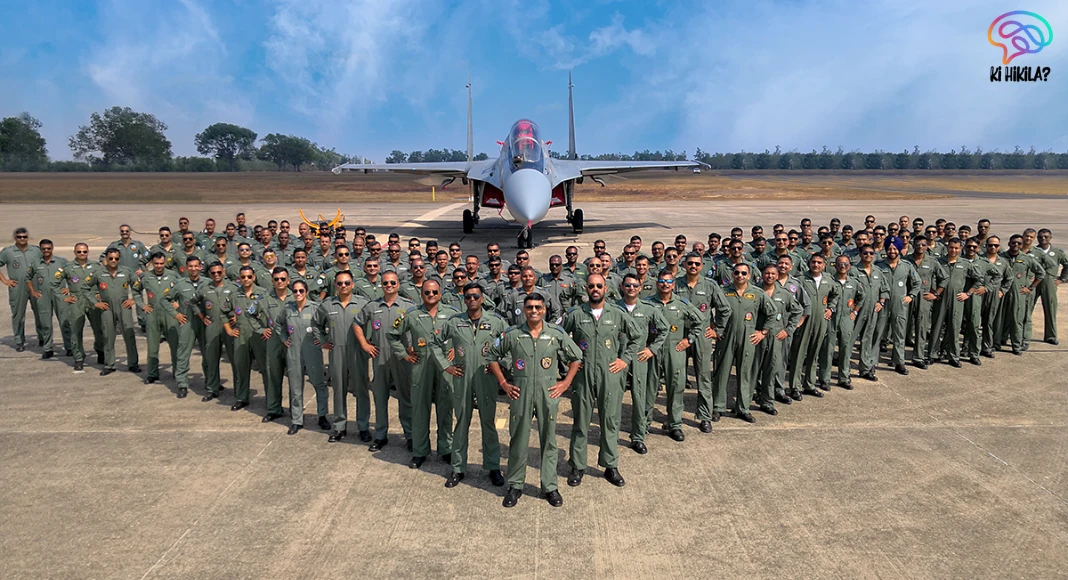
Helicopters like 150 Mi-17s handle utility, 22 Apaches deliver hellfire, and Prachands conquer Siachen’s heights. Transports C-17 Globemasters, C-130Js enable rapid deployments, as in 2013’s Daulat Beg Oldi landing record.
AWACS like Netra and Phalcon provide eyes in the sky, while UAVs Herons, Harops scout silently. Missiles: BrahMos supersonic, Akash SAMs, S-400 guardians.
This arsenal, showcased on Indian Air Force Day, isn’t static upgrades like Tejas Mk2 promise hypersonic futures.
Heroes of the Horizon: Notable IAF Personnel and Gallantry Awards
Behind every Indian Air Force Day flypast are heroes whose stories soar higher than any jet. Marshal Arjan Singh, the sole five-star, led in 1965, earning eternal honors.
Subhas Chandra Bose‘s INA air wing inspired early recruits, but gallants like Hardit Malik WWI ace with a DSO paved paths. WWII’s Mohinder Pujji flew 17 missions, bagging a DFC.
Post-independence, Nirmal Jit Singh Sekhon posthumously won the Param Vir Chakra in 1971, single-handedly downing Sabres over Srinagar. Ajay Ahuja’s 1999 Kargil sacrifice earned MVC.
Abhinandan Varthaman‘s 2019 F-16 kill netted a Vir Chakra. In Sindoor 2025, nine pilots led by Group Captain Animesh Patni received Vir Chakras for precision strikes, downing foes at record distances. Thirteen Yudh Seva Medals followed, honoring logistics wizards.
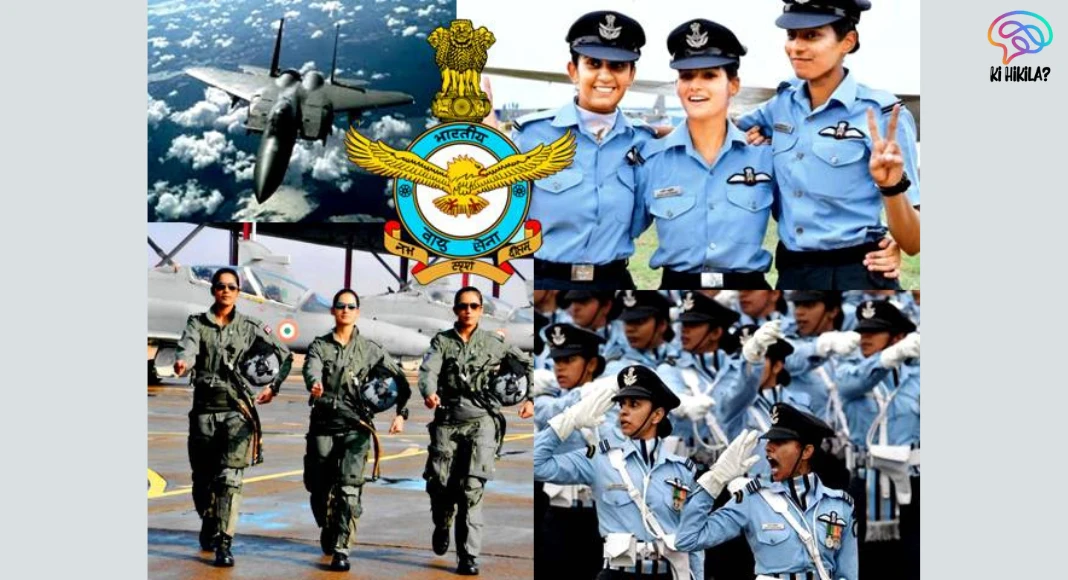
Women shine too: Avani Chaturvedi, first MiG-21 solo flyer. Awards tally: 1 PVC, 9 MVCs, 78 VCs—each a chapter in Indian Air Force Day‘s ode to bravery.
The Modern IAF: Guardians of Tomorrow’s Skies
Today, the IAF transcends borders, integrating space and cyber domains via the Defence Space Agency. With 140,000 personnel, it aids HADR evacuating Yemenis in 2015, aiding Turkey’s 2023 quake.
Modernization drives: 114 MRFA fighters, AMCA stealth jet by 2030. AFNET enables data-linked ops, while Garuds counter terror. International exercises like Red Flag hone edges.
Challenges persist squadron shortages (31 vs. 42) but resolve endures. Indian Air Force Day heralds this evolution, from MiG relics to drone swarms.
Touching the Sky: A Conclusion on Indian Air Force Day
As Indian Air Force Day 2025 dawns, we celebrate not just machines, but the human spirit that pilots them. From 1932’s Wapitis to 2025’s Sindoor strikes, the IAF embodies glory. Let this day inspire us to look up with gratitude and ambition. Jai Hind!
FAQs About Indian Air Force Day
1. What is Indian Air Force Day? Indian Air Force Day is celebrated annually on October 8 to mark the establishment of the Indian Air Force (IAF) in 1932. It honors the IAF’s contributions to national security, its heroes, and its advancements in aerial warfare.
2. Why is Indian Air Force Day celebrated on October 8? The IAF was officially founded on October 8, 1932, under the Indian Air Force Act as an auxiliary force of the Royal Air Force during British rule. This date is commemorated to celebrate its legacy and growth.
3. How is Indian Air Force Day celebrated? Celebrations include a grand parade, air shows featuring fighter jets and aerobatic teams like Surya Kiran, wreath-laying ceremonies at war memorials, and public events like open days at air bases. The 2024 Chennai air show drew over 1.2 million spectators.
4. What is the significance of Indian Air Force Day? Indian Air Force Day highlights the IAF’s role in defending India’s skies, its contributions to wars, disaster relief, and modernization efforts. It fosters patriotism, inspires youth, and showcases India’s aerospace prowess.
5. What is the theme for Indian Air Force Day 2025? While the official theme for 2025 is yet to be announced, recent themes like “Bharatiya Vayusena: Saksham, Sashakt aur Aatmnirbhar” (Capable, Powerful, Self-Reliant) emphasize self-reliance and strength.
6. Which aircraft are showcased on Indian Air Force Day? Air shows feature aircraft like Su-30MKI, Rafale, Tejas, MiG-29, Mirage 2000, and helicopters like Dhruv and Apache. Aerobatic teams like Surya Kiran and Sarang perform breathtaking maneuvers.