


Dussehra: The Story, Significance, and Celebration of the Victory of Good Over Evil

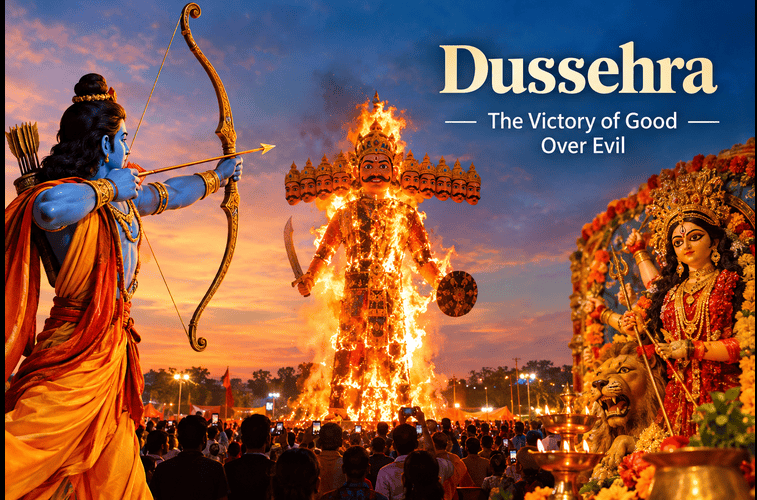
Dussehra is one of the most important Hindu festivals celebrated across India. Also known as Vijayadashami, this festival marks the victory of good over evil and reminds people of the importance of truth, courage, righteousness, and justice. It is celebrated on the tenth day after the nine days of Sharad Navratri, usually during September or October. The festival is associated with two important stories from Hindu mythology: Lord Rama’s victory over Ravana and Goddess Durga’s victory over Mahishasura.
Dussehra is celebrated in different ways across India. In northern India, people burn large effigies of Ravana, while in eastern India, the festival marks the conclusion of Durga Puja. In southern and western India, people worship tools, books, vehicles, and other objects connected with their work and daily lives. Although the customs differ, the central message remains the same: goodness, truth, and righteousness can overcome evil.

What Is Dussehra?
Dussehra is a major Hindu festival that celebrates the victory of good over evil. The name is commonly connected to the Sanskrit words dasha, meaning ten, and hara, meaning defeat. The name is often understood in relation to the defeat of Ravana, the ten-headed king of Lanka, by Lord Rama.
The festival is observed on the tenth day of the Hindu lunar month of Ashvina, following Sharad Navratri. Since Hindu festivals follow the lunar calendar, the date changes each year according to the Gregorian calendar.
Dussehra is also known as Vijayadashami. The word Vijayadashami combines the ideas of victory and the tenth day. It represents the triumph of righteousness and divine power over destructive forces.
For many people, Dussehra is not only a religious celebration but also a time for family gatherings, cultural programmes, prayers, fairs, and community events.
The Story of Lord Rama and Ravana
One of the most popular stories associated with Dussehra comes from the ancient Hindu epic, the Ramayana.
Lord Rama was the prince of Ayodhya and is regarded in Hindu tradition as an incarnation of Lord Vishnu. He was known for his honesty, courage, kindness, and devotion to duty. His wife, Sita, and his brother Lakshmana accompanied him during important events in his life.
According to the Ramayana, Ravana, the powerful king of Lanka, abducted Sita and took her to his kingdom. Rama decided to rescue her and bring her home safely.
During his journey, Rama received help from Lakshmana, Hanuman, Sugriva, and their allies. Hanuman played an important role in finding Sita, while the monkey army helped Rama prepare for the battle against Ravana.
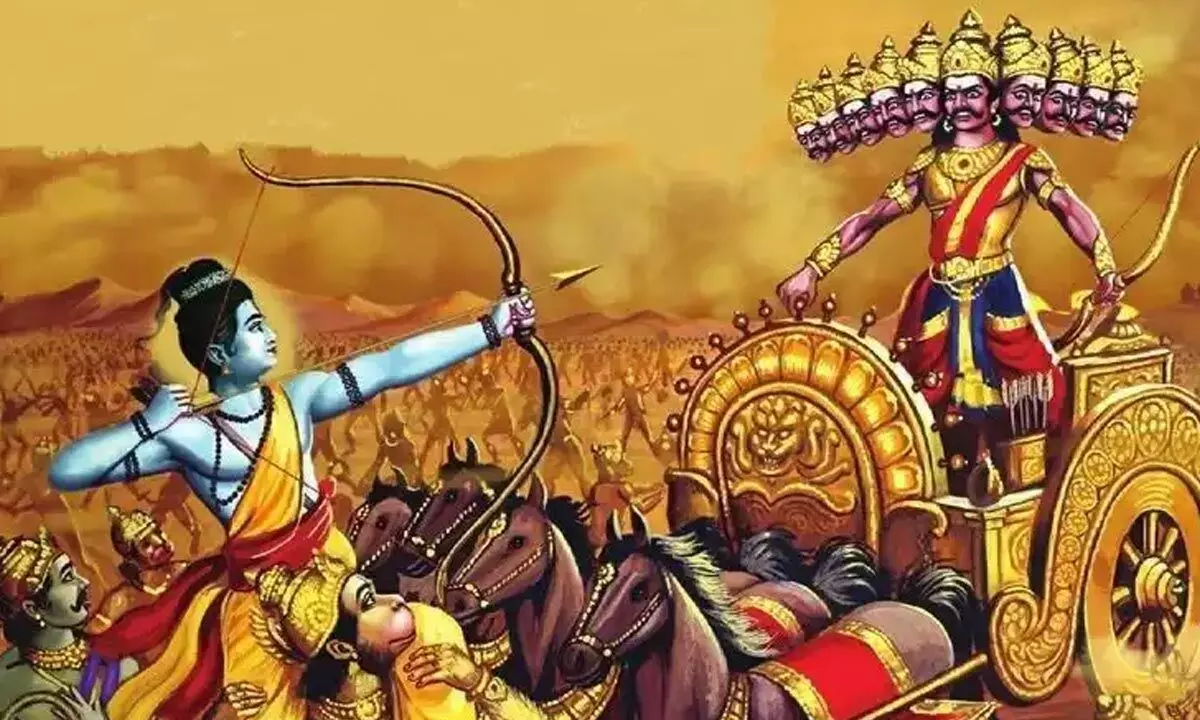
A great war followed between Rama’s forces and Ravana’s army. After a fierce battle, Rama defeated Ravana and rescued Sita. This victory is traditionally associated with the tenth day of Ashvina, which is celebrated as Dussehra.
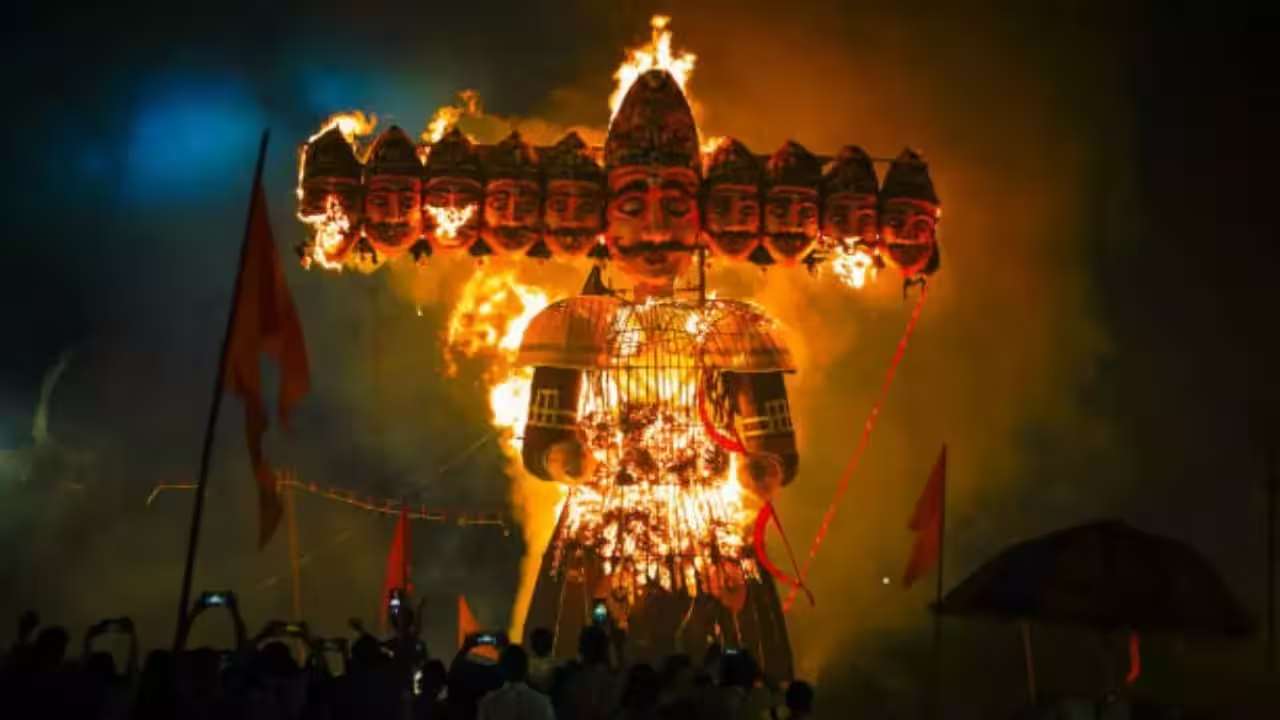
The burning of Ravana’s effigy during Dussehra represents the destruction of evil, arrogance, and injustice. In many places, effigies of Ravana’s son Meghanada and his brother Kumbhakarna are also burned.
The story teaches people that power and knowledge should be used responsibly. It also reminds us that pride, cruelty, and wrongdoing can lead to destruction, regardless of how powerful a person may appear.
Goddess Durga’s Victory Over Mahishasura
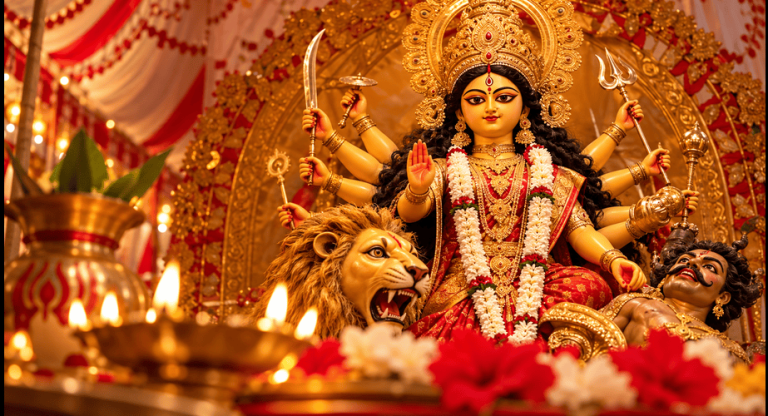
Another important story associated with Dussehra is the victory of Goddess Durga over Mahishasura, a powerful demon.
According to Hindu mythology, Mahishasura received a boon that made him extremely difficult to defeat. He used his power to challenge the gods and create trouble in the heavenly world. When the gods could not defeat him, their combined divine energy gave rise to Goddess Durga.
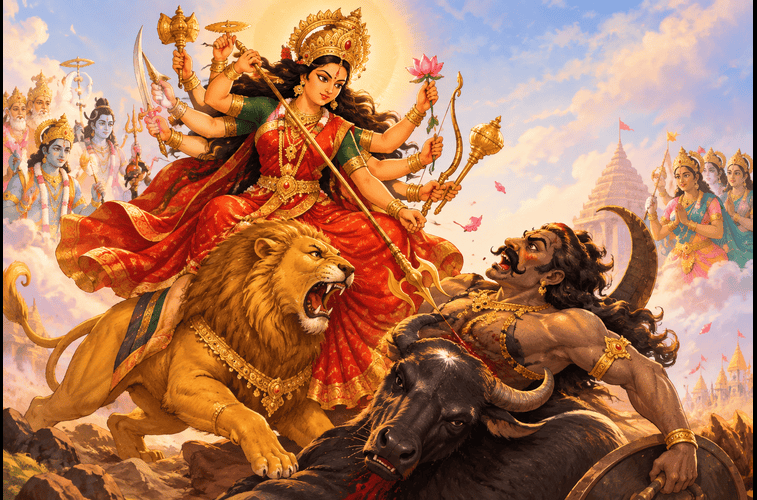
Durga was blessed with divine weapons and immense strength. She fought Mahishasura in a fierce battle that continued for nine nights. On the tenth day, she defeated the demon and restored peace.
This victory is celebrated during Vijayadashami and is closely connected with the nine days of Navratri, which honour Goddess Durga and her different forms.
The story highlights the strength of the divine feminine and the importance of courage, determination, and protection against injustice. It also teaches that evil cannot continue forever, even when it appears powerful.
In eastern India, especially West Bengal, Assam, and other parts of the region, the victory of Goddess Durga is central to the religious and cultural significance of Vijayadashami.
Why Is Dussehra Celebrated?
Dussehra is celebrated to remember the victory of good over evil. Both the stories of Lord Rama and Goddess Durga carry this message, although they describe different battles and different forms of divine victory.
The festival also encourages people to think about their own actions and behaviour. It reminds us that negative qualities such as anger, dishonesty, greed, jealousy, and arrogance can harm individuals and society.
The ten heads of Ravana are sometimes interpreted symbolically as representing negative human qualities that people should try to overcome. Although interpretations differ, this symbolism provides an opportunity for personal reflection.
Dussehra encourages people to:
- Follow truth and honesty in daily life.
- Stand against injustice and wrongdoing.
- Control anger, pride, and greed.
- Respect family members and other people.
- Develop courage and patience during difficult times.
- Use knowledge and power responsibly.
In this way, the festival connects ancient stories with values that remain relevant in modern life.
How Is Dussehra Celebrated Across India?
Dussehra is celebrated throughout India, but traditions vary from one region to another. Local customs, religious beliefs, and cultural practices give the festival its unique character.
Dussehra in North India
In many northern Indian states, Dussehra is celebrated with Ramlila performances. Ramlila is a traditional theatrical presentation of important episodes from the Ramayana. Actors perform the roles of Rama, Sita, Lakshmana, Hanuman, Ravana, and other characters.
These performances often take place over several days and conclude with the battle between Rama and Ravana. On Dussehra evening, large effigies of Ravana, Meghanada, and Kumbhakarna are set on fire in public grounds.
Thousands of people gather to watch the celebrations, enjoy local fairs, and participate in community activities.
Dussehra in Eastern India
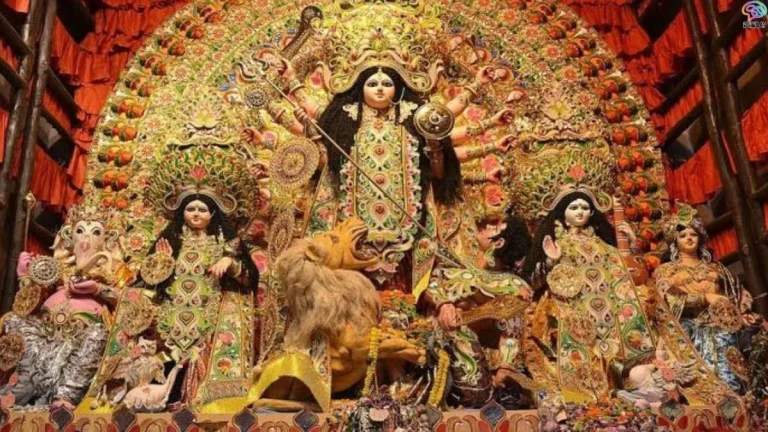
In eastern India, Dussehra is closely associated with Durga Puja. Elaborate pandals, beautifully decorated idols, cultural programmes, traditional music, and community gatherings form important parts of the celebrations.
In West Bengal, Vijayadashami marks the final day of Durga Puja. Devotees offer prayers to Goddess Durga before the idols are taken in processions for immersion in water.
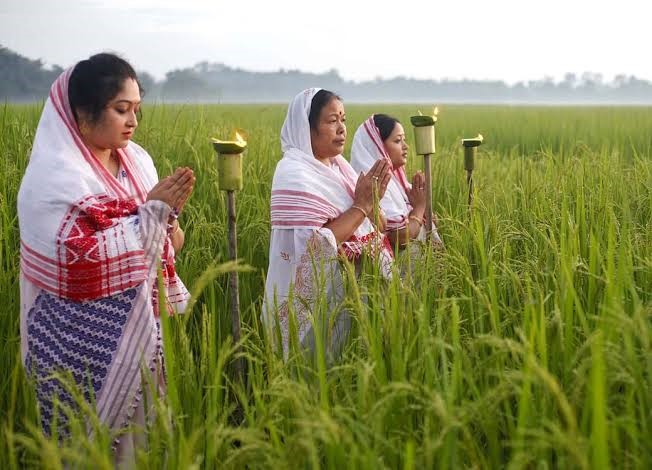
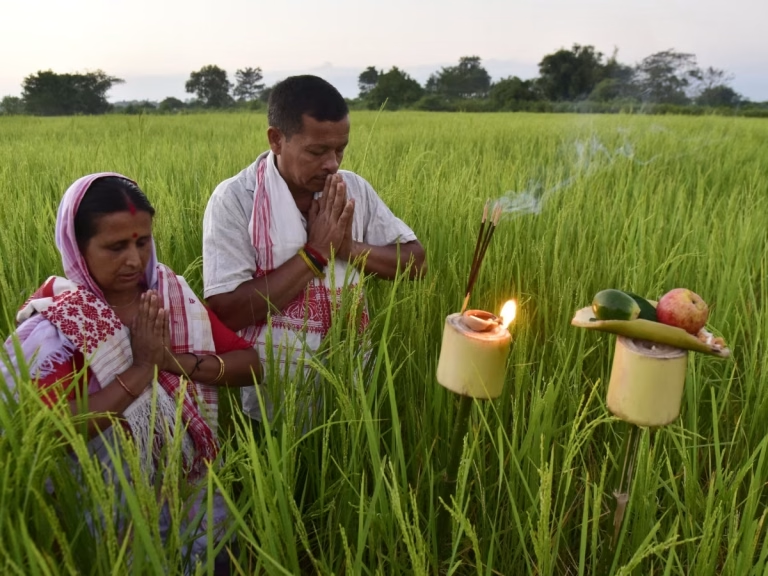
In Assam, Durga Puja is celebrated in towns and villages with decorated pandals, devotional activities, cultural events, and gatherings with family and friends. Vijayadashami marks the end of the main Durga Puja celebrations.
Although the customs may differ between communities, the festival expresses devotion to Goddess Durga and celebrates her victory over Mahishasura.
Dussehra in Southern India
In southern India, Dussehra celebrations often include worship of books, tools, musical instruments, vehicles, and objects used in daily work.
Navratri Golu, also known as Bommai Golu in some regions, is a traditional practice in which dolls and figurines representing gods, goddesses, historical scenes, and cultural stories are arranged on stepped platforms.
Ayudha Puja is another important tradition. People worship the tools, equipment, and instruments that support their professions and livelihoods. Students may also honour their books and learning materials.
These practices express gratitude for knowledge, skills, work, and the resources that help people earn a living.
Dussehra in Western India
In western India, Dussehra is celebrated with prayers, family gatherings, cultural activities, and traditional customs.
In Maharashtra, some people exchange leaves of the apta tree as symbolic gold and offer good wishes to friends and relatives. The custom represents prosperity, goodwill, and the sharing of happiness.
In Gujarat, the festival comes at the end of Navratri, a period known for devotional celebrations, Garba, and Dandiya Raas. Vijayadashami is observed with prayers and other regional traditions.
Kullu Dussehra in Himachal Pradesh
Kullu Dussehra is one of the distinctive regional celebrations of the festival. It takes place in the Kullu Valley of Himachal Pradesh and is known for its processions, traditional music, and gatherings of local deities.
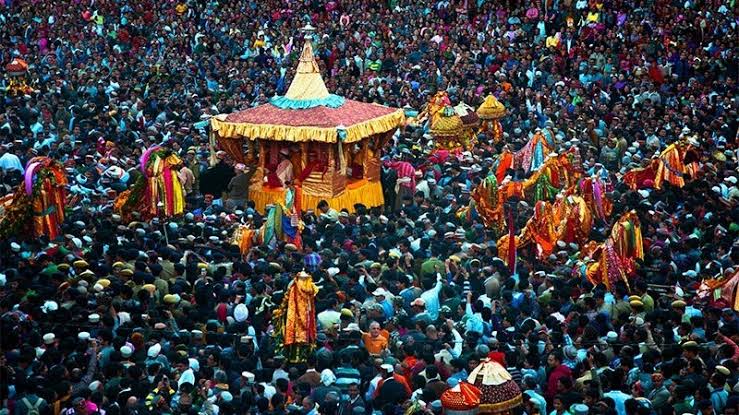
The festival centres on Lord Raghunath, a form of Lord Rama worshipped in the region. Deities from nearby villages are brought together in decorated palanquins, creating a colourful religious and cultural gathering.
Unlike many other Dussehra celebrations, the Kullu festival does not primarily focus on burning a large effigy of Ravana. Instead, its traditions highlight local religious heritage and community participation.
The Difference Between Dussehra and Vijayadashami
Dussehra and Vijayadashami are often used interchangeably because both refer to the tenth day associated with the victory of good over evil.
Dussehra is commonly connected with Lord Rama’s victory over Ravana, particularly in northern and western India. Vijayadashami is widely used for the tenth day of Navratri and the celebration of Goddess Durga’s victory over Mahishasura, especially in eastern India.
However, these distinctions are not absolute. The names and traditions overlap across regions, and both festivals share the theme of victory over evil.
The day also marks the conclusion of the main Navratri celebrations and, in many places, the beginning of preparations for Diwali, which traditionally falls about 20 days after Dussehra.
The Importance of Dussehra in Modern Life
Although Dussehra is rooted in ancient Hindu traditions, its message remains meaningful today. The festival encourages people to reflect on the difference between right and wrong and to make positive choices in their personal and professional lives.
The defeat of Ravana reminds us that arrogance and the misuse of power can lead to failure. The victory of Goddess Durga highlights the importance of courage, strength, and standing against injustice.
Dussehra also brings families and communities together. People visit temples, attend cultural programmes, share meals, meet relatives, and take part in local celebrations. These activities help preserve traditional stories, art forms, music, and regional customs for future generations.
The festival can also inspire people to overcome their own weaknesses. Just as Rama fought against Ravana and Durga defeated Mahishasura, individuals can work to overcome dishonesty, anger, selfishness, and harmful habits.
For children, Dussehra provides an opportunity to learn about Indian epics, cultural diversity, and the values of truth and kindness. For communities, it offers a time to celebrate shared traditions while respecting the different ways people observe the festival.
Dussehra and the Beginning of Diwali Preparations
Dussehra is also connected with the wider festive season in India. For many families, the festival marks the beginning of preparations for Diwali, the festival of lights.
According to the Ramayana, Lord Rama returned to Ayodhya with Sita and Lakshmana after defeating Ravana and completing his exile. The return is traditionally celebrated during Diwali, when homes are decorated with lamps and people gather with their families.
Dussehra and Diwali therefore form part of a broader cultural story about victory, homecoming, hope, and the restoration of peace.
The celebrations also support local artisans, shopkeepers, performers, and small businesses through the demand for decorations, traditional clothing, sweets, gifts, and festival-related services.
Frequently Asked Questions (FAQs)
What is Dussehra celebrated for?
Dussehra is celebrated to mark the victory of good over evil. It is associated with Lord Rama’s defeat of Ravana and Goddess Durga’s victory over Mahishasura.
What is the other name of Dussehra?
Dussehra is also known as Vijayadashami. Both names are commonly used for the tenth day of the autumn festival period.
Why do people burn Ravana’s effigy on Dussehra?
People burn Ravana’s effigy to symbolise Lord Rama’s victory and the destruction of evil, arrogance, and injustice.
What is the connection between Dussehra and Navratri?
Dussehra generally falls on the tenth day following the nine nights of Sharad Navratri. Navratri honours Goddess Durga and her different forms, while the tenth day celebrates victory over evil.
Why is Dussehra important in Assam?
Dussehra is observed in Assam as part of Vijayadashami and Durga Puja celebrations. Devotees offer prayers, visit decorated pandals, participate in cultural programmes, and mark the conclusion of the festival.
What is the difference between Dussehra and Durga Puja?
Durga Puja is a festival dedicated to Goddess Durga and her victory over Mahishasura. Dussehra commonly highlights Lord Rama’s victory over Ravana. Vijayadashami connects the traditions, and the terms may overlap depending on the region.
How is Dussehra celebrated in South India?
In southern India, celebrations may include Navratri Golu, Ayudha Puja, prayers to Goddess Saraswati, and the worship of books, tools, vehicles, and work-related objects.
What lesson does Dussehra teach us?
Dussehra teaches that truth, courage, and righteousness can overcome evil. It encourages people to control negative qualities, stand against injustice, and treat others with honesty and respect.
Final Thoughts
Dussehra is more than a festival of rituals, performances, and celebrations. It is a reminder that truth and righteousness remain important even in difficult times. The stories of Lord Rama and Goddess Durga inspire people to face challenges with courage, protect what is right, and overcome negative qualities within themselves.
From the burning of Ravana’s effigies in northern India to the immersion of Goddess Durga’s idols in eastern India, Dussehra reflects the cultural diversity of the country. Its customs may vary, but its central message remains universal: goodness, courage, and justice deserve to triumph over evil.