Kati Bihu: Unity in Simplicity

Kati Bihu, also known as Kongali Bihu, is an important festival in Assam celebrated in mid-October. Unlike the cheerful Rongali Bihu and Bhogali Bihu, Kati Bihu is simpler and marks the end of sowing and the beginning of the growing season for crops.
Thank you for reading this post, don't forget to subscribe!Historical Significance
1. Origin of the Name
The name ‘Kongali’ Bihu reflects the hardships faced during this period, with ‘Kongali’ meaning poverty-stricken. Unlike other Bihu festivals that are marked by feasts and merriment, this bihu symbolizes simplicity, scarcity, and restraint.
2. Agricultural Importance
Kati Bihu coincides with a critical phase in agriculture—paddy crops are in the field but not ready for harvest. This time brings uncertainty and tension as farmers anxiously wait, hoping for favorable weather and a good yield. The festival encourages patience, reminding people that the fruits of their labor will come in time.
3. Connection to the Changing Seasons
Falling in mid-October, Kati Bihu marks the shift from monsoon to cooler autumn and prepares communities for the upcoming winter. It is a period of transition, where households reflect, offer prayers for the protection of crops, and mentally prepare for the challenges of the colder months ahead.
Rituals and Traditions of Kati Bihu
Lighting of Earthen Lamps (Saki)
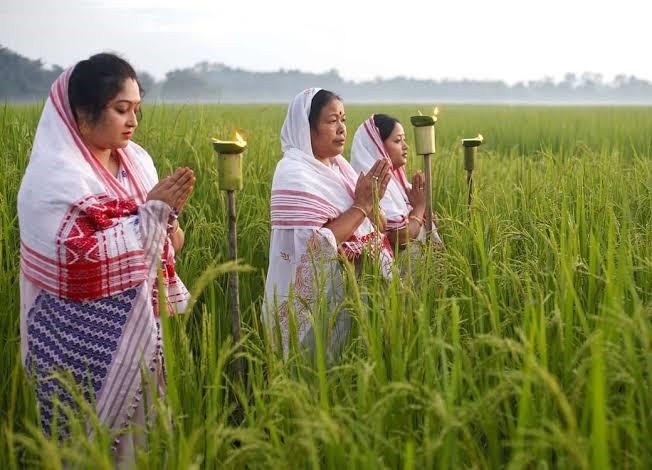
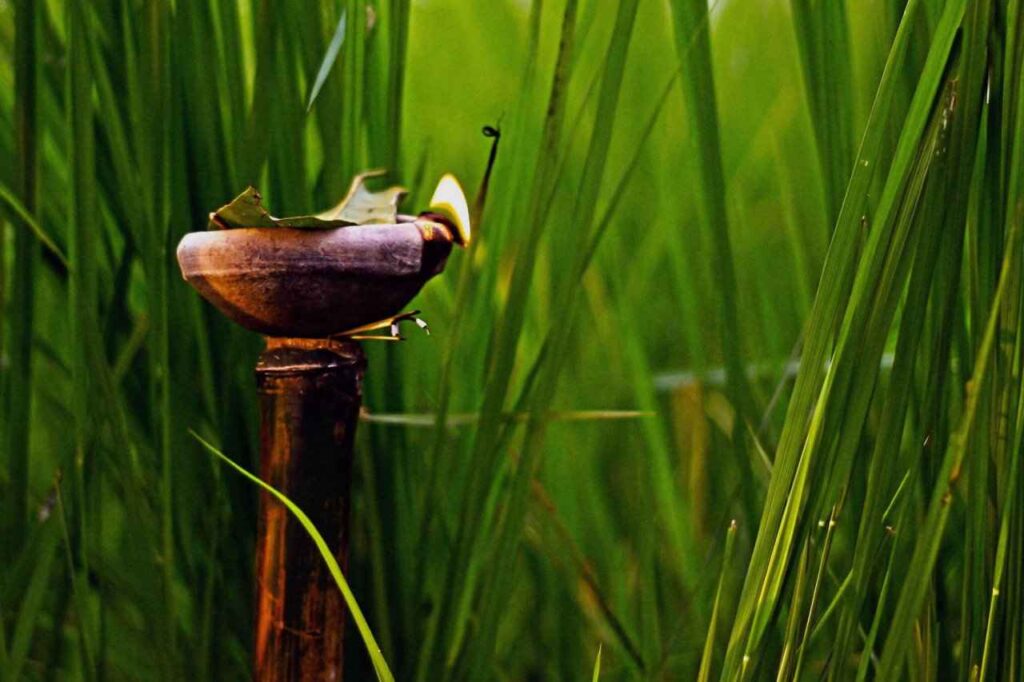
People light small earthen lamps in rice fields, granaries, and under sacred trees, especially the Tulsi (basil) plant. These lamps symbolize the hope for a healthy crop and are believed to ward off evil spirits. As they light the lamps near the Tulsi plant, many chant the folk prayer “Tulsi barahe barhim,” invoking blessings for the household and crops.
Fasting and Prayers
Some families observe fasting during this festival as a gesture of patience and faith, waiting for better days when the crops are ready for harvest. Nighttime prayers are offered for the well-being of ancestors and the prosperity of the household, reinforcing spiritual strength during this lean season.
The Role of Cattle
Cattle are highly valued in rural Assam, and their importance in farming is acknowledged during Kati Bihu. Small rituals are held to honor cattle, showing gratitude for their contribution to agricultural activities, as they play a key role in ensuring a successful harvest.
The Cultural and Spiritual Aspects
Community Bonding
Even though Kati Bihu is simple and modest, it plays an important role in bringing people together. Families and neighbors come together to light lamps, offer prayers, and perform rituals, strengthening social ties and fostering a sense of unity.
A Festival of Hope and Patience
Kati Bihu teaches valuable life lessons of patience and humility, reminding people to stay grounded and trust the process of nature. Unlike festivals centered on feasts or grandeur, it emphasizes spirituality over materialism. The rituals reflect gratitude for nature’s gifts and express hope for a bountiful harvest in the future, encouraging resilience through tough times.
Folk Songs and Dances (Though Minimal)
While Kati Bihu lacks the lively dances and music associated with Rongali Bihu, folk elements are not entirely absent. In certain villages, people still sing soft folk songs, celebrating the cycle of life and nature, though the overall tone remains modest and reflective.
Why Kati Bihu is Also Called Kangali Bihu?
Kati Bihu is popularly known as Kongali Bihu or Kangali Bihu, a name that beautifully reflects the economic and emotional reality of this time in rural Assam. The word “Kangali” in Assamese means poor or deprived, symbolizing a period of scarcity when food grains are low and farmers wait with hope for their crops to mature.
1. The Season of Scarcity
Kati Bihu falls in the Assamese month of Kati (mid-October), a transitional phase in the agricultural calendar. By this time, the previous harvest is already consumed, and the new paddy is still growing in the fields. As a result, granaries remain nearly empty, and households live modestly with whatever little remains.
This period of economic austerity gave the festival its name — Kangali Bihu — the Bihu of scarcity and simplicity.
2. A Festival Without Feasting
Unlike Bohag Bihu (Rongali Bihu) or Magh Bihu (Bhogali Bihu), which are celebrated with music, dance, and abundant food, Kati Bihu is devoid of feasting and festivities. Instead, it is marked by spiritual reflection and prayer.
Families light lamps under the Tulsi plant and in the paddy fields, praying to Goddess Lakshmi for wealth, good fortune, and protection of crops. This absence of grandeur emphasizes devotion over material celebration — reinforcing the identity of Kati Bihu as Kangali Bihu.
3. Symbol of Faith During Hardship
Despite being a time of scarcity, the people of Assam celebrate Kati Bihu with deep faith, discipline, and unity. The lighting of Akash Banti (lamps on bamboo poles) represents the farmer’s trust in divine blessings during times of uncertainty. It shows that even in poverty, hope and spirituality remain strong.
For students, this teaches a valuable lesson — that true celebration lies not in abundance, but in hope, gratitude, and togetherness.
4. The Emotional and Cultural Message
Kangali Bihu reflects the Assamese philosophy of “unity in simplicity.” It encourages humility, conservation, and patience. The rituals remind people to stay grounded, respect nature, and prepare for better days ahead.
Through its quiet observance, Kati Bihu conveys a timeless truth — that even in the humblest circumstances, faith and community spirit can bring light to life.
Regional Variations
Differences Across Assam
The way Kati Bihu is celebrated varies slightly across regions. In urban areas, the rituals are often more symbolic, with families lighting lamps near Tulsi plants and offering prayers at home. On the other hand, rural communities continue to follow traditional practices more closely, such as placing lamps in fields and performing rituals to honor cattle, reflecting their deep connection to agriculture.
Influence of Religion
In some regions, Vaishnavite customs have blended with Kati Bihu traditions. These areas incorporate additional prayers and rituals dedicated to Vishnu, aligning the festival with the Bhakti movement’s spiritual practices, adding a devotional layer to the celebration.
Kati Bihu in the Modern Era
Challenges in Urban Life
With urbanization spreading across Assam, many people no longer depend on farming. However, the spirit of Kati Bihu lives on, with families continuing to observe the rituals in symbolic ways—like lighting lamps at home or on balconies. The festival now serves as a way for urban dwellers to stay connected to their cultural roots, even without direct involvement in agriculture.
Environmental Impact and Relevance
Kati Bihu’s customs, such as lighting lamps under trees and offering prayers to nature, resonate with modern environmental awareness. These rituals promote respect for the environment, encouraging sustainable practices. In many ways, the values of conservation embedded in Kati Bihu align with today’s environmental movements, reminding people to care for the natural world and practice gratitude for its resources.
How People Wish in Kati Bihu
Kati Bihu, also known as Kongali Bihu, is a festival celebrated with prayers, purity, and faith rather than grandeur. Unlike other Assamese festivals that involve feasting and dancing, Kati Bihu focuses on spiritual connection and simplicity. Still, people exchange warm Kati Bihu wishes and messages to express unity, hope, and blessings among family, friends, and the community.
1. Traditional Way of Wishing
In Assam, people greet each other with heartfelt phrases like:
- “Kati Bihur Subhessa!” (Meaning “Best wishes for Kati Bihu”)
- “Deuta, Maa, Kati Bihur logot prarthona aru anugraha.” (Prayers and blessings on the occasion of Kati Bihu)
These greetings reflect mutual goodwill and the hope for a prosperous harvest. Elders bless the younger ones, and people visit nearby homes or call relatives to share prayers and good wishes.
2. Modern Way of Greeting
With changing times, Kati Bihu wishes are now shared digitally through WhatsApp, Facebook, Instagram, and SMS. People send thoughtful messages, Assamese quotes, or greeting cards that carry wishes such as:
“May the divine light of Kati Bihu bring peace, prosperity, and happiness to your home.”
“On this Kati Bihu, let us light the lamp of hope and pray for a fruitful harvest ahead.”
These modern greetings maintain the same spiritual tone and remind people of the festival’s purpose — to spread light, faith, and positivity.
3. Wishes Through Rituals
In Assamese households, wishing others on Kati Bihu is not only verbal but also symbolic through rituals.
Lighting the Tulsi lamp, the Akash Banti (lamp on bamboo pole), and offering prayers to Goddess Lakshmi are considered acts of wishing well-being for all. Every lit lamp signifies a prayer for prosperity, unity, and harmony in the community.
4. Community Blessings
In villages, people often gather at the Namghar (community prayer house) during the evening prayers. Collective chants and devotional songs are considered blessings for everyone. These gatherings act as a form of wishing peace and progress for the entire village, strengthening the bond among people.
Read More on Kati Bihu Wishes
If you’re looking for meaningful Kati Bihu wishes, messages, and WhatsApp greetings to share with your loved ones, you can read our detailed post here — Kati Bihu Wishes for WhatsApp.
This guide includes beautiful Assamese and English greetings, short quotes, and heartfelt messages that perfectly express the spirit of Kongali Bihu.
Conclusion
Kati Bihu is much more than a festival; it’s a reflection of patience, humility, and hope rooted in Assam’s agrarian culture. Unlike the more celebratory Bihu festivals, it emphasizes simplicity, reminding us of the value of gratitude during times of scarcity. Whether through lighting lamps, offering prayers, or honoring cattle, the traditions of Kati Bihu reflect a deep connection to nature and community.
In an evolving world, Kati Bihu continues to adapt while preserving its core message: trust in the cycle of life and stay resilient through challenges. As environmental movements grow and urban lifestyles take over, this festival remains relevant by promoting mindfulness, sustainability, and unity, encouraging us to cherish both nature and tradition.