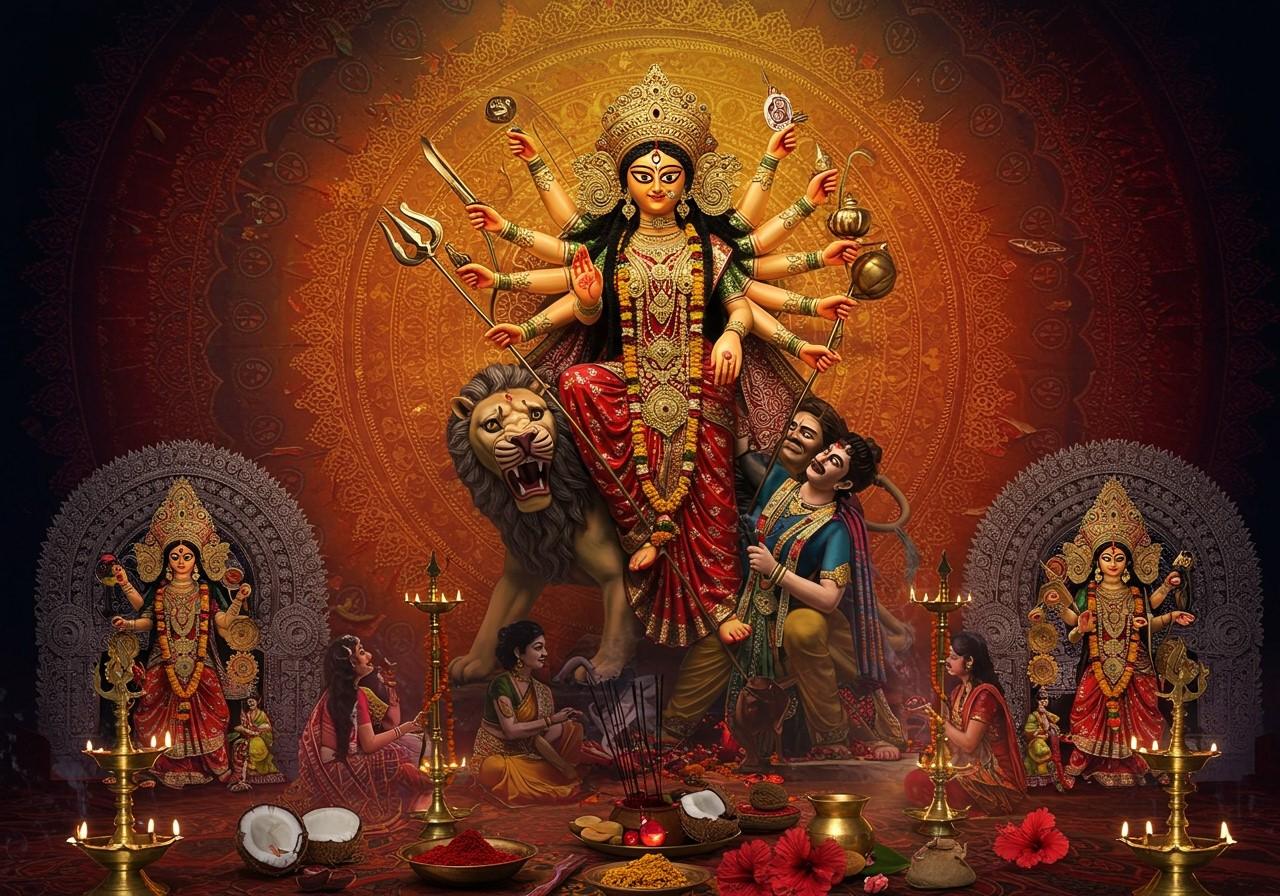
Durga Puja 2026: Dates, Rituals, Significance and Celebrations

Durga Puja 2026 is one of the most important Hindu festivals, celebrated with great devotion and excitement, especially in West Bengal, Assam, Tripura and other parts of India. In 2026, the main Durga Puja celebrations in West Bengal will take place from Saturday, October 17, to Wednesday, October 21. The festival honours Goddess Durga and celebrates the victory of good over evil. It is a time for prayers, cultural programmes, beautiful pandals, traditional food, family gatherings and community celebrations.
Durga Puja is particularly famous in Kolkata, where artists create magnificent idols and artistic pandals that attract millions of visitors. The celebrations begin before the main puja days with Mahalaya, which marks the beginning of Devi Paksha and the traditional arrival of Goddess Durga.

Durga Puja 2026: Important Dates
Durga Puja follows the Hindu lunar calendar. The main celebrations take place during the final five days of the festival, beginning with Maha Shashthi and ending with Bijoya Dashami. Mahalaya is observed earlier and holds special religious and cultural importance.
| Festival or Ritual | Date in 2026 | Significance |
|---|---|---|
| Mahalaya | Saturday, October 10 | Marks the beginning of Devi Paksha and the traditional invocation of Goddess Durga |
| Bilva Nimantran | Friday, October 16 | An important ritual associated with inviting the goddess |
| Maha Shashthi | Saturday, October 17 | Bodhon and other preparatory rituals take place |
| Maha Saptami | Sunday, October 18 | Nabapatrika bathing and the main worship begin |
| Maha Ashtami | Monday, October 19 | Pushpanjali, Kumari Puja and other important rituals |
| Sandhi Puja | Monday, October 19 | Special worship at the transition between Ashtami and Navami |
| Maha Navami | Tuesday, October 20 | Special prayers, bhog and homa |
| Bijoya Dashami | Wednesday, October 21 | Farewell rituals and immersion of Durga idols |
Note: Exact ritual timings can vary according to the Bengali panjika (almanac), location and religious tradition. Check the calendar followed by your family or local puja committee for the final timings.
What Is Durga Puja?
Durga Puja is a major Hindu festival dedicated to Goddess Durga, who represents strength, courage, protection and the power of good over evil. According to Hindu tradition, Goddess Durga defeated the buffalo demon Mahishasura after a fierce battle. Her victory represents the triumph of righteousness over evil forces.
The festival is celebrated in different ways across India. In West Bengal, it is not only a religious event but also a major cultural celebration. People decorate their homes, wear new clothes, visit pandals, enjoy traditional Bengali dishes and take part in community events.
The festival also celebrates the traditional homecoming of Goddess Durga with her children, Lakshmi, Saraswati, Ganesha and Kartikeya. For many Bengali families, Durga Puja represents happiness, reunion and the renewal of hope.
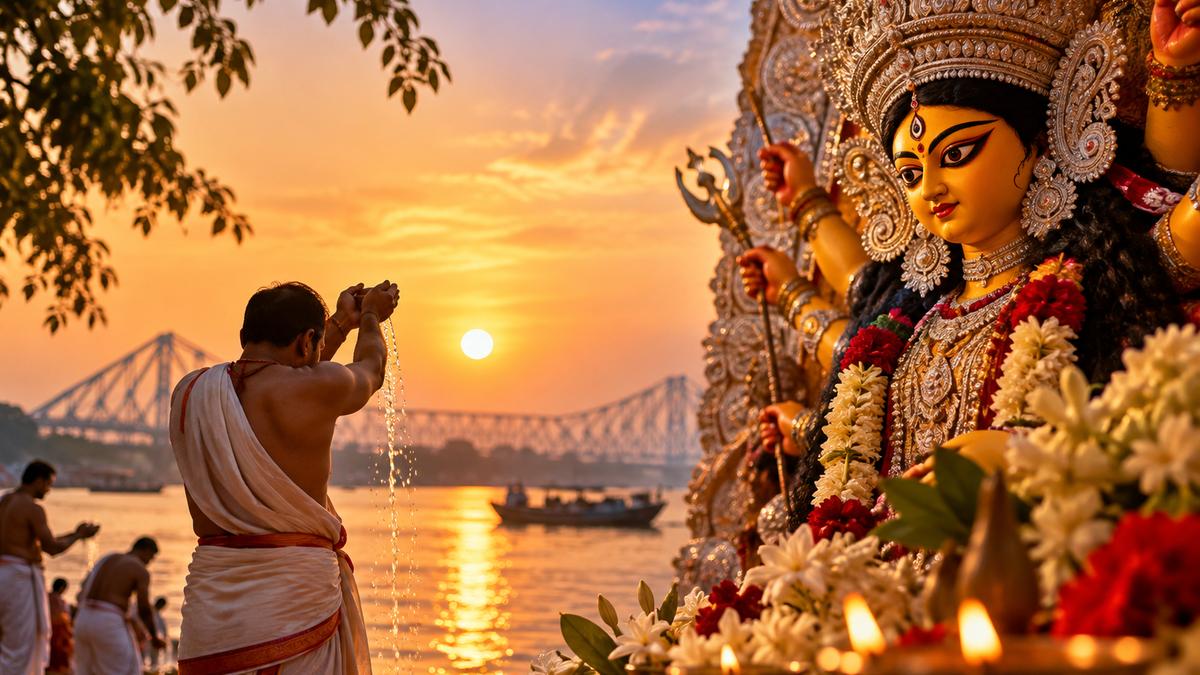
Mahalaya 2026: The Beginning of Devi Paksha
Mahalaya will be observed on Saturday, October 10, 2026. It marks the end of Pitru Paksha, the period traditionally dedicated to remembering and honouring ancestors, and the beginning of Devi Paksha, the auspicious period associated with Goddess Durga.
One of the most popular Mahalaya traditions is listening to Mahishasuramardini in the early morning. This famous radio programme combines Sanskrit verses from the Chandi, devotional music and narration. It has been broadcast by All India Radio since 1931.
The programme is closely associated with the voice of Birendra Krishna Bhadra, who narrated the celebrated version. Pankaj Mullick composed the music, while Bani Kumar wrote the programme. For many people in Bengal, listening to Mahishasuramardini is an essential part of welcoming Durga Puja.
Mahalaya is also associated with tarpan, a ritual offering made in remembrance of ancestors. Many devotees visit riverbanks early in the morning to perform these traditional rites.
Maha Shashthi 2026: Welcoming Goddess Durga
Maha Shashthi falls on Saturday, October 17, 2026. It marks the beginning of the main Durga Puja celebrations in West Bengal.
Several important rituals are performed on this day, including Kalparambha, Bodhon, Adhibas and Amantran. These rituals prepare the place of worship and symbolically awaken and invite the goddess to accept the devotees’ prayers.
Bodhon is particularly important because it represents the awakening of Goddess Durga for her autumn worship. According to popular tradition, Lord Rama worshipped the goddess at an unusual time of the year before his battle with Ravana. This is known as Akal Bodhon.
On Shashthi, devotees visit beautifully decorated pandals, admire the idols and participate in prayers. The atmosphere becomes lively as dhak drums, devotional songs and cultural programmes mark the beginning of the festival.
Bilva Nimantran is scheduled for October 16, 2026, one day before Maha Shashthi. It is a distinct ritual and should not be confused with Bodhon.
Maha Saptami 2026: The Nabapatrika Ritual
Maha Saptami will be celebrated on Sunday, October 18, 2026. One of its most important traditions is the Nabapatrika Snan, which usually takes place before sunrise.
Nabapatrika means a group of nine plants that are tied together, bathed in water and dressed in a red-bordered sari. The bundle is placed near Lord Ganesha during the worship. It represents the goddess through the natural world and is associated with fertility, agriculture and the prosperity of the harvest.
The nine plants used in the Bengali tradition include banana, colocasia, turmeric, jayanti, wood apple, pomegranate, ashoka, arum and paddy. Each plant has a traditional religious association.
The Nabapatrika is popularly known as Kola Bou because of its appearance after being dressed in a sari. However, it is not traditionally Ganesha’s wife. It represents the sacred group of nine plants associated with Goddess Durga.
Other important Saptami rituals include Mahasnan, Prana Pratishtha and Shodashopachar Puja. Prana Pratishtha is the ritual through which the image is ceremonially consecrated for worship. Devotees offer flowers, prayers and bhog to seek the goddess’s blessings.
Maha Ashtami 2026: Pushpanjali and Kumari Puja
Maha Ashtami falls on Monday, October 19, 2026. It is one of the most sacred and widely celebrated days of Durga Puja.
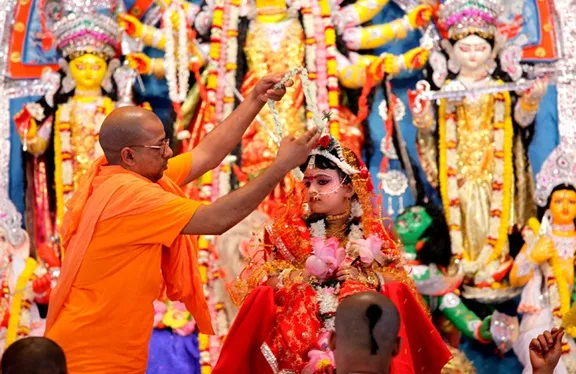
Devotees gather at temples and pandals to offer Pushpanjali, a ritual in which flowers are offered while sacred mantras are recited. Many people observe fasting until they complete their prayers. Families often visit pandals together and participate in community worship.
Kumari Puja is another important tradition. During this ritual, a young girl is worshipped as a living representation of the Divine Mother. The practice symbolises the purity, strength and divine power associated with Goddess Durga.
At Belur Math, the tradition of Kumari Puja was introduced by Swami Vivekananda in 1901 during the monastery’s first Durga Puja. In 2026, the scheduled Kumari Puja at Belur Math begins at 9:00 AM on October 19.
Ashtami is also associated with the powerful Sandhi Puja, which takes place at the transition between Maha Ashtami and Maha Navami. Devotees light lamps and offer lotuses during this special worship.
Sandhi Puja 2026: Date and Timings
Sandhi Puja is performed during the final 24 minutes of Ashtami and the first 24 minutes of Navami. The ritual lasts for 48 minutes and commemorates the appearance of Goddess Chamunda, who defeated the demons Chanda and Munda in Hindu tradition.
For Kolkata, one published calculation gives the Sandhi Puja timing as approximately 10:27 AM to 11:15 AM on Monday, October 19, 2026. However, different Bengali almanacs may give slightly different timings.
The ritual is often associated with 108 earthen lamps and 108 lotuses. It is a moment of deep devotion and symbolic victory over evil. Although many people associate Sandhi Puja with evening celebrations, its timing depends on the transition between lunar dates, so it can take place during the morning or at another time of day.
Maha Navami 2026: Special Prayers and Homa
Maha Navami will be observed on Tuesday, October 20, 2026. It is another important day of worship before the festival reaches its final stage.
Devotees offer prayers, flowers, sweets and bhog to Goddess Durga. Many temples and community pandals organise special pujas, devotional programmes and cultural activities.
Chandi Homa is one of the significant rituals associated with Navami. It involves the recitation of sacred verses and offerings into a consecrated fire. The ritual is performed to seek divine protection, peace and prosperity.
Practices related to bali, or ritual offerings, differ across temples and families. Many Durga Puja celebrations use symbolic offerings such as fruits, sugarcane or pumpkins instead of animal sacrifice.
Maha Navami is also a popular day for visiting famous pandals, enjoying traditional food and spending time with friends and family.
Bijoya Dashami 2026: Sindoor Khela and Durga Visarjan
Bijoya Dashami will be celebrated on Wednesday, October 21, 2026. It marks the end of the main Durga Puja celebrations and the farewell to Goddess Durga.
One traditional ritual is Darpan Bisorjon, in which the goddess’s reflection is symbolically immersed before the clay idol is taken for immersion. This ritual represents the formal conclusion of the goddess’s stay during the festival.
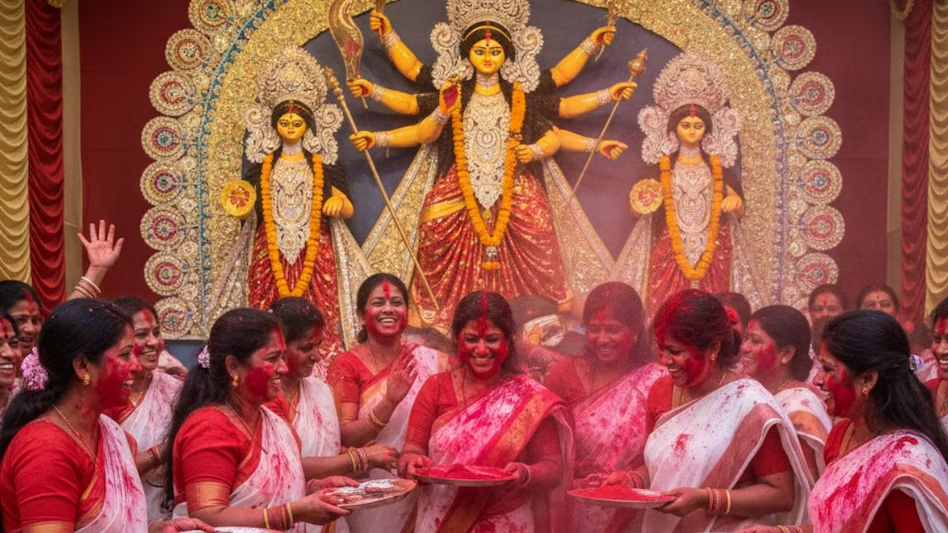
Sindoor Khela is another well-known tradition in Bengal. Traditionally, married women apply vermilion to the goddess and to one another while exchanging greetings and sweets. Today, participation varies, and some community celebrations welcome women beyond the traditionally defined group.
The final stage is Durga Visarjan, or idol immersion. Devotees carry the idols in processions accompanied by dhak drums, songs and emotional farewells. Many people exchange greetings and embrace one another in the custom known as Kolakuli.
The greeting Shubho Bijoya is shared among family members, friends and neighbours. It expresses good wishes for happiness, peace and prosperity in the coming year.
How Is Durga Puja Celebrated in West Bengal?
West Bengal, especially Kolkata, is famous for its grand Durga Puja celebrations. Thousands of community pujas and household celebrations bring neighbourhoods to life.
Some of the most popular features include:
- Pandal hopping: Visitors explore temporary structures decorated with artistic themes, traditional designs and creative lighting.
- Durga idol decoration: Artists create idols using traditional clay work and detailed painting.
- Dhak performances: Traditional drums create the festival’s distinctive sound.
- Traditional food: Bhog, khichuri, labra, luchi, sweets and other regional dishes are enjoyed during the festival.
- Cultural programmes: Music, dance, theatre and community events take place throughout the celebrations.
- Family gatherings: People wear festive clothes, meet relatives and celebrate together.
Durga Puja is also an important occasion for local artisans, small businesses, food vendors, designers and the tourism industry. The festival supports creative work and provides opportunities for people across many communities.
Durga Puja 2026 in Assam
Durga Puja is also celebrated with great enthusiasm in Assam. Guwahati and other towns organise community pujas, decorate pandals and arrange cultural programmes during the festival.
People visit temples and neighbourhood pujas to offer prayers and enjoy the festive atmosphere. Traditional Assamese and Bengali cultural influences can be seen in different celebrations, depending on the community and location.
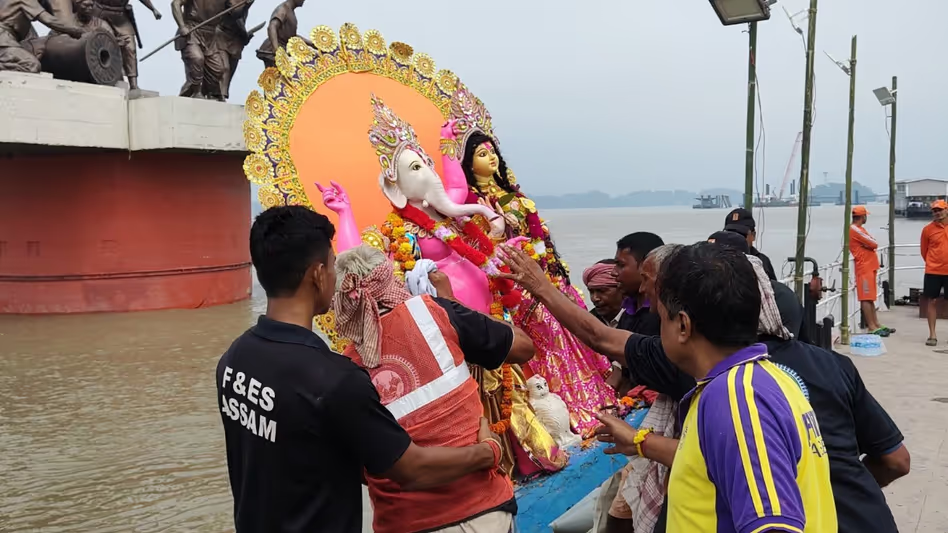
For visitors planning to attend Durga Puja in Assam or West Bengal, it is useful to check local puja schedules, traffic restrictions, public transport arrangements and accommodation availability before travelling.
Why Is Durga Puja Important?
Durga Puja has religious, cultural and social significance. Its central message is the victory of good over evil and the importance of courage, justice and faith.
The festival also highlights the power of women through the worship of Goddess Durga. Her image represents strength, protection and the ability to overcome challenges.
Beyond religion, Durga Puja brings people together regardless of their backgrounds. Communities work together to create pandals, organise cultural events and help visitors. The festival encourages creativity, strengthens social bonds and preserves traditional art and music.
For millions of people, Durga Puja is more than a festival. It is a celebration of homecoming, hope, devotion and shared happiness.
Frequently Asked Questions
When is Durga Puja 2026?
The main Durga Puja celebrations in West Bengal will run from October 17 to October 21, 2026, beginning with Maha Shashthi and ending with Bijoya Dashami.
When is Mahalaya in 2026?
Mahalaya will be observed on Saturday, October 10, 2026. It marks the beginning of Devi Paksha and is associated with the traditional invocation of Goddess Durga.
What are the dates of Maha Ashtami and Maha Navami in 2026?
Maha Ashtami falls on Monday, October 19, 2026, while Maha Navami falls on Tuesday, October 20, 2026.
When is Sandhi Puja in 2026?
Sandhi Puja falls on Monday, October 19, 2026. One published Kolkata calculation places it approximately between 10:27 AM and 11:15 AM. Exact timings may differ according to the almanac followed.
When is Bijoya Dashami in 2026?
Bijoya Dashami will be observed on Wednesday, October 21, 2026. It marks the farewell to Goddess Durga and is associated with idol immersion and the exchange of Bijoya greetings.
Why is Durga Puja celebrated?
Durga Puja celebrates Goddess Durga’s victory over Mahishasura and symbolises the triumph of good over evil. It is also a celebration of devotion, strength, culture and community.
Which city is famous for Durga Puja celebrations?
Kolkata, the capital of West Bengal, is especially famous for its artistic pandals, beautiful idols, cultural programmes and large public celebrations.
What is the significance of Nabapatrika?
Nabapatrika is a group of nine plants worshipped during Maha Saptami. It represents the goddess through nature and is traditionally associated with fertility, agriculture and prosperity.
What happens on Bijoya Dashami?
Devotees perform farewell rituals, participate in Sindoor Khela in communities where it is practised, immerse Durga idols and exchange greetings such as Shubho Bijoya.
Is Durga Puja a public holiday?
Durga Puja holidays depend on the state government and the specific year. West Bengal generally observes holidays around the festival, but people should check the official 2026 holiday notification for confirmed dates.