BRICS Sports Games 2026 in Ahmedabad

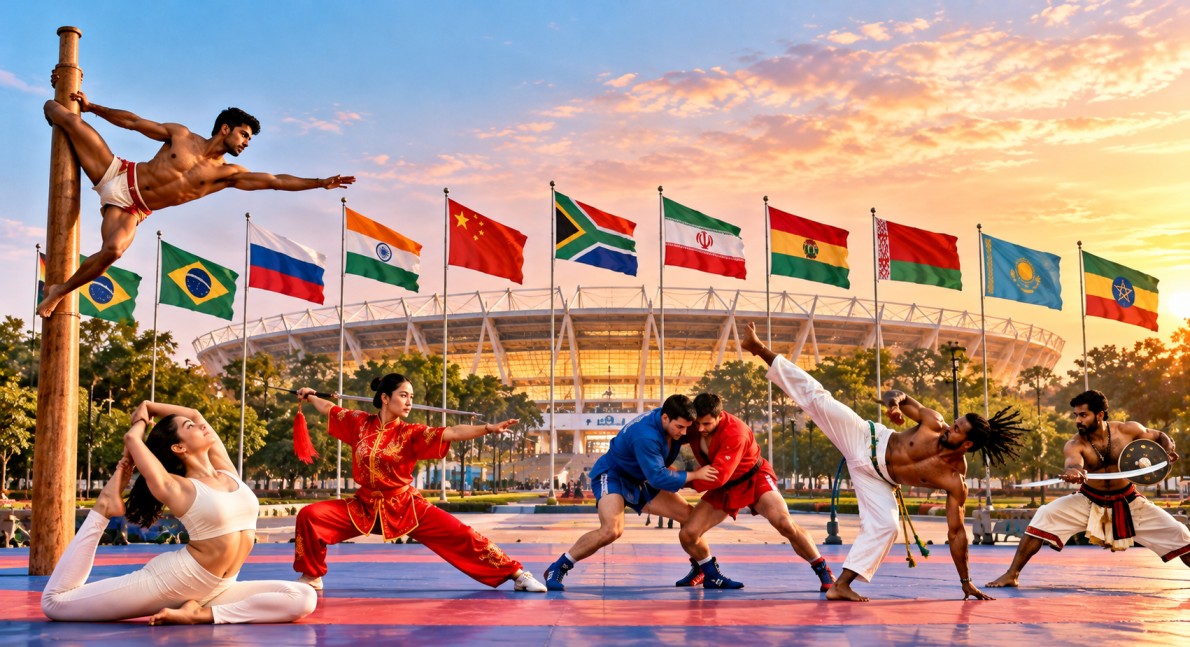
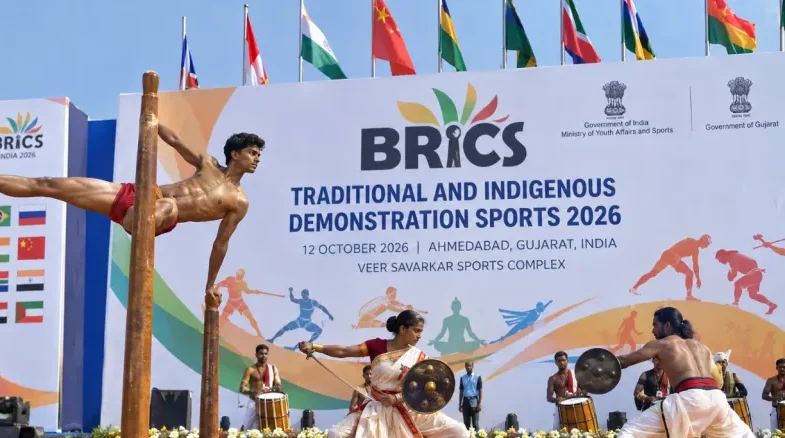
BRICS Sports Games will bring traditional and indigenous sporting practices from several countries to Ahmedabad, Gujarat, on 12 and 13 October 2026. The BRICS Traditional and Indigenous Sports Demonstration Games will be held at Veer Savarkar Sports Complex as part of India’s BRICS Chairship 2026. The event aims to promote cultural exchange, preserve traditional sports and strengthen cooperation among participating countries.
Ahmedabad to Host International Sports Delegations
The Ministry of Youth Affairs and Sports is organising the event in collaboration with the Gujarat Government. Union Minister for Youth Affairs and Sports Mansukh Mandaviya is scheduled to inaugurate the programme.

Around 2,000 athletes, officials and other participants from nine countries are expected to attend. The participating countries listed for the event are China, Russia, Iran, Bolivia, Belarus, Ethiopia, South Africa, Brazil and Kazakhstan.
Gujarat Deputy Chief Minister Harsh Sanghavi, Union Minister of State for Youth Affairs and Sports Raksha Nikhil Khadse, and Gujarat Minister of State for Sports Jayram Gamit are also scheduled to attend the inauguration.
The programme will use a non-competitive format. Instead of focusing on medals and rankings, participants will demonstrate traditional sporting practices and share knowledge about their cultural backgrounds.
Traditional Indian Sports on Display
India will showcase Mallakhamb, Yogasana and Kalaripayattu during the event. These activities represent different aspects of India’s sporting and cultural heritage.
Mallakhamb is a traditional discipline in which performers demonstrate strength, balance and flexibility on a wooden pole or rope. It requires body control, physical endurance and regular practice.
Yogasana involves performing yoga postures and developing flexibility, balance and concentration. It is also organised as a competitive sport in India, with participants judged according to established performance rules.
Kalaripayattu is a traditional martial art associated with Kerala. It includes physical training, coordinated movements and techniques that have been passed down through generations.
Presenting these activities to international visitors will give participants an opportunity to learn about India’s traditional sporting practices and their place in local communities.
Sports From Other Participating Countries
The BRICS Sports Games will also feature demonstrations of sporting traditions from other parts of the world. The programme includes Wushu, Capoeira and Sambo, each with its own history and style.
Wushu is a broad term for Chinese martial arts. It includes different forms of movement, techniques and routines that demonstrate physical skill and coordination.
Capoeira originated in Brazil and combines martial arts movements with music, rhythm and elements of dance. It is known for its flowing movements and strong cultural connections.
Sambo is a martial art and combat sport that developed in the Soviet Union. It includes wrestling and grappling techniques and has developed into different sporting forms.
These demonstrations are intended to help participants understand how traditional physical activities reflect the history and culture of different societies.
BRICS Sports Cooperation and India’s Chairship
The event is being held under India’s BRICS Chairship in 2026. BRICS provides a platform for member countries to discuss cooperation across areas such as trade, development, science, culture and sport.
The decision to hold the traditional sports event in Ahmedabad was confirmed at the BRICS Sports Ministers’ Meeting in Visakhapatnam on 23 August 2026. The meeting adopted the BRICS Sports Joint Declaration, setting out a shared framework for sports cooperation.
Alongside the demonstrations, bilateral meetings with visiting delegations are planned. These discussions are expected to focus on cooperation in sports and opportunities for future interaction between participating countries.
Why Traditional Sports Matter
Traditional and indigenous sports often carry the stories, values and customs of the communities where they developed. They can pass physical skills between generations and help preserve cultural identity.
International events focused on traditional sports also allow practitioners to exchange training methods and learn about different sporting systems. Unlike major medal-based competitions, a demonstration format gives greater attention to participation, cultural understanding and the history of each activity.
By bringing these traditions together in Ahmedabad, the BRICS Traditional and Indigenous Sports Demonstration Games aim to create a shared space for cultural learning and international sports cooperation.