Reema Nanavaty Wins Hillary Clinton Award

Reema Nanavaty received the Hillary Rodham Clinton Award on 15 October 2026 at the Georgetown Institute for Women, Peace and Security in Washington, D.C., according to the supplied report. The Indian social worker was honoured for her work supporting women’s rights, economic independence and livelihood opportunities. Former US Secretary of State Hillary Clinton presented the award.
Nanavaty is the Director of the Self-Employed Women’s Association of India (SEWA), an organisation that works with women employed in the informal economy. Through her work, she has helped women gain better access to income opportunities, food security, renewable energy and community-based businesses.

The recognition brings attention to the role of women-led organisations in addressing economic challenges and helping communities build more secure livelihoods. It also highlights the importance of supporting women who work in agriculture, textiles, food processing and other sectors that often lack formal employment benefits.
What Is the Hillary Rodham Clinton Award?
The Hillary Rodham Clinton Award recognises individuals who work to advance women’s rights and promote peace and security around the world. It is associated with the Georgetown Institute for Women, Peace and Security at Georgetown University in Washington, D.C.
The award highlights efforts to improve the position of women in society and expand their opportunities to participate in economic and public life.
According to the supplied report, the 2026 recipients also included Tory Burch, the fashion designer and founder of the Tory Burch Foundation, and Muhammad Yunus, the Nobel Peace Prize laureate and founder of Grameen Bank.
Hillary Clinton served as US Secretary of State from 2009 to 2013. Her presentation of the award recognised Nanavaty’s work with women whose livelihoods depend on informal employment and community-based economic activity.
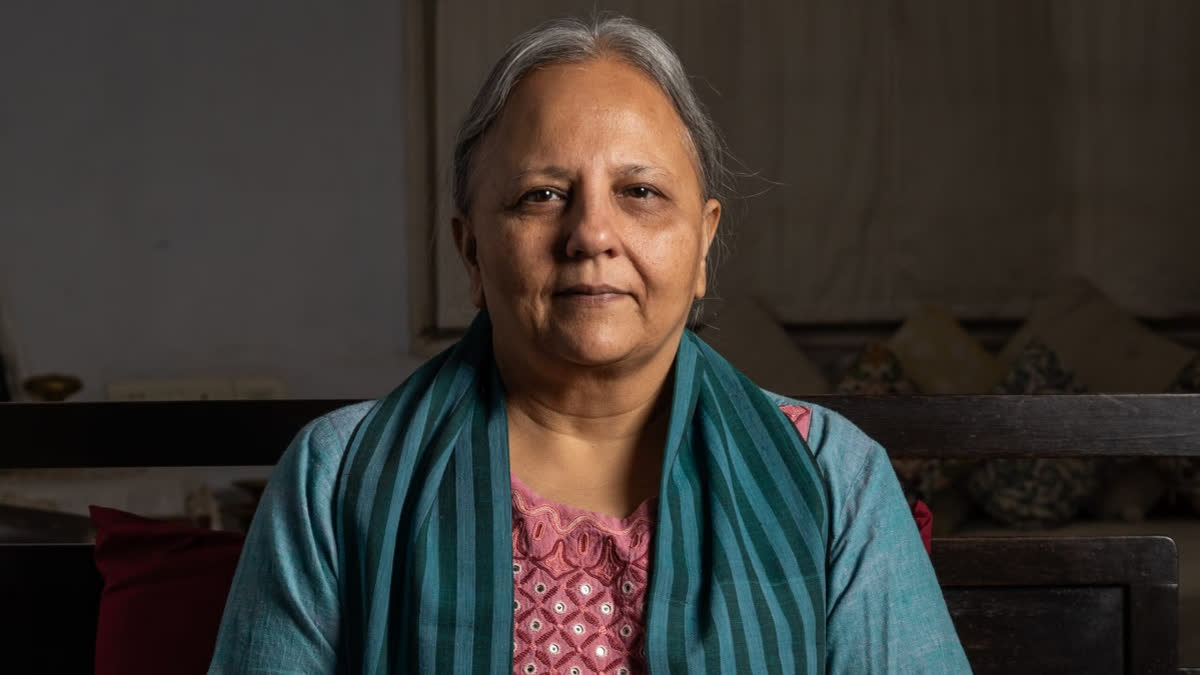
Reema Nanavaty and SEWA
The Self-Employed Women’s Association, widely known as SEWA, is a trade union that represents women workers in India’s informal economy. Ela Bhatt founded the organisation in 1972, and its headquarters are in Ahmedabad, Gujarat.
Informal-sector workers often face challenges such as irregular earnings, limited access to social security, unsafe working conditions and difficulty obtaining loans or other financial services. Many women also balance paid work with unpaid household and care responsibilities.
SEWA works to help women organise, strengthen their livelihoods and improve their economic security. Its activities support women working in agriculture, textiles, food processing, waste recycling and other areas.
Under Nanavaty’s leadership, the organisation has expanded its work on women-owned enterprises and women-led supply chains. These efforts aim to help women participate more fully in local economies and gain greater control over their income.
By bringing women workers together, SEWA also provides a platform through which they can raise concerns, share knowledge and work towards better working conditions.
Supporting Women’s Livelihoods and Food Security
One of Nanavaty’s major initiatives is SEWA’s food security programme, which covers one million households, according to the supplied report. Food security means that people have reliable access to sufficient, safe and nutritious food.
For families with irregular incomes, rising food prices and changing weather conditions can make it difficult to maintain a stable food supply. Programmes that support local livelihoods and access to food can help communities manage these challenges.
Nanavaty has also led the Hariyali Green Energy and Livelihoods Initiative. The initiative connects renewable energy with income-generating activities and livelihood development.
Access to reliable energy can help women-led businesses operate more effectively. It can support agricultural work, food processing and other small enterprises, particularly in rural areas where energy access and infrastructure may be limited.
These activities are also relevant to current discussions about climate change and sustainable development. Helping communities use cleaner energy while strengthening local incomes can support both economic resilience and environmental goals.
Helping Communities Recover After Disasters
Reema Nanavaty’s work has also included efforts to rebuild livelihoods for rural women affected by earthquakes. Natural disasters can destroy homes, damage farmland, interrupt local businesses and remove important sources of income.
For women who depend on small enterprises or daily work, recovering from a disaster can be especially difficult when savings, equipment and access to markets are lost.
Livelihood-rebuilding programmes can help affected families restart economic activities and regain financial stability. This may involve supporting local enterprises, improving access to resources and helping women work together to restore their sources of income.
Nanavaty has also been involved in rehabilitation programmes in Afghanistan and Sri Lanka. These efforts reflect the wider role of community-based organisations in helping people recover from difficult circumstances and rebuild their livelihoods.
Her work connects economic recovery with women’s participation, recognising that long-term community development depends not only on rebuilding infrastructure but also on restoring people’s ability to earn a living.
Reema Nanavaty’s Padma Shri Honour
The Government of India awarded Reema Nanavaty the Padma Shri in 2013 for her contribution to social work. The Padma Shri is one of India’s highest civilian honours and recognises distinguished service across different fields.
Her international recognition in 2026 adds to the attention given to her work with women workers and rural communities.
Awards of this kind can also help bring wider attention to the challenges faced by informal-sector workers. In India, many women earn their living through self-employment, home-based work, agriculture and small businesses. Their work supports families and local economies, even when it receives limited formal recognition.
Organisations such as SEWA seek to improve the conditions in which these women work and help them gain access to opportunities that support long-term financial security.
Nanavaty’s award highlights the importance of community-led programmes that connect women’s rights with employment, food security, renewable energy and economic development.