

Bhutan Stupa Record in Nine Hours

Bhutan Stupa Record has brought international attention to Gelephu Mindfulness City after 108 Buddhist stupas were reportedly constructed and consecrated in a single day. The achievement took place on 1 November 2026, with the work completed in just nine hours. Guinness World Records recognised the event on 3 November, marking a major moment for Bhutan’s cultural and spiritual heritage.
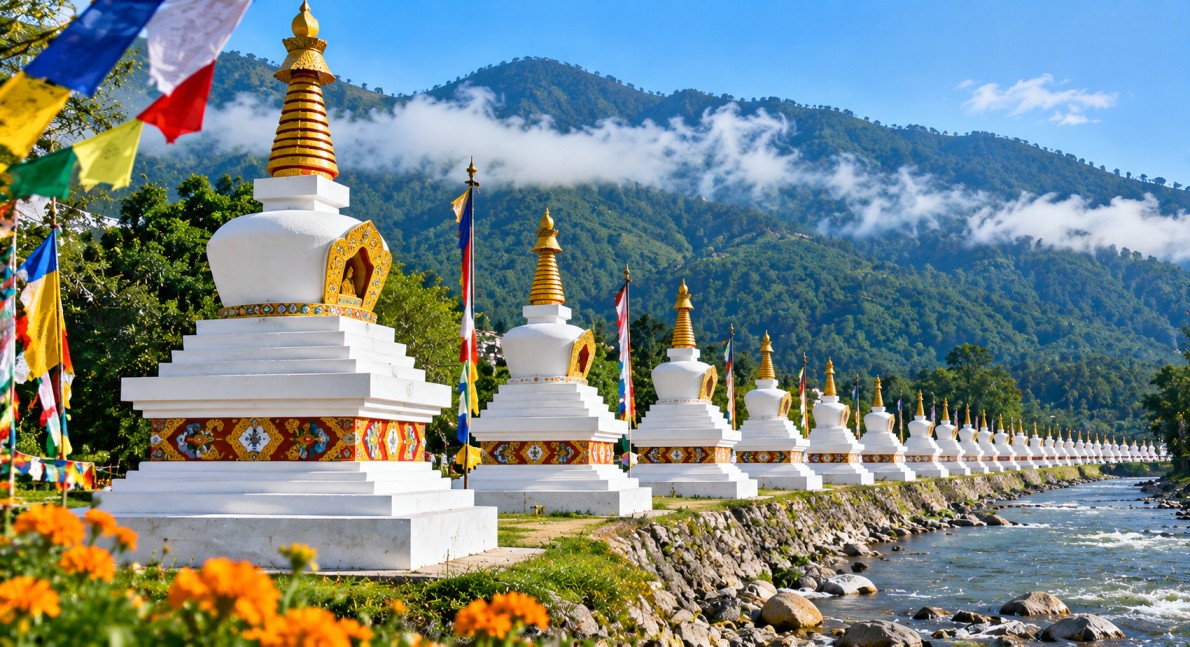
The stupas, also known as Jangchub Chortens, were built along the Mau Chhu River in Gelephu Mindfulness City. The project brought together thousands of trained volunteers who worked in organised teams to complete the construction within a short period.

108 Stupas Built in Nine Hours
Construction began at 3:00 am on 1 November and was completed by noon. The work covered a 12-kilometre stretch along the Mau Chhu River.
Around 40,000 trained volunteers reportedly took part in the project. They worked in teams of 20 to 23 people at designated locations. Each team was assigned a specific site and task to help maintain the pace of construction.
The 108 stupas were built around 108 metres apart. Each structure stood approximately 15 metres tall and was made using steel and other materials.
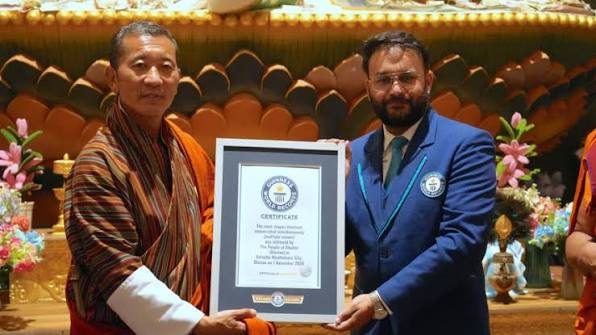
The Guinness World Records recognition was for the highest number of stupas consecrated in a single day. The achievement was announced by Gelephu Mindfulness City Governor Dr Lotay Tshering during a live broadcast on Bhutan Broadcasting Service.
A Guinness World Records representative presented the certificate to Dr Tshering in Gelephu on 3 November 2026.
Spiritual Meaning of the Stupas
A stupa is a Buddhist monument associated with spiritual practice, remembrance and devotion. In Bhutan and other Himalayan regions, stupas are often called chortens. They can serve as places for prayer, meditation and religious offerings.
The number 108 holds special meaning in several Buddhist traditions. It is commonly associated with spiritual practice and is used in prayer beads and other religious activities. The construction of 108 stupas therefore carried symbolic importance alongside the record-setting effort.
The consecration ceremony was an important part of the event. Consecration is a religious process through which a sacred structure is formally dedicated for spiritual use.
The project combined a large community effort with a religious occasion, bringing volunteers together around a shared cultural and spiritual purpose.
Dedication by Bhutan’s King
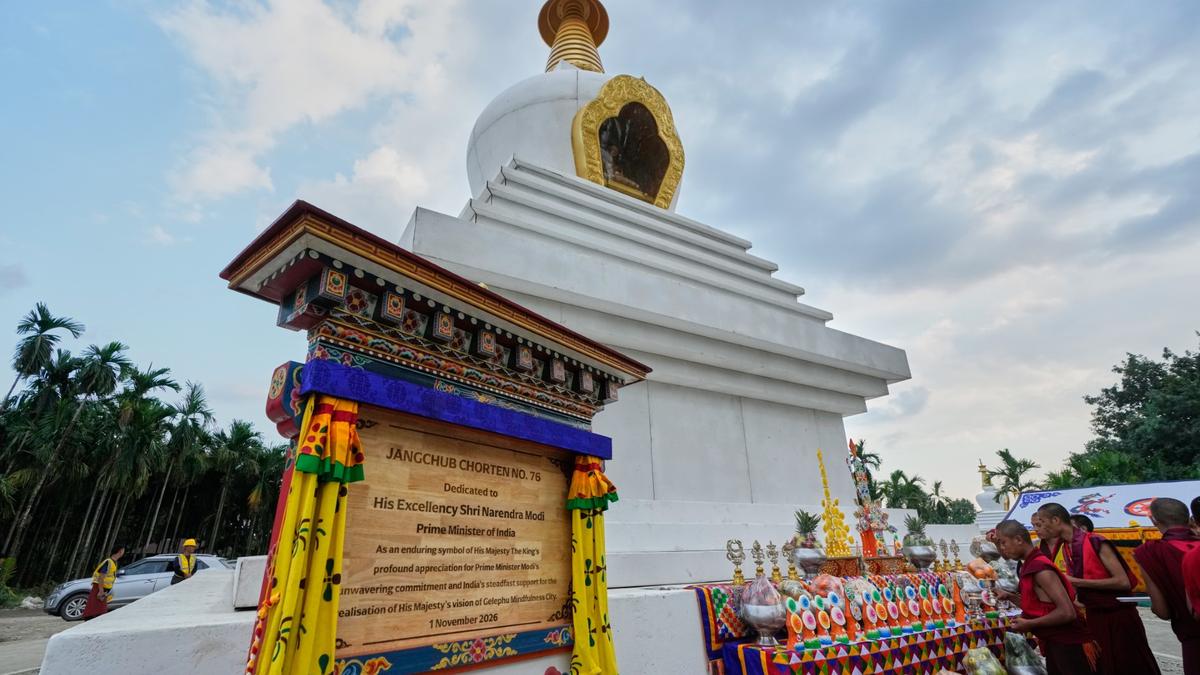
Bhutan’s King Jigme Khesar Namgyel Wangchuck dedicated Chorten No. 76 to Indian Prime Minister Narendra Modi on 1 November. The dedication acknowledged India’s support for the Gelephu Mindfulness City project.
Gelephu Mindfulness City is a major development initiative in southern Bhutan. The project is intended to create a city shaped around wellbeing, sustainability and mindful living. Its development has drawn attention to Bhutan’s approach to balancing economic growth with cultural values and environmental concerns.
The dedication of the stupa also highlighted the close relationship between Bhutan and India. The two countries share longstanding ties in areas such as trade, development cooperation and cultural exchange.
A Special Day in Bhutan
The record-setting construction coincided with the 18th anniversary of King Jigme Khesar Namgyel Wangchuck’s coronation. The occasion made the event especially significant for Bhutan.
In Bhutan, 1 November is also observed as the Day of Lord Buddha’s Descent from Trāyastriṃśa Heaven. The day is associated with Buddhist religious observance and devotion. It is also celebrated as Mother’s Day in the country.
Holding the stupa construction on this date connected the record attempt with important religious and national occasions. The event brought together spiritual traditions, community participation and a major public celebration.
Community Participation and Cultural Heritage
The Bhutan Stupa Record highlights how large community projects can support cultural traditions while creating a shared public experience. The participation of thousands of volunteers was central to completing the work within nine hours.
The event also brought attention to Gelephu Mindfulness City and Bhutan’s wider efforts to connect development with spiritual and cultural identity. The 108 chortens now stand as monuments linked to the record-setting day and the religious occasion on which they were consecrated.
The achievement has been recognised internationally, while its significance within Bhutan remains closely connected to Buddhist devotion, community service and the country’s cultural heritage.