


India’s Solid Waste Management Challenges and Reforms 2025

India’s Solid Waste Management faces rising challenges in 2025, with reforms focusing on segregation, local solutions, and stronger governance.
Thank you for reading this post, don't forget to subscribe!Current Waste Management Challenges
Data Deficiencies: Reliable data on waste composition, generation rates at source (households, markets, industries), and seasonal variations are often missing. Estimates vary wildly. Without accurate baseline data, planning and investment decisions are inferior.
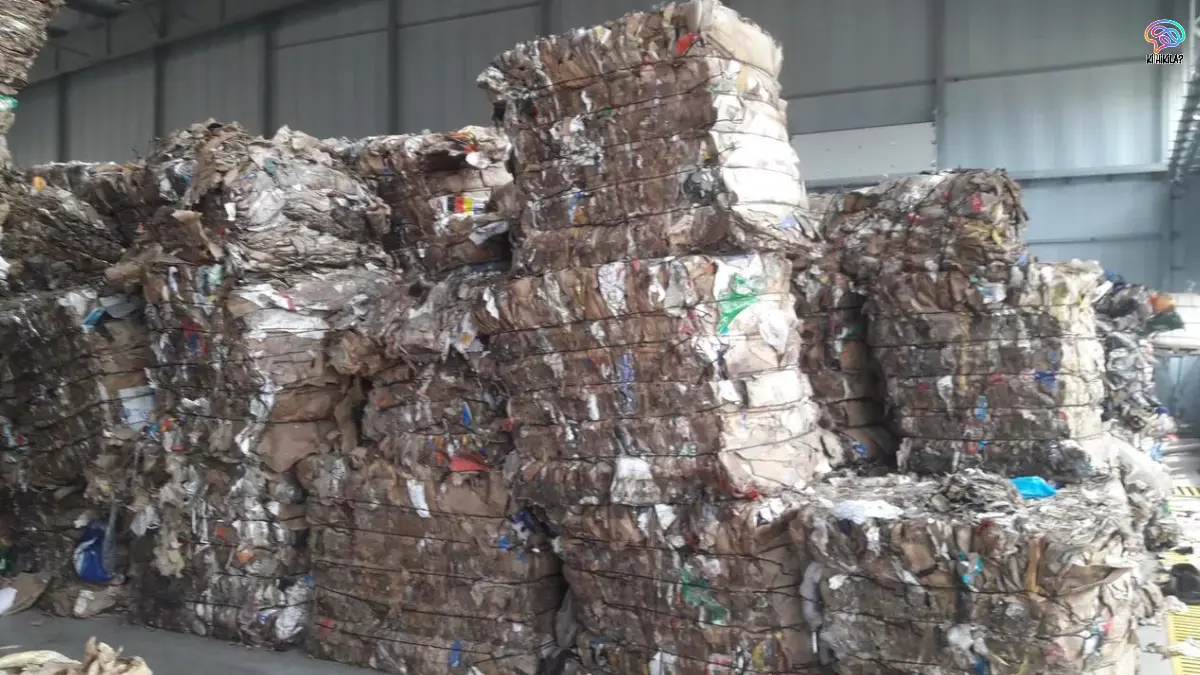
Massive Waste Generation, Limited Processing: India generates tens of millions of tonnes of municipal solid waste annually, but less than 60% is scientifically treated. A large portion ends up in open dumps, causing air, water, and soil pollution. (See: National estimates vs actual processing gaps.)
Unregulated Landfills & Dumpsites: Existing waste disposal sites often lack proper lining, leachate treatment, or gas recovery systems. Sites like Bhalswa (Delhi) and others continue to grow uncontrolled, leading to fires, odor problems, and groundwater contamination.
Fragmented Responsibility & Weak Enforcement: Multiple agencies (urban local bodies, pollution control boards, municipal corporations) share mandates. In many places, rules exist (Solid Waste Management Rules, 2016; Plastic Waste Rules; E-waste rules) but enforcement is inconsistent. Complaints go unaddressed, violations persist.
Source Segregation – Myth vs Reality
- Legal Mandate, Poor Adoption: The law requires segregation of wet, dry, hazardous, and sanitary wastes at source (household / establishment). Many cities still collect mixed waste because households aren’t aware, or the infrastructure (separate bins, collection routes) is missing.
- Public Awareness & Behavior Gap: Even when segregation bins are provided, usage is low. The habitual mixing of waste (wet + dry) is common due to lack of discipline, lack of accountability, or lack of incentives.
- Infrastructure Misfit: Many municipalities do not have enough material recovery facilities (MRFs), enough compost or biomethanation units, or frequent collection systems that differentiate between waste types. Even existing MRFs are under-utilized.
Systemic Issues and Data Deficiency
- Under-investment in Processing Facilities: Scientific waste processing requires investment toward composting, waste-to-energy (WTE), biomethanation, and recycling centers. Many cities lack capacity, or the existing units operate below capacity due to operational, logistical, or financial constraints.
- Lack of Robust Monitoring & Accountability: Penalties or environmental compensation are applied only after major violations. Some ULBs are penalized for non-compliance (e.g. violation of SWM rules), but many default practices continue due to weak monitoring and limited institutional capacity.
- Workforce & Informal Sector Challenges: Much of waste sorting and recycling is handled by informal waste pickers, often under poor working conditions, without social protection or formal recognition. Policies call for inclusion (Extended Producer Responsibility, etc.), but many waste workers remain unregistered and outside welfare systems.
- Poor Data Systems: Many cities lack regular audits or surveys of waste types, volumes, and sources. Without accurate data, estimating and projecting infrastructure needs becomes guesswork, leading either to overbuilding (waste of funds) or under-capacity (failure to meet needs).
Phased and Localised Approach to Waste Management
- Decentralization of Waste Treatment: Smaller, ward- or neighborhood-level composting units, material recovery facilities, and even micro biomethanation units are being explored to reduce transport costs, improve participation, and speed up waste treatment.
- Pilot “Zero Waste” Wards / City Zones: Some cities are piloting zero-waste zones or wards where segregation, composting, reuse, and recycling are aggressively promoted. Successful local models are being considered for replication.
- Upgrading Legacy Landfills: Reclamation, bioremediation, and biomining of old dumpsites are being planned in various states. These sites are being proposed for reuse: as green spaces, public facilities, or mixed-use developments after stabilization.
- Phased Regulatory Reforms: Reworking bye-laws, stricter rules for waste generators (especially bulk generators), tighter standards for materials, Extended Producer Responsibility (EPR) rules being refined, scheduled deadlines for compliance.
Role of Governance and Leadership
- Policy Frameworks and Central Missions: Schemes like Swachh Bharat Mission (Urban 2.0) set the agenda for “Garbage-Free Cities,” mandatory waste segregation, material recovery, and increased processing capacity. National regulations provide rules, but local adaptation is essential.
- Institutional Accountability: Pollution control boards, municipal commissions, and courts (e.g., National Green Tribunal) are issuing orders, imposing fines for non-compliance, insisting on transparency in data. ULBs are being held responsible for meeting processing targets and maintaining sanitary conditions.
- Finance & Incentives: Central / state funding, viability gap funds, public-private partnerships are being pushed to build processing plants, composting units, WTE facilities. Incentives for private sector investment and CSR participation are increasingly considered.
- Community Participation & Behavioral Change: Leadership at ward, municipal, and state level is promoting awareness campaigns, school education, incentivizing segregation, penalizing littering. Local leadership often plays a decisive role in adoption.
What Must Happen Next
- A unified, national roadmap reflecting real data to guide investment and scale projects.
- Localized models of segregation and treatment must be scaled, with replicable blueprints.
- Data infrastructure to be improved: mapping generation zones, waste flow, seasonal changes.
- Worker safety, inclusion, and formalization of informal sector participation need to be central.
- Stronger enforcement, coupled with incentives, so that policy is not just on paper but in practice.
Summary
India’s solid waste management is at a turning point in 2025. On one hand, the volume and complexity of waste are increasing rapidly, and many cities and towns still depend on landfills and open dumps. On the other, reforms — legal, institutional, behavioral, and infrastructural — are accelerating. The success of the reforms will depend heavily on local commitment, accurate data, inclusive policies, and sustained leadership. If done right, these measures could lead India toward its goal of clean, sustainable, and equitable waste management.