

Lakhimpur: History, Culture and Famous Places to Visit in Assam

Introduction
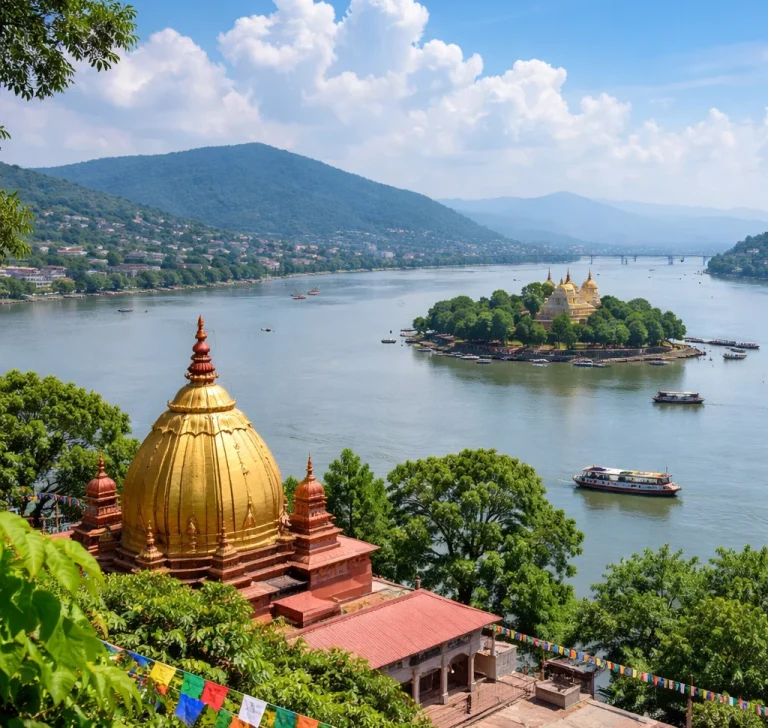
Lakhimpur Assam is a historically important district located in the northern part of Assam. Known for its fertile agricultural land, beautiful rivers, religious institutions, traditional villages and rich cultural heritage, Lakhimpur represents an important part of the history and identity of Upper Assam. The district is situated along the northern bank of the mighty Brahmaputra River, with the foothills of Arunachal Pradesh forming its northern landscape.
North Lakhimpur is the district headquarters. The region is known for its agricultural activities, particularly rice cultivation, and its cultural connections with Assamese communities, including the Mising people. It is also home to important religious places, archaeological remains, forests and wetlands.

From the historical Padumoni Than to the ancient archaeological remains of Baghar Chukar Doul, Lakhimpur has several places that reflect the region’s past. Its natural attractions, including the Subansiri River, Dullung Reserve Forest and Kakoi Reserve Forest, also make it interesting for visitors who enjoy nature and rural landscapes.
Historical Background of Lakhimpur
The history of Lakhimpur is connected with the ancient and medieval history of Assam. Before the establishment of modern administrative boundaries, the larger Lakhimpur region covered an extensive area of the Upper Assam and North Bank regions. Parts of present-day Dhemaji, Dibrugarh and Tinsukia were once included in the undivided Lakhimpur district.
According to the Government of Assam’s district administration, the name Lakhimpur is believed to have originated from Goddess Lakshmi, who represents prosperity. Another explanation connects the name with the Assamese word Lakhimi, which is commonly associated with paddy. The word pur means a place or settlement. Therefore, Lakhimpur is often interpreted as a place of abundant paddy cultivation.
The region’s fertile alluvial soil and agricultural resources played an important role in its development. Rice cultivation, fishing and other traditional occupations supported local communities.
Ancient and Medieval History
The region has a long historical association with different communities and kingdoms that influenced Assam’s political and cultural development. Historical records mention the Chutia kingdom and the Baro-Bhuyans as important political powers in the wider North Bank region.
The Chutias were an important historical community whose kingdom extended across parts of present-day eastern Assam. Their influence can also be seen through archaeological remains and historical structures found in different parts of the region.
The Baro-Bhuyans, a group of local chiefs and landholding leaders, also played an important role in the political history of medieval Assam. They established principalities and maintained influence in areas such as Lakhimpur, Bihpuria, Narayanpur and Dhalpur.
Later, the Ahom kingdom expanded its influence over Upper Assam and the surrounding territories. The political changes during the medieval period shaped the administration, religious practices and social structure of the region.
The archaeological remains found in Lakhimpur provide evidence of its historical connections with earlier ruling communities. The Directorate of Archaeology, Government of Assam, has documented several protected archaeological sites in the district.
Lakhimpur During British Rule
The modern administrative history of Lakhimpur is closely associated with British rule in Assam. According to the official district administration, Lakhimpur was notified as a district through a proclamation issued by the Governor-General in July 1839.
During the colonial period, the district covered a much larger geographical area than it does today. Its administrative headquarters and boundaries changed over time as the British reorganised different parts of Assam.
The region was once popularly described as Koliapani because road communication was extremely limited. According to the district administration, a temporary aerodrome became operational in 1954, Assam State Transport Corporation buses began operating in 1957, and railway services reached the district in 1963.
These developments gradually improved transportation and communication with other parts of Assam.
Formation of the Present Lakhimpur District
The present administrative structure of Lakhimpur developed after the reorganisation of the old district.
On 2 October 1971, Lakhimpur was reorganised with two subdivisions: Dhemaji and North Lakhimpur. Later, in 1989, Dhemaji was separated into an independent district, leaving North Lakhimpur and Dhakuakhana as the main subdivisions of Lakhimpur.
Today, Lakhimpur remains an important district of Assam, with North Lakhimpur serving as its administrative headquarters.
Geography and Natural Landscape
Lakhimpur is situated in the northeastern part of Assam. The district has a combination of fertile plains, rivers, wetlands, agricultural fields and forest areas.
The northern part of the district lies close to the foothills of Arunachal Pradesh, while the southern region is connected with the Brahmaputra River. The Subansiri is one of the most important rivers flowing through the region.
The district receives substantial rainfall during the monsoon season. Several rivers originating in the Himalayan region flow through its plains, contributing to fertile agricultural land. However, these rivers also make the district vulnerable to seasonal floods and riverbank erosion.
The natural environment supports different varieties of birds, aquatic life, vegetation and wildlife. Wetlands and forest areas are particularly important for biodiversity.
Culture and Traditions of Lakhimpur
The cultural identity of Lakhimpur reflects the diversity of Assam. Assamese traditions, Mising cultural practices, religious institutions, traditional music, dance and agricultural festivals contribute to the district’s social life.
Mising Community and Its Traditions
The Mising community is one of the important indigenous communities of Lakhimpur. Many Mising families live in villages near rivers and agricultural areas.
Their traditional lifestyle is closely connected with agriculture, fishing, handloom weaving and community celebrations. Mising women are well known for their weaving skills and traditional garments.
Some important traditional Mising clothing items include:
- Gonro: A traditional garment worn by Mising women.
- Gale: A traditional wraparound garment.
- Ribi Gaseng: A traditional woven textile associated with Mising women.
Traditional Mising houses are often built using locally available materials, and elevated houses are common in flood-prone areas.
Ali-Aye-Ligang Festival
Ali-Aye-Ligang is one of the most important festivals of the Mising community. It is associated with agriculture, particularly the beginning of the sowing season.
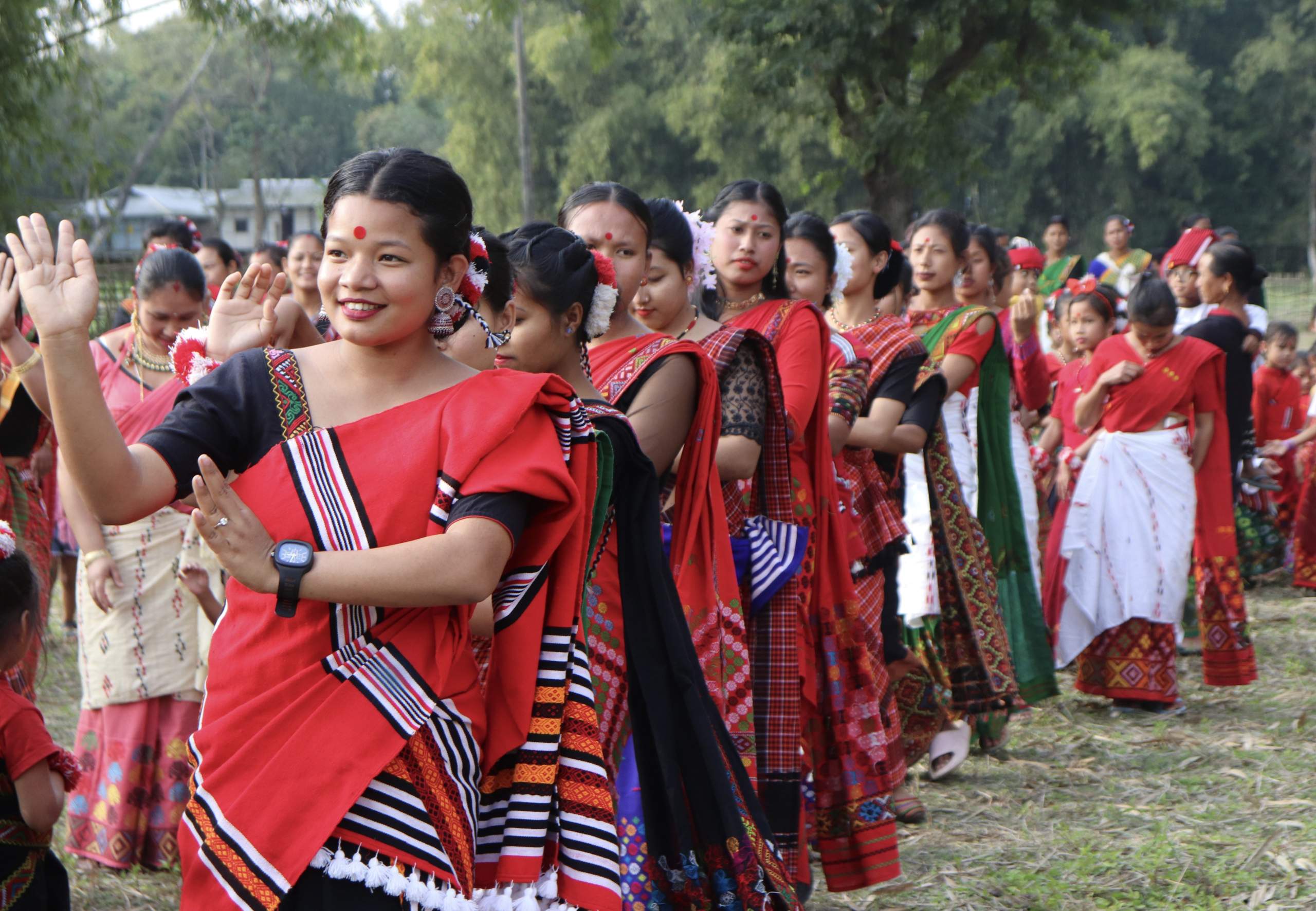
The festival is generally celebrated in February, on the first Wednesday of the Assamese month of Phagun. Traditional dances, songs, community gatherings and food are important parts of the celebration.
Gumrag dance is closely associated with the festival. People also prepare traditional dishes and participate in cultural activities that express their connection with agriculture and nature.
Bihu and Assamese Festivals
Bihu is celebrated throughout Assam, including Lakhimpur. The three major Bihu festivals are Rongali Bihu, Kongali Bihu and Bhogali Bihu.
Rongali Bihu marks the Assamese New Year and the beginning of the agricultural season. Kongali Bihu is associated with a period of limited agricultural resources, while Bhogali Bihu celebrates the harvest.
Traditional Bihu songs, dances, community feasts and agricultural customs remain important parts of local life.
Satras and Vaishnavite Traditions
Lakhimpur also has a strong connection with the Neo-Vaishnavite movement of Assam. The teachings of Srimanta Sankardeva and Madhavdeva influenced religious practices, art, music and community life in the region.
Satras and Namghars are important religious and cultural institutions. They serve as places of worship, prayer, traditional performances and community gatherings.
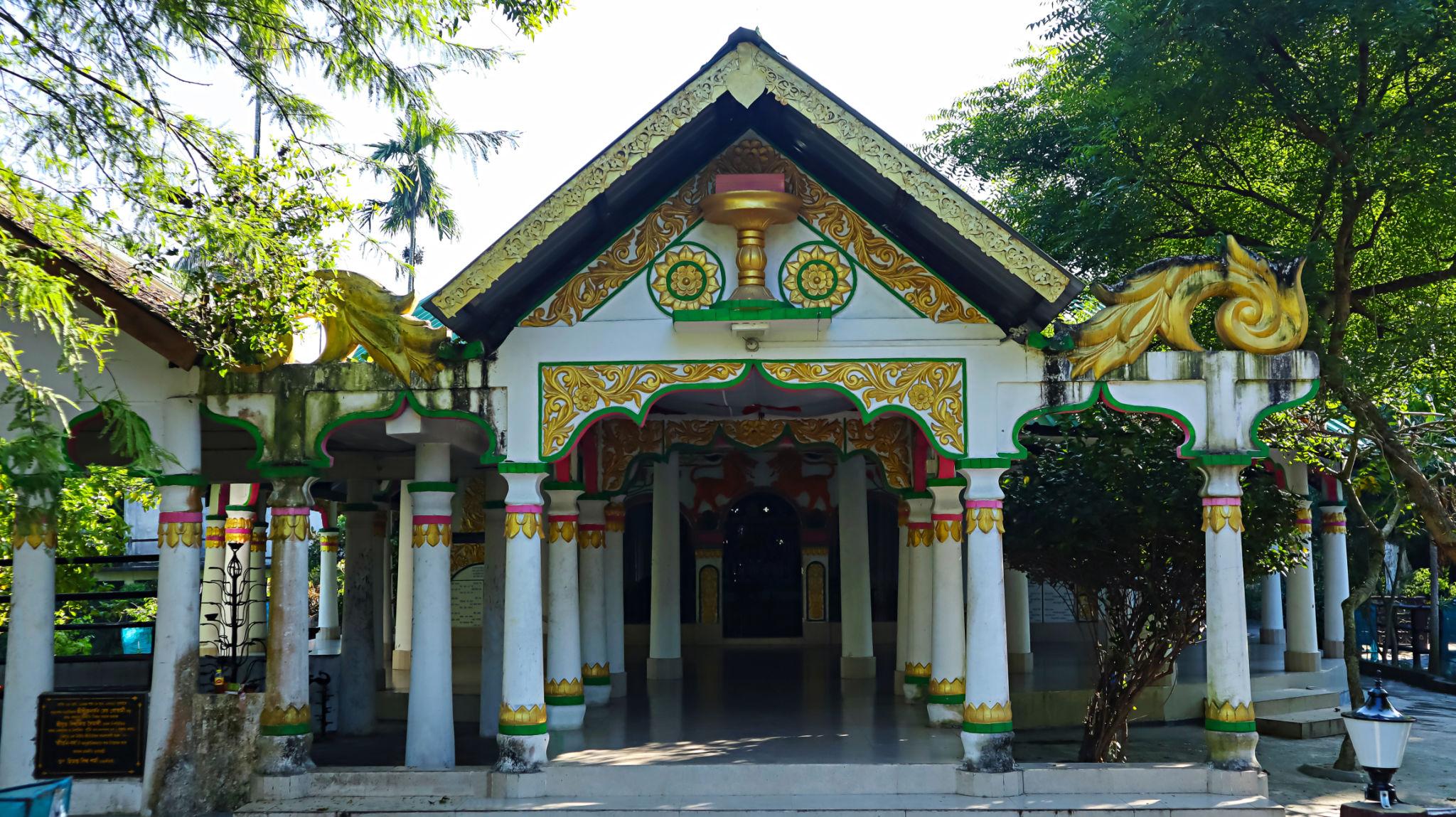
Some important Satras in the wider Lakhimpur region include Adi-Elengi Satra, Baligaon Auniati Sakha and Gharmora Satra.
These institutions help preserve traditional Assamese devotional music, religious literature and cultural practices.
Important Historical and Religious Places in Lakhimpur
Lakhimpur has several religious and historical locations that reflect its traditional beliefs and architectural heritage. Some are important pilgrimage destinations, while others preserve archaeological evidence of earlier settlements.
Padumoni Than
Padumoni Than is one of the religious places recognised by the Lakhimpur district administration. It is an important local place of worship and reflects the religious traditions of the region.
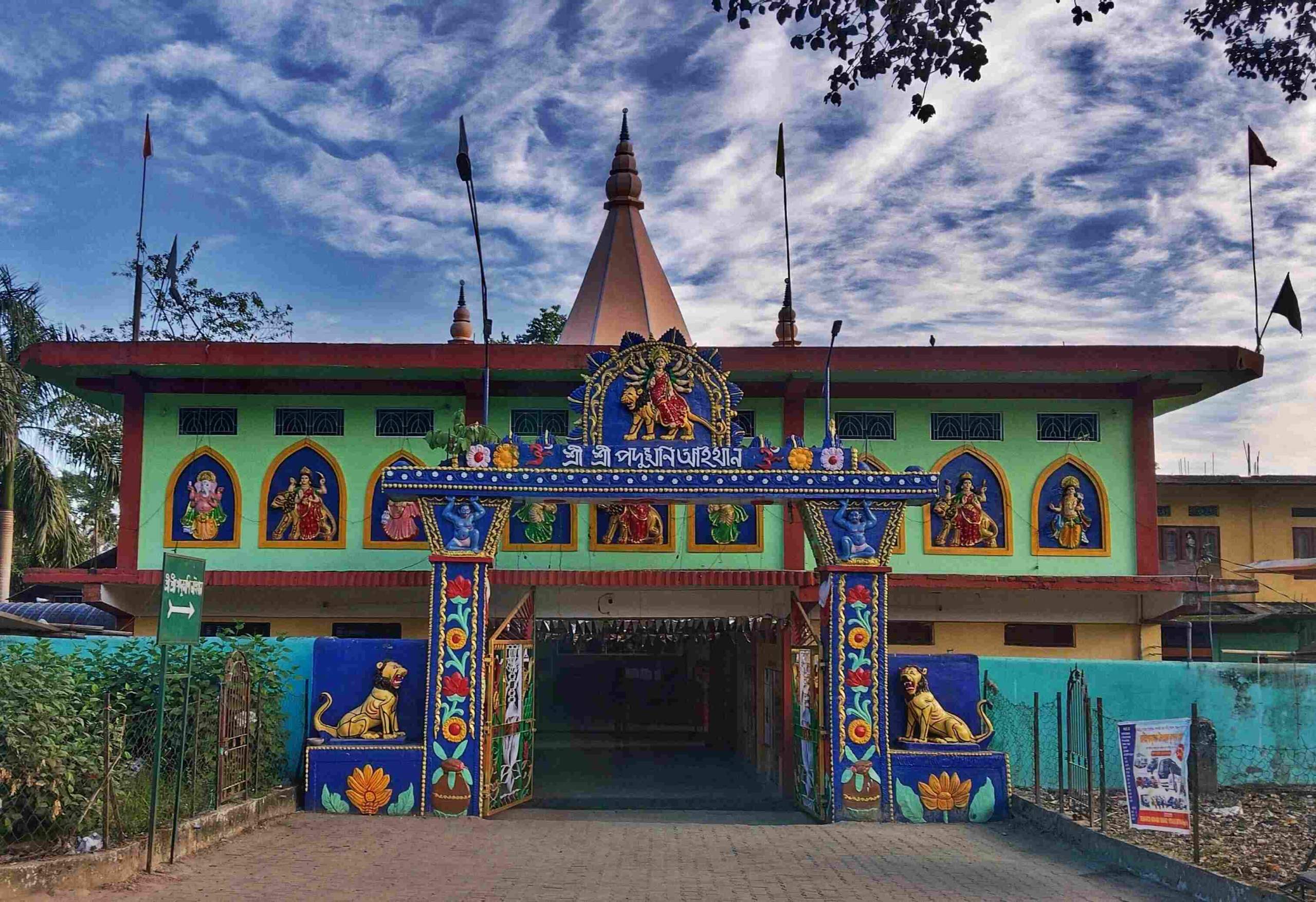
Than institutions have a significant place in Assamese society. They are associated with worship, religious gatherings and the preservation of traditional practices.
Padumoni Than is included in the official list of places of interest published by the district administration.
Baghar Chukar Doul
Baghar Chukar Doul is one of the notable archaeological sites in Lakhimpur. It is located in the Dhakuakhana area and is recognised by the Directorate of Archaeology, Government of Assam, as a protected archaeological monument.
The structure is a small brick temple with an octagonal ground plan. According to the Archaeology Department, it was constructed by the Chutias during the late medieval period.
The temple is approximately 3.5 metres high. Its architectural design includes eight vertical walls that gradually narrow towards the top and meet at a common pinnacle. A brick altar near the structure was also used for religious rituals.
The site is historically important because it provides evidence of the architectural and religious traditions of the Chutia period.
Gosaipukhuri Ruins
Gosaipukhuri Ruins, located at Laluk in Lakhimpur, are another important archaeological attraction.
The site contains remains of an ancient stone temple, including carved images and other historical relics. Some of the recovered materials have been preserved at Laluk Higher Secondary School, the Public Works Department resthouse at Laluk and Nabanagar Club.
The remains provide an opportunity to understand the region’s earlier religious and architectural history. Gosaipukhuri is particularly interesting for people interested in Assam’s archaeological heritage.
Ganesh Mandir, North Lakhimpur
Ganesh Mandir is another religious attraction listed on the official Lakhimpur district tourism page.
Dedicated to Lord Ganesha, the temple is a place of worship for local devotees. Religious sites like this form an important part of the everyday cultural landscape of North Lakhimpur.
Visitors interested in religious traditions can include the temple while exploring the town.
Famous Natural Places and Tourist Attractions in Lakhimpur
Apart from its historical and religious heritage, Lakhimpur is known for its natural beauty. Rivers, wetlands, green forests and rural landscapes provide opportunities for nature lovers and visitors interested in exploring Assam beyond its major cities.
Subansiri River and Subansiri Bridge
The Subansiri River is one of the most significant geographical features of Lakhimpur. It originates in the Himalayan region and flows through Arunachal Pradesh before entering Assam and joining the Brahmaputra River.
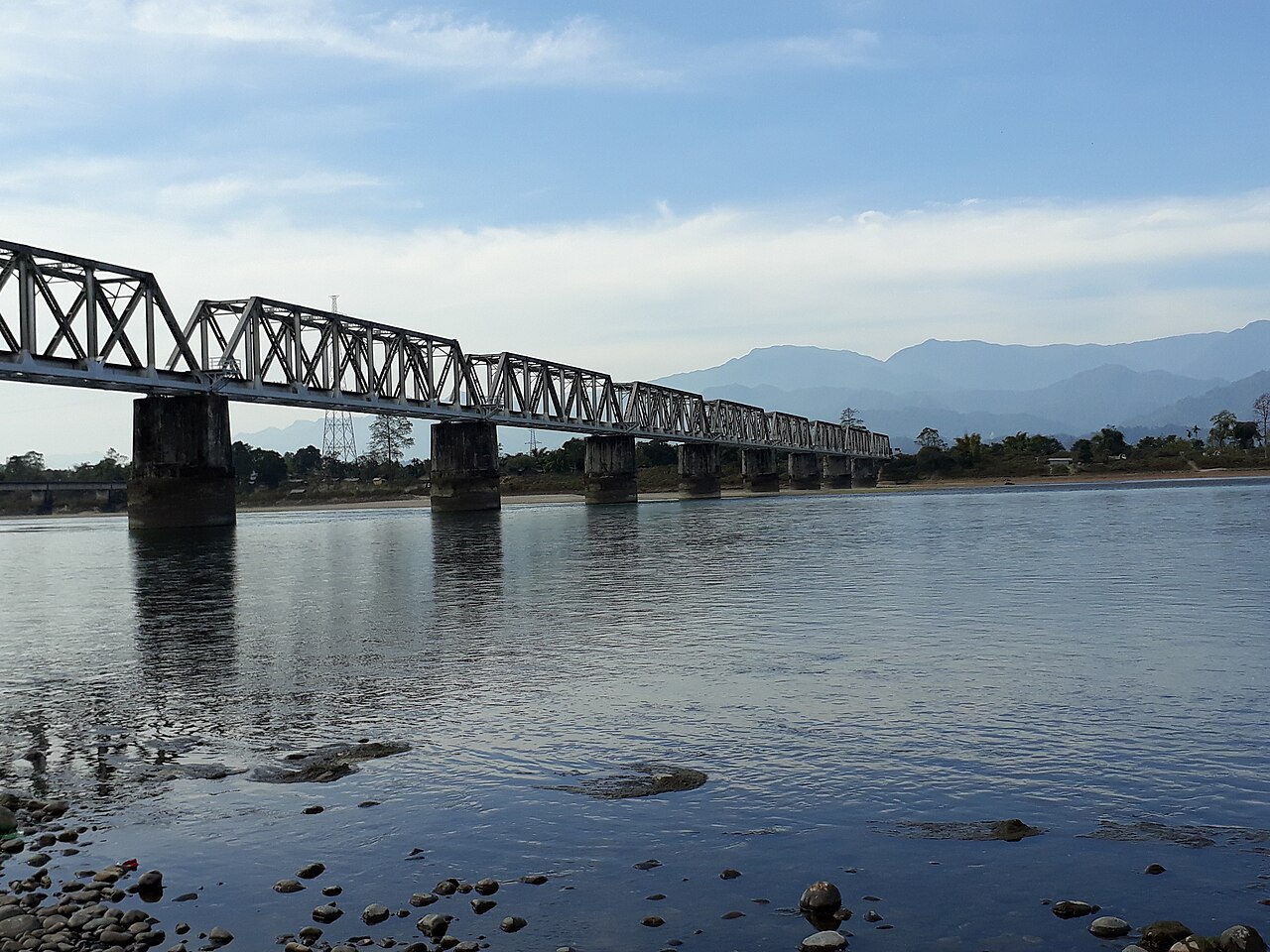
The river plays an important role in the agricultural and ecological life of the region. Its water supports farming, fishing and other local activities.
The Subansiri Bridge is listed among the official places of interest in Lakhimpur. The surrounding landscape offers views of the river and its adjoining areas.
However, the Subansiri is also known for seasonal flooding and changing river conditions. Visitors should follow local safety instructions, particularly during the monsoon.
Dullung Reserve Forest
Dullung Reserve Forest is one of the important forest areas of Lakhimpur. It is known for its green vegetation and natural environment.
The forest forms part of the district’s ecological landscape and provides habitat for different species of wildlife and birds.
The District Survey Report of Lakhimpur identifies Dullung as one of the district’s important forest attractions and mentions the presence of wild elephants in the forest areas.
Nature lovers interested in forests and biodiversity may find the area worth exploring. Visitors should remember that reserve forests are protected areas and activities must follow applicable forest regulations.
Kakoi Reserve Forest
Kakoi Reserve Forest is another natural attraction in Lakhimpur. It is known for its forest landscape and biodiversity.
Along with Dullung, Kakoi contributes to the district’s natural environment. The forest areas are important for wildlife habitats and ecological balance.
The District Survey Report of Lakhimpur includes Kakoi among the district’s notable forest areas. These forests are also important from an environmental perspective because they support vegetation and wildlife in the northern Assam landscape.
Bordoibum Beelmukh Wetland
Bordoibum Beelmukh is an important wetland situated between Lakhimpur and Dhemaji districts. It is known for its birdlife and aquatic environment.
The wetland supports several varieties of resident and migratory birds. The District Survey Report mentions species such as the lesser adjutant stork, kingfisher, purple moorhen, Indian river tern and other water-associated birds.
Wetlands like Bordoibum Beelmukh play an important role in maintaining ecological balance. They provide feeding and breeding habitats for birds and support aquatic biodiversity.
It is a particularly interesting location for birdwatchers and people interested in wetland conservation.
Satajan Wetland
Satajan is another wetland area mentioned in the district’s environmental and tourism-related records. It is known for its birdlife and natural surroundings.
The presence of wetlands makes Lakhimpur an interesting destination for birdwatching, particularly during periods when migratory birds visit Assam.
Wetland conservation is important because these ecosystems provide shelter and food for birds, fish and other aquatic organisms.
Luit Khabolu
Luit Khabolu is a Mising village located around 10 kilometres from North Lakhimpur, according to the district’s District Survey Report.
The village represents the traditional rural and cultural landscape of the Mising community. Its location and surrounding natural environment make it an interesting place for people who want to understand village life in Assam.
The District Survey Report also identifies the area as a location where migratory birds can be observed.
A visit to Luit Khabolu can offer an opportunity to learn about traditional lifestyles, local culture and the relationship between communities and their natural surroundings.
Joyhing
Joyhing is another scenic location mentioned in the District Survey Report of Lakhimpur. It is known for its natural surroundings and is described as a place where people visit for picnics.
The area’s green landscape makes it an attractive option for people interested in outdoor recreation and spending time in nature.
As with other natural locations, visitors should avoid littering and help maintain the cleanliness of the surroundings.
Letekupukhuri: Birthplace of Madhavdeva
Letekupukhuri, located in the Narayanpur area of Lakhimpur, is an important religious and historical destination. It is traditionally recognised as the birthplace of Srimanta Madhavdeva, one of the most influential figures in Assamese religious and cultural history.
Madhavdeva was a prominent disciple of Srimanta Sankardeva and played a major role in spreading the Neo-Vaishnavite movement in Assam.
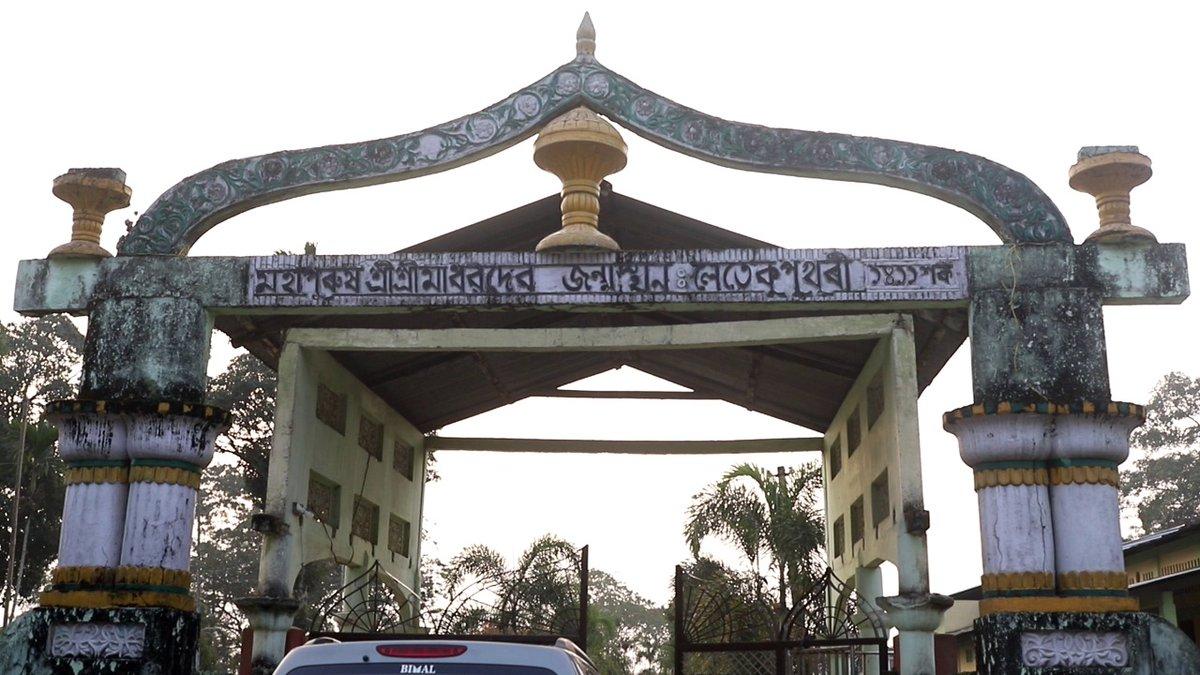
His contributions to Assamese literature, devotional music, religious teachings and cultural traditions remain significant. His literary works and devotional compositions continue to be performed and studied across Assam.
Letekupukhuri holds special importance for followers of the Neo-Vaishnavite tradition and people interested in the religious history of Assam.
Traditional Food and Lifestyle of Lakhimpur
Food is an important part of Lakhimpur’s cultural identity. The district’s traditional cuisine reflects Assamese food habits and the culinary practices of its different communities.
Rice is the main staple food. People commonly prepare rice with vegetables, fish, meat and locally available ingredients.
Some traditional foods and dishes associated with the region include:
- Pitha: Traditional rice-based preparations commonly enjoyed during Bihu.
- Laru: Traditional sweets prepared using ingredients such as sesame seeds, coconut and rice.
- Masor Tenga: A popular Assamese sour fish curry.
- Khar: A traditional Assamese preparation made using an alkaline ingredient.
- Poita Bhat: Fermented or soaked leftover rice, commonly eaten with salt, mustard oil and other accompaniments.
- Apong: A traditional rice-based fermented beverage associated with the Mising community.
Agriculture, fishing, weaving and livestock rearing continue to influence the everyday lifestyle of many rural families.
Agriculture and Economy of Lakhimpur
Agriculture is one of the major economic activities in Lakhimpur. The district’s fertile alluvial soil and river systems support the cultivation of different crops.
Rice is the most important agricultural crop. Farmers also cultivate vegetables, mustard, pulses and other seasonal crops.
The rural economy depends on several activities, including:
Agriculture: Paddy cultivation is a major occupation and an important source of livelihood for rural households.
Fishing: Rivers, wetlands and local water bodies support traditional fishing activities.
Handloom and weaving: Traditional textile production provides income and helps preserve the cultural identity of different communities.
Small businesses: Markets, shops, transport services and other small commercial activities contribute to the district’s economy.
North Lakhimpur is the main commercial and administrative centre. It connects surrounding villages and rural areas with important public services, educational institutions and markets.
Educational and Cultural Importance
Lakhimpur is also an important educational centre in northern Assam. The district has several educational institutions that serve students from different parts of the region.
North Lakhimpur College (Autonomous) is one of its prominent higher educational institutions. Established in 1952, it has played an important role in higher education in the district.
Lakhimpur Medical College and Hospital is another important institution that provides medical education and healthcare services.
The district also has cultural institutions and facilities that contribute to preserving Assamese traditions. The Government of Assam’s Department of Cultural Affairs lists a cultural centre at Narayanpur and the Jyoti-Bishnu Cultural Complex at Bahpati in Lakhimpur.
These institutions provide opportunities to promote traditional music, dance, literature and other cultural activities.
How to Reach Lakhimpur
Lakhimpur is connected with other important destinations in Assam through road, railway and air transport.
By Air: Lilabari Airport is located approximately 5 kilometres from the district headquarters. The district administration also identifies Dibrugarh Airport and Donyi Polo Airport in Arunachal Pradesh as alternative airport options.
By Road: North Lakhimpur is approximately 380 kilometres from Guwahati by road. Regular road transport connects the district with major destinations such as Tezpur, Dibrugarh, Jorhat and other parts of Assam.
By Railway: North Lakhimpur Railway Station is situated in Nakari, approximately 2 kilometres from the district headquarters. Rail services connect the region with other parts of Assam.
The district also has river transport connections through the Brahmaputra, including ferry routes towards neighbouring areas.
Travellers should check current flight, railway and ferry schedules before planning their journey.
Best Time to Visit Lakhimpur
The winter season, particularly from October to March, is generally suitable for exploring Lakhimpur. During this period, the weather is comparatively pleasant, making it easier to visit religious places, historical sites, villages and natural attractions.
The monsoon season brings heavy rainfall to the district. Rivers may experience rising water levels, and flooding can affect road communication and access to certain locations.
People interested in local culture may also plan their visit around festivals such as Rongali Bihu and Ali-Aye-Ligang. Festival dates and local programmes should be checked before travelling.
Why Lakhimpur Is Important in Assam’s History and Culture
Lakhimpur is more than an agricultural district. Its history reflects the influence of the Chutias, Baro-Bhuyans, Ahoms and other communities that contributed to the development of Assam.
Its archaeological monuments preserve evidence of earlier religious and architectural traditions. Places such as Baghar Chukar Doul and Gosaipukhuri Ruins provide valuable connections with the medieval past.
The district’s cultural identity is equally important. Mising traditions, Assamese festivals, Satras, traditional food, handloom weaving and village lifestyles make Lakhimpur a culturally diverse region.
Its rivers, forests and wetlands also contribute to the natural heritage of northern Assam.
Understanding Lakhimpur means understanding an important part of Assam’s historical development, indigenous traditions, agricultural life and cultural diversity.
Frequently Asked Questions (FAQs) About Lakhimpur
Where is Lakhimpur located in Assam?
Lakhimpur is located in the northern part of Assam, along the northern bank of the Brahmaputra River. It shares its northern boundary with Arunachal Pradesh.
What is the headquarters of Lakhimpur district?
North Lakhimpur is the administrative headquarters of Lakhimpur district.
Why is Lakhimpur famous?
Lakhimpur is known for its rich history, agricultural activities, Mising culture, religious institutions, archaeological monuments, rivers, forests and wetlands.
What is the historical importance of Lakhimpur?
Lakhimpur has historical connections with the Chutia kingdom, Baro-Bhuyans and Ahom kingdom. Its archaeological sites, including Baghar Chukar Doul and Gosaipukhuri Ruins, provide evidence of its medieval history.
Which river is important in Lakhimpur?
The Subansiri River is one of the most important rivers in Lakhimpur. It supports agriculture, fishing and the region’s natural ecosystem.
What are the famous tourist places in Lakhimpur?
Some notable places include Padumoni Than, Baghar Chukar Doul, Gosaipukhuri Ruins, Letekupukhuri, Dullung Reserve Forest, Kakoi Reserve Forest and Bordoibum Beelmukh Wetland.
Which famous Assamese personality was born in Lakhimpur?
Srimanta Madhavdeva, an important religious reformer, poet and disciple of Srimanta Sankardeva, is traditionally associated with Letekupukhuri in the Narayanpur area of Lakhimpur.
Which communities are prominent in Lakhimpur?
The district has a diverse population, including Assamese-speaking communities and indigenous communities such as the Mising. Their languages, festivals, traditional clothing and customs contribute to its cultural diversity.
What is the main festival of the Mising community?
Ali-Aye-Ligang is one of the most important festivals of the Mising community. It celebrates the beginning of the agricultural sowing season and is marked by traditional dances, songs and community gatherings.
What is the best time to visit Lakhimpur?
October to March is generally a suitable period to explore Lakhimpur because the weather is comparatively pleasant. Visitors should take precautions during the monsoon due to heavy rainfall and possible flooding.
How can tourists reach Lakhimpur?
Lakhimpur can be reached by road, railway and air. Lilabari Airport is the nearest airport to North Lakhimpur, while North Lakhimpur Railway Station provides railway connectivity.
What is the main occupation of people in Lakhimpur?
Agriculture is one of the major occupations in Lakhimpur. Rice cultivation, fishing, handloom weaving, livestock rearing and small businesses also support the local economy.