

Kamrup Metropolitan: History, Heritage and Historical Importance of Guwahati

Introduction
Kamrup Metropolitan is one of the most historically and culturally important districts of Assam. Located in the northeastern part of India, it is home to Guwahati, the largest city in Northeast India and an important centre of administration, education, trade, tourism and transportation. The district has a rich historical background connected with the ancient kingdom of Kamarupa, the Ahom dynasty, the Koch rulers and several important events in Indian history.
Kamrup Metropolitan is particularly significant because Guwahati was once known as Pragjyotishpura, an ancient city associated with the early history of Assam. The city has witnessed the rise and fall of powerful kingdoms, battles between the Ahoms and Mughals, the development of religious institutions and the growth of modern Assam.

Today, Guwahati represents a combination of ancient traditions and modern urban development. Its historical monuments, temples, archaeological remains and the mighty Brahmaputra River make it an important destination for understanding Assam’s past.
Geographical Location and Administrative Background
Kamrup Metropolitan is situated in Central Assam, along the southern bank of the Brahmaputra River. Its headquarters is Guwahati, which also serves as the capital region’s major administrative and commercial centre.
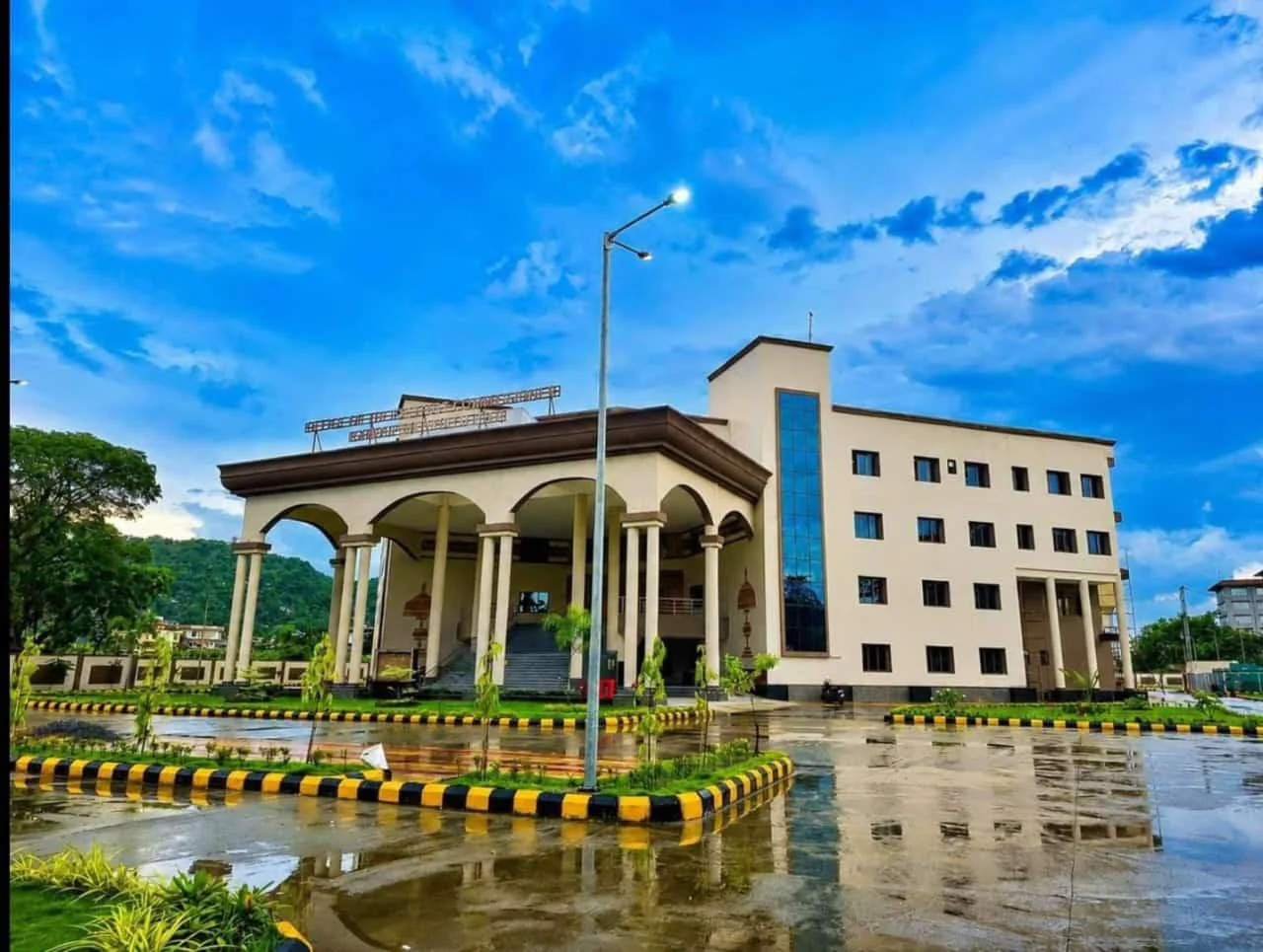
According to the Kamrup Metropolitan District Administration, the district covers approximately 1,528 square kilometres and had a population of 12,60,419 according to the 2011 Census.
Some important administrative details are given below:
| Particulars | Information |
|---|---|
| District | Kamrup Metropolitan |
| State | Assam |
| District Headquarters | Guwahati |
| Administrative division | Central Assam |
| Geographical area | Approximately 1,528 sq. km |
| Population | 12,60,419 (2011 Census, district administration figure) |
| Revenue Circles | 5 |
| Development Blocks | 3 |
| Important River | Brahmaputra |
| Major Urban Centre | Guwahati |
The district was formed by separating the metropolitan area from the old Kamrup district. The district was notified in December 2002, and its formation is associated with the administrative reorganisation of 2003.
The five revenue circles listed by the district administration are Guwahati, Dispur, Azara, Sonapur and Chandrapur.
Source: Kamrup Metropolitan District Administration – District Profile.
Ancient History of Guwahati: The Land of Pragjyotishpura
Guwahati has a history that goes back many centuries. In ancient times, the city was associated with the name Pragjyotishpura, which is commonly interpreted as the City of Eastern Astrology or the Light of the East.
The ancient region was also known as Kamarupa, one of the important historical kingdoms of northeastern India. References to Pragjyotishpura and Kamarupa appear in ancient Indian literary and religious traditions, including the Ramayana and Mahabharata.
According to Hindu mythology, Narakasura was an important legendary ruler associated with Pragjyotishpura. His son Bhagadatta is also mentioned in the Mahabharata, where he is described as participating in the Kurukshetra War on the side of the Kauravas.
However, it is important to distinguish between mythology and established historical evidence. These stories form an important part of Assam’s cultural heritage, while archaeological findings and historical records provide evidence of the region’s ancient settlements and political development.
The name Guwahati is generally explained through two Assamese words: ‘Guwa’, meaning areca nut, and ‘Haat’, meaning market. The name reflects the city’s historical association with trade and local markets.
The Ancient Kingdom of Kamarupa
Kamarupa was one of the major ancient kingdoms of northeastern India. It covered a much larger geographical region than the present-day Kamrup Metropolitan district.
The kingdom was ruled by several dynasties, including the Varman, Mlechchha and Pala dynasties. These rulers played an important role in developing the political, cultural and religious identity of ancient Assam.
The Varman Dynasty
The Varman dynasty is among the earliest historically documented ruling dynasties of Kamarupa. Pushyavarman is generally recognised as its founder, around the fourth century CE.
One of its most famous rulers was Kumar Bhaskar Varman, who ruled approximately from 594 to 650 CE.
Bhaskar Varman was an influential ruler who maintained friendly relations with King Harshavardhana of northern India. Their diplomatic relationship strengthened the political importance of Kamarupa.
During his reign, the Chinese traveller Xuanzang (Hiuen Tsang) visited Kamarupa in the seventh century. His travel account provides valuable information about the kingdom, its people, religious practices and political conditions.
The Varman dynasty established Kamarupa as an important political power in ancient northeastern India.
Guwahati During the Ahom Period
The Ahom period is one of the most important chapters in Assam’s history. The Ahom kingdom was established in 1228 by Sukaphaa, who entered the Brahmaputra Valley and laid the foundation of a kingdom that continued for nearly 600 years.
Guwahati became an important strategic location because of its position along the Brahmaputra River.
During the medieval period, the region was contested by the Ahom and Koch kingdoms and faced repeated Mughal military campaigns.
The Ahom rulers understood the importance of Guwahati because controlling this area helped protect the western approaches to their kingdom.
Guwahati also became the headquarters of the Ahom Borphukan, an important civil and military authority responsible for administering the western part of the kingdom.
The Ahom administration developed defensive structures and military arrangements around Guwahati to protect the region from external attacks.
Battle of Saraighat: A Historic Victory of the Ahoms
The Battle of Saraighat, fought in 1671, is one of the most celebrated military events in Assam’s history.
The battle took place on the Brahmaputra River near Guwahati between the Ahom kingdom and the Mughal Empire.
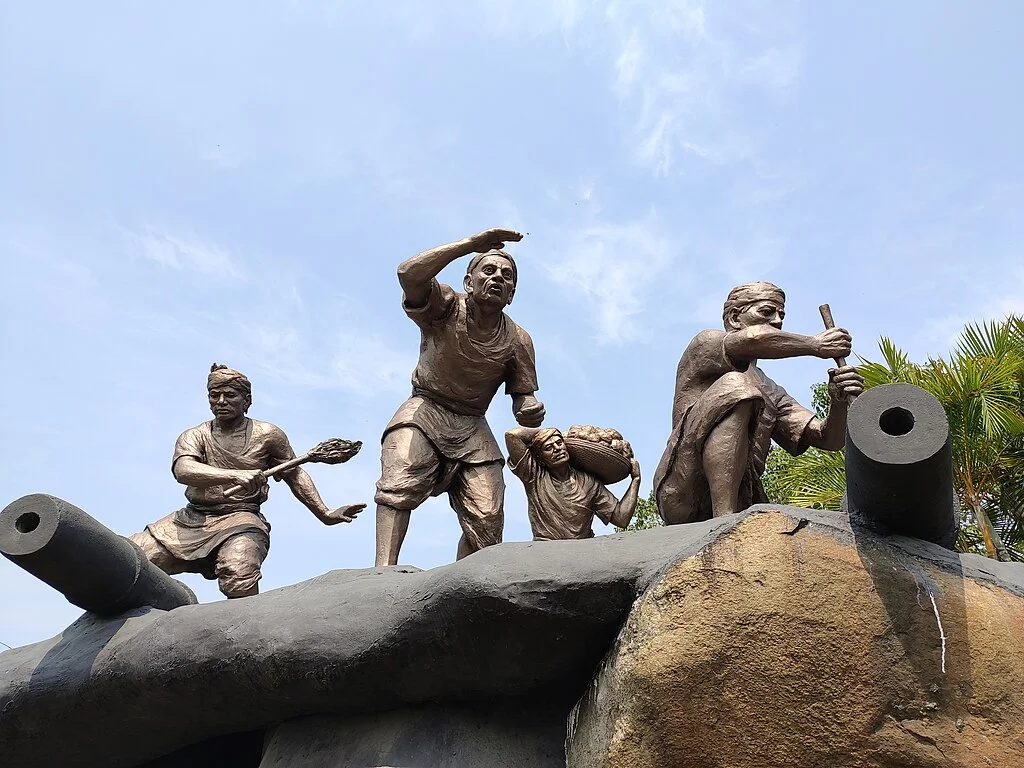
The Mughal forces, led by Raja Ram Singh I, attempted to extend Mughal control over Assam. The Ahom army was commanded by Lachit Borphukan, one of the most respected military commanders in Assamese history.
The Ahom forces used their knowledge of the Brahmaputra River, local geography and naval warfare to challenge the much larger Mughal army.
Lachit Borphukan played a crucial role in organising the defence of Guwahati. Despite facing illness during the final stages of the conflict, he continued to lead his forces.
The Ahoms eventually defeated the Mughal army in the Battle of Saraighat in 1671.
Historical importance of the battle:
- It prevented the Mughal Empire from establishing lasting control over Assam.
- It demonstrated the importance of naval warfare in the Brahmaputra Valley.
- It established Lachit Borphukan as one of the greatest military leaders in Assam’s history.
- It strengthened the independence of the Ahom kingdom.
Even today, the Battle of Saraighat remains an important symbol of courage, leadership and resistance in Assam.
Kamakhya Temple: An Important Centre of Religious Heritage
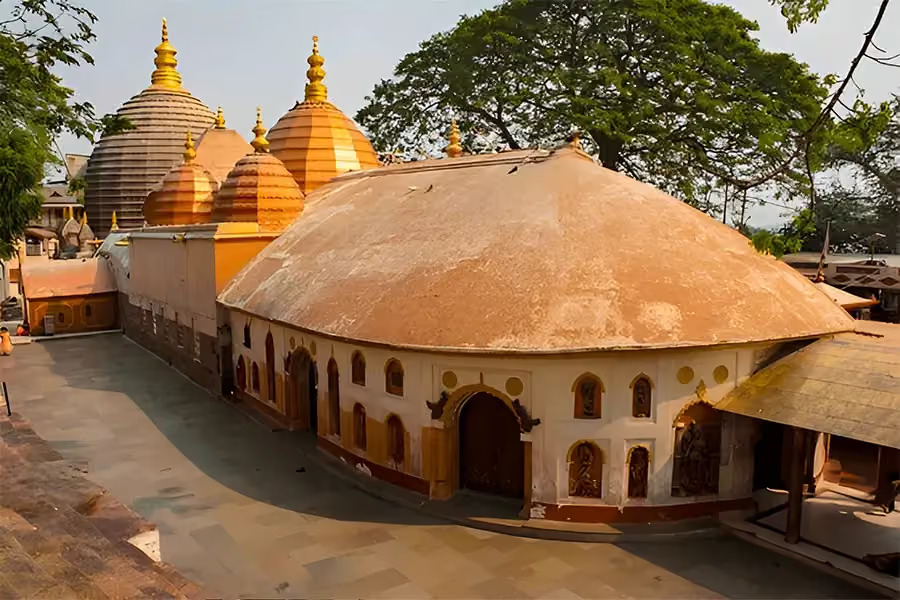
The Kamakhya Temple, situated on Nilachal Hill in Guwahati, is one of the most important religious and historical landmarks of Assam.
Dedicated to Goddess Kamakhya, the temple is among India’s most prominent Shakti pilgrimage centres. It is also an important centre of Tantric traditions.
According to Hindu mythology, the temple is associated with the legend of Goddess Sati and is traditionally recognised as one of the Shakti Peethas.
The temple’s history is connected with the medieval Koch rulers. The earlier structure was destroyed, and the temple was reconstructed in 1565 under the patronage of Koch ruler Naranarayana, with the support of his brother Chilarai.
The temple complex contains several shrines dedicated to different forms of Goddess Shakti.
Ambubachi Mela is one of the most important annual religious festivals celebrated at Kamakhya Temple. It usually takes place in June and attracts devotees, pilgrims and visitors from different parts of India.
The temple is significant not only for religious reasons but also for its architectural heritage and connection with the cultural history of Assam.
Umananda Temple and Peacock Island
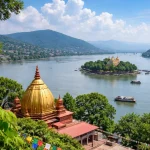
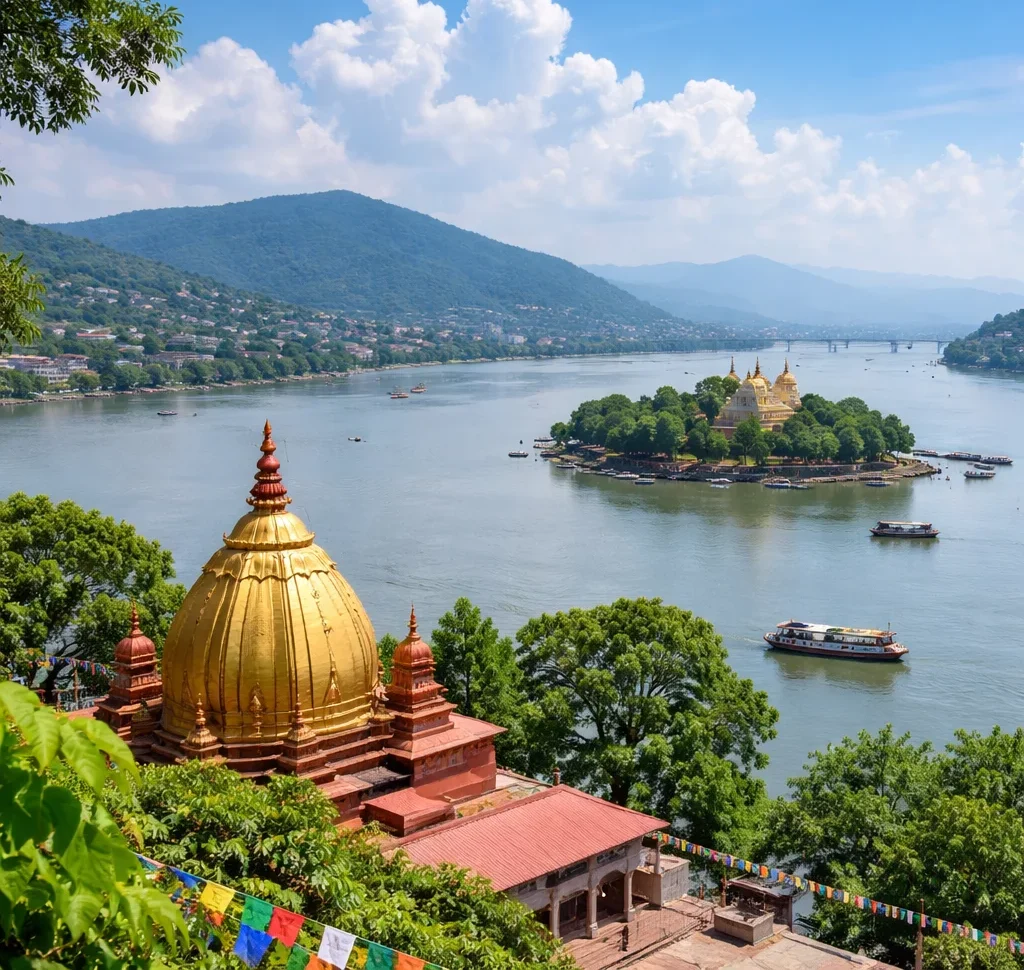
Umananda Temple is another important historical and religious attraction in Guwahati. It is located on Peacock Island, in the middle of the Brahmaputra River.
The temple is dedicated to Lord Shiva and is associated with several religious legends.
The temple was constructed in 1694 CE during the reign of Ahom king Gadadhar Singha. Bar Phukan Garhganya Handique was associated with its construction.
The temple contains traditional sculptures and engravings that reflect the craftsmanship of Assamese artisans during the Ahom period.
A major part of the temple was damaged during the devastating earthquake of 1897 and was subsequently repaired.
Today, visitors can reach Umananda Island through ferry services operating from the Guwahati riverfront.
The temple is an important example of the Ahom dynasty’s contribution to religious architecture in Assam.
Ambari Archaeological Site: Evidence of Ancient Guwahati
The Ambari Archaeological Site is one of the most important archaeological locations in Kamrup Metropolitan.
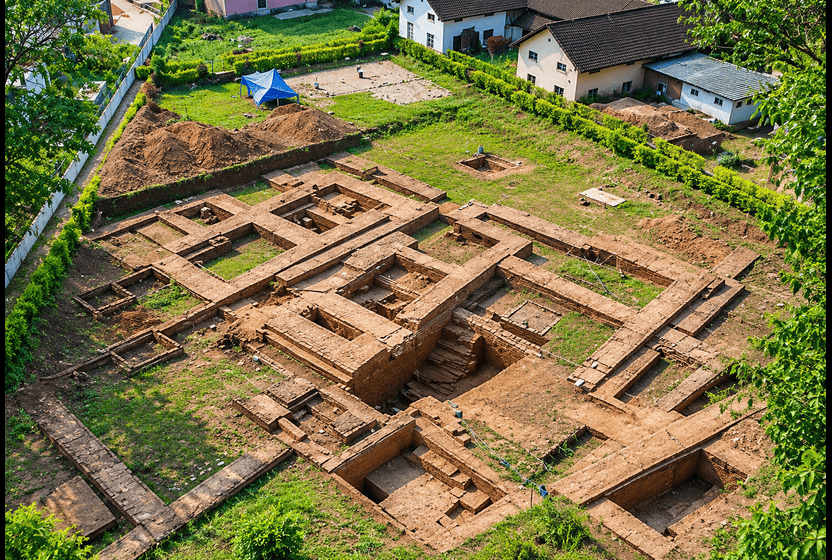
Situated in Guwahati, the site was discovered in 1968. Excavations revealed remains of ancient settlements and structures that provide valuable information about the history of Kamarupa.
According to the Directorate of Archaeology, Government of Assam, the archaeological evidence indicates two major cultural periods.
| Cultural Period | Historical Details |
|---|---|
| Early cultural period | Around 200 BCE onwards |
| Later cultural period | Approximately 1100 CE to the late medieval period |
Excavations at Ambari revealed several important remains, including:
- Burnt-brick structures.
- Ancient drainage systems.
- Brick-paved pathways.
- Brick-paved floors.
- Structural foundations.
- Remains associated with an ancient urban settlement.
These discoveries indicate that Ambari was an important cultural and urban centre in ancient times.
The archaeological findings are particularly valuable because they provide material evidence of Guwahati’s historical development beyond traditional stories and literary references.
Basistha Temple and Its Historical Importance
Basistha Temple is another important religious and historical site located in the southern part of Guwahati.
The temple is associated with Sage Basistha, one of the respected sages in Hindu traditions. According to local belief, the sage established his ashram in this area.
The present brick-built temple was constructed around 1764 CE during the reign of Ahom king Rajeswar Singha.
According to the Directorate of Archaeology, Government of Assam, evidence of an earlier stone temple dating approximately from 1000 to 1100 CE has also been identified at the site.
The temple stands near the meeting point of three streams known as Sandhya, Lalita and Kanta.
Basistha Temple is important because it combines religious traditions, archaeological remains and the natural landscape of Guwahati.
Guwahati During British Rule
The arrival of British rule changed the political and administrative structure of Assam.
Following the Treaty of Yandabo in 1826, the British East India Company gained control over Assam from Burma. The region gradually became part of British India’s administrative system.
Guwahati developed as an important administrative and commercial centre during the colonial period.
Its location along the Brahmaputra River helped connect different parts of Assam through river transportation and trade.
The development of roads, railways, educational institutions and administrative offices contributed to the growth of the city.
During this period, Guwahati gradually became an important urban centre in northeastern India.
Dispur: The Administrative Centre of Assam
Dispur, located within Kamrup Metropolitan, is the capital of Assam.
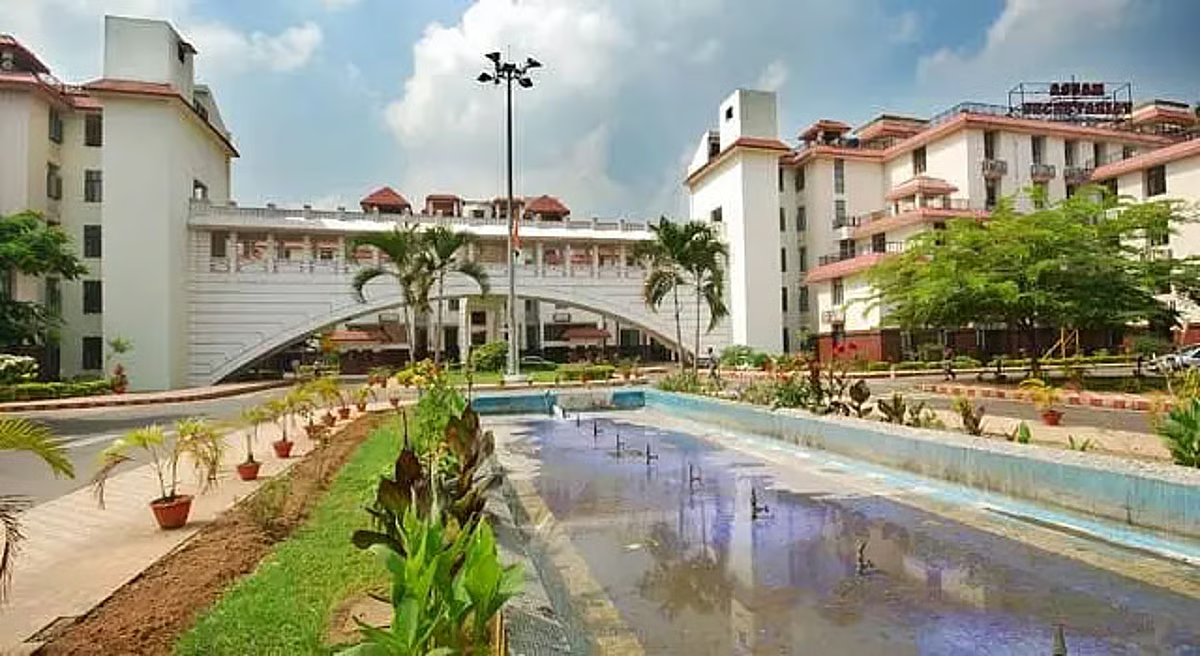
After Meghalaya became a separate state in 1972, Shillong became part of Meghalaya. Guwahati subsequently developed as the principal administrative centre of Assam, and Dispur was established as the state capital in 1973.
Dispur houses important government institutions, including the Assam Secretariat and the Assam Legislative Assembly.
Its location within Kamrup Metropolitan makes the district particularly important for the political and administrative administration of Assam.
Economic and Cultural Importance of Kamrup Metropolitan
Apart from its historical importance, Kamrup Metropolitan is one of the major economic centres of northeastern India.
Guwahati serves as a commercial connection between Assam and other northeastern states.
Important economic activities include:
Trade and Commerce: Guwahati is a major trading centre for agricultural products, consumer goods, construction materials and other commodities.
Transportation: The city is connected through road, railway, air and river transport. The Lokpriya Gopinath Bordoloi International Airport serves as an important aviation gateway to Northeast India.
Education: Guwahati has several important educational institutions, including Gauhati University, Indian Institute of Technology Guwahati and other colleges and research institutions.
Tourism: Historical temples, archaeological sites, religious festivals and the Brahmaputra River attract visitors throughout the year.
Cultural Heritage: Bihu, traditional Assamese music, dance, handloom, handicrafts and local festivals contribute to the cultural identity of the district.
Important Historical Places in Kamrup Metropolitan
The following table highlights some important historical and cultural locations in the district.
| Historical Place | Historical Importance |
|---|---|
| Kamakhya Temple | Important Shakti Peetha and centre of Tantric traditions |
| Umananda Temple | Ahom-era temple constructed in 1694 CE |
| Ambari Archaeological Site | Evidence of ancient urban settlements |
| Basistha Temple | Present temple constructed around 1764 CE |
| Navagraha Temple | Historic temple associated with the nine celestial bodies |
| Saraighat | Associated with the historic Battle of 1671 |
| Nilachal Hill | Important religious and archaeological landscape |
| Peacock Island | Location of Umananda Temple |
These places demonstrate the historical importance of Guwahati and its surrounding areas.
Conclusion
Kamrup Metropolitan holds a special position in the history of Assam because of its connection with ancient Kamarupa, the Ahom kingdom, medieval military conflicts and the development of modern Guwahati.
From the ancient settlement of Pragjyotishpura to the historic Battle of Saraighat, the district has witnessed several important events that shaped the political and cultural identity of Assam.
Its archaeological discoveries, including the Ambari site, provide evidence of ancient urban development, while monuments such as Kamakhya Temple, Umananda Temple and Basistha Temple reflect the region’s religious and architectural heritage.
Today, Guwahati is not just the largest city of Northeast India; it is also an important centre of administration, education, trade and tourism. The historical importance of Kamrup Metropolitan continues to make it one of the most significant districts of Assam.
Frequently Asked Questions
What is Kamrup Metropolitan famous for?
Kamrup Metropolitan is famous for Guwahati, ancient temples, historical monuments, the Brahmaputra River and its rich cultural heritage.
What was the ancient name of Guwahati?
Guwahati was historically associated with the name Pragjyotishpura.
When was Kamrup Metropolitan district formed?
Kamrup Metropolitan was formed in 2003 following the administrative reorganisation of the old Kamrup district.
Which river flows through Guwahati?
The Brahmaputra River flows along the northern side of Guwahati.
Why is the Battle of Saraighat important?
The Battle of Saraighat was fought in 1671 between the Ahoms and the Mughals. The Ahoms, led by Lachit Borphukan, defeated the Mughal forces.
Which famous temple is located on Nilachal Hill?
Kamakhya Temple, one of India’s most important Shakti pilgrimage centres, is located on Nilachal Hill.
Who built Umananda Temple?
Umananda Temple was constructed in 1694 CE during the reign of Ahom king Gadadhar Singha.
Which archaeological site is famous in Guwahati?
The Ambari Archaeological Site is famous for its ancient settlement remains and archaeological discoveries.