


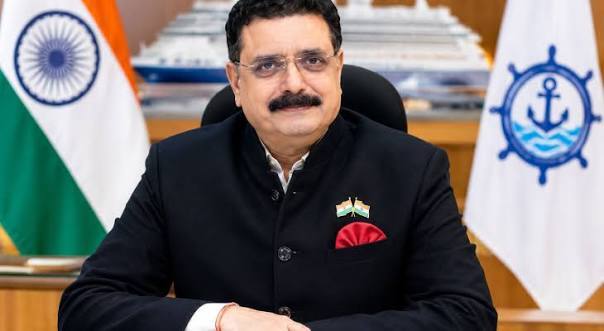
IMU Vice-Chancellor Venkata Ramana Akkaraju as VC

IMU Vice-Chancellor Dr. Venkata Ramana Akkaraju took charge as the new Vice-Chancellor of the Indian Maritime University (IMU) on 3 November 2026. The university is headquartered in Chennai, Tamil Nadu. His appointment is an important step for the institution as it looks to strengthen maritime education, research, innovation and cooperation with the shipping industry.
The President of India appointed Dr. Akkaraju under Statute 2(1) of the Indian Maritime University Act. The President serves as the Visitor of the university. His term will be five years or until he reaches the age of 70, whichever comes earlier. With his long experience in port administration and maritime management, he is expected to bring valuable leadership to the university.

Who Is Dr. Venkata Ramana Akkaraju?
Dr. Venkata Ramana Akkaraju is an experienced maritime-sector professional who has held several important positions in India’s port administration system. Before joining IMU as Vice-Chancellor, he served as Chairman of the New Mangalore Port Authority from June 2019 to November 2025.
He also served as Chairman of the Cochin Port Authority from 2016 to 2018. In addition, he held the position of Chairman of the Goa Port Authority from 2022 to 2023. These responsibilities gave him experience in managing port operations, shipping activities, infrastructure and maritime administration.
His connection with maritime education goes back several years. Between 2007 and 2009, he worked as Deputy Director at the Indian Maritime University and the National Maritime Academy. This earlier experience gives him an understanding of both the academic and practical sides of the maritime sector.
IMU Vice-Chancellor Venkata Ramana Akkaraju as VC
The appointment of Dr. Akkaraju was made by the President of India under the provisions of the Indian Maritime University Act. According to the appointment terms, he will serve for five years, unless he reaches the age of 70 before the completion of this period.
As Vice-Chancellor, he will be responsible for providing academic and administrative leadership to the university. His role will include supporting educational development, improving research activities and encouraging cooperation between the university and the maritime industry.
The appointment comes at a time when the maritime sector is becoming increasingly important for India’s trade, transport and economic development. Ports and shipping services play a major role in the movement of goods, international trade and the growth of coastal industries. Skilled professionals and modern maritime knowledge are important for meeting the sector’s future needs.
Indian Maritime University and Its Role
The Indian Maritime University is a central university established to support maritime education, training and research in India. It was formed in 2008 by bringing together seven teaching and research institutes that were previously under the Ministry of Shipping.
The university provides education and training in areas connected with commercial shipping, marine engineering, maritime administration and other maritime-related subjects. Its main aim is to develop skilled professionals who can work in different parts of the maritime industry.
IMU has six campuses located in different parts of the country. These campuses are in Chennai, Kochi, Kolkata, Mumbai Port, Navi Mumbai and Visakhapatnam. This network helps the university serve students from different coastal and inland regions of India.
Through its academic programmes, the university supports the development of knowledge and technical skills needed in shipping, port management and marine operations. It also has an important role in connecting education with the practical requirements of the maritime industry.
Priorities for the University Under His Leadership
Dr. Akkaraju’s appointment is expected to support the university’s focus on academic excellence, innovation and research-driven development. His experience in managing major port authorities may help strengthen the relationship between the university and organisations working in shipping and port operations.
One important area will be industry collaboration. Maritime education needs to remain connected with changes in shipping technology, port infrastructure, cargo handling and international trade. Cooperation with industry organisations can help students understand real working conditions and develop useful professional skills.
Research and innovation will also remain important. Modern ports are increasingly using digital systems, automation and improved management methods. Research in these areas can help improve efficiency, safety and environmental performance in maritime operations.
The university can also support the development of trained professionals for India’s growing maritime requirements. Better academic facilities, practical training and cooperation with industry can help prepare students for careers in shipping companies, ports, marine engineering and maritime services.
Importance for India’s Maritime Sector
India has a long coastline and depends heavily on maritime transport for international trade. Ports connect Indian businesses with global markets and support the movement of essential goods, raw materials and industrial products.
The maritime sector is also changing because of new technologies, environmental concerns and growing international competition. Port modernisation, digitalisation, cleaner shipping practices and skilled human resources are becoming important areas of development.
In this situation, institutions such as the Indian Maritime University have an important responsibility. They help create the knowledge and skills required to manage modern shipping and port systems.
With Dr. Venkata Ramana Akkaraju taking charge as Vice-Chancellor, IMU will have leadership with experience in port administration as well as maritime education. His appointment is expected to support the university’s efforts to improve academic quality, research and cooperation with the maritime industry.