Red Crowned Turtle Decline Raises Conservation Alarm

The Red Crowned Turtle Decline has become a serious concern for conservationists in South Asia. The Red-crowned Roofed Turtle, once widely found in the Ganga river system, is now limited to shrinking habitats. This decline highlights growing environmental challenges such as pollution, habitat loss and human interference.
Thank you for reading this post, don't forget to subscribe!About the Species
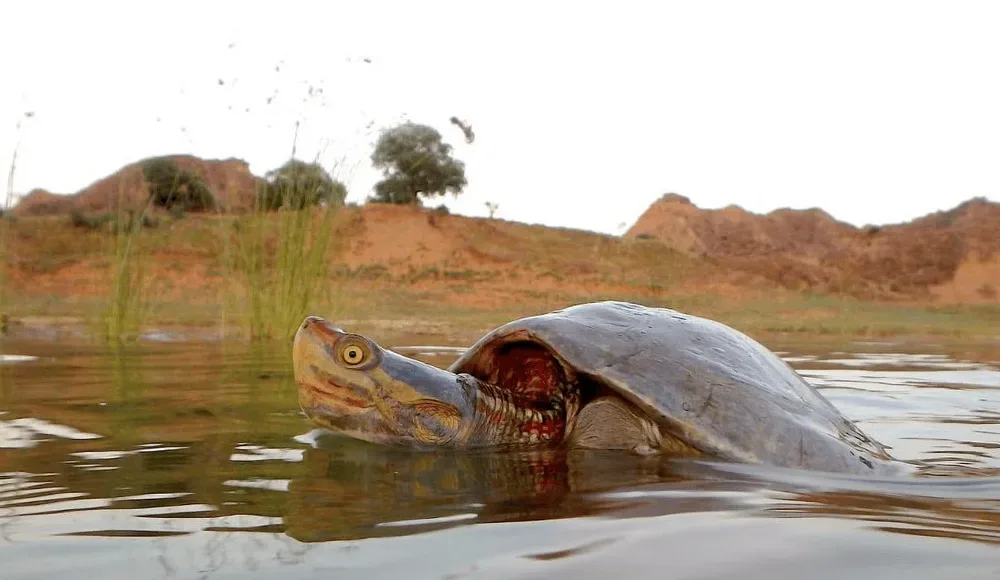
The Red-crowned Roofed Turtle is a freshwater turtle species found only in South Asia. It belongs to the Batagur genus and is one of the largest freshwater turtles in India. This species is important for maintaining the balance of river ecosystems.
Distribution and Habitat
The turtle is native to India, Bangladesh and Nepal. Earlier, it was widely found across the Ganga River system and also in the Brahmaputra River basin. Today, its presence is limited to small and protected river stretches due to habitat destruction and environmental changes.
Physical Features and Ecological Role
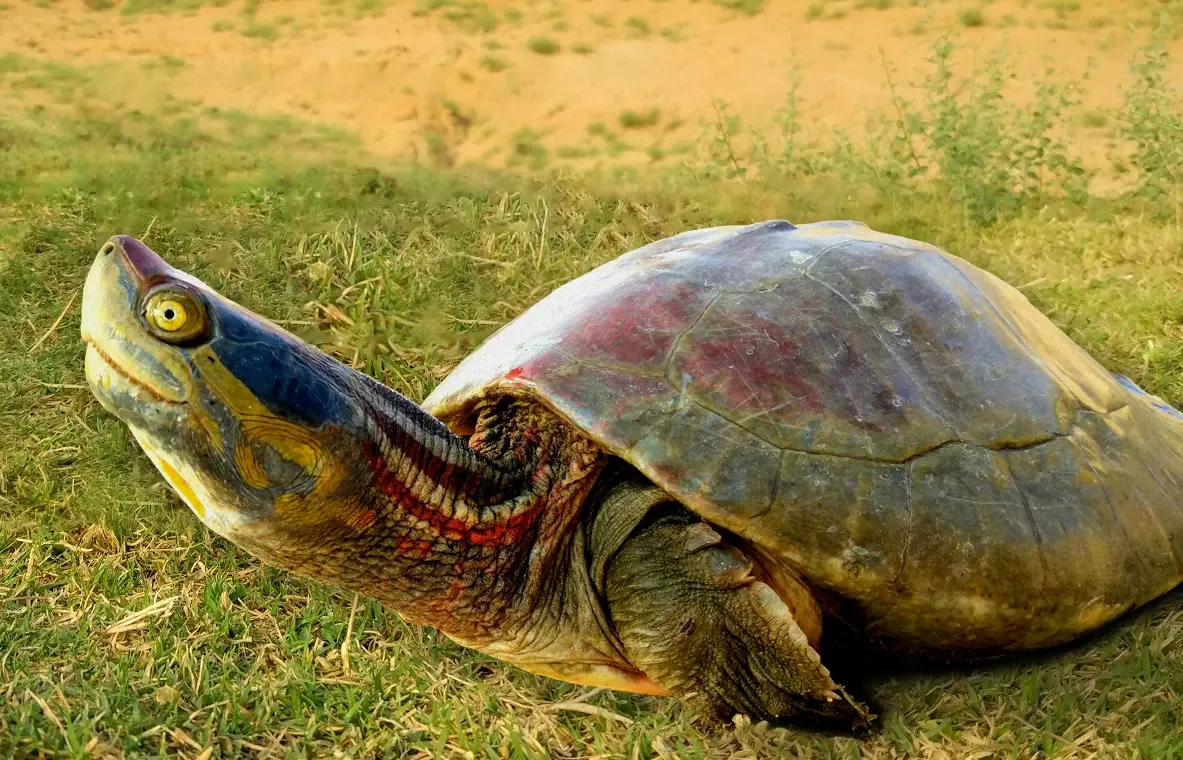
Male turtles are much smaller than females, growing to about half their size. They have a unique reddish-orange head with a black crown, making them easy to identify. Their shell is greenish-brown with yellow patterns, while the underside is yellow with black markings.
The species is omnivorous and feeds on aquatic plants and small animals. It plays a key role as a bio-indicator, meaning it reflects the health of river ecosystems. It also helps in nutrient cycling, which supports aquatic life.
Conservation Status and Concerns
The Red Crowned Turtle Decline is closely linked to its conservation status. It is listed as Critically Endangered by the International Union for Conservation of Nature. It is also included under Appendix II of Convention on International Trade in Endangered Species and protected under Schedule I of the Wildlife Protection Act 1972.
Major threats include river pollution, illegal sand mining and infrastructure development. These factors have reduced its natural habitat and increased risks to its survival. Conservation programmes and habitat restoration efforts are now important to protect this rare species.