


Asteroid 2026 QQ8 Mini-Moon

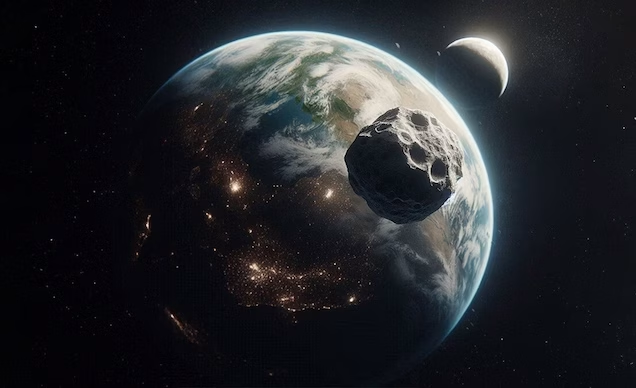
Asteroid 2026 QQ8 has become a temporary mini-moon of Earth after entering our planet’s orbit in late April 2026. The small space rock is expected to remain near Earth until December before escaping the planet’s gravitational pull and continuing its journey around the Sun. Scientists say it poses no threat to Earth because of its very small size.
The object was first spotted by Hungarian astronomer Krisztián Sárneczky on 20 August 2026. At first, researchers thought it might be a piece of human-made space debris. Further observations helped confirm that it is a natural asteroid. The Minor Planet Center confirmed its natural origin on 29 October, following observations made with the University of Hawaii’s 2.2-metre telescope and the Lowell Discovery Telescope.

What Is a Temporary Mini-Moon?
A mini-moon is a small natural object that becomes temporarily captured by Earth’s gravity. Unlike the Moon, which has remained in orbit around Earth for billions of years, a mini-moon stays only for a limited period.
Asteroid 2026 QQ8 entered Earth’s gravitational influence in late April 2026. Its movement around Earth is described as a kidney-shaped loop. The object is expected to remain gravitationally bound to our planet until December 2026.
After leaving Earth’s orbit, it will continue moving around the Sun. It is expected to follow a solar orbit during 2027, rather than remaining a permanent companion of Earth.
Temporary mini-moons are useful objects for scientists because they provide opportunities to study small asteroids that come close to our planet. Their movements also help researchers understand how gravity affects objects travelling through the Solar System.
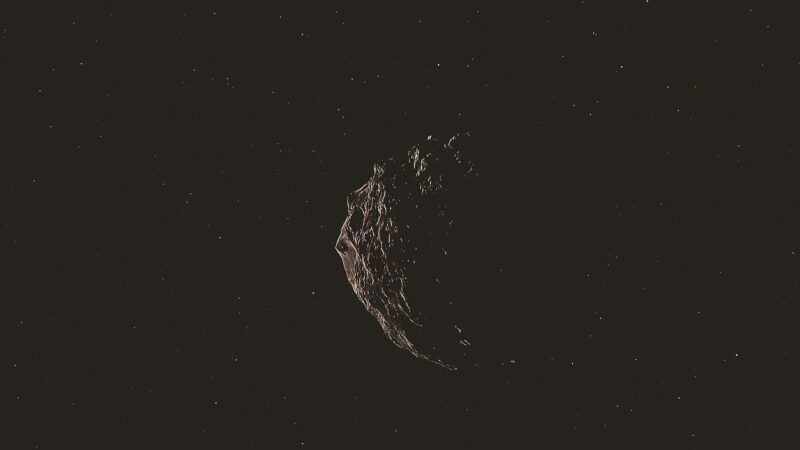
Size and Orbit of Asteroid 2026 QQ8
Asteroid 2026 QQ8 is estimated to be about one metre across, although some estimates suggest it could be closer to two metres. Its small size makes it difficult to observe, which is one reason scientists needed further telescope observations to confirm its identity.
The asteroid’s path brings it within about 0.0038 astronomical units of Earth. An astronomical unit, or AU, is the average distance between Earth and the Sun. This close approach distance is roughly 1.5 times the average distance between Earth and the Moon.
Although the asteroid is moving close to Earth, it is not expected to collide with the planet. Its temporary capture is a result of its orbital path and speed relative to Earth.
If an object of this size entered Earth’s atmosphere, it would be expected to burn up during its passage. Its small dimensions mean it is not considered a serious impact threat.
How Scientists Confirmed the Asteroid
The object was initially considered a possible piece of space debris. Scientists needed to determine whether it was natural or human-made.
Observations from the University of Hawaii’s 2.2-metre telescope and the Lowell Discovery Telescope helped researchers study its movement and characteristics. The Minor Planet Center later confirmed its natural origin.
The Minor Planet Center collects observations of asteroids and other small Solar System objects. It helps researchers calculate their orbits and share information with the scientific community.
Confirming an object’s orbit is important because its path can help scientists determine whether it is a near-Earth object, a temporary mini-moon or an object that will move away from Earth.
Future Close Approaches to Earth
Orbital information indicates that 2026 QQ8 makes close approaches to Earth roughly every ten years. However, coming close to Earth does not mean that an asteroid will always become a mini-moon.
The object’s previous close approach is listed as occurring in 1965, while another approach is predicted for 2058. It was not captured by Earth during the earlier encounter, and current predictions indicate that it will not be captured during the 2058 approach either.
Whether an asteroid becomes temporarily bound to Earth depends on several factors, including its speed, direction and the geometry of its encounter with the planet. Distance alone is not enough to cause capture.
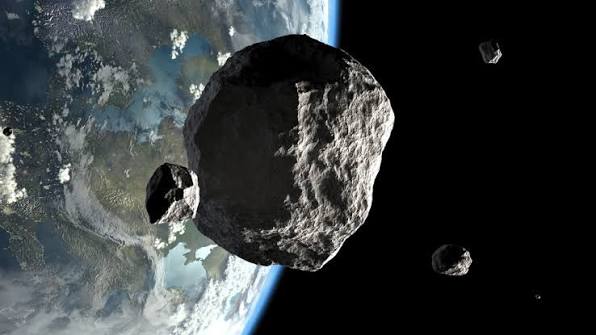
Why Mini-Moons Matter to Space Science
Temporary mini-moons offer scientists a chance to learn more about small asteroids and their movement through space. Because these objects can come relatively close to Earth, they may be easier to observe than many asteroids that remain far away.
Researchers can use observations of mini-moons to improve their understanding of orbital motion and the effects of gravity. These objects may also provide future opportunities for spacecraft missions, although the short time they remain near Earth can make mission planning difficult.
Asteroid 2026 QQ8 is expected to leave Earth’s gravitational influence in December 2026. It will then continue its journey around the Sun, becoming another small object moving through the wider Solar System.