


Antarctic Ozone Hole Ranks Seventh

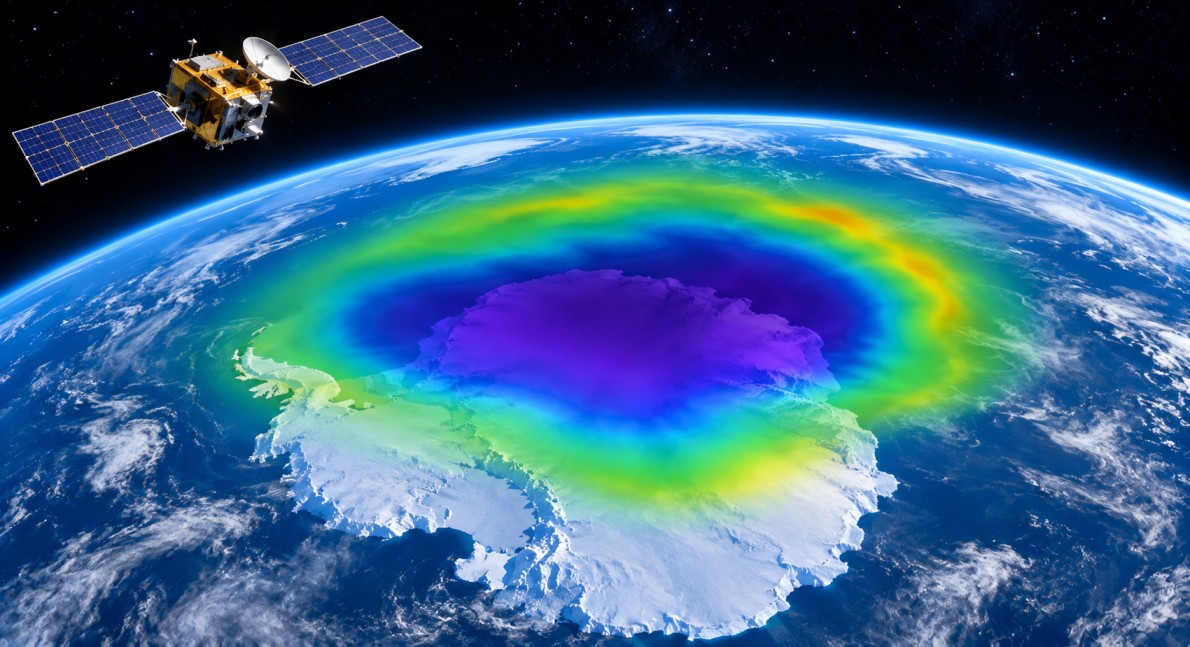
Antarctic Ozone Hole reached the seventh-largest size recorded in 48 years of monitoring, according to NASA and the National Oceanic and Atmospheric Administration (NOAA). The agencies reported the findings on 4 November 2026 and linked the large size of the ozone hole to unusual weather conditions, including a powerful polar vortex.
The ozone hole is a region over Antarctica where the amount of ozone in the atmosphere becomes greatly reduced during the Southern Hemisphere’s spring. Ozone in the stratosphere helps protect life on Earth by absorbing much of the Sun’s harmful ultraviolet radiation. A large ozone hole can allow more ultraviolet rays to reach the surface, making continued monitoring important for human health and the environment.

Size of the 2026 Antarctic Ozone Hole
The 2026 Antarctic Ozone Hole reached its largest one-day extent on 18 September. It covered about 10.5 million square miles, or 27.1 million square kilometres.
During the main ozone-depletion period, from 7 September to 13 October, its average size was around 9.6 million square miles, equal to about 25 million square kilometres.
These measurements show that the ozone hole was large compared with many recent years. However, its size can change from one year to another because of atmospheric temperatures, wind patterns and chemical conditions in the stratosphere.
NASA and NOAA use satellite observations and other scientific instruments to monitor the ozone layer. Their measurements help researchers understand both seasonal changes and the long-term effects of international efforts to reduce ozone-depleting substances.
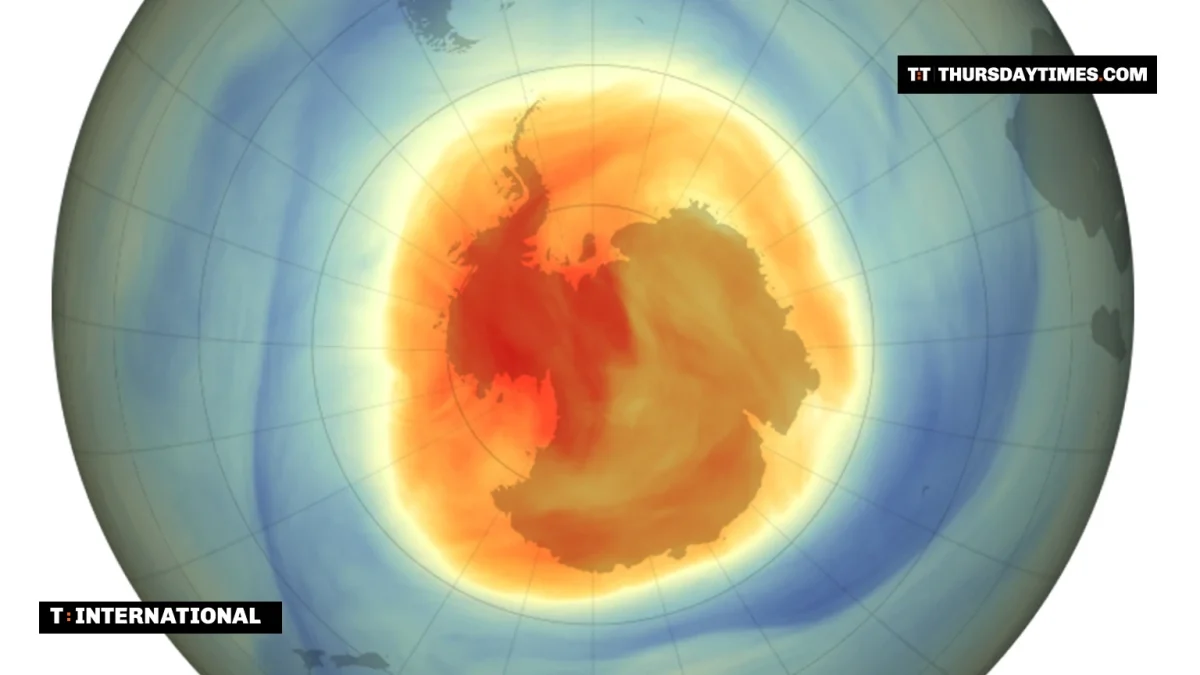
Ozone Levels Over the South Pole
Scientists also measure the amount of ozone in the atmosphere using a unit called the Dobson unit. On 17 October 2026, NOAA’s balloon-borne instruments recorded an ozone concentration of 105 Dobson units directly over the South Pole.
The lowest recorded value remains 92 Dobson units, measured in October 2006.
A Dobson unit measures the total amount of ozone in a column of air above a location. Scientists commonly use a threshold of 220 Dobson units to map the Antarctic ozone hole. Areas with values below this level are considered part of the ozone hole.
These measurements are important because the size of the ozone hole and the amount of ozone present are related but different indicators. A region may cover a large area while ozone concentrations vary across that region.
Role of the Polar Vortex
NASA and NOAA attributed the large 2026 ozone hole partly to an unusually powerful polar vortex. The polar vortex is a broad circulation of winds that forms around the polar region in the stratosphere during winter.
When the vortex is strong, it can keep very cold air trapped over Antarctica. These cold conditions support the formation of polar stratospheric clouds, which play an important role in ozone loss.
Chemical reactions on these clouds can change chlorine compounds into forms that become highly active when sunlight returns in spring. The activated chlorine then reacts with ozone and can destroy large amounts of it.
This process helps explain why the Antarctic ozone hole usually develops during the Southern Hemisphere’s spring. The strength and temperature of the polar vortex can affect how much ozone is lost in a particular year.
Signs of Long-Term Ozone Recovery
Despite the large size of the 2026 ozone hole, scientists say the long-term trend shows signs of recovery. The agencies reported that the hole would have been around 1-2 million square miles larger if ozone-depleting substances were still as common in the atmosphere as they were at their peak in 2000.
NASA ozone research team leader Paul Newman, a senior scientist at the University of Maryland, said the ozone hole has been forming later in recent years. Scientists view this pattern as one sign that the ozone layer is recovering.
The recovery is closely linked to the 1987 Montreal Protocol, an international agreement designed to reduce and phase out chemicals that damage the ozone layer. These substances were once widely used in products and equipment such as refrigerants and aerosol systems.
The agreement has helped reduce the presence of many ozone-depleting chemicals in the atmosphere. However, these substances can remain in the atmosphere for a long time, meaning the recovery process is gradual.
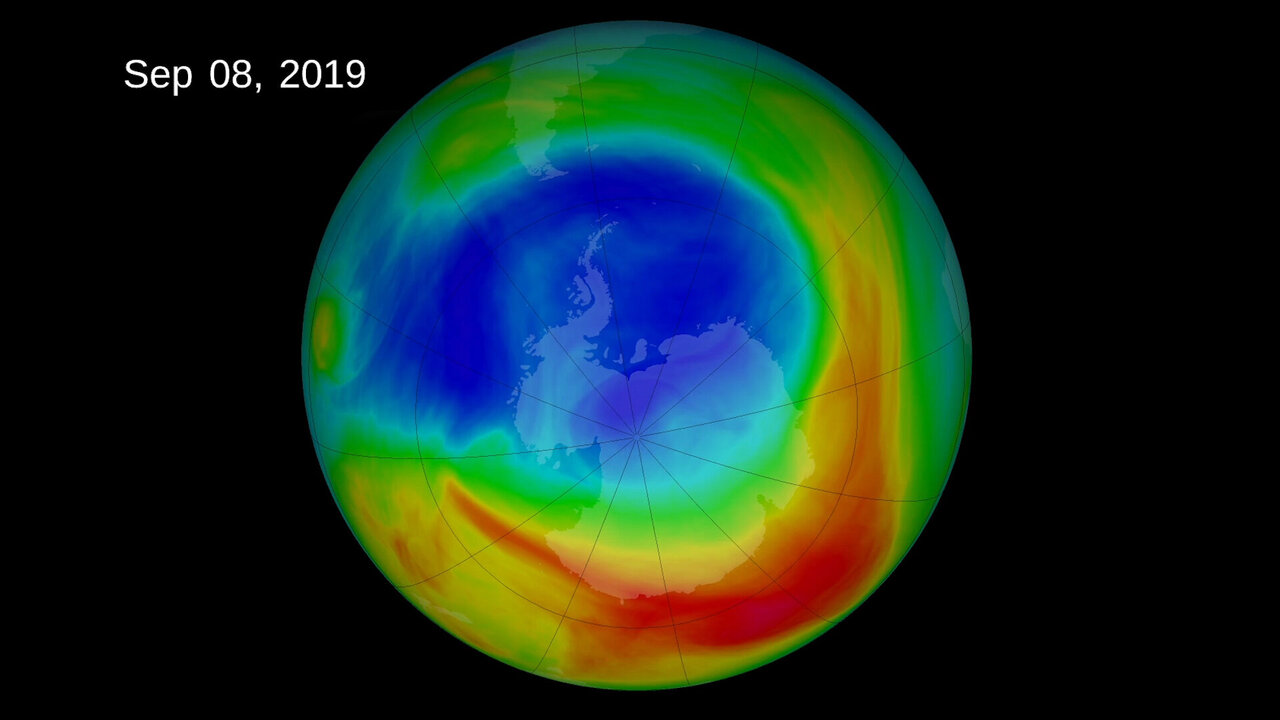
Comparing Recent Ozone Hole Seasons
The 2026 result differs from the 2025 season. NASA and NOAA reported on 24 November 2025 that the Antarctic ozone hole that year was the fifth smallest since 1992.
This contrast shows how much the ozone hole can vary from year to year. Weather conditions in the stratosphere can influence its size, even while the overall amount of ozone-depleting chemicals continues to decline.
Scientists continue to track the ozone hole to understand these annual changes and assess the progress of recovery. Satellite data, balloon measurements and atmospheric research help them separate short-term weather effects from the longer-term influence of global environmental policies.
The 2026 Antarctic Ozone Hole highlights both the continuing challenge of ozone depletion and the importance of sustained international action. Its large size is linked to unusual atmospheric conditions, while long-term observations indicate that reducing ozone-depleting substances remains an important step towards recovery.