
Sentinel Sensor Wins 2026 James Dyson Sustainability Award

Sentinel Sensor is an innovative safety technology developed by Filipino structural engineer Aldrei Ong. It won the 2026 James Dyson Global Sustainability Award on 4 November 2026. The device is designed to detect hidden damage in concrete buildings after earthquakes. It aims to help engineers identify possible structural problems earlier and assess the safety of buildings more quickly.
The award recognises inventions that address real-world problems through practical design and technology. Sentinel is especially important for earthquake-prone regions such as the Philippines, where damaged buildings can put many lives at risk.

What Is the Sentinel Sensor?
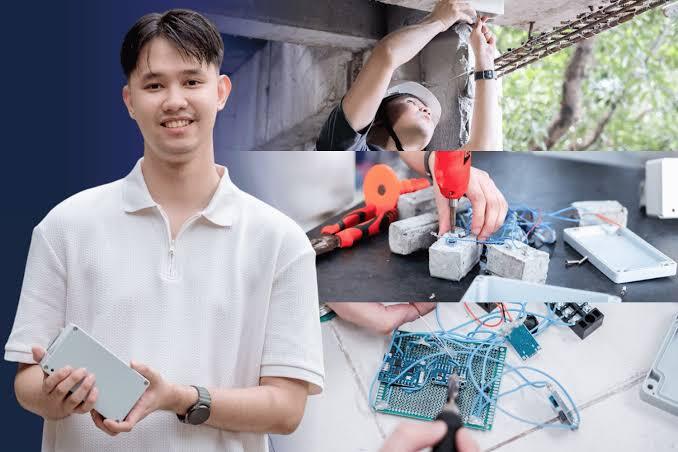
Sentinel is a low-cost damage detection device that uses a special type of concrete known as self-sensing concrete. It is designed to identify changes inside concrete structures that may not be visible during a normal visual inspection.
The main idea behind the invention is to turn an ordinary concrete spacer block into a sensor. Concrete spacer blocks are commonly used in construction to maintain the correct distance between steel reinforcement bars and the outer surface of concrete. Ong’s design gives this simple construction material an additional purpose by allowing it to detect possible damage.
The device could help engineers monitor buildings after earthquakes and decide which structures need a more detailed inspection.
How Does Sentinel Work?
Sentinel works by measuring changes in the electrical resistance of concrete. The material used in the device can respond to physical changes, including strain and cracking.
When concrete experiences pressure, deformation or damage, the electrical connections between conductive particles inside the material can change. This affects the material’s electrical resistance. Sentinel uses these changes as signals that may indicate damage within a structure.
This method is known as piezoresistive sensing. It allows concrete to act as both a building material and a sensing element.
Unlike conventional inspection methods that mainly depend on visible signs of damage, this technology is intended to identify changes that may occur inside the concrete. It could therefore provide useful information when engineers assess buildings following an earthquake.
However, electrical resistance can also change because of moisture, temperature and the amount of dissolved ions in concrete. For reliable results, the technology will need proper calibration and methods to account for these environmental conditions.
Why Is Sentinel Important for Earthquake-Prone Countries?
Earthquakes can cause serious damage to buildings, roads, bridges and other infrastructure. Sometimes, the damage is clearly visible, such as large cracks or broken walls. In other cases, structural problems may remain hidden inside concrete columns, beams and other building components.
A building that looks normal from the outside may still require a detailed safety assessment. This makes post-earthquake inspection an important part of disaster management.
Sentinel aims to support this process by providing early information about possible damage. It could help engineers identify buildings that need urgent attention and prioritise further inspections.
The Philippines is particularly exposed to earthquakes because it is located along the Pacific Ring of Fire, a region known for frequent seismic and volcanic activity. Affordable monitoring technologies could be useful in countries where large numbers of buildings need to be checked after major earthquakes.
Sentinel is not intended to replace professional structural inspections. Instead, it could work as an additional tool to support engineers in making informed decisions about building safety.
James Dyson Award and Prize Money
Aldrei Ong will receive PHP 2.39 million, approximately £30,000, to continue developing Sentinel. The prize will support further testing and improvements to the device.
Ong plans to validate the technology and improve its electronic system. At present, the device uses hand-soldered electronics. He aims to replace these components with a custom printed circuit board, which could make the design more suitable for production.
He also plans to develop versions that can be installed in existing buildings. This is an important step because many structures were built before modern structural monitoring systems became available.
Further testing will be necessary to understand how accurately Sentinel detects different types of damage and how well it performs under real building conditions.
Record Participation in the 2026 James Dyson Award
The 2026 James Dyson Award received a record 2,294 entries from students and recent graduates across 28 countries and regions. The competition encourages young designers and engineers to develop practical solutions to everyday problems.
The award is open to university-level students and recent graduates. It recognises inventions that use creative design and engineering to address challenges in areas such as health, sustainability, technology and public safety.
Sentinel received the Global Sustainability Award for its approach to improving the monitoring of concrete structures. Its focus on affordable technology and building safety connects engineering innovation with the needs of communities exposed to natural disasters.
Philippines Returns to the Global Sustainability Spotlight
Aldrei Ong’s achievement is another important moment for Filipino innovation. The Global Sustainability distinction returned to the Philippines six years after Filipino inventor Carvey Ehren Maigue won the award in 2020.
Maigue was recognised for AuREUS, a material developed using waste crop materials that can absorb ultraviolet light and convert it into usable electricity. His invention demonstrated how discarded agricultural materials could be used in sustainable technology.
Ong’s Sentinel project focuses on a different challenge: protecting buildings and supporting safer communities after earthquakes. Both innovations show how young Filipino inventors are using science and engineering to address practical problems.
The recognition also highlights the growing role of young engineers in developing affordable technologies for public safety and environmental sustainability.
Future Possibilities for Sentinel
The next stage of Sentinel’s development will focus on testing, improving its electronics and adapting the design for different types of buildings. If further validation is successful, the technology may offer engineers another way to monitor concrete structures.
Its low-cost approach could be particularly useful in regions where advanced structural monitoring systems are difficult to install because of their price or technical requirements.
As climate-related disasters and natural hazards continue to challenge communities around the world, affordable monitoring tools can support better infrastructure planning and risk management. Sentinel represents an effort to make building safety technology more accessible while giving concrete an additional role in protecting people.