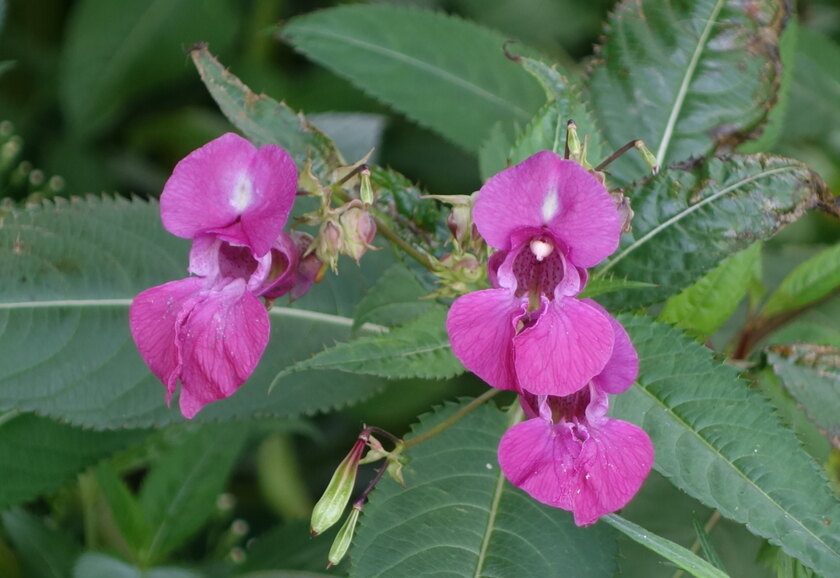
Impatiens nagorum Nagaland: New Flowering Plant Discovered in Fakim Wildlife Sanctuary

Botanists have discovered and officially described a new species of flowering plant in Northeast India, bringing fresh attention to the rich biodiversity of the region. The plant has been named Impatiens nagorum and was found in Fakim Wildlife Sanctuary in Nagaland’s Kiphire district. The discovery was published in the international scientific journal Phytotaxa.
Thank you for reading this post, don't forget to subscribe!The discovery of Impatiens nagorum Nagaland shows that the forests of Northeast India still hold many secrets. Scientists say that this region is one of the most important biodiversity hotspots in the world, yet many areas remain less explored. This new finding highlights both the beauty and the ecological importance of Nagaland’s natural landscapes.
Discovery in Fakim Wildlife Sanctuary
The new species was discovered in Fakim Wildlife Sanctuary, located in the eastern part of Nagaland near the India-Myanmar border. The sanctuary is known for its rich plant and animal life, especially in its high-altitude forests.
The plant was found at an elevation of about 2,336 metres above sea level. It grows in moist temperate broadleaf forests, which provide cool temperatures, high humidity, and dense vegetation cover. These forests create the perfect environment for many rare and endemic plant species.
The research team included scientists from Kohima Science College, Nagaland University, the University of Warsaw, and the Botanical Survey of India. Their joint effort led to the formal identification and classification of the new species.

Unique Features of Impatiens nagorum
Impatiens nagorum belongs to the genus Impatiens, commonly known as balsams or “touch-me-nots.” These plants are famous for their delicate flowers and seed pods that burst open when touched.
The new species stands out because of its striking purple flowers. It can grow up to 35 centimetres in height. Scientists carefully studied its physical features and found several characteristics that make it different from closely related species.
The plant has serrated leaves, which means the edges of the leaves are shaped like small teeth. It also has slightly hairy lateral sepals. One of its most distinctive features is the deeper lower sepal that narrows into a hooked spur at the end. These small but important differences helped researchers confirm that it is a completely new species.
To be sure of their findings, scientists used advanced tools such as a scanning electron microscope (SEM). This allowed them to closely examine the pollen grains and seeds. The microscopic details further confirmed that Impatiens nagorum is distinct from other known species.
Limited Population Raises Concern
So far, Impatiens nagorum Nagaland has been found only in its original location inside Fakim Wildlife Sanctuary. During field observation, researchers recorded around 20 individual plants. This small population size suggests that the species may be rare and possibly vulnerable.
Because it is known from only one location, any threat to its habitat could put the species at risk. Factors such as habitat loss, climate change, and environmental disturbances may affect its survival in the future.
Scientists believe that more field surveys are needed in nearby areas to check whether the plant grows elsewhere. It is possible that other small populations exist but have not yet been recorded.
Nagaland’s Rich Biodiversity
Nagaland covers just over 16,500 square kilometres, but it is home to an estimated 2,250 plant species. This makes it one of the most botanically rich states in India. The discovery of Impatiens nagorum adds another species to this impressive list.
The Eastern Himalayas, which include parts of Northeast India, are recognised as a global biodiversity hotspot. These regions support a high number of endemic species, meaning plants and animals that are found nowhere else in the world.
Many species of Impatiens are adapted to very specific microhabitats. Some grow only in certain soil types, elevations, or moisture conditions. This special adaptation makes them unique but also sensitive to environmental changes.
The name nagorum honours the Naga tribes of Nagaland. By naming the species after the indigenous communities, the researchers recognised the cultural and ecological importance of the region.
Importance of Scientific Exploration
Large parts of Northeast India remain botanically underexplored. Difficult terrain, dense forests, and remote locations have limited scientific studies in many areas. However, discoveries like Impatiens nagorum Nagaland show that these forests still have many unknown species waiting to be documented.
Continued research is important not only for scientific knowledge but also for conservation. If species are not identified and recorded, they may disappear before the world even knows they exist.
The involvement of institutions like the Botanical Survey of India plays a key role in documenting and protecting India’s plant diversity. Collaborative research between Indian and international scientists also strengthens conservation efforts.

Protecting Rare and Endemic Species
The discovery of Impatiens nagorum highlights the urgent need to protect fragile mountain ecosystems. Montane forests in Nagaland provide habitat to many rare plants and animals. Protecting these forests ensures the survival of unique species that depend on them.
Conservation efforts may include detailed field studies, monitoring of known populations, and raising awareness among local communities. Since the species is currently known from only one location, its habitat should be carefully preserved.
The discovery also reminds us that biodiversity is not just about large animals or famous species. Small flowering plants like Impatiens nagorum play an important role in maintaining ecological balance. They support pollinators, contribute to forest health, and add to the natural beauty of the region.
As scientists continue to explore Northeast India, more new species may come to light. Each discovery adds to our understanding of nature and strengthens the case for protecting the environment.